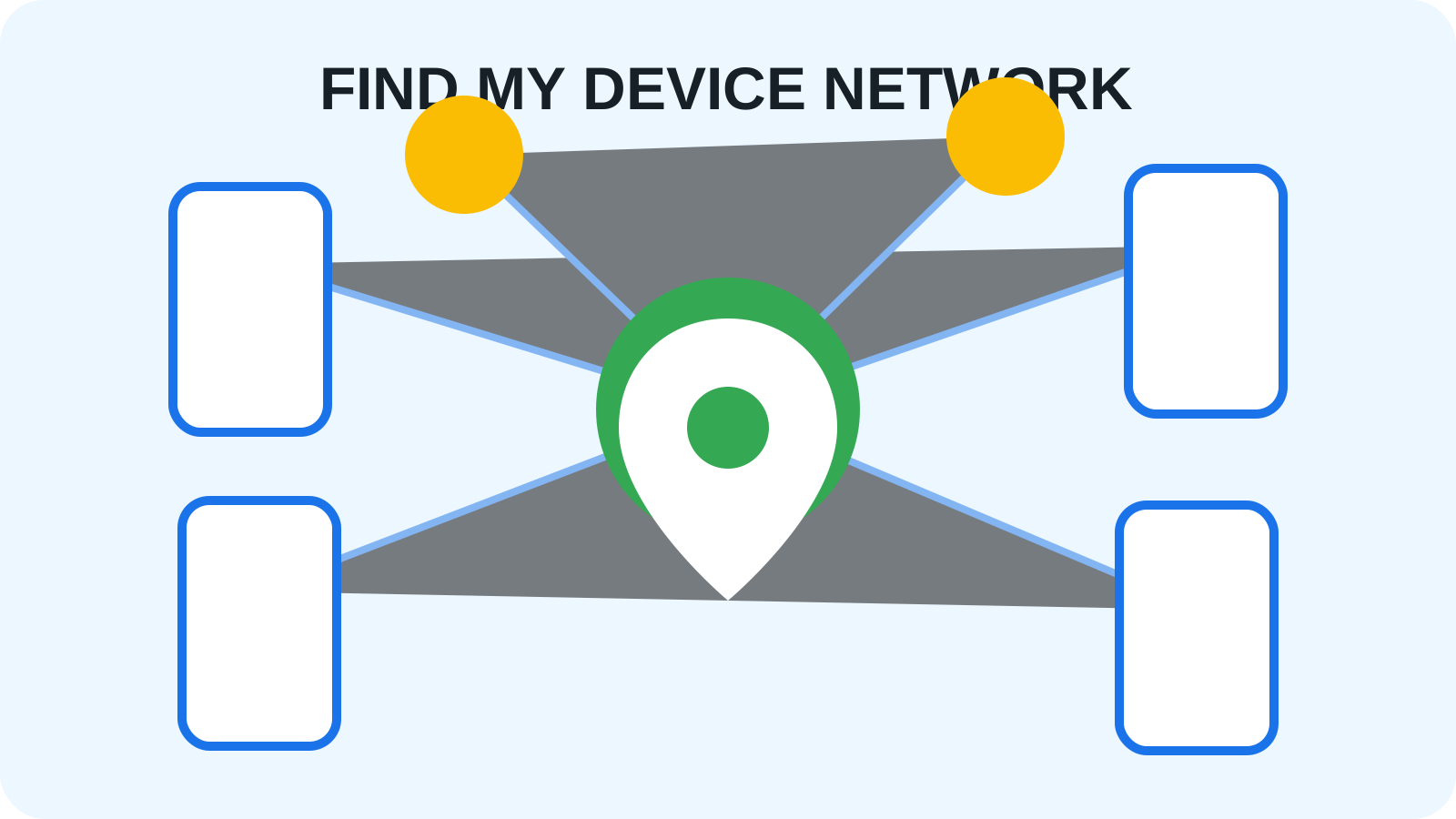
On April 8, 2024, Google began rolling out a redesigned Find My Device network, starting in the United States and Canada. The older service could locate a phone that reported its own position online. The new network added a crowdsourced layer: more than a billion Android devices could help detect a compatible offline phone or Bluetooth tag and relay an encrypted location to its owner.
The concept is simple but sensitive. A large network makes a tiny tag easier to find, yet the same capability could be abused to track a person. Google’s launch therefore combined offline finding with end-to-end encryption, aggregation rules, unknown-tracker alerts and controls intended to reduce reporting around private locations.
What changed on April 8, 2024?
Google’s launch announcement said the new experience would work on devices running Android 9 and newer. It could locate compatible phones and tablets even when offline, add everyday objects through Bluetooth tags and show the proximity of a lost item to Nest devices in the owner’s home.
The rollout began regionally rather than appearing worldwide on one day. Compatible tags from Chipolo and Pebblebee were scheduled to join in May, with other manufacturers later. Headphones also needed software updates before they could participate. April 8 is therefore the network-launch milestone, not proof that every announced accessory was on sale that morning.
Pixel 8 and Pixel 8 Pro included specialized hardware that allowed the network to find them for a period even when powered off or after the battery was depleted. That capability was device-specific. An ordinary offline Android phone and a phone advertising through reserved powered-off hardware are not the same case.
How can another phone find an offline item?
A compatible missing device or tag emits a Bluetooth identifier. A nearby participating Android device can detect that signal, associate it with its own location and send an encrypted report through the network. The owner then sees an estimated location in Find My Device. The nearby helper does not need to know whose item it detected.
Identifiers and cryptographic material are designed to rotate, limiting the value of collecting one broadcast over time. The accessory specification defines how compatible Fast Pair accessories participate, including unwanted tracking protections and device behavior. An accessory merely having Bluetooth does not make it a Find My Device tag.
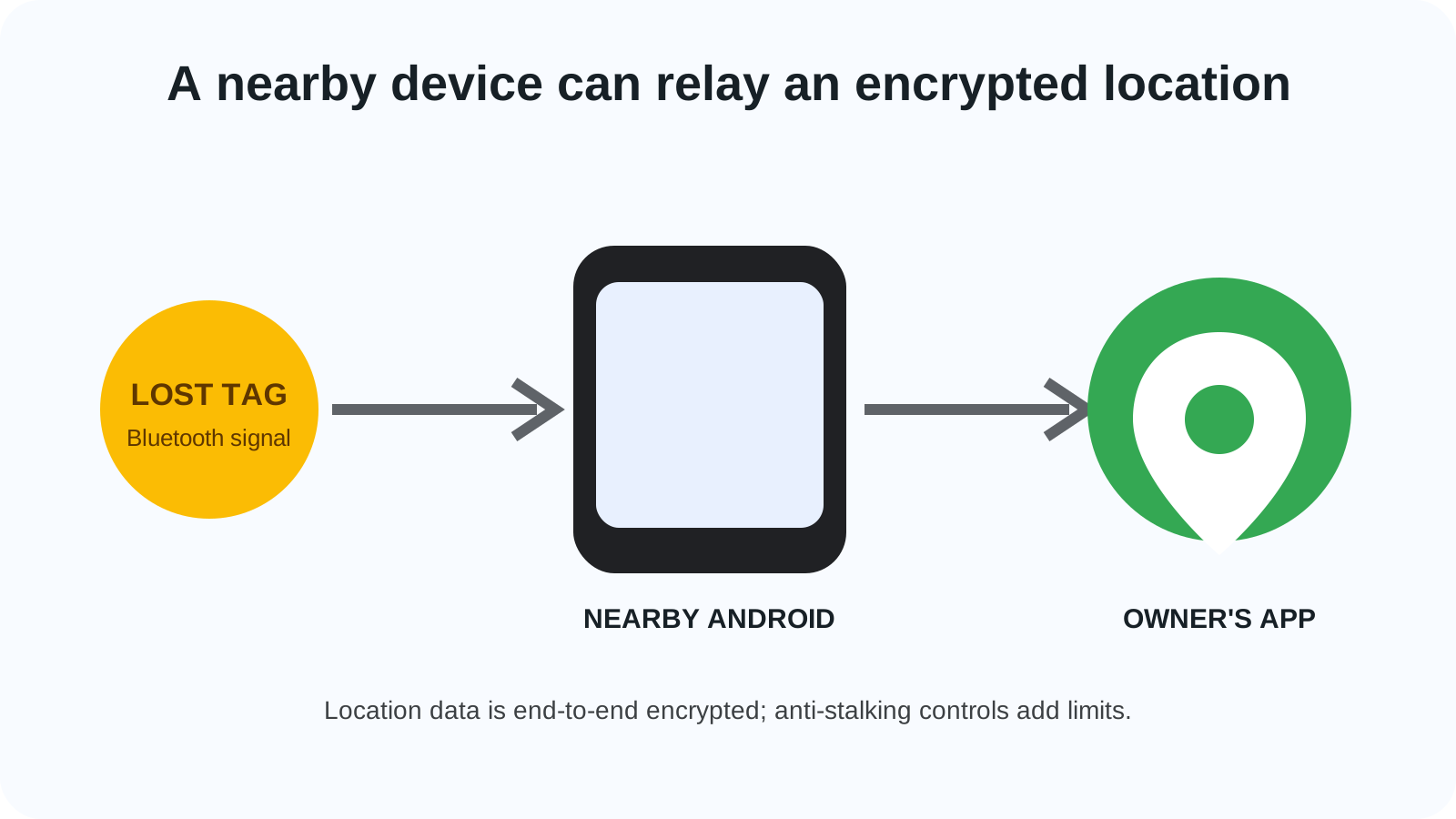
Finding still depends on physical conditions. A tag outside Bluetooth range of participating devices may not report. Dense urban areas and busy transport hubs are likely to produce more encounters than an empty trail, but Google did not promise a particular update interval everywhere. Location is an estimate, not a guaranteed live pursuit tool.
What could the network locate at launch?
| Item type | 2024 finding path | Important limit |
|---|---|---|
| Android phone or tablet | Device location plus crowdsourced offline reports | Requires compatible software and enabled settings |
| Powered-off Pixel 8 series | Reserved specialized hardware can continue signaling | Specific to supported hardware and limited duration |
| Bluetooth tag | Nearby Android devices relay tag reports | Only certified compatible tags participate |
| Compatible headphones | Device or case can join after updates | Model and firmware support vary |
| Shared accessory | Trusted people can view the same item | Sharing must be deliberately configured |
The app also offered “Find nearby” guidance when the owner was close to an item. Google announced shared accessory access so a household or travel companion could help locate common keys, luggage or a remote control. A Nest device could serve as a familiar home reference point without publicly revealing a precise home address to strangers in the network.
These functions expanded Find My Device from a phone-recovery page into a general object-finding system. In 2025 Google renamed the broader experience Find Hub, but the crowdsourced network launched under the Find My Device name.
How was location data protected?
Google said network location reports were end-to-end encrypted, meaning only the device owner and authorized sharers held the keys needed to interpret them. The helper device contributed a report without learning the identity of the lost item or owner, while Google said it could not read the encrypted location.
The design also used aggregation around private locations. By default, an item near a home would generally need detection by multiple nearby devices before the network reported it, reducing the chance that one person’s phone could be used to map an item inside a private residence. Users could choose different network participation settings, including more limited behavior.
No privacy architecture removes all risk. Account compromise, an unlocked owner phone or an incorrectly shared accessory could still expose information. Encryption protects data in transit and at the service layer; it does not replace strong account authentication and device locks.
How did Android address unwanted tracking?
A cheap Bluetooth tag hidden in a bag or vehicle can become a stalking tool. Before the network launch, Android had already added unknown tracker alerts for compatible trackers, including Apple AirTags. If Android determined that an unknown tag was moving with a person away from its owner, it could alert them, show where it had traveled, play a sound and provide disabling instructions.
Google and Apple also worked on a shared industry specification so alerts would not stop at an operating-system boundary. The Find My Device accessory rules required support for unwanted-tracking protections. These measures aimed to raise the cost of covert use, not to guarantee instant detection in every case.
An alert needs enough observations to distinguish a tag traveling on the same bus from one persistently following a person. That delay is a safety trade-off: too little evidence creates constant false alarms, while too much delay weakens warning value. Users facing an immediate threat should contact local authorities or a trusted safety service rather than relying only on an app.
What could stop offline finding from working?
The owner may have disabled network participation, Bluetooth or location services. A tag battery may be dead, a phone may have been reset, or an item may be far from any participating device. Regional rollout and account eligibility also mattered. Corporate or supervised devices could have policy restrictions.
Powered-off finding should not be generalized from Pixel 8 to all Android phones. It requires hardware and software designed to preserve a limited Bluetooth finding function after shutdown. Similarly, “over a billion devices” described potential network scale, not a promise that a billion devices were always active around any lost item.
Recovery also involves judgment. A map pin at an unfamiliar address is not permission to confront someone. For theft, owners should preserve the location, lock the device using tools described in Android 15’s theft-protection history and work with local authorities where appropriate.
Why does the Find My Device network still matter today?
The April 2024 launch turned the installed base of Android phones into shared finding infrastructure while attempting to keep reports private from the helper and service provider. It demonstrated how ecosystem scale can become a feature that no single phone’s GPS or mobile connection could provide alone.
It also made abuse prevention part of the product definition. Encryption, aggregation and cross-platform tracker alerts were not optional decorations; without them, a more powerful finding network would create a more powerful tracking system.
The network belongs in the Android history timeline because it broadened what “my device” meant—from an online phone to offline phones, headphones, keys and luggage. Its lasting lesson is that useful location technology must be evaluated by both what it can find and who it prevents from following.