On August 2, 2013, Google announced Android Device Manager, a service that would help people locate a missing Android phone, ring it loudly or erase its data remotely. The functions were not unprecedented in the wider smartphone world, but their delivery through Google Play made a common recovery toolkit available across a broad range of Android devices running version 2.2 or later.
That reach made the announcement historically important. Android hardware came from many manufacturers, and security utilities were not always consistent. Google’s original safety post treated remote recovery as part of a simple baseline alongside a screen lock and harmful-app scanning.
What could Android Device Manager originally do?
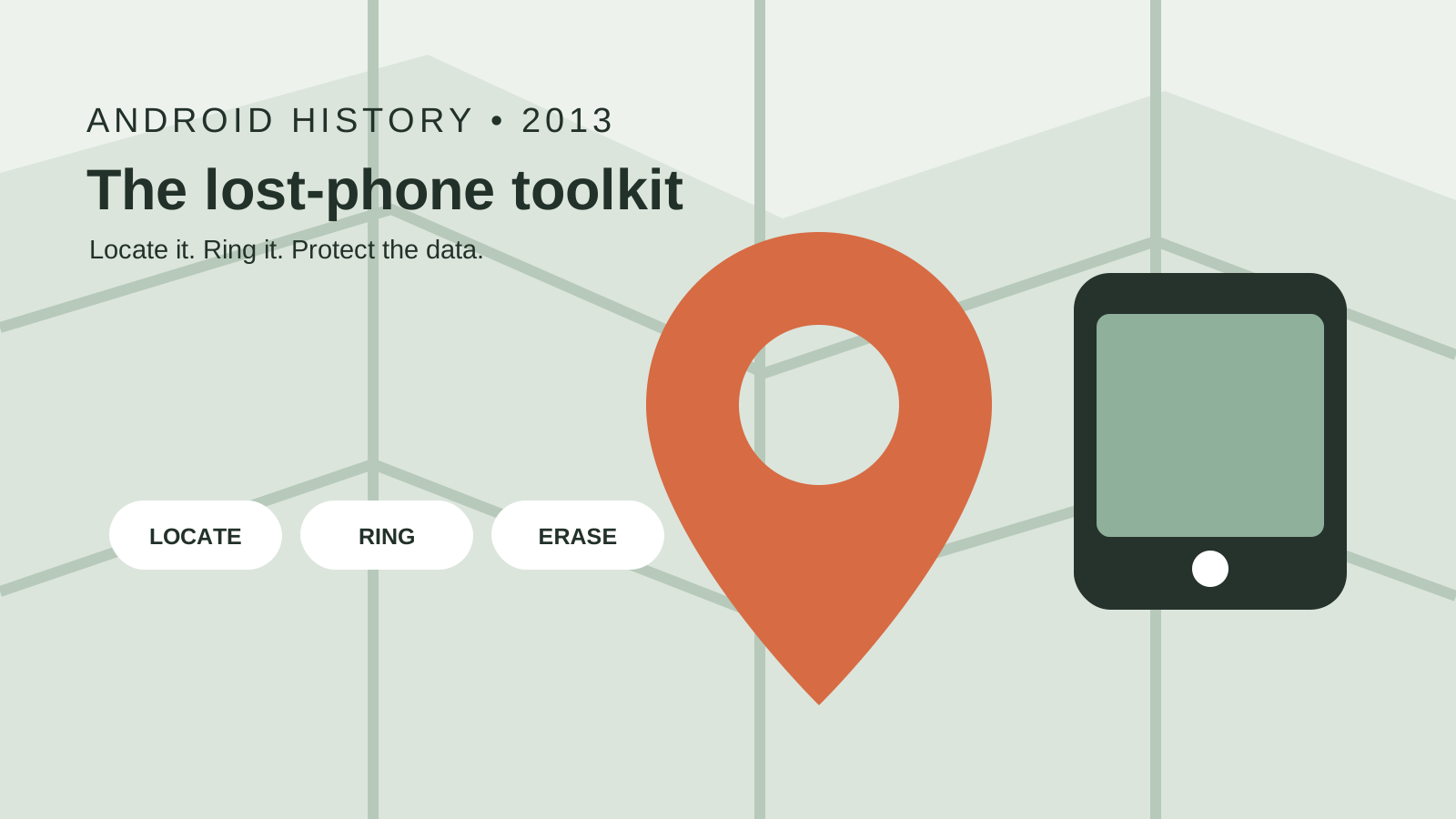
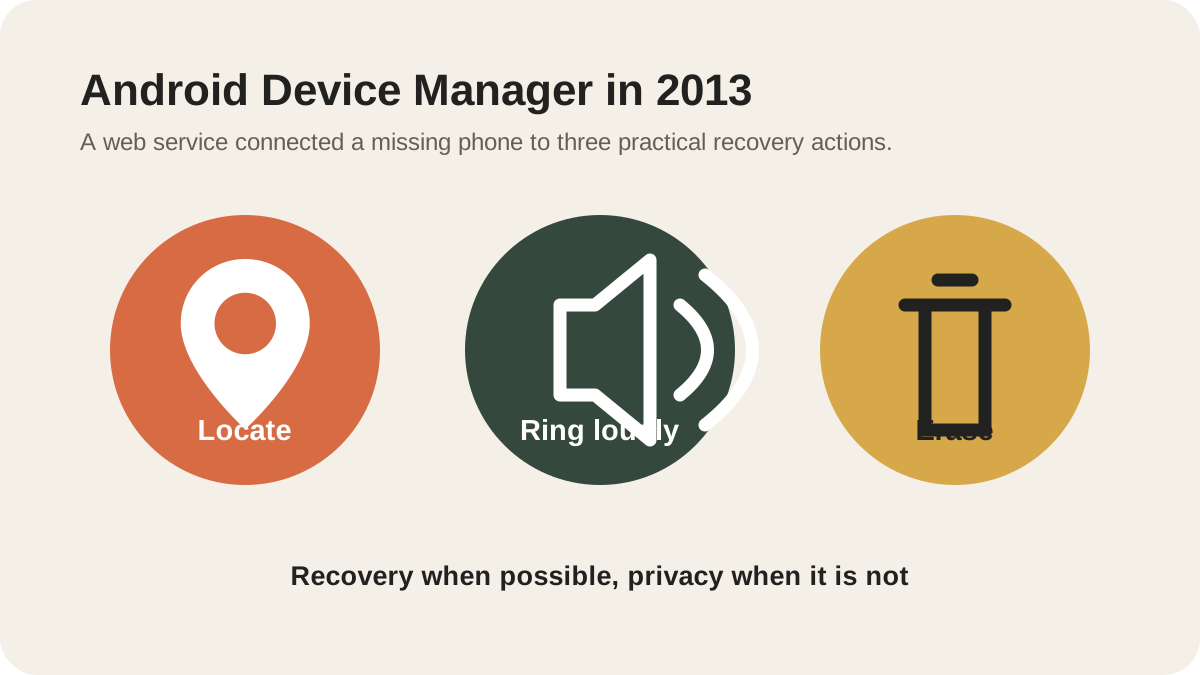
The service began with three easily understood actions. It could show a phone’s location on a map in real time, ring the device at maximum volume even if it had been silenced, and erase personal data when the phone could not be recovered. Each action addressed a different kind of loss.
Ringing helped with the ordinary case: a phone under a sofa cushion or left in the next room. Mapping helped when a person had left it at a restaurant or another known place. Erasure was the last resort when protecting the information mattered more than preserving the device’s contents.
Google later added and renamed capabilities, and today’s interface should not be projected backward onto the 2013 launch. The original announcement did not promise every modern function, such as a crowdsourced finding network. It established the core relationship between a Google account, a web service and the Android device associated with it.
Why did delivery through Google Play matter?
Android 2.2 had been released years earlier, so a feature tied only to the newest operating-system update would have reached far fewer active phones. Google instead distributed Android Device Manager as part of Google Play services. That allowed compatible devices with the Play ecosystem to receive the capability without a full firmware upgrade from each manufacturer.
This model became one of Android’s important responses to fragmentation. Google could improve selected services independently of the underlying OS, while core platform and driver changes still required device updates. It did not cover Android builds without Google Play services, and it did not make manufacturers irrelevant. It simply created a faster delivery path for an account-based safety function.
| Recovery situation | Original action | Main purpose |
|---|---|---|
| Phone is nearby but hidden | Ring at maximum volume | Find it quickly despite silent mode |
| Phone was left elsewhere | Locate on a map | Identify a likely place to recover it |
| Phone cannot be recovered | Remotely erase data | Reduce exposure of personal information |
| Phone is still in hand | Screen lock and app scanning | Lower risk before loss occurs |
The last row comes from Google’s broader 2013 guidance rather than an Android Device Manager button. It is included because recovery works best as one layer of a larger security routine.
What had to be set up before a phone went missing?
A remote service cannot help if it has no account relationship, no network connection or no permission to perform the requested action. Settings and labels have changed over time, but the practical principle has not: recovery features should be checked while the phone is safely in its owner’s hand.
Location accuracy also has limits. A device may be indoors, offline, powered off or unable to obtain a fresh position. A map point should therefore be treated as an estimate, not permission to confront someone or enter private property. For theft, involving the carrier or local authorities is safer than attempting personal recovery.
Remote erasure involves another trade-off. It protects data but can remove the information needed for ordinary recovery and may prevent further tracking, depending on the device and service state. Google’s current lost-device help page presents securing and erasing as deliberate choices, not interchangeable buttons.
How did the service change Android security expectations?
Before account-level recovery became routine, a lost phone could be treated mainly as lost hardware. Smartphones changed the stakes because they held email, photos, contacts, location history and authenticated sessions. Android Device Manager helped normalize the idea that a platform vendor should provide tools for both physical recovery and data protection.
Google reinforced that message later in 2013 by listing phone location and remote wiping among its most popular online-safety tips. The company’s security recap also placed the feature beside verification, malware warnings and careful sharing. This did not prove that every theft was prevented. It showed a shift from optional specialist software toward a built-in safety expectation.
The timing sits beside another effort to widen Android access. KitKat’s low-memory work aimed to bring current software to cheaper phones; Device Manager aimed to give many existing phones a common recovery layer. Both used platform scale for a practical user problem.
Is Android Device Manager the same as today’s finding service?
It is the direct historical ancestor, but the name and capabilities evolved. Google later used “Find My Device,” and the current product is presented as Find Hub in some Google materials and regions. Modern versions can support a wider network of Android devices and accessories, subject to device, country, settings and account requirements.
Those later improvements should be described with their own dates. Saying that the 2013 service already included every current network feature would be incorrect. What carried forward was the core model: sign in with the associated account, inspect the device’s status, choose a recovery action and protect data if retrieval fails.
The naming history is also a reminder that readers should use current Google support instructions rather than follow a decade-old menu path. Historical articles explain origins; support pages explain today’s controls.
Why does the 2013 launch still matter today?
The service made lost-phone preparation an ordinary part of Android ownership. Its three original actions remain a clear mental checklist: locate when possible, ring when nearby and protect the data when recovery is unrealistic. The surrounding precautions are just as important—use a strong screen lock, keep account recovery information current and maintain a backup that does not depend on the missing device.
Modern phones contain more sensitive information than their 2013 counterparts, so the basic lesson has become stronger. A recovery feature is useful only if it is enabled, understood and tested before an emergency. It also cannot replace physical safety or law-enforcement guidance.
Within the Android history timeline, Android Device Manager shows how Google increasingly updated important phone experiences through services as well as annual OS releases. That delivery pattern—and the expectation that a phone platform should help protect a missing device—has outlasted the original product name.