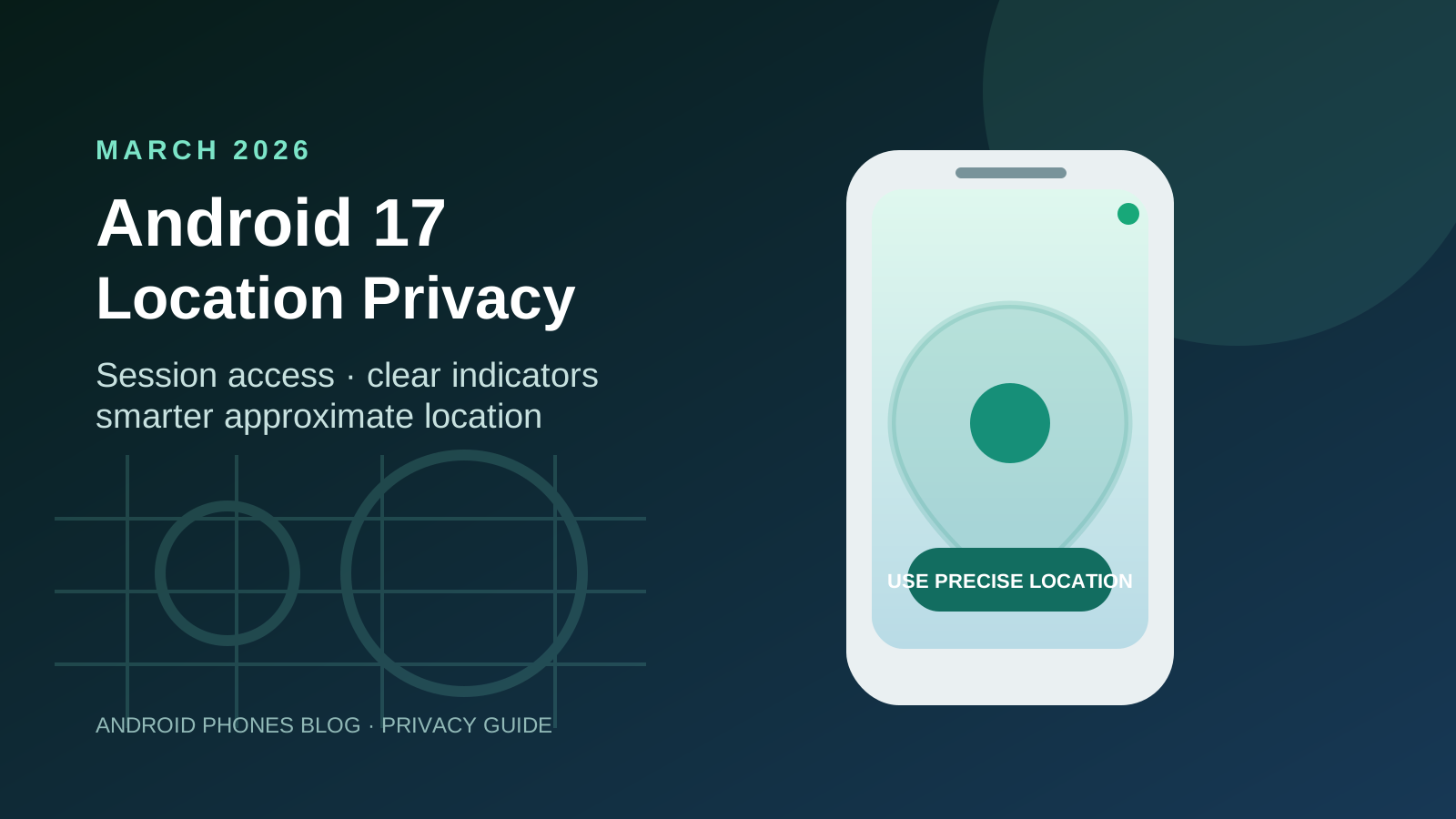
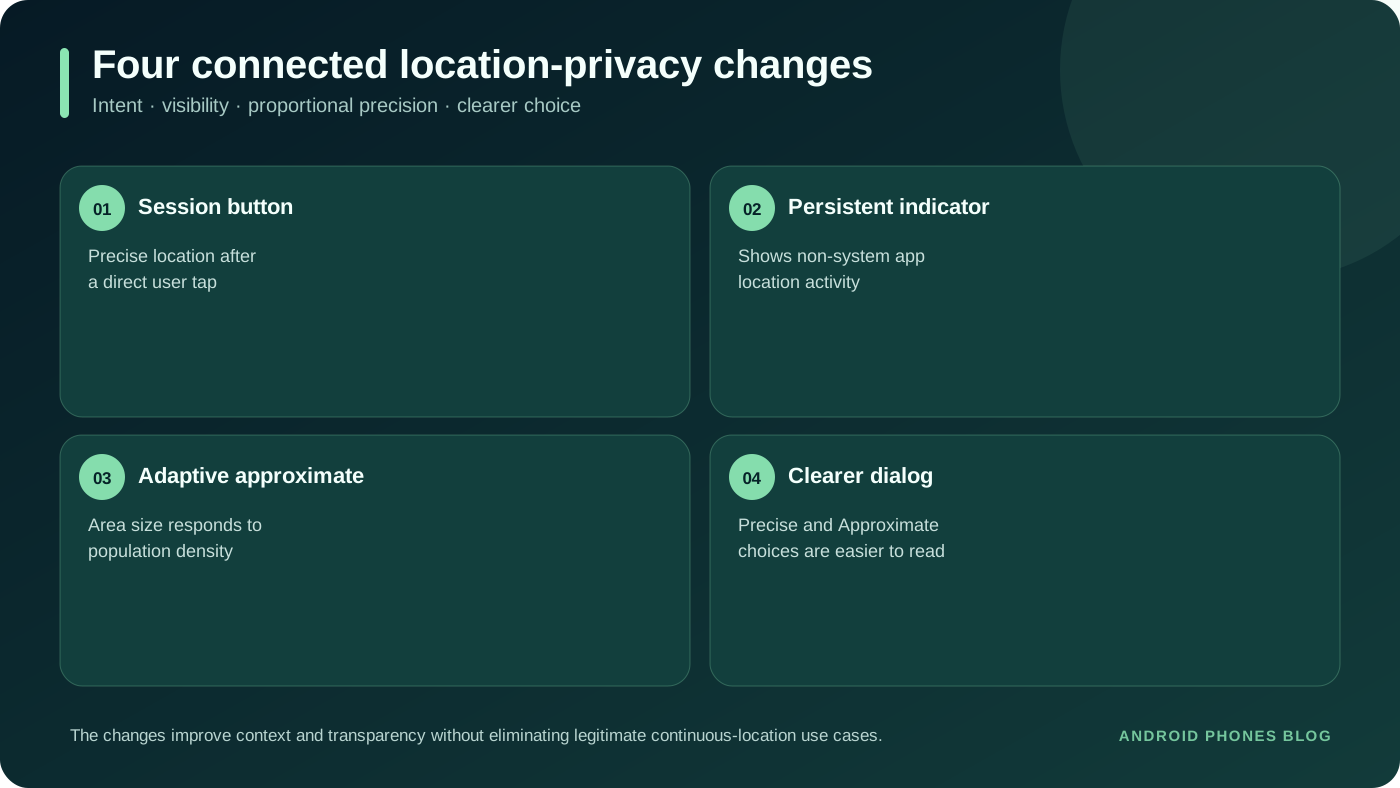
Android 17 precise location controls introduce four connected privacy changes: a session-based precise-location button, a persistent location-use indicator for non-system apps, density-based coarse location, and a redesigned permission dialog. Together, they give users more contextual control while encouraging developers to request precise location only when it is genuinely needed for a specific task.
Why did Android 17 change the way location permissions work?
Android has gradually shifted from broad, permanent permissions toward more contextual and transparent access. Earlier releases introduced choices such as Approximate vs. Precise location, Only this time, foreground permissions, and stronger background location restrictions. Android 17 continues that direction by reducing situations where an app needs to request unrestricted precise location when a temporary, user-initiated action would be sufficient.
The timeline matters:
- March 26, 2026: Google announced these features in Android 17 Beta 3, introducing new APIs and developer guidance.
- June 16, 2026: Android 17 became the stable release, making the new framework available for supported devices.
The goal is not to remove location permissions. Instead, Android 17 provides additional ways for apps to access location that better match short-lived user actions while making ongoing access easier to understand.
For organizations evaluating Android deployments, these changes complement broader platform privacy improvements introduced in previous releases, including Android 16 security and Live Updates and earlier protections described in Android 15 privacy and theft protection.
What is the new Android 17 location button, and how does it work?
The most visible addition is the system-rendered location button.
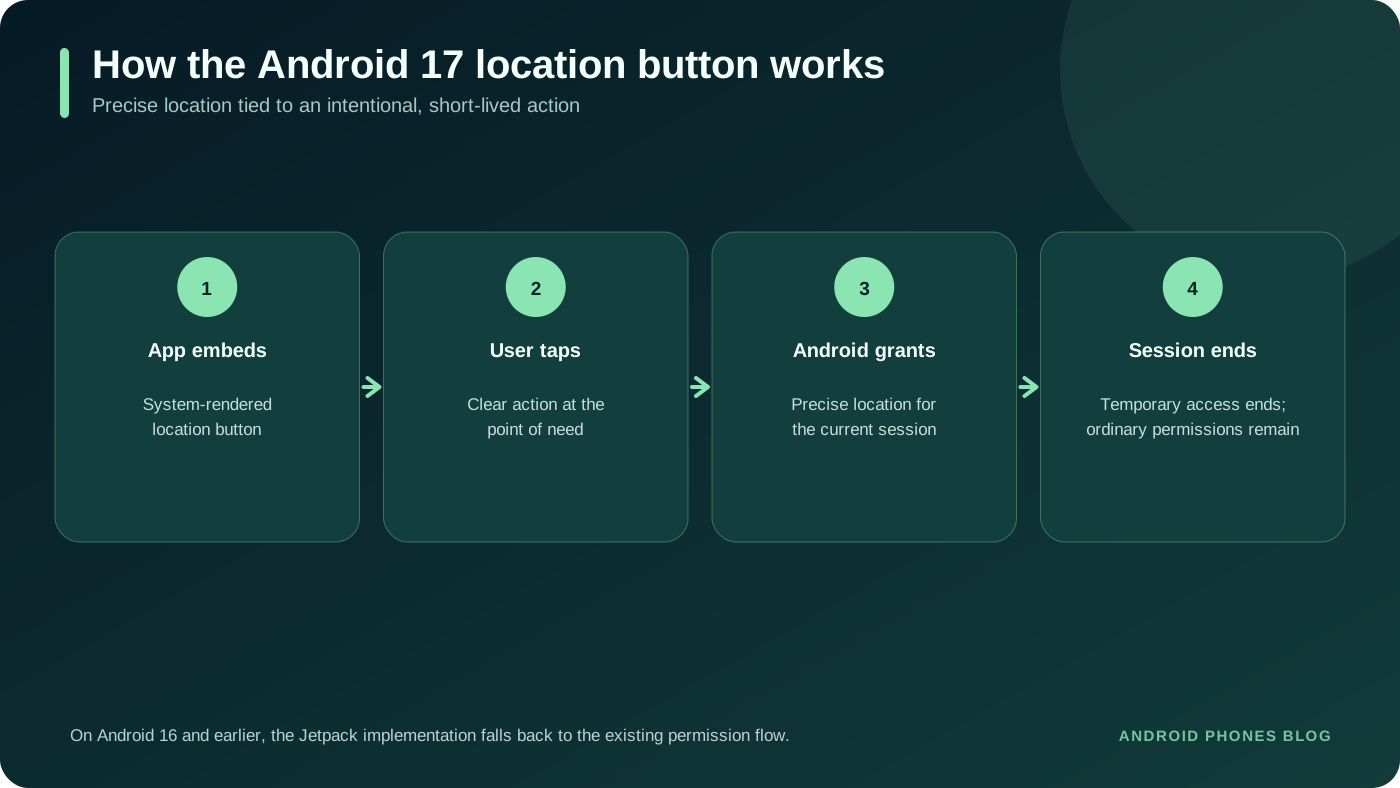
Rather than requesting precise location through the traditional permission dialog every time, participating apps can embed this button directly into their own interface. When a user deliberately taps it, Android grants precise location only for the current session, according to Google’s location-button guide.
This design shifts the permission request from an abstract dialog to an obvious user action.
Several characteristics are important:
- The button is rendered by the Android system rather than being an ordinary app-designed control.
- The app embeds it where location is needed.
- The user must actively press it.
- Precise location is granted only for the current session.
- The feature requires explicit implementation by the application.
This last point is critical.
Android 17 does not automatically place a location button inside every app. Users cannot force unsupported apps to display it. Developers must adopt the API and integrate the control into their interface.
According to Google’s implementation guidance, suitable examples include:
- nearby business searches
- finding nearby restaurants
- one-time location sharing
- location tagging
- check-ins
- delivery address autofill
These are all examples where users intentionally request a location-dependent feature for a short period rather than expecting continuous tracking.
How is the location button different from existing permission options?
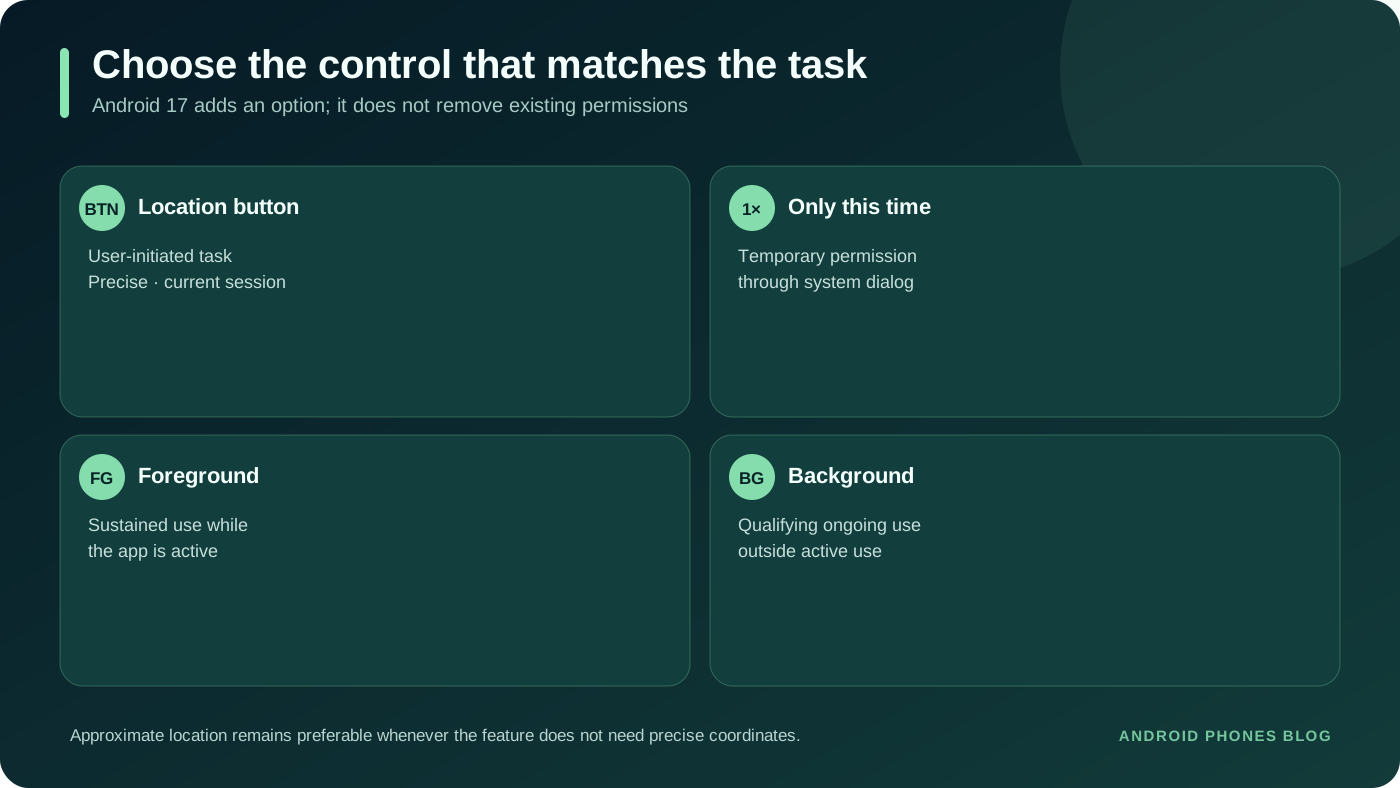
The new button complements existing permission models instead of replacing them.
| Control | What it changes | What it does not change |
|---|---|---|
| Session-based location button | Grants precise location after a direct user tap for the current session | Does not replace ordinary permissions or appear automatically in every app |
| Approximate location | Continues to provide less precise location when appropriate | Does not become as accurate as precise location |
| “Only this time” permission | Still provides temporary permission through the existing permission flow | Is not identical to the embedded location button workflow |
| Foreground location permission | Remains available for apps needing location while actively in use | Is not replaced by the location button |
| Background location permission | Continues to exist for qualifying continuous use cases | Is not removed by Android 17 |
Although both the location button and Only this time involve temporary access, they are designed for different user experiences.
The traditional permission dialog interrupts the user with a system prompt requesting permission.
The Android 17 location button instead appears as part of the app’s interface. When users intentionally activate a location-related feature, tapping the embedded button grants precise location for that session.
Similarly, Android 17 does not eliminate foreground or background location permissions. Applications with legitimate ongoing location needs—such as navigation or continuous tracking scenarios—may still require those permission models, depending on how they operate.
Which apps should use the location button instead of traditional permissions?
Google positions the location button primarily for temporary, user-initiated actions.
Typical examples include:
- searching for nearby stores
- finding nearby services
- sharing your current location once
- attaching your location to a message
- checking in at a venue
- autofilling a delivery address
These actions generally begin because the user requests them directly, making session-scoped precise access a natural fit.
Other categories often require different permission models because they depend on sustained or continuous location access.
Examples include:
- turn-by-turn navigation
- geofencing
- fitness tracking
- enterprise fleet tracking
- emergency or personal safety applications
These use cases typically involve location beyond a single interaction, so developers should evaluate whether foreground or background permissions remain appropriate instead of assuming the location button replaces them.
How much can developers customize the new location button?
Google intentionally balances branding flexibility with visual consistency.
Developers may customize:
- background color
- icon color
- outline
- overall size
- shape
- predefined text labels
However, important elements remain controlled by Android.
Specifically:
- the location icon is mandatory
- the icon itself cannot be customized
- font sizing follows system management rather than app-defined values
These boundaries help users consistently recognize that the control grants location access, regardless of which application they are using. They are documented in Google’s March location-privacy announcement.
Another practical consideration is backward compatibility.
Google provides the feature through Jetpack libraries. If an app includes the new location button but runs on Android 16 or earlier, the library automatically falls back to the existing permission request flow instead of attempting to display functionality unavailable on older operating system versions.
This allows development teams to maintain a single implementation path across multiple Android releases while preserving expected behavior for users on earlier devices.
What changed for location indicators and approximate location?
Android 17 introduces two additional privacy improvements beyond the new button.
Persistent location-use indicator
Android already informs users when sensitive hardware is being used. Android 17 expands visibility by introducing a persistent location-use indicator for non-system applications.
When a non-system app is actively using location, users can see the indicator and interact with it.
Tapping the indicator opens a Recent app use dialog showing which application recently accessed location, providing a faster path for users to understand ongoing activity and review controls.
The intent is greater transparency rather than changing how permissions themselves operate.
Population-density-aware approximate location
Android has long offered approximate location as an alternative to precise coordinates.
Google says the previous approach used a static grid roughly two kilometers wide. Android 17 replaces that fixed approach with dynamically sized areas based on local population density.
The practical implication is that approximate location becomes more context-aware.
Google has not published fixed precision guarantees for urban or rural areas, nor should developers assume specific distance values. The size of the approximation area depends on population density rather than a universal measurement.
This helps maintain privacy while adapting more naturally to different geographic environments.
How does the redesigned permission dialog improve user choice?
Android 17 also redesigns how users see the choice between Precise and Approximate location.
Rather than changing the underlying permission model, the updated interface presents these choices more clearly during the permission process.
The redesign works together with the other Android 17 improvements:
- session-based access for temporary tasks
- improved transparency during ongoing use
- clearer presentation of precision choices
- smarter approximate-location behavior
For users, the overall experience becomes easier to understand because permission requests better reflect the task being performed.
For developers, it encourages selecting the smallest level of location access necessary for each feature instead of defaulting to precise location everywhere.
What should app teams change before targeting Android 17?
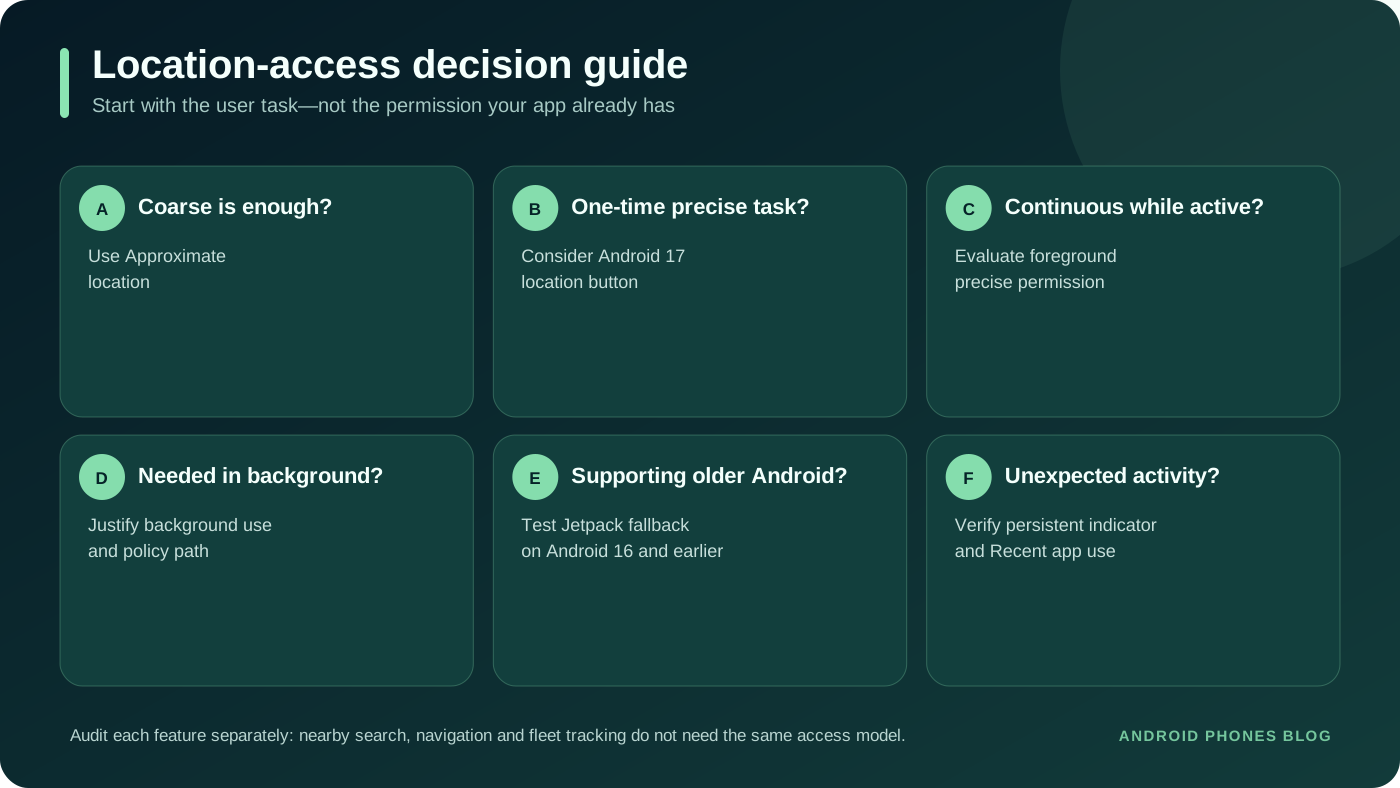
Development teams should evaluate every feature that requests location rather than treating location as a single permission.
| Feature type | Recommended approach | Typical examples |
|---|---|---|
| Session-only precise use | Consider implementing the Android 17 location button | Nearby search, check-ins, one-time sharing, delivery address autofill |
| Sustained foreground use | Continue evaluating foreground location permission where continuous active use is necessary | Navigation while the app is open, active route guidance, live workout tracking |
| Background location | Use only where the product genuinely requires ongoing location outside active use | Fleet tracking, qualifying geofencing scenarios, certain safety workflows |
For organizations managing multiple Android applications, an audit is worthwhile before targeting Android 17.
What app teams should audit
- Identify every feature requesting precise location.
- Separate one-time actions from continuous tracking features.
- Determine whether temporary interactions can migrate to the location button.
- Review user interface placement so the button appears naturally where location is needed.
- Test Jetpack fallback behavior on Android 16 and earlier devices.
- Verify that ongoing foreground and background location requests remain justified.
Google also announced a related Google Play policy direction.
For applications targeting Android 17 (API level 37) or later, features that use precise location for discrete, temporary actions are expected to use the location button. Applications requiring persistent or always-on location follow a different review path because their use cases differ. Google’s April policy announcement describes the requirements and announced support-tool schedule.
Developers should interpret this as implementation guidance and evolving policy direction rather than assuming identical treatment for every location-enabled application. Likewise, announced timelines for Android Studio policy insights and future Play Console checks should be understood as Google’s published plans rather than guarantees of specific enforcement outcomes.
What should Android users and enterprise buyers pay attention to?
Most users will not need to change anything immediately after upgrading to Android 17.
Instead, the practical benefit is better visibility into how applications use location and more opportunities to share precise location only when a specific task requires it.
What users should check
- Notice whether an app now presents a system location button instead of immediately requesting permanent permissions.
- Review the Recent app use dialog if the location indicator appears unexpectedly.
- Continue choosing Approximate location whenever precise positioning is unnecessary.
- Review background location permissions periodically for applications that no longer need continuous access.
For enterprise IT teams and device buyers, Android 17’s location changes also affect application evaluation.
Questions worth asking include:
- Does the application truly require continuous precise location?
- Can short-lived workflows adopt the session-based button?
- Does the application explain why location is needed?
- Have Android 17 behaviors been tested alongside older supported Android versions?
Organizations deploying managed Android devices should also consider how these location controls interact with other privacy-sensitive capabilities, such as offline Find My Device tracking, while recognizing that different Android features may rely on different permission models.
Ultimately, Android 17 does not make location access simpler by removing permissions. It makes location access more intentional.
Temporary tasks can receive precise location only after an explicit user action through the embedded system button. Ongoing access becomes more visible through persistent indicators. Approximate location becomes more adaptive to local conditions. And permission choices are presented more clearly.
For users, that means greater transparency with fewer unnecessary prompts. For developers, it means designing location access around genuine user intent rather than treating every location feature as if it required the same level of permission.