Circle to Search has two dates that should not be confused. Google announced it on January 17, 2024, alongside the Galaxy S24 series. The feature began rolling out on January 31 to the Galaxy S24, Pixel 8 and Pixel 8 Pro. This article uses January 31 as the event date because that was the first public availability milestone, not the earlier preview.
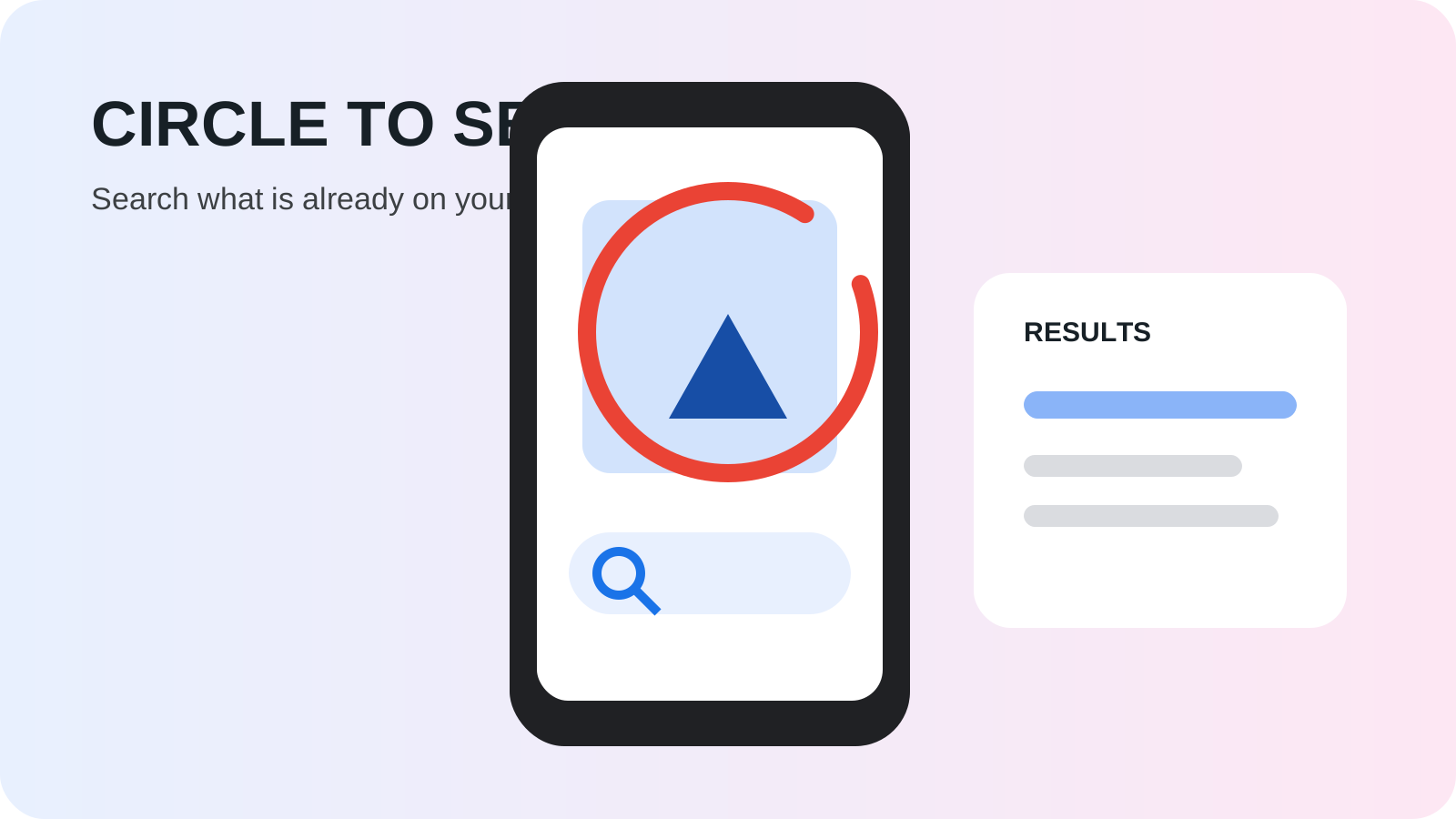
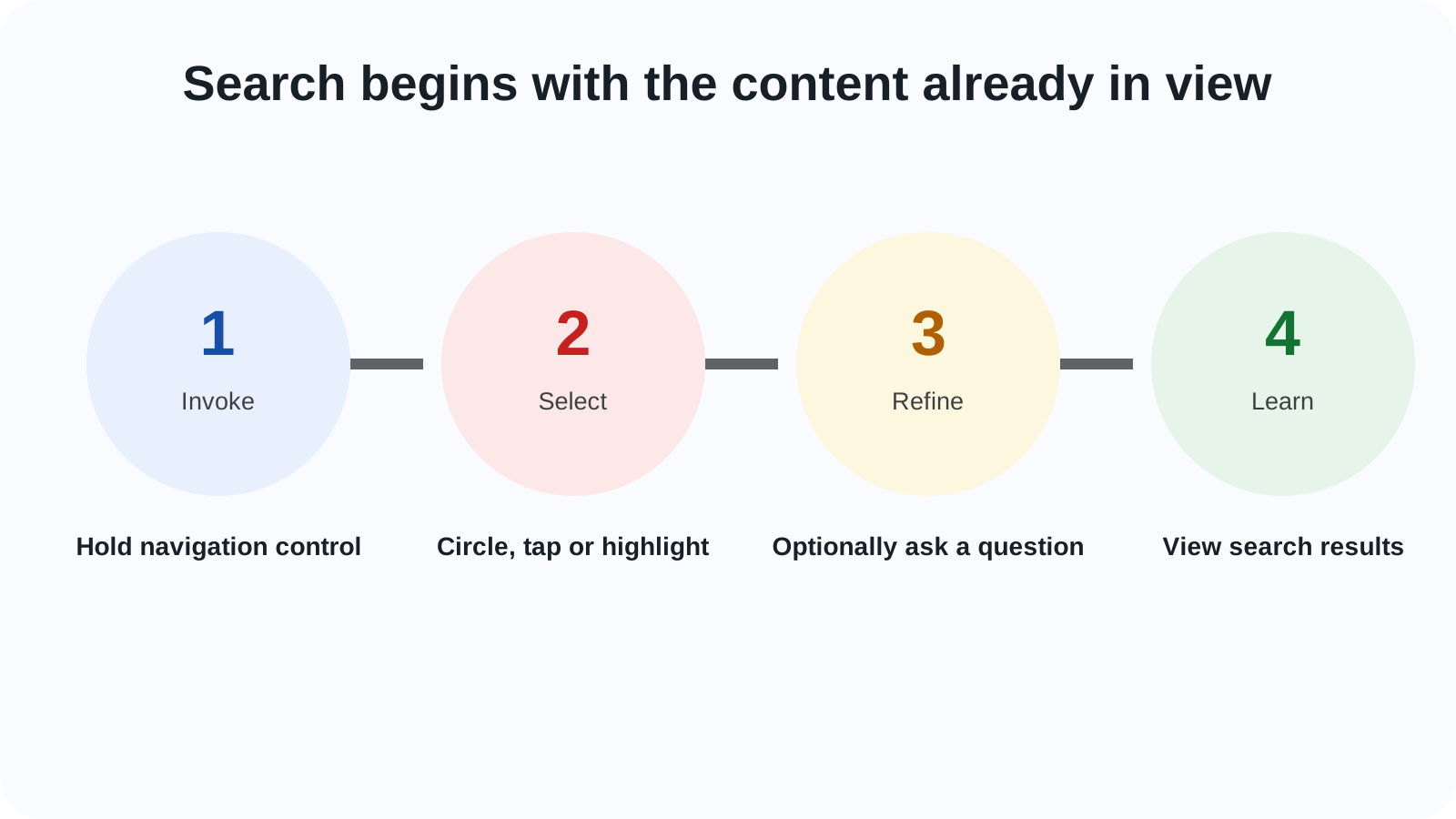
The idea was easy to demonstrate: hold the navigation control, circle or tap something already visible on the screen and see Google Search results without switching to another app. Its significance was not the drawing gesture alone. It reduced the distance between noticing an object and forming a visual query.
What did Circle to Search do at launch?
The user could select an image, text or a visible part of a video by circling, highlighting, scribbling or tapping. Search results appeared over the current app, and dismissing the overlay returned the user to the same place. Google described the feature in its January 17 announcement as a way to search anything on an Android screen without changing apps.
The selection could be enough by itself, or the user could add words to refine the request. Circling a pair of shoes might return visually similar products; adding a question could ask about the style or material. Selecting a phrase could produce a definition or related information.
Circle to Search required a compatible device, internet connection and screen context. Some apps or protected surfaces could prevent capture. It was not a general offline recognition engine built into every Android version.
Why was January 31 different from January 17?
January 17 was the announcement and Galaxy Unpacked event. Google said the feature would launch globally on January 31, starting with the new Galaxy S24 series and Pixel 8 family. On January 31, Google published its practical launch guide and said rollout was starting that day.
Software history often contains several legitimate dates: announcement, preorder, public rollout and later expansion. Calling January 17 the launch is understandable in casual writing, but it hides the two-week gap before owners could use the feature. Conversely, using January 31 without mentioning the announcement makes it look as if the S24 partnership appeared without warning.
The feature later reached more Pixel and Samsung devices and gained translation, homework and barcode capabilities. Those expansions should not be projected back onto the first January build. At launch, its core promise was selection and search within the current screen.
How was it different from Google Lens?
Google Lens already allowed people to search with a camera image, screenshot or photo. Circle to Search used related visual-search capabilities but changed the entry point. The user did not first save a screenshot, open Lens and crop the object. The current screen became the search surface.
| Search route | Starting point | Extra step Circle to Search reduced |
|---|---|---|
| Text search | Words typed into a search box | Describing an unfamiliar visible object |
| Google Lens camera | Physical object seen through the camera | Useful for the world outside the screen |
| Screenshot plus Lens | Image saved from another app | Saving, switching apps and cropping |
| Circle to Search | Content already visible on a compatible Android screen | Leaving the app before selecting the subject |
This was an interaction improvement rather than a replacement for Lens. Camera search remains natural for a plant or sign in front of the user. Circle to Search is natural for a product, landmark or phrase already inside a social post, message or video.
The result quality still depended on visual recognition, available web information and the clarity of the selected area. A circle is a hint about the subject; it does not prove the system correctly identified it.
Where did AI enter the experience?
Google paired the launch with AI-powered multisearch results in the United States. A user could combine an image and natural-language question and, for some queries, receive an AI-generated overview with links. The selection gesture identified the visual subject; the added question provided intent.
The Galaxy S24 launch also used Gemini Nano for selected on-device tasks and Google’s Gemini models in other services. That does not mean Circle to Search ran entirely on Gemini Nano or processed every query locally. It was a Google Search feature, required the internet and could show ordinary search and shopping results as well as AI-assisted responses.
Separating these layers avoids the vague claim that “AI did everything.” Visual matching, text recognition, query interpretation, web ranking and generated summaries are different functions. The Google and Samsung announcement documented their partnership, while the Search page defined the user-facing feature.
What privacy questions should users ask?
Circle to Search needs access to the portion of screen selected for a query. That means a user should avoid invoking it over private account information, confidential conversations or sensitive images unless they intend to submit that content to Search. The fact that a gesture begins on the device does not make the search local.
Protected apps can restrict screen capture, which may prevent the feature from working on sensitive surfaces. Google also said the feature was not available in all apps and contexts. Those restrictions are a useful reminder that system convenience must respect application security boundaries.
Search activity and personalization depend on Google account and activity settings. Users who want to understand retention should review current Search and Web & App Activity controls, because those policies can evolve separately from the January 2024 interface.
What were the main launch limitations?
Device support was extremely narrow on January 31. Even phones capable of taking a screenshot or running Lens did not automatically receive Circle to Search. Google expanded compatibility later, but hardware model, software update, country and account could all affect availability.
Results could be mistaken, especially for visually similar products or places. AI overviews could contain errors, and advertisements continued to appear in dedicated result areas. A circle did not turn Search into an authoritative source; users still needed to open supporting pages and compare evidence.
Gesture navigation also created a learning step. Depending on navigation mode, the user held the gesture bar or home button before selecting content. The feature was designed to reduce app switching, not necessarily to be discoverable without introduction.
Why does Circle to Search still matter today?
Circle to Search turned the phone display from a passive output into a query surface. That interaction spread to hundreds of millions of Android devices and gained more capabilities after 2024. Its lasting idea is that a user should not have to translate every visible curiosity into words before a search can begin.
The feature also shows how Android differentiation can start with a small set of partner flagships and later broaden through software. It debuted beside the Galaxy S24’s seven-year support policy, so the same device launch paired a new interaction with a longer maintenance horizon.
In the Android history timeline, January 31 marks a change in how people initiate search, not a claim that visual answers became infallible. The useful habit remains the same: select naturally, then verify the result.