Samsung unveiled the Galaxy S24 series at Galaxy Unpacked on January 17, 2024. On January 30, it announced global availability, with broad retail sales starting January 31. This article uses the January 30 availability announcement as its event date, while preserving the earlier launch event rather than blending the three milestones into one.
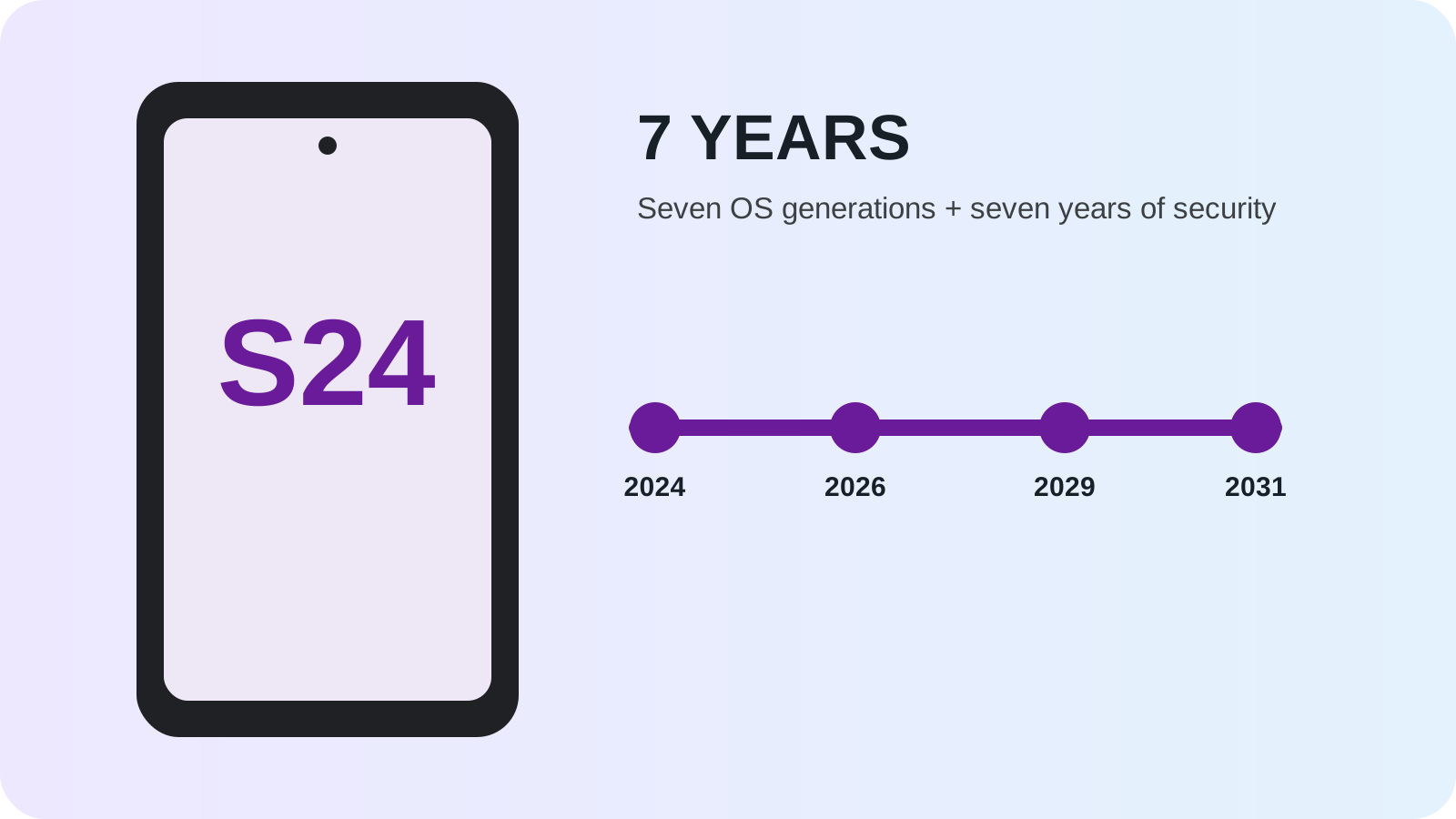
Among the S24’s many AI and camera announcements was a less theatrical promise: seven generations of operating-system upgrades and seven years of security updates. Google’s Pixel 8 had moved to a seven-year policy three months earlier. Samsung’s adoption showed that long support was becoming a competitive expectation across major Android flagship families.
What did Samsung promise for the Galaxy S24 series?
Samsung’s global availability announcement said the Galaxy S24, S24+ and S24 Ultra would receive seven generations of OS upgrades and seven years of security updates. The wording matters. Major OS generations are counted releases; security support is a time period. They are parallel commitments, not two ways of saying exactly the same thing.
The launch footnotes said timing and availability could vary by model and market. Carrier testing can also affect deployment. A seven-year policy therefore supplies a long endpoint, not a guarantee that every regional variant receives every package on the same day.
All three S24 models were included, rather than reserving the policy for the Ultra. That breadth made the promise more significant for the mainstream flagship line and easier for buyers to compare before purchase.
Why did the policy matter after Pixel 8?
Google’s Pixel 8 seven-year promise had already shown that an Android flagship could publish a support horizon through 2030. Samsung shipped Android phones at a much larger variety of price points and through many carrier relationships. Bringing a similarly long policy to the S24 family made longevity a contest between ecosystems, not an isolated Pixel experiment.
It would be too strong to claim that Google’s policy alone caused Samsung’s. Update planning involves chipset support, engineering, testing, regulation and customer expectations over years. The defensible historical observation is that two leading Android flagship families announced seven-year horizons within one product cycle.
That gave buyers a concrete question to carry into future launches: if a 2024 flagship can receive seven years, why should another premium model receive much less? Policies for cheaper models still varied, but the benchmark had moved.
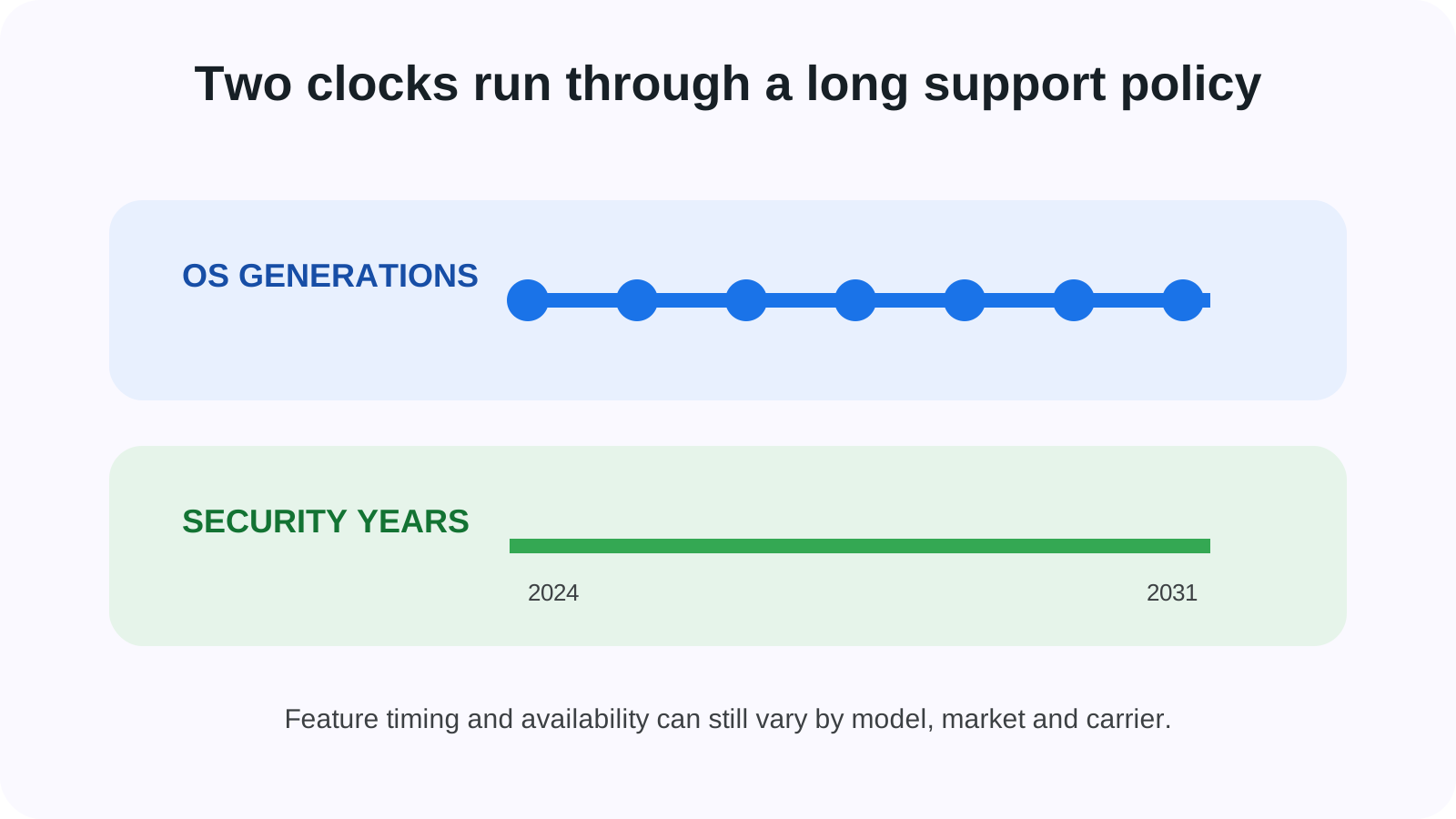
How are OS generations different from security years?
| Commitment | Measurement | Main purpose | What can still vary |
|---|---|---|---|
| Seven OS generations | Number of major platform upgrades | New Android and One UI capabilities | Feature support, timing and regional rollout |
| Seven security years | Calendar support window | Vulnerability fixes and platform maintenance | Patch cadence by model, market and carrier |
| App updates | Individual app releases | Service features and fixes | Developer support and account eligibility |
| Google Play system updates | Modular Android components | Selected platform and security improvements | Component, device and version compatibility |
A major upgrade can change Android APIs and Samsung’s One UI interface. A security patch may leave the visible interface unchanged while fixing a serious vulnerability. Apps and Google Play components can update on separate schedules. An owner experiences all of those streams together, even though a product page summarizes them as one support story.
Seven generations also did not mean seven updates in seven precisely spaced years. Android’s release cadence and Samsung’s integration schedule could change. The commitment is best read as a count plus a security horizon rather than a calendar promising one named version each anniversary.
Did seven years guarantee every new Galaxy feature?
No. A future feature might require a newer neural processor, modem, camera sensor or memory configuration. Samsung could also limit a service by language, country, account type or licensing. Receiving the underlying OS does not make different hardware identical.
This was especially relevant because the S24 launch emphasized Galaxy AI. The January product announcement introduced live translation, writing assistance, generative editing and other features with extensive availability notes. Some processing occurred on-device, some used cloud services and terms could evolve independently of the OS policy.
Long support should therefore be valued for compatibility, security and ongoing improvement, not treated as a promise that a 2024 phone gains every capability of a 2030 flagship. Hardware limits remain real even when software support is excellent.
What did longevity require beyond update policy?
A phone used for seven years will experience battery wear and may suffer screen, port or camera damage. Repair options, parts, cost and local service therefore matter alongside software. Samsung’s policy announcement did not make every repair free or guarantee identical parts availability worldwide.
Storage and connectivity can also become constraints. Applications grow, network standards change and owners accumulate data. A flagship processor may remain adequate while a degraded battery makes daily use frustrating. Long software support creates the opportunity for longevity; maintenance and owner needs determine whether that opportunity is used.
Security behavior matters too. A supported phone still needs updates installed, a strong screen lock and safe account practices. Patches reduce known software risk but cannot protect a user who approves a fraudulent request or reveals a credential.
How did the policy fit the wider S24 launch?
The series was Samsung’s first major “Galaxy AI” launch. It also introduced Circle to Search, which Google announced on January 17 and opened on January 31. The combination is historically notable: Samsung paired fast-changing AI services with a slow, seven-year maintenance commitment.
The S24 Ultra used a titanium frame and an integrated S Pen, continuing the Note-to-Ultra convergence established by the S22 Ultra. The S24 and S24+ offered the same support policy without the pen. Hardware and processor details varied by model and some markets, but the update promise applied across the named series.
Google’s partnership account showed how Android, Search, Gemini models and Samsung software met in one launch. That complexity makes a long support horizon more important: phones increasingly depend on coordinated platform, app and service updates after sale.
Why does the Galaxy S24 policy still matter today?
By 2026, seven-year flagship support no longer sounded like an impossible edge case. The Galaxy S24 helped establish it as a standard against which premium Android phones could be judged. Buyers still needed to read footnotes and check model-specific pages, but the burden shifted toward manufacturers to explain shorter policies.
The milestone also separated durability from mere build material. A metal frame may survive a drop, but software maintenance determines whether a physically working phone can safely remain connected years later. Neither kind of durability replaces the other.
In the Android history timeline, the January 2024 S24 availability moment follows Pixel 8’s support leap and precedes Android 15’s stronger theft defenses. Together they show Android longevity expanding from update years to the broader question of how a phone remains secure and useful.