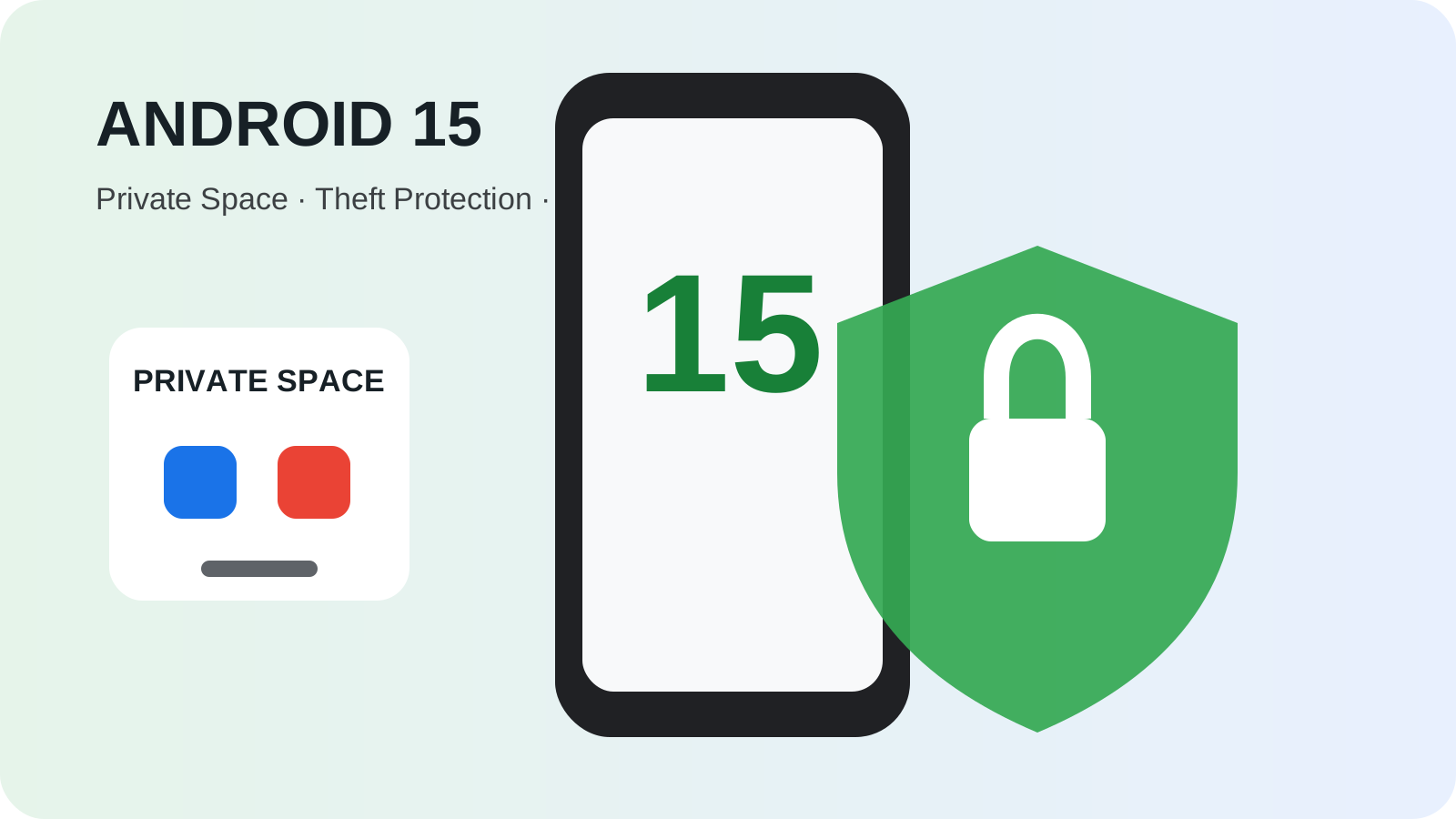
On October 15, 2024, Android 15 began rolling out to supported Pixel devices. Its most recognizable additions addressed a modern reality: a phone is both a valuable object and a container for financial, health, identity and personal information. Private Space created a separately locked area for sensitive apps, while stronger reset and settings protections aimed to make a stolen phone less useful to a thief.
The release also arrived beside Theft Detection Lock, Offline Device Lock and Remote Lock. Those names are often grouped under “Android 15,” but Google delivered several through Google Play services to many Android 10 and newer phones. Understanding which layer supplied a feature is essential to knowing why an older device could receive it.
What changed when Android 15 reached Pixels?
Google’s October release overview highlighted Private Space, theft defenses, improved large-screen multitasking, one-tap passkey sign-in and camera controls for third-party apps. Pixel was the first rollout, followed by eligible devices from other manufacturers on their own schedules.
The platform version added authentication requirements around settings commonly targeted after theft, such as removing a SIM or disabling Find My Device. It also strengthened factory-reset protection and responses to repeated failed attempts. These measures sought to protect both resale value and data access, but no feature could guarantee recovery or prevent every attack.
Android 15 continued rather than replaced earlier security. Screen locks, hardware-backed credentials, Google Play Protect and Find My Device already existed. The update added layers for situations in which a thief obtained an unlocked phone, knew a PIN or tried to reset the device.
How does Private Space separate sensitive apps?
Private Space acts like a second app environment inside the user’s personal profile. A person can install or move supported apps into it and protect the space with the device lock or a separate lock. When locked, its apps can be hidden from the launcher, recent-apps view, notifications and Settings surfaces. The user can also hide the existence of the space from ordinary view.
This is more than placing icons in a folder. A normal launcher folder organizes shortcuts but does not isolate app data or notifications. Private Space creates a separate Android profile boundary, so an app inside it is a distinct installation from a copy outside it. Accounts and files may therefore need to be configured separately.
The feature is useful when lending an unlocked phone briefly or when banking, health, dating or work apps should not appear casually. It is not an invisibility guarantee against forensic analysis or a substitute for a strong device lock. If the entire phone is compromised, a secondary space is one defense among many.
What happens when Android detects a phone snatch?
Theft Detection Lock uses on-device signals and machine learning to identify motion associated with someone grabbing an unlocked phone and quickly moving away on foot, bicycle or vehicle. If the system detects that pattern, it locks the screen. Google did not claim that it could identify every theft without error; ordinary motion and real theft vary too much for certainty.
Offline Device Lock can lock a screen after a device remains disconnected for a period under suspicious conditions. Remote Lock lets an owner visit Google’s lock page from another device, enter the missing phone’s number and complete a security challenge. That path is useful when a shocked owner does not remember the Google account password needed for the full Find My Device interface.
Google’s theft-protection announcement said these three features would reach Android 10 and newer devices through Google Play services. Some Android 15 protections, including Private Space and the factory-reset upgrade, required the new platform. The distinction explains why feature lists differ by phone and software component.
| Protection | Main purpose | Delivery described by Google |
|---|---|---|
| Private Space | Hide and separately lock sensitive apps | Android 15 platform |
| Factory-reset protection upgrade | Make forced reset and resale harder | Android 15 platform |
| Theft Detection Lock | Lock after likely snatch motion | Google Play services on many Android 10+ devices |
| Offline Device Lock | Lock after suspicious disconnection | Google Play services on many Android 10+ devices |
| Remote Lock | Lock by phone number and security challenge | Google Play services on many Android 10+ devices |
How did Android 15 make resale and account attacks harder?
A thief interested only in hardware may try to erase a phone and sell it. Factory Reset Protection already required account credentials after certain resets. Google’s 2024 upgrade aimed to prevent setup after a forced reset unless the person knew the device or Google account credentials, reducing the value of the stolen hardware.
Other changes added authentication around disabling tracking, changing the screen timeout and accessing sensitive credentials. Identity Check, introduced on selected devices around the Android 15 period, could require biometrics for critical account and device settings when the phone was outside trusted places. Availability and timing varied, so it should not be assumed from the Android version number alone.
These controls address a known-PIN scenario. Someone watching an owner enter a PIN and then stealing the phone may otherwise use that knowledge to change credentials or disable recovery. Requiring a biometric for selected actions can interrupt that chain, although biometrics and trusted-place detection have their own practical limits.
What else did Android 15 add for ordinary users?
On tablets and foldables, users could pin or unpin the taskbar and save a pair of apps as one split-screen shortcut. That work followed Pixel Fold and earlier large-screen Android, making repeated two-app workflows easier to reopen.
Passkey-supported apps could reduce sign-in to a single confirmation step. Third-party camera apps gained better low-light boost and more precise flash control on compatible hardware. Carrier messaging apps gained platform support for satellite messaging where devices and networks implemented it. Android 15 also improved support for hearing devices and enabled partial screen sharing so a user could record or cast one app rather than expose the whole display.
The Android 15 developer documentation contains additional platform and app-behavior changes. As with security, an API being present does not mean every app or carrier adopted it immediately.
Did Android 15 make a stolen phone safe automatically?
No. A screen that remains unlocked, weak account recovery, exposed notification content and social engineering can still create risk. Theft Detection Lock may miss an event or lock after a delay, and a phone without connectivity cannot receive every remote command immediately. Recovery features also work best when configured before an emergency.
Owners still need a strong PIN or password, biometric protection where appropriate, Find My Device enabled, current backups and account recovery information. Sensitive notifications can be hidden on the lock screen, and a carrier should be contacted promptly about a missing SIM or eSIM.
Private Space also requires deliberate setup. Apps outside it remain outside, and locking the space may pause those apps and notifications. A person must balance concealment with the need to receive time-sensitive alerts.
Why does Android 15 still matter today?
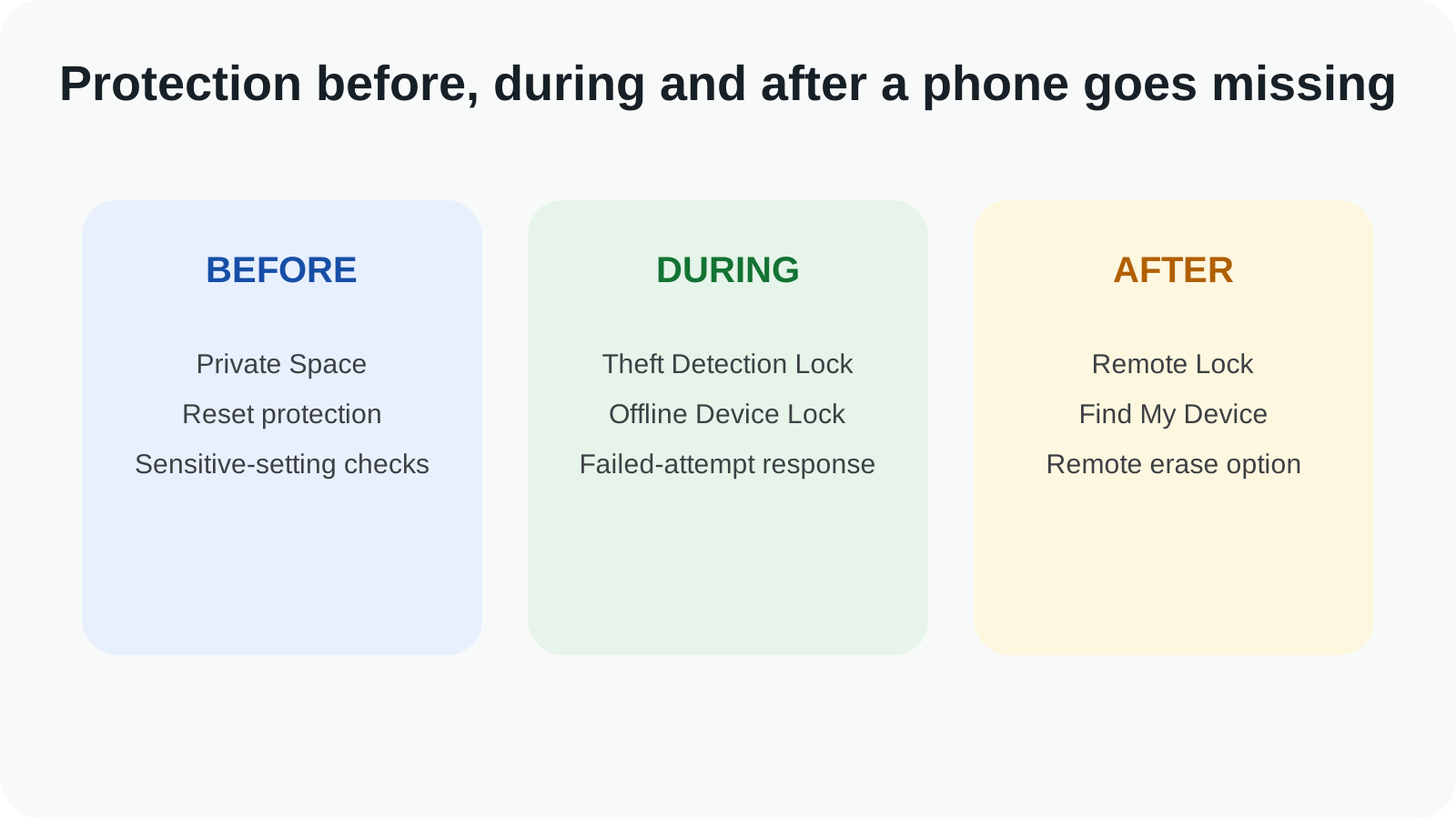
Android 15 shifted phone theft protection from a mostly reactive sequence toward defense before, during and after the event. The platform tried to reduce resale value, a model attempted to recognize a snatch, and a phone-number path made remote locking easier under stress. Private Space recognized that privacy can matter even while the owner intentionally keeps the main phone unlocked.
The release also demonstrates Android’s modular evolution. Some protections required a new operating system; others reached older phones through Google Play services. That mixed delivery can be confusing, but it also allows important safety tools to spread beyond the latest flagship generation.
Within the Android history timeline, Android 15 follows Android 14’s data controls and precedes Android 16’s unified Advanced Protection mode. Its enduring lesson is that “the phone is locked” is not one condition but a chain of decisions that must hold up under pressure.