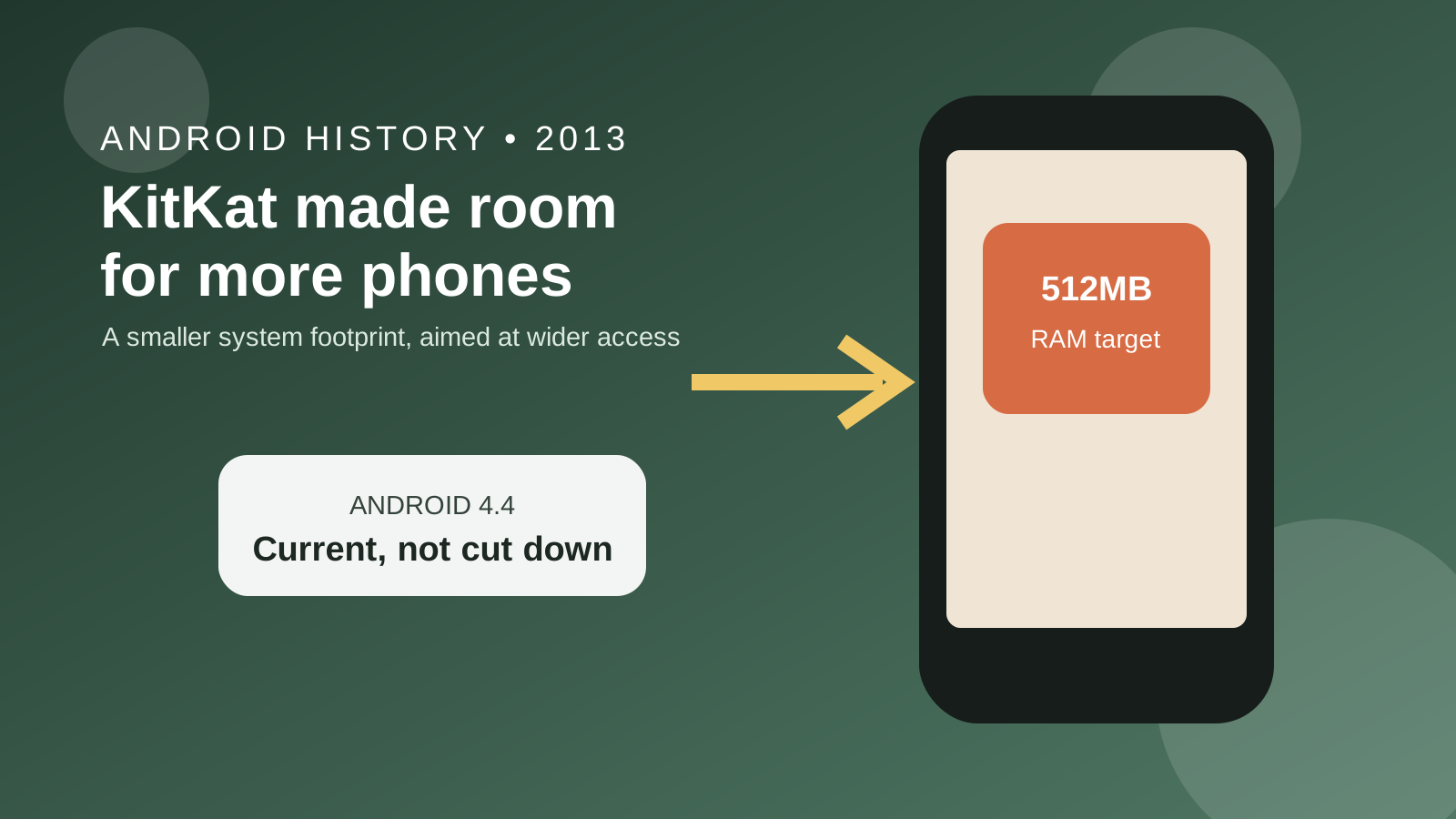
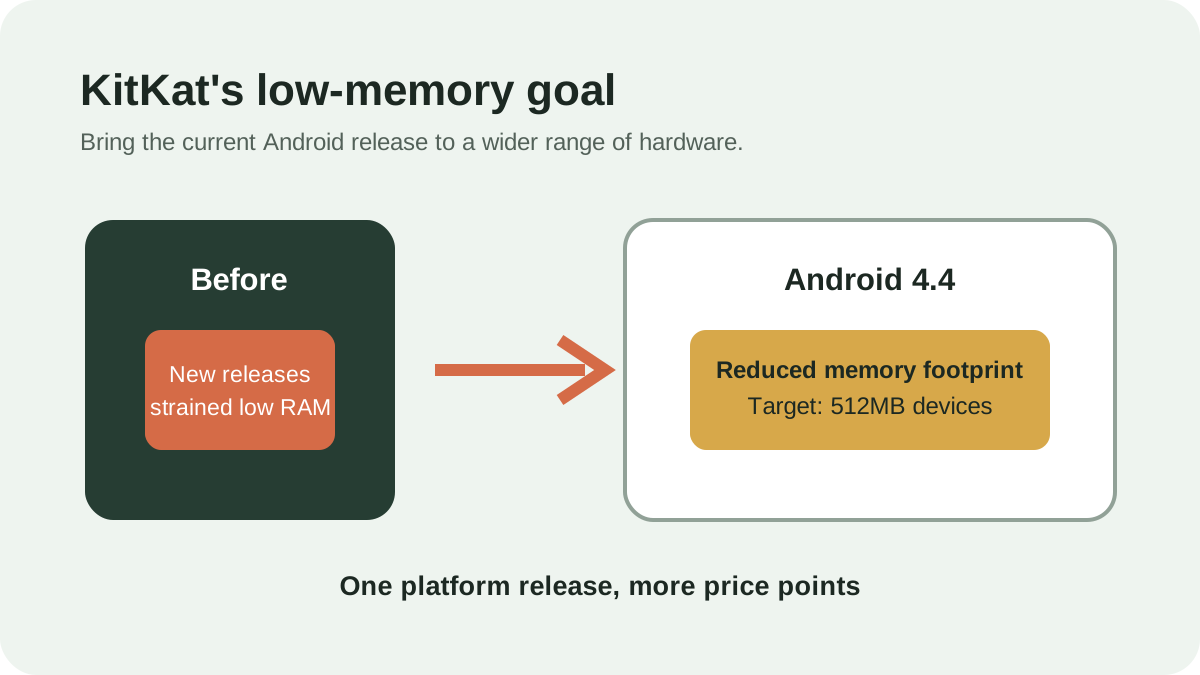
Google introduced Android 4.4 KitKat on October 31, 2013, alongside the Nexus 5. Its most consequential promise was not the dessert partnership or a new visual flourish. Google said it had reduced Android’s memory footprint enough for the current release to run comfortably on devices with 512MB of RAM, a capacity common in lower-cost phones at the time.
That goal addressed a growing contradiction. Android reached many price points, but inexpensive hardware could be left on old software because newer releases demanded more resources. KitKat tried to make platform progress and broad access compatible. Google’s announcement explicitly framed the work as a way to reach the next billion smartphone users.
What changed in Android 4.4 itself?
KitKat refined Android’s appearance with lighter system colors, translucent bars and an immersive mode that could hide interface controls while a person read, watched video or played a game. It improved caller identification and search in the Phone app, and it expanded printing, storage and connectivity APIs for developers. The platform also introduced a framework for SMS provider selection and made Chromium the basis of the embedded WebView.
Some widely remembered demonstrations belonged specifically to Google’s apps or the Nexus 5 experience rather than every Android 4.4 phone. For example, the Nexus 5 launcher placed Google Now beside the home screen and supported an “OK Google” voice trigger in that context. Separating platform features from Google software and device-specific features prevents a common error in Android history: assuming every handset received an identical interface.
The official Android developer overview shows how broad the release was. Yet its low-memory work gave those additions a larger strategic purpose.
How did Google make Android fit smaller memory budgets?
Google described removing unnecessary background services and reducing the memory used by features people used all the time. It also optimized Google services such as Chrome and YouTube. Developers received tools and guidance for checking memory behavior, while the platform exposed ways to recognize a low-RAM device and adjust an app accordingly.
The point was not to pretend that 512MB performed like a flagship. Memory still limited how many processes could remain active, and demanding games or browser tabs could be closed more readily. The goal was a functional, current system baseline with apps that behaved responsibly under tighter constraints.
| Area | KitKat-era change | Why a user could notice |
|---|---|---|
| System services | Lower background memory use | More room for the foreground app |
| Google apps and services | Memory optimization beyond the core OS | A lighter total device workload |
| App development | Low-RAM detection and profiling guidance | Apps could scale effects and caches down |
| Interface | Immersive mode and visual refinement | A current experience was not limited to premium hardware |
This approach differs from creating a completely separate operating system. KitKat remained one Android release with shared APIs, while allowing software to adapt to the capability of the device.
Did KitKat solve Android version fragmentation?
No. A lower memory requirement removed only one obstacle to an update. A phone maker still needed compatible chipset support, device drivers, engineering time, testing and, in some markets, carrier certification. Storage space could also be tight, and manufacturers had to decide whether an older product justified the work.
This distinction explains why “Android can run on this hardware” did not mean “every existing phone will receive Android 4.4.” KitKat made a new release more practical for future low-cost devices and some upgrades, but it did not control every participant in the delivery chain.
The same tension appears throughout the Android history archive. Android’s open hardware ecosystem created extraordinary variety, while that variety made synchronized platform updates difficult. Later efforts such as Project Treble would attack a different part of the problem by separating the Android framework from device-specific vendor code.
Why was the 512MB target important for ordinary buyers?
Memory was, and remains, a meaningful part of a phone’s cost. If a current Android version required substantially more RAM, manufacturers serving price-sensitive markets had to raise prices, ship old software or modify the experience heavily. Reducing the platform footprint gave them another option: build less expensive hardware without automatically abandoning the current API level and security foundation.
The first Moto G, announced shortly after KitKat, had 1GB of RAM rather than 512MB. It nevertheless represented the same broader movement toward capable software on affordable hardware. Our history of how Moto G redefined the mid-range covers the device side of that story.
There was also a developer benefit. A larger common platform gave app makers a reason to support new APIs without serving only a small premium audience. That virtuous cycle was an aspiration, not a guarantee: real adoption still depended on devices shipping and receiving updates.
How did KitKat point toward later lightweight Android efforts?
KitKat’s strategy was to optimize the main platform. Four years later, Google introduced Android Go as a more explicit configuration for entry-level phones, combining operating-system changes with smaller Google apps and Play Store recommendations. The two projects were not identical, but both treated resource efficiency as an access issue rather than merely a benchmark.
Google’s later official retrospective emphasized KitKat’s voice and visual changes, showing that Android releases are remembered through several layers. For users, design may have been immediately visible. For the ecosystem, the less visible memory work was arguably more important because it expanded the range of hardware that could carry those features.
That is a retrospective judgment based on what followed. It should not be read as proof that KitKat alone caused smartphone adoption or eliminated poor low-cost devices.
Why does KitKat’s low-memory work still matter today?
Current phones have far more memory, yet software efficiency remains relevant. Extra RAM can be consumed by richer interfaces, larger apps, machine-learning models and more background activity. An operating system that uses resources carelessly can still shorten battery life and make inexpensive hardware feel older than it is.
KitKat also offers a useful way to evaluate platform announcements. Visible features answer what a phone can do; architectural work answers who can use it and how reliably. Both matter. Buyers should therefore look beyond a version name to update policy, available storage, memory capacity and the manufacturer’s record of maintaining lower-priced models.
Android 4.4 is now obsolete and unsuitable for secure daily use. Its lasting lesson is not to keep an old KitKat phone alive. It is that making software smaller and more adaptable can be a form of inclusion, allowing a current platform to reach people who do not buy flagship hardware.