On November 13, 2013, Motorola announced the first Moto G. Its importance was not that it beat the year’s premium phones in every specification. It was that the phone assembled a sensible screen, processor, battery and software package at a starting unlocked price of $179 in the United States. At a time when a low price often meant an obviously compromised Android experience, Moto G made “good enough” feel deliberate rather than apologetic.
That historical distinction matters. The first Moto G did not invent every component it used, and regional prices and network support varied. What it did was turn capable mid-range hardware into a coherent product for ordinary buyers. Motorola’s own launch announcement described the intended audience as people priced out of premium smartphones.
What exactly did Motorola announce in 2013?
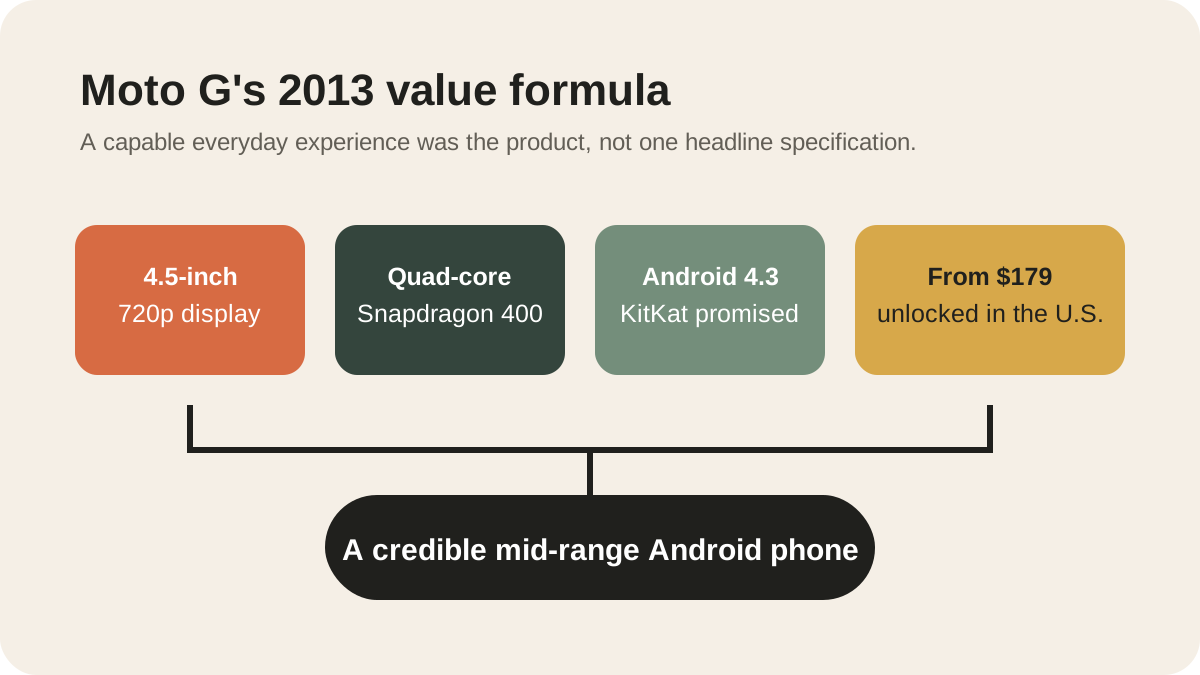
The original Moto G used a 4.5-inch 1280-by-720 display, a quad-core Qualcomm Snapdragon 400 processor and 1GB of RAM. It came with 8GB or 16GB of internal storage and a 5-megapixel rear camera. The first model lacked LTE and a microSD slot, limitations that were meaningful even then, but it covered the daily basics with unusual confidence for its price.
Motorola shipped it with Android 4.3 and promised an upgrade to Android 4.4. The software stayed close to Google’s standard interface, supplemented by a small number of Motorola utilities rather than a heavy collection of duplicate apps. Interchangeable rear shells added color without making buyers choose a different internal configuration.
The hardware list looks modest from a modern perspective, but historical comparison should use 2013 expectations. A 720p panel at this size was sharp, the processor was adequate for mainstream apps, and buying unlocked reduced a customer’s dependence on a long carrier contract. Motorola later summarized the first model as an effort to make premium technology more accessible in its official ten-year retrospective.
Why did affordable Android phones need a reset?
Early low-cost smartphones frequently combined several weaknesses at once: coarse displays, little memory, slow processors, old software and uncertain updates. Any one compromise could be acceptable, but their combination made a phone frustrating in routine use. Buyers could instead purchase an older flagship, yet that often meant an aging battery and a shorter remaining support life.
Moto G offered a different allocation of cost. It did not spend heavily on a luxury body, cutting-edge camera or the fastest mobile data. It protected the parts people touched constantly: screen clarity, interface responsiveness and software simplicity. The following comparison describes the product logic, not a claim that every competing phone followed one formula.
| Common low-cost compromise in 2013 | Moto G’s approach | Everyday effect |
|---|---|---|
| Low-resolution display | 4.5-inch 720p panel | Text and photos looked clearer |
| Weak single-task performance | Quad-core Snapdragon 400 with 1GB RAM | Core apps felt more dependable |
| Old, heavily modified software | Near-stock Android 4.3 with a KitKat upgrade promised | A cleaner and more current experience |
| Carrier subsidy tied to a contract | Low unlocked starting price | More flexibility in compatible markets |
How did hardware and software work as one value proposition?
Specifications do not automatically create a pleasant phone. A manufacturer also has to control background software, animation, storage use and update work. The Moto G benefited from a relatively restrained Android build, so its mid-range processor was not asked to carry an elaborate interface on top of basic apps. That helped the device feel balanced even though no component was the industry’s most advanced.
The timing also connected it to Google’s effort to broaden the platform. Android 4.4 KitKat was designed to run comfortably on devices with 512MB of RAM. Moto G had more memory than that target, but the same philosophy was visible: current Android should not be reserved for the most expensive hardware. Our separate guide explains how KitKat reduced Android’s memory demands.
What compromises did the first Moto G still make?
Calling the phone influential should not turn it into a flawless product. The original version’s lack of LTE limited network speed where 4G service was already spreading. Fixed internal storage required discipline, especially on the 8GB model. The camera was useful for casual records but was not a substitute for the stronger imaging systems in premium phones. Its plastic construction prioritized durability and cost over luxury materials.
Availability also differed by country, carrier and release phase. An unlocked phone still needed compatible network bands, and a low U.S. list price did not guarantee the same total cost everywhere. Those details keep the story honest: Moto G changed expectations by choosing its compromises well, not by removing compromise from inexpensive hardware.
That distinction remains useful when reading old reviews. Praise for value is relative to a particular market and date. It should not be interpreted as a recommendation to use the original device today; its software and radios are far beyond their supported life.
Did Moto G really create the modern mid-range category?
No single phone can receive exclusive credit for a market segment. Affordable Android devices existed before Moto G, and manufacturers around the world were already improving them. The defensible claim is narrower: Moto G became a highly visible demonstration that a globally recognized brand could design an inexpensive phone around a consistent experience instead of treating it as a collection of leftover parts.
Motorola says the family went on to sell hundreds of millions of devices, but later family totals include many generations and should not be confused with sales of the first model. More important for this history is the continuity of the idea. Motorola’s retrospective on the Moto G family describes bringing features from higher price tiers downward as a recurring mission.
Competitors pursued their own versions of the formula, and “mid-range” became a meaningful category with multiple performance and price levels. That is a reasonable historical interpretation from the products that followed, rather than a direct causal result that Motorola alone can prove.
Why does the first Moto G still matter today?
Modern affordable phones are vastly faster and more capable, yet buyers still face the same underlying question: which compromises will affect daily life? The first Moto G’s answer was to protect the display, basic responsiveness and software experience, while accepting limits in imaging, storage and network technology. That framework is more durable than its specifications.
It also reminds buyers to judge value beyond a launch price. Update length, battery longevity, storage expansion, repair options and network compatibility determine whether a cheap phone remains useful. A device that receives current security maintenance can be better value than a more impressive model with a short support window.
In the broader Android history timeline, Moto G marks the moment when mainstream affordability became part of Android’s innovation story, not merely its lower shelf. That legacy is why the phone remains worth explaining even though no one should treat 2013 hardware as a current buying choice.