Google announced Project Treble on May 12, 2017, ahead of Android 8.0 Oreo. The project reorganized Android’s low-level architecture so the main operating- system framework could be updated more independently from device-specific code written by chip and phone manufacturers. Google called it the platform’s largest low-level architectural change to date.
Treble is often summarized as “faster Android updates,” but that phrase can mislead. The project reduced a major engineering dependency; it did not force a manufacturer to create, test or distribute an update. Google’s original Treble explanation is most useful when read as an account of the work between an Android release and the update that reaches a phone.
Why were Android version updates so complicated?
Google first published a new Android release to the open-source project. Chip manufacturers then adapted lower-level software for their processors. Device makers integrated that work with a particular phone’s cameras, radios, sensors and interface. Carriers could add testing and certification before an update reached users.
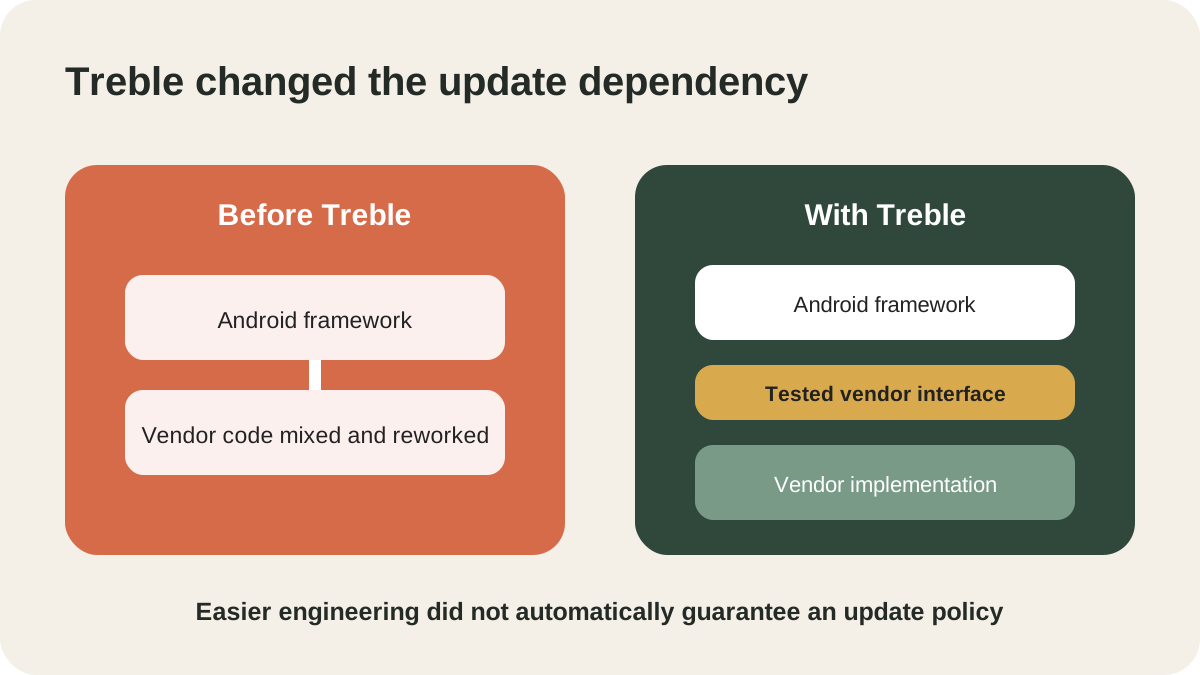
Before Treble, the Android framework and vendor implementation were tightly connected. Moving to a new version could require chip-specific code to be updated and reworked even when the physical hardware had not changed. If an old chip no longer received support, a phone manufacturer faced a much harder—or impossible—upgrade path.
Memory optimization in KitKat and A/B installation in Nougat had addressed other pieces of the update problem. Treble focused earlier in the chain: making the new OS framework work with a stable, testable boundary above the hardware- specific layer.
What did Project Treble separate?
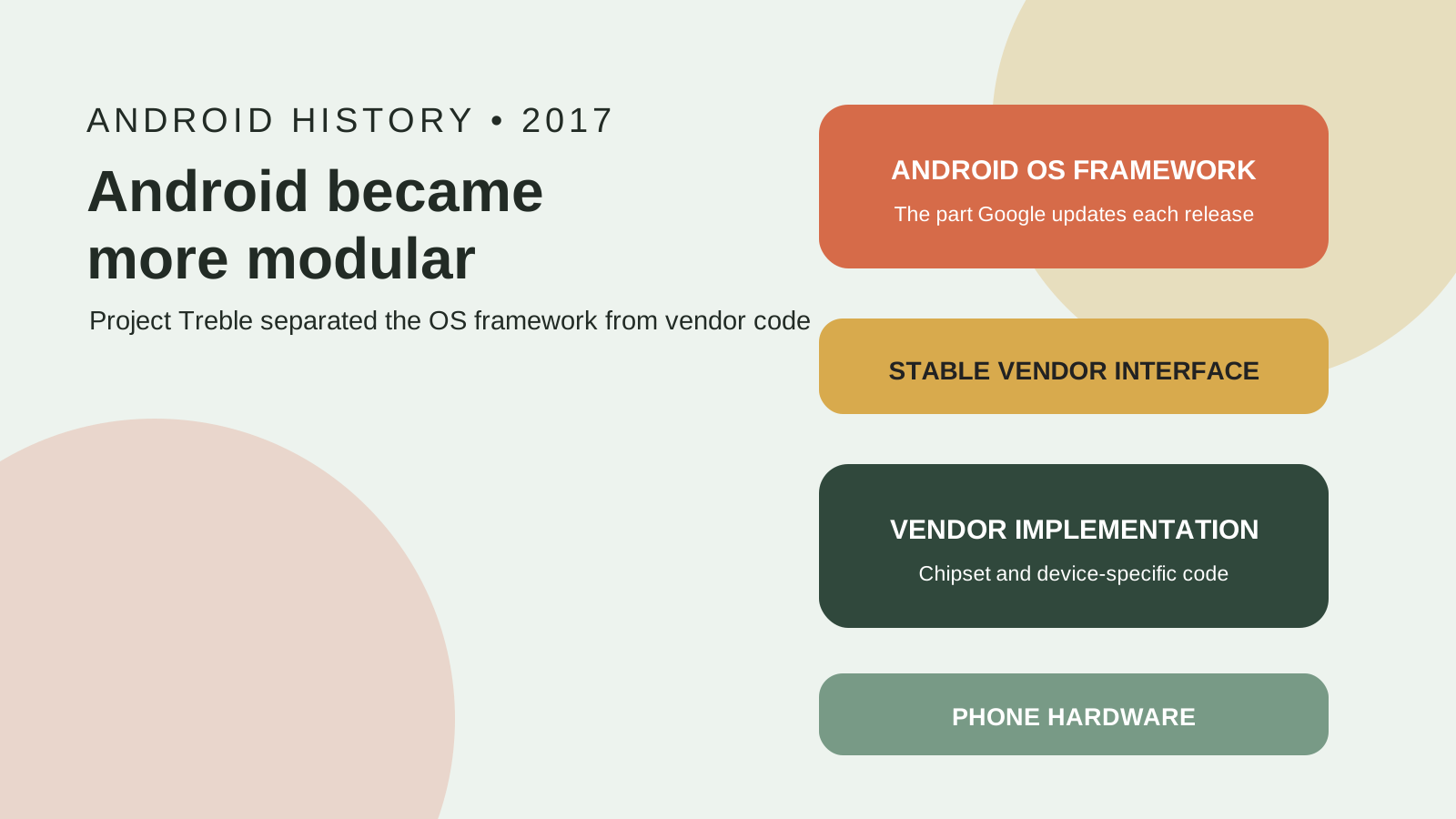
Treble introduced a defined vendor interface between the Android OS framework and the vendor implementation. The framework contains the device-independent parts of Android that evolve with a platform release. The vendor side contains lower-level code that communicates with a phone’s chipset and hardware.
A Vendor Test Suite, or VTS, checked that the implementation satisfied the interface. The concept resembled Android’s Compatibility Test Suite for apps: define behavior at a boundary, test it, and allow the parts on either side to change with less direct entanglement.
| Update layer | Before Treble | Treble’s intended change |
|---|---|---|
| Android framework | Closely mixed with device-specific work | Could be updated above a defined vendor interface |
| Chip and vendor implementation | Often needed rework for each OS release | Could remain compatible through a stable interface |
| Testing | Compatibility focused strongly on app-facing APIs | VTS added tests for the framework-to-vendor boundary |
| Manufacturer decision | Required difficult engineering and product support | Engineering became easier, but support remained a business decision |
Treble did not remove custom interfaces or manufacturer apps. It modularized the operating-system foundation beneath them.
Which phones actually received the new architecture?
Google said Treble would be present on all new devices launched with Android O and later. The architecture also ran on the Android O developer preview for Pixel phones. A device merely upgraded from an older release was not automatically required to be redesigned around Treble.
That boundary explains uneven early impact. The installed Android population included many phones designed before Oreo, so Treble’s reach had to grow as new hardware replaced old hardware. It could only demonstrate an upgrade benefit when the next Android version arrived and manufacturers used the architecture.
This delayed effect is typical of platform architecture. A new interface can be available in source code immediately, yet its practical value emerges only after compatible devices ship, another Android release is ready and vendors attempt the next upgrade. Announcement date and ecosystem impact are therefore different milestones.
Google’s 2018 Treble update showed the Generic System Image running across devices and connected Treble to a wider Android Pie beta program. This later evidence should not be mistaken for a result already visible on announcement day in May 2017.
What did Treble not solve by itself?
Treble did not create a mandatory support period. A manufacturer still had to allocate engineers, adapt its interface and apps, pass testing, coordinate with carriers and choose to release the build. Device storage, kernel support and other components could also limit longevity. Easier is not the same as free.
It also did not make every Android phone visually identical. A generic system image was valuable for testing and architecture, while a retail update still included device-specific features and certification. Nor did Treble replace monthly security patches, Google Play services or app updates; those were different delivery channels.
The accurate consumer lesson is therefore conditional: Treble made updates more technically feasible on compliant hardware, but a buyer still needed a clear manufacturer policy.
Did Project Treble eventually improve adoption?
Google later reported that Android Pie adoption was substantially higher than Oreo adoption at the equivalent point and said Treble had a positive effect on updatability. The Android beta also expanded beyond Pixel to devices from multiple manufacturers, evidence that common system images and earlier chip support were changing development schedules.
Those observations came in later years. Google’s 2019 update report compared platform distribution and described manufacturer participation. It is reasonable to treat faster adoption as evidence that the architecture helped, while recognizing that partnerships, beta programs and vendor policies also contributed.
Treble became a foundation for further work rather than the final answer. Project Mainline later moved selected system components into Google Play system updates, and extended vendor requirements supported longer upgrade windows.
Why does Project Treble still matter today?
Treble changed Android updates from a repeatedly rebuilt connection into a more modular contract. That is an architectural achievement most users never see, yet it influences how many devices can test a new release and how quickly manufacturers can begin their work.
For buyers, the history clarifies what to ask. Technical capability matters, but a written support promise matters more: how many OS upgrades, how many years of security fixes, how frequently they arrive and whether regional or carrier models follow the same schedule.
In the Android history timeline, Project Treble continues the update story after Nougat’s seamless installation design. Nougat reduced disruption once an update arrived; Treble reduced work needed to build it. Modern Android maintenance depends on both kinds of improvement.