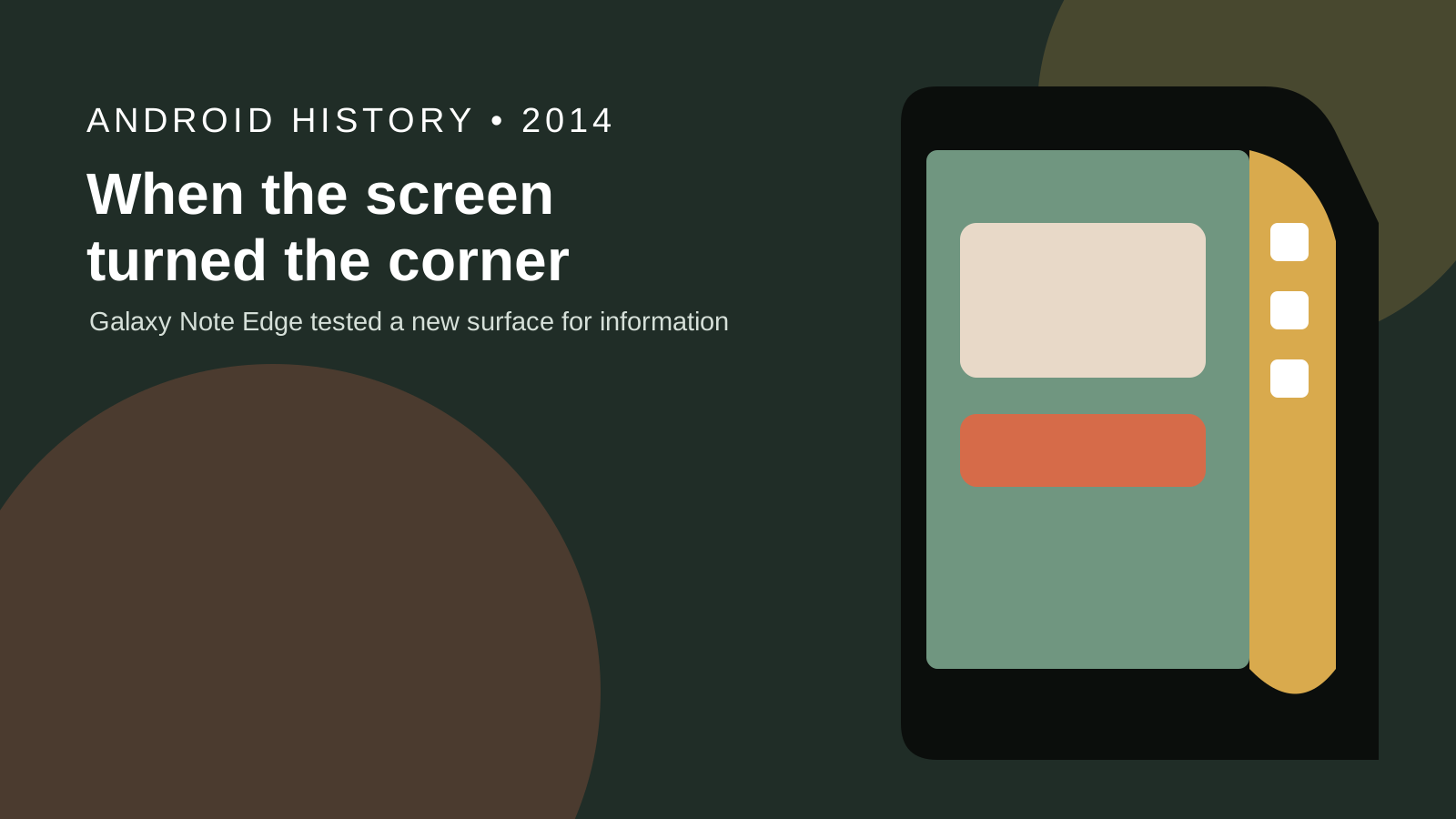
Samsung announced the Galaxy Note Edge on September 3, 2014, alongside the more conventional Galaxy Note 4. Its display did something visually startling: the image continued around the phone’s right side, creating a narrow edge area for shortcuts, alerts, tools and contextual controls. The curve was intended as an additional interface surface, not merely decorative glass.
The Note Edge did not single-handedly invent curved phones, and Samsung had already released the curved Galaxy Round. Its historical value is more specific. Samsung’s official announcement presented an asymmetric screen that asked whether the side of a phone could carry information independently from the main canvas.
What made the Note Edge display unusual?
The main screen was a 5.6-inch Quad HD+ Super AMOLED panel, with an additional strip continuing over the right edge. Unlike a conventional piece of curved cover glass above a flat image, the display itself extended into that side area. Samsung could therefore place live interface elements where a bezel would normally be.
The shape made the device asymmetrical. Its right side was both screen and control surface, while the physical power button moved to the top. The design was technically and ergonomically different from the later fashion for gently curved glass on both sides of a phone.
Samsung described the Note Edge as available only in selected markets. That limited release fits its experimental character: it was a commercial product, but one testing a less familiar interaction model next to the mainstream Note 4.
What could people do with the edge panel?
The edge area offered quick access to frequently used applications, alerts and device functions. Notifications could appear there while video continued on the main display. Camera controls could move to the edge so the viewfinder had fewer overlays. Quick tools included functions such as a ruler, stopwatch, timer, flashlight and voice recorder.
Panels could also show personal images or text. Samsung’s design explanation compared the concept to index tabs beside a notebook, an analogy connected to the Note family’s writing focus. A revolving panel interaction let users move through different edge screens with a thumb.
| Edge-screen use | Intended benefit | Practical question it raised |
|---|---|---|
| App shortcuts | Reach frequent tools without leaving the main content | Was the narrow target easy to operate one-handed? |
| Notifications | Preserve an unobstructed video or work area | Were side alerts easier to notice and read? |
| Camera controls | Keep buttons away from the viewfinder | Did the unusual grip help or hinder shooting? |
| Personal panels and tools | Turn unused side space into a customizable surface | Would enough apps and users adopt the format? |
The panel’s value depended on software support and individual habits. A new screen shape can create possibilities, but it also asks developers and users to learn conventions that do not exist on most other phones.
Why did Samsung curve the screen around only one side?
Samsung’s designers said the curve drew inspiration from natural forms and the index-card behavior associated with notebooks. The one-sided layout preserved a broad flat main display while making the additional panel clearly distinct. That distinction supported dedicated controls in a way a shallow, symmetrical curve might not.
There were engineering consequences. Components, glass and touch behavior had to work across an unusual shape. Cases needed to protect the phone without covering the useful edge, and left-handed operation required attention. Samsung said the interface could rotate when the device was turned 180 degrees, although using a large phone upside down was not equivalent to a truly symmetrical design.
The device therefore illustrates a recurring hardware principle: a novel form factor and its software must be designed together. The curve would have been a gimmick if the interface ignored it; the interface would have been impossible without the display technology.
How was Note Edge different from later curved-screen phones?
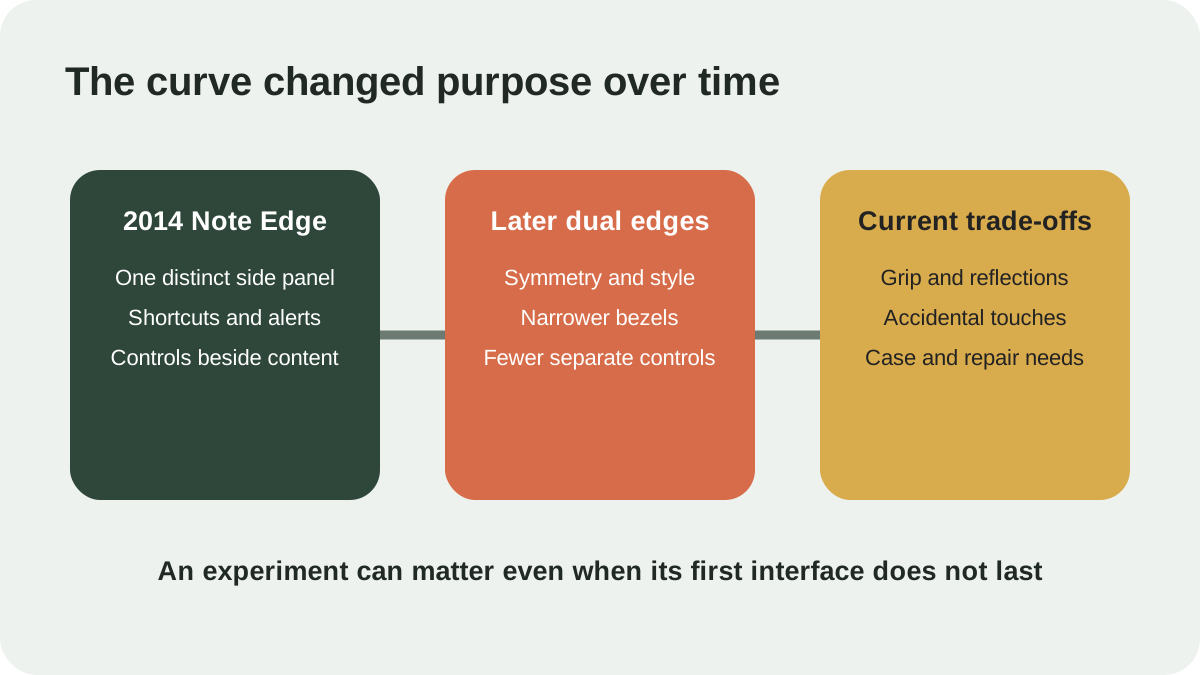
The original edge acted like a secondary information strip with its own panels. Later Samsung flagships used curves on both sides, often emphasizing a narrow visual frame and a seamless body more than a separate column of controls. Some edge software ideas survived, but the strong division between main screen and side screen became less prominent.
Samsung’s Galaxy S6 edge design announcement presented dual curved edges as both an immersive visual choice and a functional surface. Compared with the Note Edge, it showed how quickly the idea moved from one distinct side panel toward a symmetrical flagship design. That is not proof that every later curved phone copied the same concept; display suppliers, designers and other brands were exploring related ways to reduce borders and distinguish hardware.
By 2017, the Galaxy S8 integrated dual curves into its near-bezel-less Infinity Display. That development belongs to the next stage of this archive, where the screen increasingly replaced the phone’s visible front controls.
What trade-offs came with the curved display?
Curved edges can improve visual continuity and help a large display feel narrower, but they complicate grip, protection and repair. Reflections may be stronger along the bend. A hand can touch the active area unintentionally, and screen protectors or cases must account for the shape. Replacing a specialized panel can also be more difficult than replacing common flat glass.
The Note Edge added another issue: interface consistency. A tool placed on the side panel was convenient only on that hardware, so app developers had limited reason to build essential workflows around it. Samsung could support its own panels, but an ecosystem feature needs enough compatible devices to become a standard.
These costs do not make the experiment a failure. They explain why later products retained some visual and technical ideas while simplifying the original secondary-screen concept.
Why does the Galaxy Note Edge still matter today?
The phone made an emerging display technology tangible. Instead of showing a curved prototype behind glass, Samsung sold a device whose software used the curve for ordinary tasks. That gave designers, developers and buyers evidence about what the idea felt like in a hand—including its limitations.
Modern phone design has moved between pronounced curves and flatter displays as priorities change. Durability, stylus use, cases and accidental-touch prevention can favor flat panels; visual continuity and a narrower feel can favor curves. The Note Edge remains useful because it makes those trade-offs easy to see.
Within the Android history timeline, it represents a year when manufacturers were still searching for new surfaces beyond the ordinary rectangle. Alongside Lollipop’s redesign of the software surface, the Note Edge shows 2014 as a moment when both the pixels and the glass around them were being reconsidered.