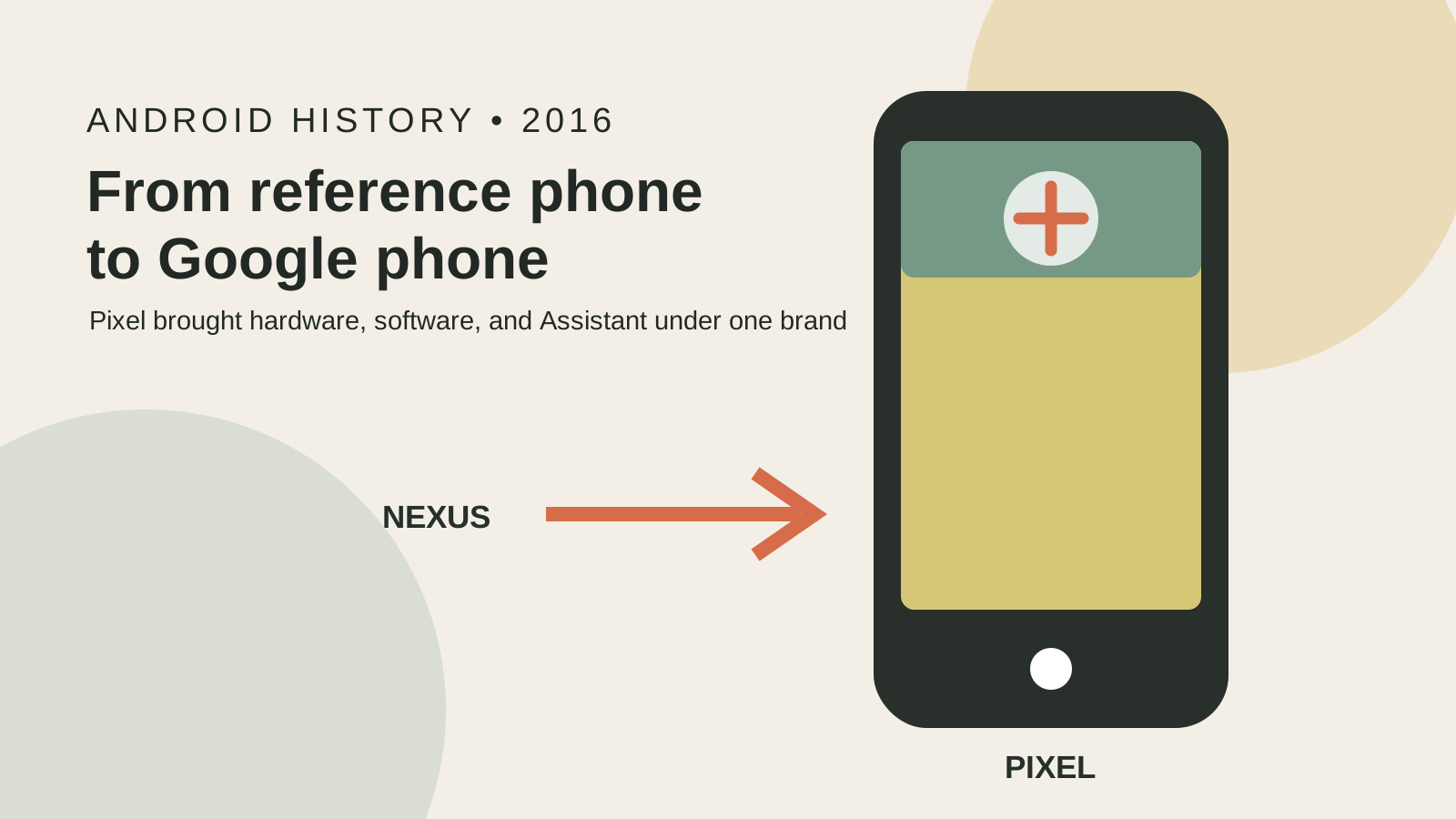
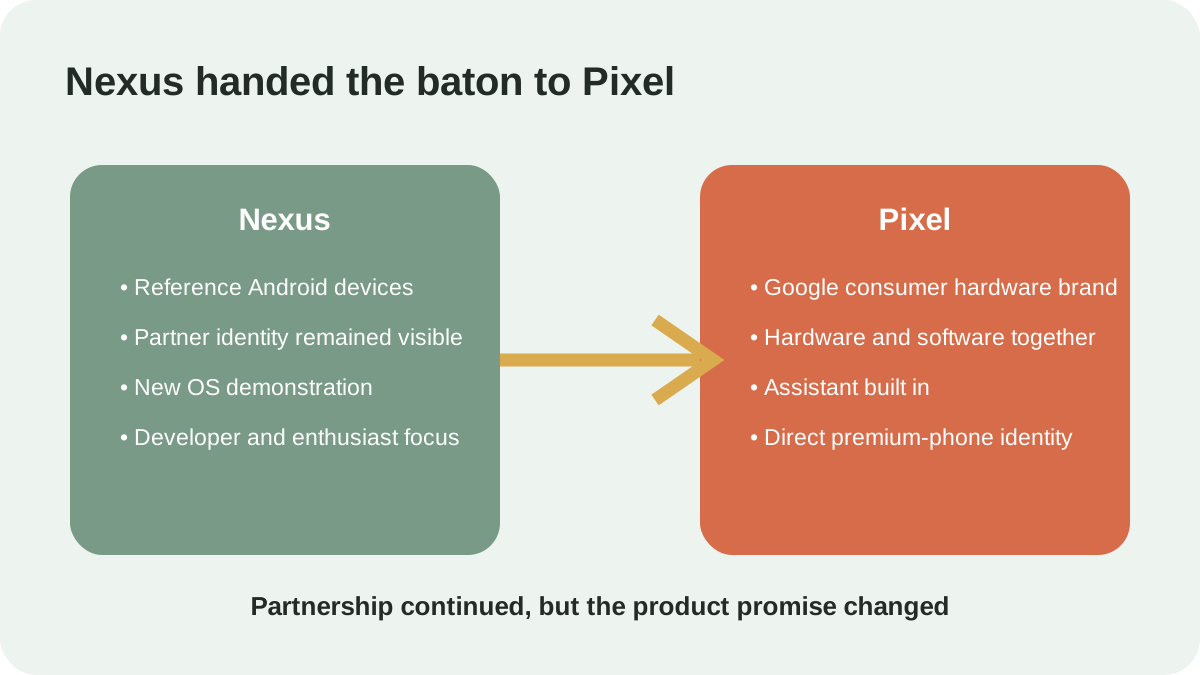
Google announced the first Pixel and Pixel XL phones on October 4, 2016. The company described Pixel as the first phone made by Google “inside and out” and the first with Google Assistant built in. The launch ended the Nexus phone line and replaced a developer-oriented reference-device identity with a direct Google consumer hardware brand.
The slogan needs context. HTC manufactured the first Pixels, just as other partners had manufactured Nexus devices. The strategic change was that Google presented the hardware, software and services as one Google-designed product. Its official launch post said bringing those disciplines under one roof was the next step after Nexus.
What did Google announce with the first Pixel?
Pixel came in a 5-inch model and a 5.5-inch Pixel XL, with different display resolution and battery capacity but a shared core experience. Both used a Qualcomm Snapdragon 821 processor, 4GB of RAM, a rear fingerprint sensor and a 12.3-megapixel camera. They shipped with Android 7.1 and supported Google’s Daydream virtual-reality platform.
Google emphasized fast charging, camera quality and unlimited Google Photos storage at original quality under the offer terms for those devices. The two sizes allowed buyers to choose scale without receiving a weaker processor or camera in the smaller model.
The industrial design combined an aluminum body with a glass panel on the back around the camera and Pixel Imprint sensor. These details mattered because Google was no longer presenting the phone mainly as a neutral Android reference. It was building a recognizable premium product family.
How was Pixel different from Nexus?
Nexus devices were collaborations that demonstrated new Android releases and gave developers and enthusiasts relatively direct access to Google’s platform. The manufacturing partner’s role was visible: LG Nexus 5X and Huawei Nexus 6P were understood as co-developed reference phones. Retail reach and marketing were often narrower than major consumer flagships.
Pixel kept close software integration and timely updates but changed the promise. The phone itself was branded Google, sold as a premium consumer device and connected to a broader “Made by Google” hardware family. Manufacturing partnership did not disappear; it moved behind a more unified product identity.
| Program question | Nexus approach | First Pixel approach |
|---|---|---|
| Main identity | Android reference device with a named partner | Google consumer phone |
| Primary story | Showcase the newest platform | Combine Google hardware, software and services |
| Assistant | Google Now and evolving assistance across devices | First phone with Google Assistant built in |
| Product range | Partner and form varied by generation | Two sizes with a shared Google design |
| Long-term direction | Ended with 5X and 6P | Became an annual Google phone family |
This comparison describes strategy, not absolute capability. Nexus phones were consumer products, and Pixel phones also served developers. The emphasis and brand responsibility changed more than the categories became mutually exclusive.
Why was built-in Google Assistant important?
Assistant let a person ask conversational questions, retrieve information and perform supported actions by voice or a long press of the Home button. It drew on Google’s search, speech recognition and natural-language work, and it could use screen context for follow-up assistance.
Google’s Assistant announcement presented the service across Pixel, Google Home and other new hardware. Pixel was therefore not only a place to run Android apps; it was the personal mobile part of an emerging ambient-computing system.
The first version was more limited than today’s assistants, and language, country, app and service support varied. Later capabilities should not be projected onto the 2016 phone. Its historical importance is that conversational help became part of the device’s defining identity rather than an optional app or search screen.
Did Google really make the hardware itself?
Google led the product definition, design and software experience, while HTC manufactured the devices. Modern consumer electronics commonly divide design, component supply and assembly among several companies, so “made by” is a brand and product-responsibility statement rather than proof that one company owns every factory.
The distinction became clearer in 2017 when Google announced an agreement that brought a team of HTC employees who had already worked on Pixel into Google’s hardware organization and provided a non-exclusive intellectual-property license. Google’s announcement about the HTC agreement described it as support for a growing hardware business.
This later event cannot be used as evidence that Google manufactured the 2016 phone alone. It does show the company investing in more internal hardware capability after the first Pixel launched.
What did the change mean for the wider Android ecosystem?
Google now competed more directly in premium hardware while continuing to provide Android to Samsung, Motorola, LG, Huawei and many other manufacturers. That created a delicate dual role: platform steward and device competitor. Pixel could demonstrate new Google services quickly, but Android’s scale still depended on partner products across prices and regions.
The first Pixel did not replace Android diversity or become the template every manufacturer had to copy. Samsung maintained its own interface and services; other brands emphasized cameras, batteries, prices or markets Google did not serve. Pixel added a first-party reference point inside that variety.
It also gave Google direct responsibility for support messaging, hardware quality and the full customer experience. A unified brand can make ownership clearer, but it also concentrates accountability when something goes wrong.
Why does the first Pixel still matter today?
Pixel turned Google’s annual phone from a partnership showcase into a durable consumer product line. Later Pixels became vehicles for computational photography, custom processors, call assistance and early Android features. Those later achievements were not present in full in 2016, but the organizational and brand foundation began here.
The phone also marked a wider shift from an operating system as the headline to an integrated experience as the product. Camera processing, cloud storage, Assistant, updates and hardware design were presented together, making it hard to judge the device through specifications alone.
Within the Android history timeline, Pixel follows the last Nexus phones and their shared hardware direction. The handoff explains Google’s current place in Android: not just the maker of the platform, but one of the manufacturers showing what it believes an Android phone should be.