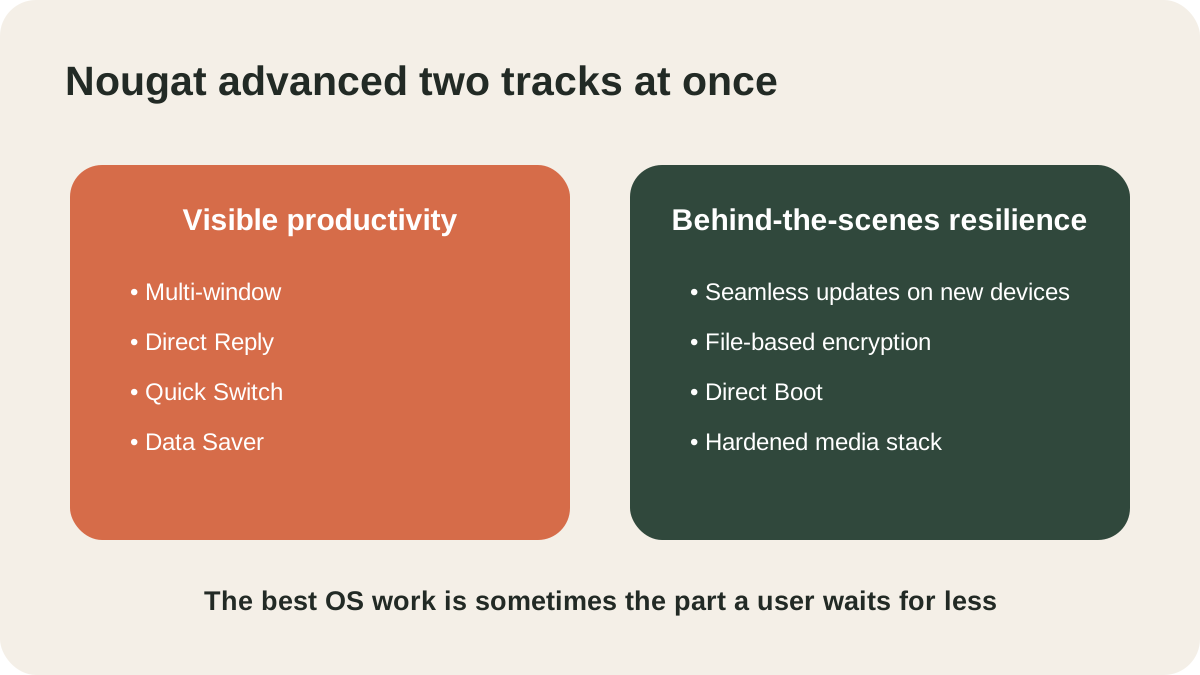
Google released Android 7.0 Nougat on August 22, 2016. Its most visible features made a phone easier to use without leaving the current task: multi-window placed two apps on screen, Direct Reply answered messages from a notification, and Quick Switch jumped between the two most recent apps. Behind those conveniences, Nougat also introduced an A/B update design for suitable new devices, file-based encryption and a safer boot process.
Google said the release contained more than 250 major features in its official Nougat announcement. The useful historical story is not the number. It is how one release improved what users did on the screen and what the operating system did while they were not watching.
How did multi-window change everyday Android use?
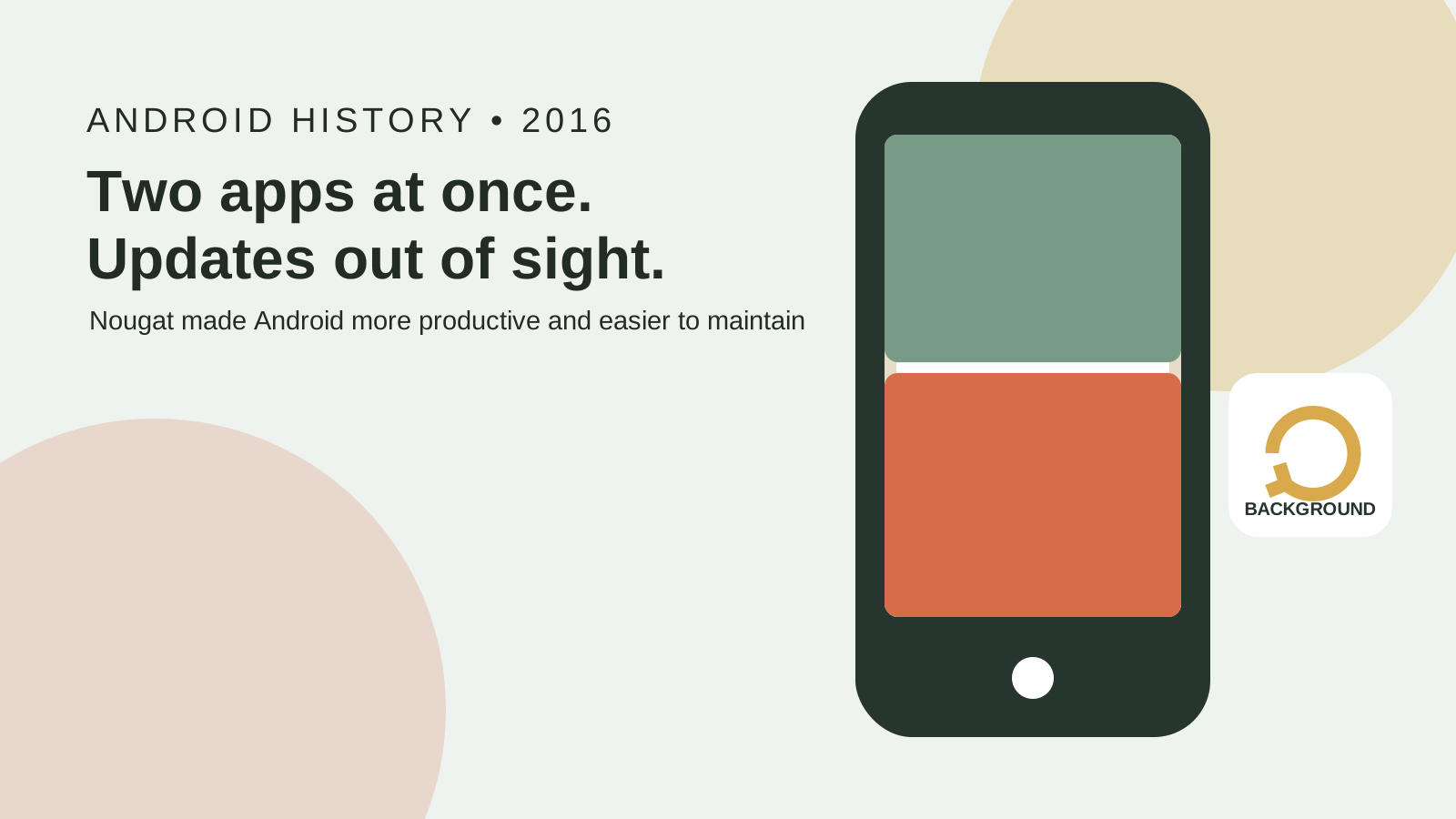
Multi-window let two supported apps share the display, with a movable divider between them. A user could read a webpage while composing a message, compare information across two apps or keep a video visible beside another task. Large phones benefited, but the feature was even more natural on tablets.
Android manufacturers had offered their own split-screen systems before Nougat. Making multi-window part of the platform gave developers a common API and lifecycle to test. Apps still needed responsive layouts and correct state handling; software that assumed it always owned the whole display could behave badly or decline to resize.
Quick Switch complemented split screen. Double-tapping Overview moved between the two most recent apps, reducing repeated trips through a task list. These were small interaction changes compared with a redesign like Lollipop, but they addressed real friction in using a phone as a general-purpose computer.
What made notifications more useful?
Direct Reply allowed a person to type a response inside a compatible notification. Bundled notifications grouped related items from the same app, and developers could provide richer actions and visual treatment. The user could complete a short communication without opening the full application and losing the current context.
This efficiency depended on good design. A reply field is helpful for a short message but inappropriate for a complex form. Notifications can also become overwhelming when every app treats its event as urgent. Nougat improved the tools; it did not decide which interruptions deserved attention.
Data Saver addressed another background concern by limiting metered-data use for apps that were not in the foreground. Users could allow selected apps through. Along with a version of Doze that worked while a phone was moving, Nougat treated background restraint as a normal system responsibility.
| Nougat feature | What the user gained | Important limit |
|---|---|---|
| Multi-window | Two resizable apps on one screen | Apps needed to support resizing well |
| Direct Reply | Answer from a notification | Best for short, focused actions |
| Quick Switch | Faster movement between recent apps | Did not replace deeper task management |
| Data Saver | More control over metered background data | Allowed apps and foreground use could still consume data |
| Seamless updates | Install a new system to an inactive partition | Required compatible A/B device design |
How did seamless updates work?
On compatible new devices, the system could download and install an update to an inactive partition while the phone continued running from the active one. After a reboot, the device switched to the updated partition. If a serious problem prevented startup, the architecture could retain the previous bootable slot rather than modifying the only installed system in place.
The design reduced time staring at an installation screen and removed the long “optimizing apps” phase from that flow. It also required extra storage and appropriate firmware. Google carefully said seamless updates applied to new devices coming with Nougat; existing Nexus devices received faster traditional updates but not a retrofitted partition layout.
The distinction remains important. “Nougat supports seamless updates” does not mean every phone upgraded to Nougat gained them. The hardware’s original partition design mattered.
What security changes arrived behind the scenes?
File-based encryption allowed different files and user profiles to use different keys, replacing the all-or-nothing structure of earlier full-disk encryption on supported new devices. Direct Boot let selected apps perform limited, carefully defined work before the user first unlocked the phone after a restart—for example, sounding an alarm—while credential-protected data stayed locked.
Nougat also continued hardening Android’s media processing after serious media vulnerabilities had drawn attention in 2015. Google split privileged media components, reduced their access and strengthened verified boot. Its security overview explains that easier updates and smaller update files were part of the security work because protection only helps when fixes reach devices.
The developer documentation also covered Vulkan graphics, multi-locale support and APIs for virtual-reality mode. These features show Nougat expanding performance and device uses while tightening the platform’s internal boundaries.
Did Nougat fix slow Android updates across manufacturers?
No. Seamless installation improved what happened after an update reached a compatible phone. It did not remove the earlier work of adapting a new Android release to a chipset, hardware drivers, manufacturer interface and carrier requirements. Many owners still waited for vendors to build and approve the update—or never received it.
Nougat’s developer preview program did give manufacturers and app makers earlier access than the traditional schedule. The LG V20 was announced as the first new smartphone to ship with Nougat. Broader coordination helped, but the underlying vendor architecture remained difficult to update.
Google attacked that earlier stage in 2017 with Project Treble, which separated the Android framework from lower-level vendor implementation. Our history of Project Treble and Android updates continues the story.
Why does Android Nougat still matter today?
Multi-window, notification actions and background limits are now ordinary expectations. A/B updates became common on many devices and influenced later update work, while file-based encryption and boot-time separation provided a foundation for stronger data protection. The exact interfaces evolved, but the problems Nougat addressed did not disappear.
The release also teaches a useful distinction between availability and installability. A manufacturer must first deliver an update; the phone must then install it safely and with minimal disruption. Nougat made major progress on the second half for newly designed hardware.
Android 7.0 is obsolete and should not be treated as secure current software. Within the Android history timeline, its importance lies in pairing practical multitasking with maintenance architecture—a reminder that a mature operating system should help people do more while asking them to wait less.