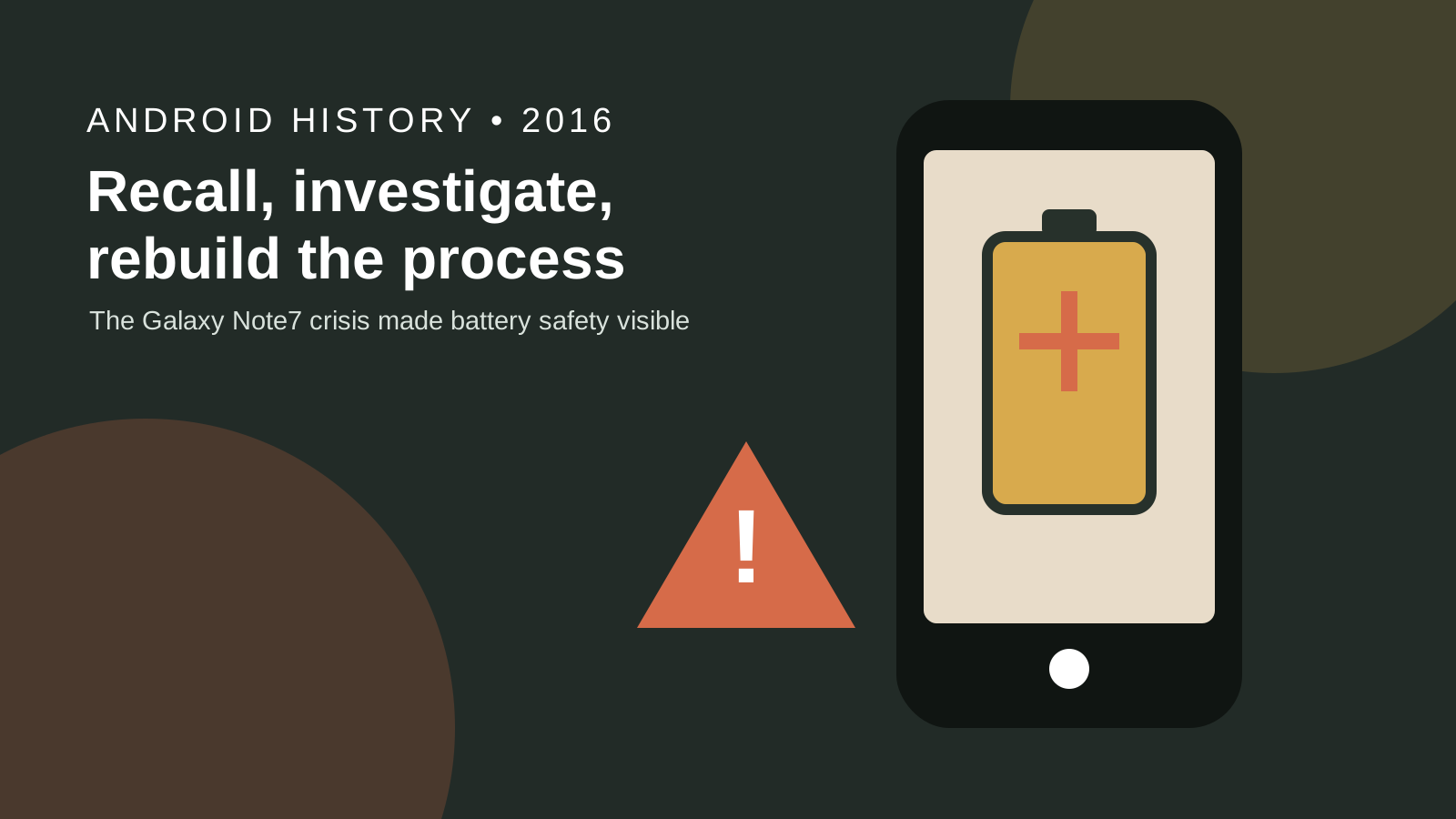
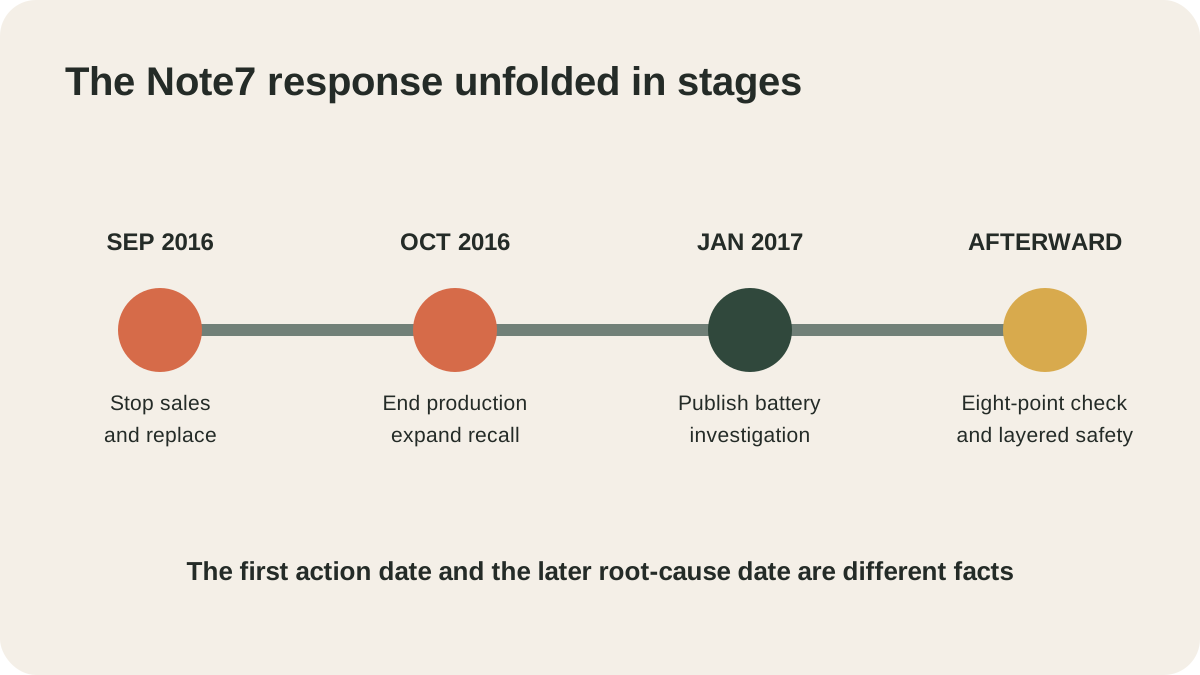
On September 2, 2016, Samsung announced that it had found a battery-cell issue in the Galaxy Note7, stopped sales and would replace devices already in customers’ hands. Reports of overheating and fire had appeared soon after the phone’s August release. The initial replacement program did not end the crisis; Samsung later stopped production, sales and exchanges, and recalls expanded to include both original and replacement Note7 units.
This article uses September 2 as the event date because it marks Samsung’s first global stop-sale and replacement statement. The detailed root-cause findings were published later, in January 2017. Keeping those dates separate avoids turning a months-long investigation into knowledge the company possessed on the first day.
What happened during the 2016 recall?
Samsung’s September 2 statement said 35 cases had been reported globally as of September 1 and that an initial investigation found a battery-cell issue. The company stopped sales and offered replacement devices. In the United States, Samsung worked with the Consumer Product Safety Commission and carriers on a formal recall and exchange process.
Replacement phones were intended to contain unaffected batteries, but further incident reports raised concern about those units as well. On October 10, Samsung stopped production, sales and exchanges. The U.S. program was then expanded to every original and replacement Note7 sold or exchanged before and after the first recall, as Samsung’s October recall notice records.
Owners were told to power the phones down and return them through the official program. Software updates later limited charging and displayed warnings to encourage remaining devices to be returned. Airlines and regulators imposed additional restrictions. These measures reflected a basic recall principle: when an affected product may create a fire hazard, continued use is not an acceptable experiment.
Why did the first replacement program fail to close the issue?
The initial diagnosis focused on batteries associated with the first incidents, and replacement devices used another battery supply. Yet the second battery design had a different defect capable of producing the same dangerous result: an internal short circuit. Replacing one affected population therefore did not eliminate the underlying risk across all supplied units.
This is easier to understand in hindsight than during a fast-moving recall. Companies must act before every laboratory question is settled, but a remedy based on an incomplete failure model can need revision. The Note7 case shows why monitoring replacement products and keeping communication channels open are part of the corrective action itself.
| Stage | What was known or done | What remained unresolved |
|---|---|---|
| September 2, 2016 | Samsung identified a battery-cell issue, stopped sales and offered replacements | Full causes across both battery supplies were not yet public |
| September recall | Original devices entered formal return programs | Replacement-device safety still had to be observed |
| October 2016 | Production, sales and exchanges stopped; recall included replacements | Detailed engineering findings were still under investigation |
| January 2017 | Samsung and outside organizations presented battery findings | New controls still had to be applied and validated over time |
The sequence is more instructive than a single blame label. Detection, containment, investigation and prevention happened at different times.
What did the 2017 investigation find?
Samsung said it tested the phone, charging behavior, software and related systems, then concluded that the batteries caused the incidents. The batteries from the two suppliers failed in different ways. In one design, physical deformation and electrode placement could damage separation inside the cell. In the other, abnormal welding features could penetrate insulating layers, and some samples lacked insulation tape in the affected area.
Both paths could allow positive and negative parts inside a lithium-ion cell to make contact, causing an internal short, rapid heating and potentially fire. Samsung presented its findings with work from UL, Exponent and TÜV Rheinland in the January 2017 press conference.
The finding should be stated carefully. It was not that every Note7 battery would ignite or that all lithium-ion batteries are inherently defective. It was that specific design and manufacturing problems created unacceptable risk in the recalled product population.
How did Samsung change its battery safety process?
Samsung announced an eight-point battery safety check covering durability, visual inspection, X-ray inspection, charge and discharge testing, analysis of volatile organic compounds, disassembly, accelerated-use testing and changes in open-circuit voltage. The company also described multi-layer safety measures for product design, materials, device strength and charging controls.
An external battery advisory group was formed to provide additional expertise. Samsung said it intended to share lessons that could improve lithium-ion safety beyond its own products. Its quality-assurance announcement links the new checks directly to the Note7 investigation.
No test regime can promise zero failures. The significance of the changes was that they examined cells at multiple stages and with different methods, rather than relying on one final pass/fail measurement. X-rays may reveal structures that a visual inspection cannot; charge cycling and accelerated use can expose behavior that a static image cannot.
What should ordinary phone owners learn from the recall?
The first lesson is to follow an official recall immediately. Power down the exact affected model, verify instructions through the manufacturer or a government product-safety authority, and use the authorized return channel. Do not assume a phone is safe because it has not yet become hot, and do not try to diagnose or repair a sealed lithium-ion battery at home.
More generally, stop using a phone with swelling, a separating back panel, unusual heat, chemical odor, smoke or hissing. Move away from flammable materials only if it is safe to do so, avoid puncturing or crushing the device, and contact local emergency or disposal guidance. Airlines and shipping services have specific battery rules that must be followed.
The case also shows why model names matter. “Galaxy Note” describes a family; a recall applies to identified products and regions. Current owners should not infer that an unrelated newer Galaxy phone is recalled because of the 2016 history, nor should they use an old article instead of a current recall database.
Why does the Galaxy Note7 crisis still matter today?
Smartphones pack considerable energy into thin bodies. Battery design, manufacturing tolerances, charging software, mechanical protection and quality control must work together. The Note7 made that usually invisible engineering chain visible to the public and demonstrated how a fast flagship launch can be overwhelmed by a low-probability but severe safety failure.
It also provides a case study in correcting a correction. The first replacement program was not the final answer, so the company expanded the recall, ended the product and continued investigating. Trust depended not on pretending the problem was small but on retrieving devices, explaining findings and changing processes.
Within the Android history timeline, the Note7 is not important because it advanced Android software. It matters because phone history also includes safety, manufacturing and accountability. The relevant legacy is not the recalled device as a curiosity; it is the expectation that companies investigate failures transparently and turn the findings into more rigorous prevention.