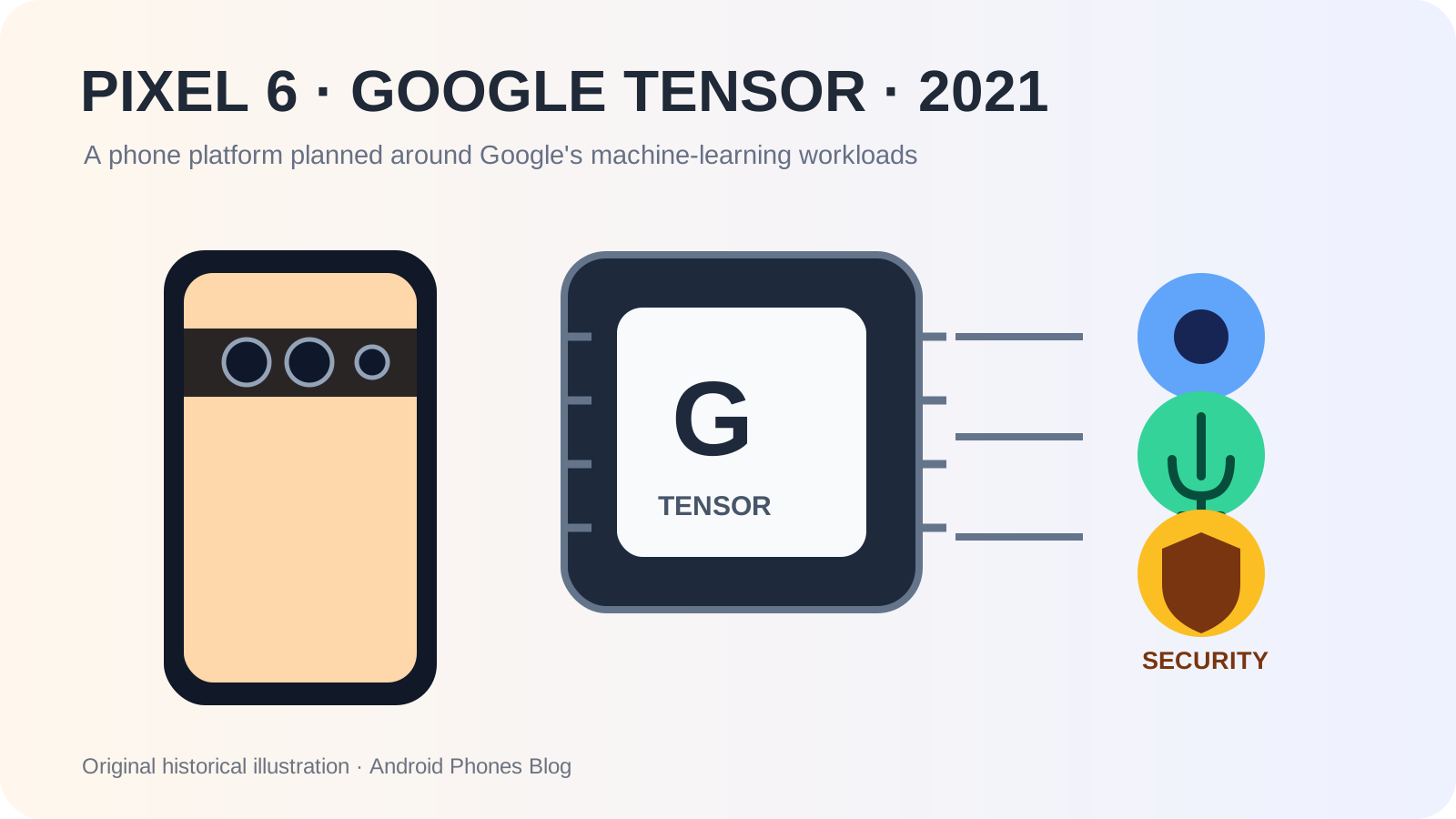
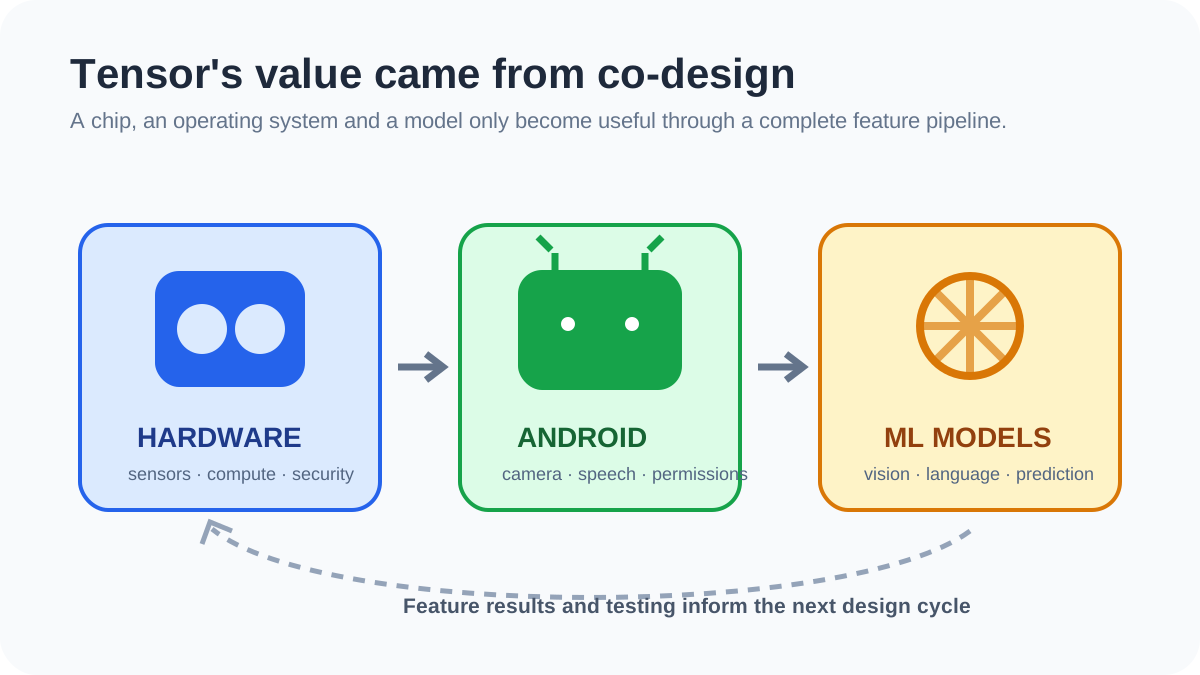
Google introduced Pixel 6 and Pixel 6 Pro on October 19, 2021 with Google Tensor, the first mobile system on a chip designed by Google for Pixel. The phones also launched with Android 12 and a new camera system. Google’s official Tensor explanation said the chip was co-designed with its research teams to run machine-learning models that previous mobile computing limits had made difficult.
Tensor did not replace every familiar phone component with artificial intelligence. It combined general processing, graphics, image processing, machine-learning acceleration and security functions into a phone platform shaped around Google’s own software priorities.
Why did Google design a chip for Pixel?
Before Pixel 6, Google built Android and Pixel software around mobile chips supplied by partners. That model supported capable phones, but the available hardware roadmap did not always match the models Google wanted to run. A custom SoC let hardware and research teams plan capabilities together instead of adapting every idea after the processor had been defined.
The motivation was vertical coordination, not simply ownership of a logo on a chip. Speech recognition, camera processing and security each have different latency, memory and power needs. Designing the computing blocks and software pipeline together can make a particular workload practical on a battery-powered device.
| Tensor area | Pixel 6 use described by Google | Why local computing helped |
|---|---|---|
| Image processing and ML | Motion handling, face detail and editing tools | Work with camera data quickly |
| Speech models | Assistant voice typing and transcription | Reduce delay and support local processing |
| Language models | Live translation in supported contexts | Keep more tasks available without a round trip |
| Security core and Titan M2 | Protect sensitive operations and device data | Isolate security work in dedicated hardware |
The table describes design goals and announced features, not a claim that every task always ran entirely offline.
What did “on-device machine learning” change?
A cloud service can run a large model on remote hardware, but sending data and waiting for a response adds network dependency and delay. An on-device model can respond when connectivity is weak and may keep relevant data on the phone. It also has strict power, heat and memory constraints that a data center does not share.
Tensor gave Google a mobile target for selected models and pipelines. That did not mean the Pixel 6 became independent of Google’s servers. Features varied by language and region, and some services still used a connection. “On device” should be checked feature by feature rather than applied to every function under the AI label.
The deeper change was planning. Google could develop future Pixel software with an expected hardware path for machine learning rather than treating the chip as a fixed external constraint.
How did Tensor affect the Pixel 6 camera?
Pixel cameras already used computational photography. The Pixel 3 Night Sight pipeline had shown how multiple frames and learned color could overcome some low-light limits. Pixel 6 paired Tensor with a larger new main sensor and additional camera hardware, so improvements cannot accurately be credited to the chip alone.
Google’s camera engineering overview described features that combined several cameras or exposures. Face Unblur could use a shorter exposure from the ultrawide camera alongside a brighter main-camera image when it detected movement. Real Tone work aimed to render a wider range of skin tones more accurately. Magic Eraser used computation to identify and remove selected distractions after capture.
These examples show Tensor’s role as part of a pipeline. Optics gathered light, sensors recorded it, motion and image processors prepared data, models analyzed the scene, and camera software assembled the output. “AI camera” is less useful than identifying which stage solved which problem.
What changed for speech and language features?
Pixel 6 introduced faster Assistant voice typing, including commands for punctuation and editing, and expanded Live Translate experiences in supported languages. Google’s Pixel 6 launch material presented Tensor as enabling models for speech recognition and translation to run more effectively on the phone.
Speech is a demanding mobile workload because a useful interface must respond quickly while distinguishing words from noise and handling language context. Reducing the need to send every utterance to a server can improve responsiveness and privacy in supported situations. It can also make some tasks available with limited connectivity.
Limitations remained important. Language coverage differed, microphones and background noise affected accuracy, and complex knowledge requests could still need an online service. Tensor expanded the local toolkit; it did not solve all speech or translation problems universally.
How was security built into the Tensor platform?
Google paired Tensor’s security core with the Titan M2 security chip and the Trusty trusted execution environment. The company described layers intended to protect operations such as verified boot, lock-screen credentials and sensitive data. Pixel 6 also launched with five years of security updates counted from the date the devices first became available in the U.S. Google Store.
Dedicated security hardware can isolate secrets from normal application processing, but it does not make a phone invulnerable. Security also depends on software design, timely patches, account protection and user behavior. A strong hardware root is a foundation, not a substitute for maintenance.
The update promise is also different from an Android-version promise. Security patch duration and major OS upgrades can have separate schedules. Readers should compare those terms directly rather than compressing them into one number.
Was Tensor mainly about benchmark performance?
Google framed Tensor around capabilities rather than winning one general CPU benchmark. Benchmarks can reveal useful information about sustained speed, graphics, heat and efficiency, but a specialized imaging or speech pipeline may not be represented by a single score. Conversely, an impressive demonstration does not prove that every ordinary app will run faster.
The best historical interpretation is workload-specific. Tensor gave Google more control over where compute, memory and acceleration were placed for Pixel features. Users still experienced the whole product: modem behavior, battery, display, storage, Android optimization and third-party apps mattered alongside the SoC.
This focus also distinguished Pixel 6 within the wider Android ecosystem. Samsung, Qualcomm, MediaTek and other chip designers pursued their own mixes of general and specialized processing. Tensor was Google’s route to tighter Pixel integration, not a common processor required by Android.
Why does Pixel 6 and Tensor still matter today?
Pixel 6 established custom Google silicon as the foundation of the modern Pixel line. It made hardware, Android, camera research and on-device models a planned multi-year system. Later Tensor generations changed the details, but the 2021 decision defined the direction.
For readers evaluating a current “AI phone,” the milestone suggests three questions. Which feature runs locally? What specialized hardware and model make it possible? What happens when the network, language or device support differs? Our Android history collection and the companion history of Android 12 Material You show the software and hardware sides of the same launch day. Tensor matters because it moved machine learning from an app-layer promise into the architecture of Google’s phone.