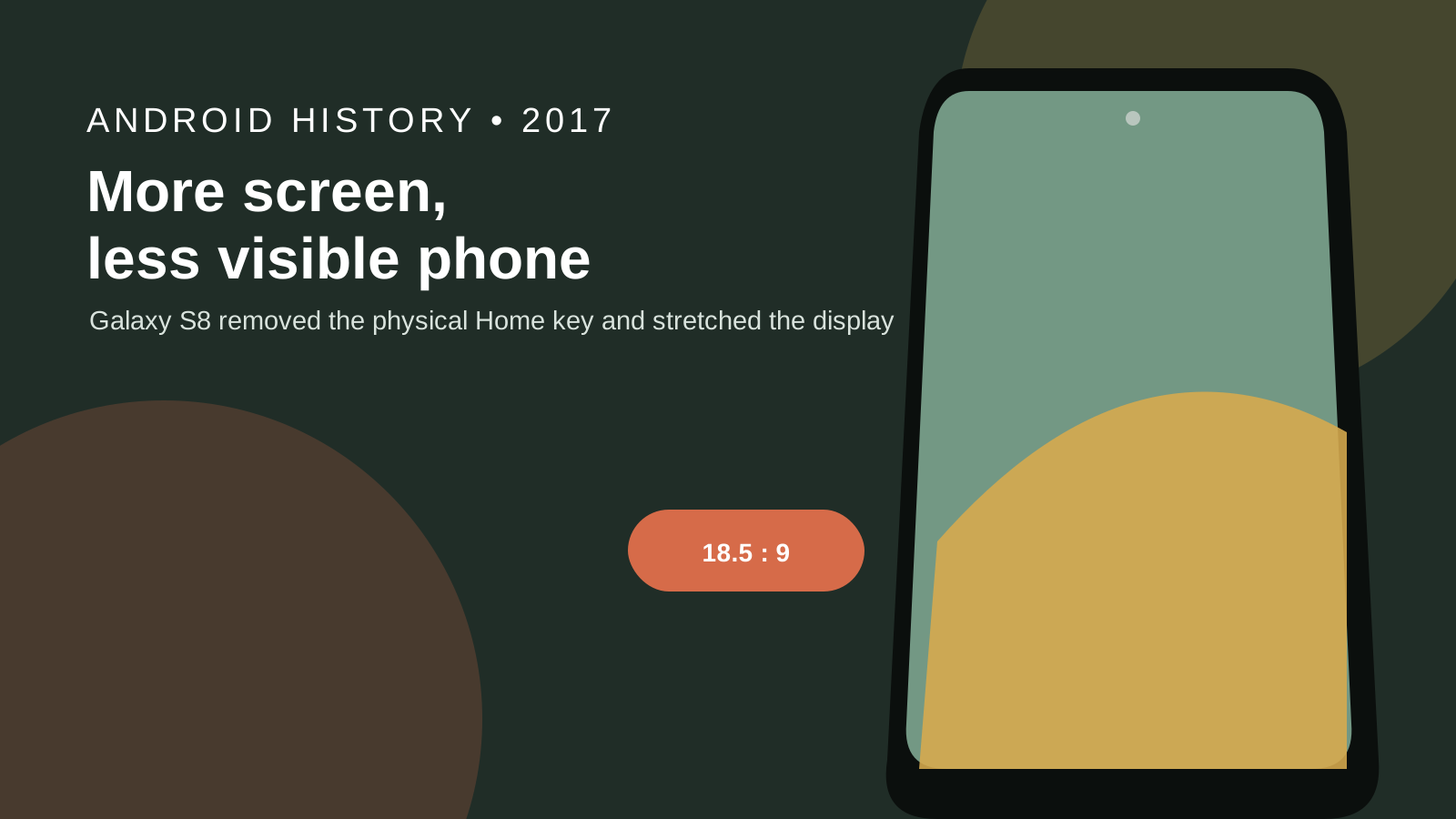
Samsung unveiled the Galaxy S8 and S8+ on March 29, 2017. Their defining feature was the Infinity Display: a tall 18.5:9 screen with narrow top and bottom bezels, curved sides and no familiar physical Home button. The 5.8-inch and 6.2-inch displays occupied more of the front while the phones remained narrow enough to hold more easily than the diagonal numbers suggested.
Near-bezel-less phones were an industry movement, not a Samsung invention that appeared in isolation. The S8 mattered because a major global flagship made the shape highly visible. Samsung’s official launch announcement presented “a large display, not a large phone” as the central design result.
What did the Infinity Display change physically?
The standard Galaxy S8 used a 5.8-inch Quad HD+ Super AMOLED panel, while the S8+ used a 6.2-inch panel. Both were much taller than the 16:9 screens common on earlier phones. Curved edges and reduced bezels allowed the display to flow closer to the sides of the body.
Samsung said the screen covered more than 80 percent of the front. Engineers rearranged internal parts, moved the display driver and placed the camera within the remaining bezel. The result was not literally edge-to-edge—cameras, sensors and structural borders still required space—but the visible front became far more screen than frame.
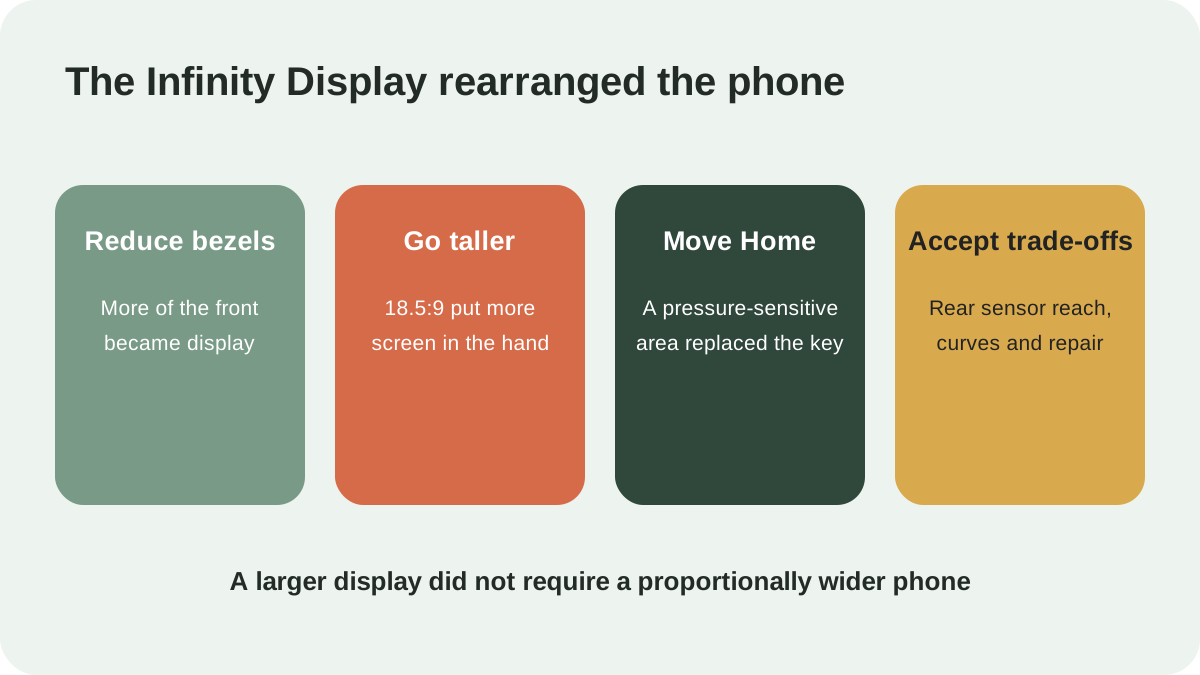
| Design decision | Immediate benefit | New trade-off |
|---|---|---|
| 18.5:9 aspect ratio | More vertical content in a narrow body | Some 16:9 media used bars or cropping |
| Smaller bezels | Larger display without proportional width | Less room for front controls and sensors |
| Curved sides | Continuous appearance and narrower feel | Reflections, cases and accidental touches became concerns |
| No physical Home key | Freed the lower bezel for display | Users relied on software navigation and haptic simulation |
| Rear fingerprint sensor | Preserved biometric unlocking without a front key | Placement beside the camera could be awkward |
The design was a package of compromises, not a screen measurement in isolation.
Why did Samsung choose an 18.5:9 shape?
A taller screen could show more of a feed, document or two-window layout while keeping the body relatively narrow. Samsung also argued that the ratio sat between common 16:9 video and wider cinema formats, reducing black bars for some content. When two apps shared the display, each had more usable height than on a shorter panel.
Applications and videos did not all understand the new shape immediately. Older content could be letterboxed, and games needed testing at unusual aspect ratios. Android developers increasingly had to stop assuming that every phone screen followed 16:9.
Samsung’s engineering account of the display described choosing 18.5:9 after testing apps, video and games. That is a useful manufacturer explanation, though individual preferences about cropping and one-handed reach still varied.
What happened to the Home button and fingerprint reader?
Earlier Galaxy S phones used a physical Home key below the display, with recent models integrating a fingerprint sensor into it. Removing that bezel meant the key had to disappear. The S8 used software navigation and a pressure-sensitive area beneath the display that provided haptic feedback where Home would normally sit.
Fingerprint sensing moved to the rear beside the camera. The position allowed the front to remain clean, but some users found it hard to reach or touched the camera lens accidentally. In-display fingerprint technology was not ready for this product, so the all-screen direction forced an interim ergonomic choice.
This illustrates how one design change moves other components. Shrinking a bezel affects navigation, authentication, cameras, speakers, antennas and repair—not only appearance.
Was the Galaxy S8 only a screen redesign?
No. It introduced Samsung’s Bixby interface, supported Samsung DeX for a desktop-like experience on an external display and used a 10-nanometer mobile processor in supported regional configurations. It also supported Gigabit LTE and Wi-Fi capabilities, iris recognition and a pressure-sensitive on-screen Home area.
The phone launched after the Galaxy Note7 recall, so Samsung emphasized safety and trust as well as design. Its commercial release notice highlighted the Infinity Display, processor and connectivity together. Battery capacity was comparatively restrained rather than used as a dramatic headline.
Some services changed substantially after launch. Bixby’s capabilities and language availability evolved, while DeX continued across later products. The screen shape, however, had an immediate influence on what buyers expected a flagship to look like.
Did the S8 begin the all-screen phone era by itself?
No. Other manufacturers were reducing bezels, experimenting with tall screens and moving controls. Xiaomi’s Mi Mix had already attracted attention in 2016, and LG’s G6 used an 18:9 display shortly before the S8. Apple adopted a related front-filling direction with the iPhone X later in 2017.
The S8’s role was scale and visibility. Samsung brought the form to a major global Android flagship family, paired it with curved OLED production and sold two sizes under one design. It helped make the tall screen feel normal rather than experimental.
The lineage also connected to Samsung’s own Galaxy Note Edge. That 2014 phone used a curved side as a distinct functional panel; the S8 blended curves into a symmetrical, near-bezel-less front. Read our Note Edge history for the earlier experiment.
Why does the Galaxy S8 design still matter today?
Current phones overwhelmingly use tall displays, software navigation and minimal front bezels. Camera cutouts, under-display fingerprint readers and folding screens have changed the details, while some manufacturers have moved back toward flatter glass for durability and usability. The S8 makes the start of that modern design grammar easy to recognize.
It also reminds buyers that screen size alone is incomplete. Aspect ratio, body width, usable area, curves, brightness and control placement determine how a phone feels. A large diagonal can fit a manageable body when the display is tall and the bezels are small.
In the Android history timeline, the Galaxy S8 marks the moment the front of a mainstream flagship stopped being organized around a physical button. The phone became a frame for the screen, a direction that has defined mobile hardware ever since.