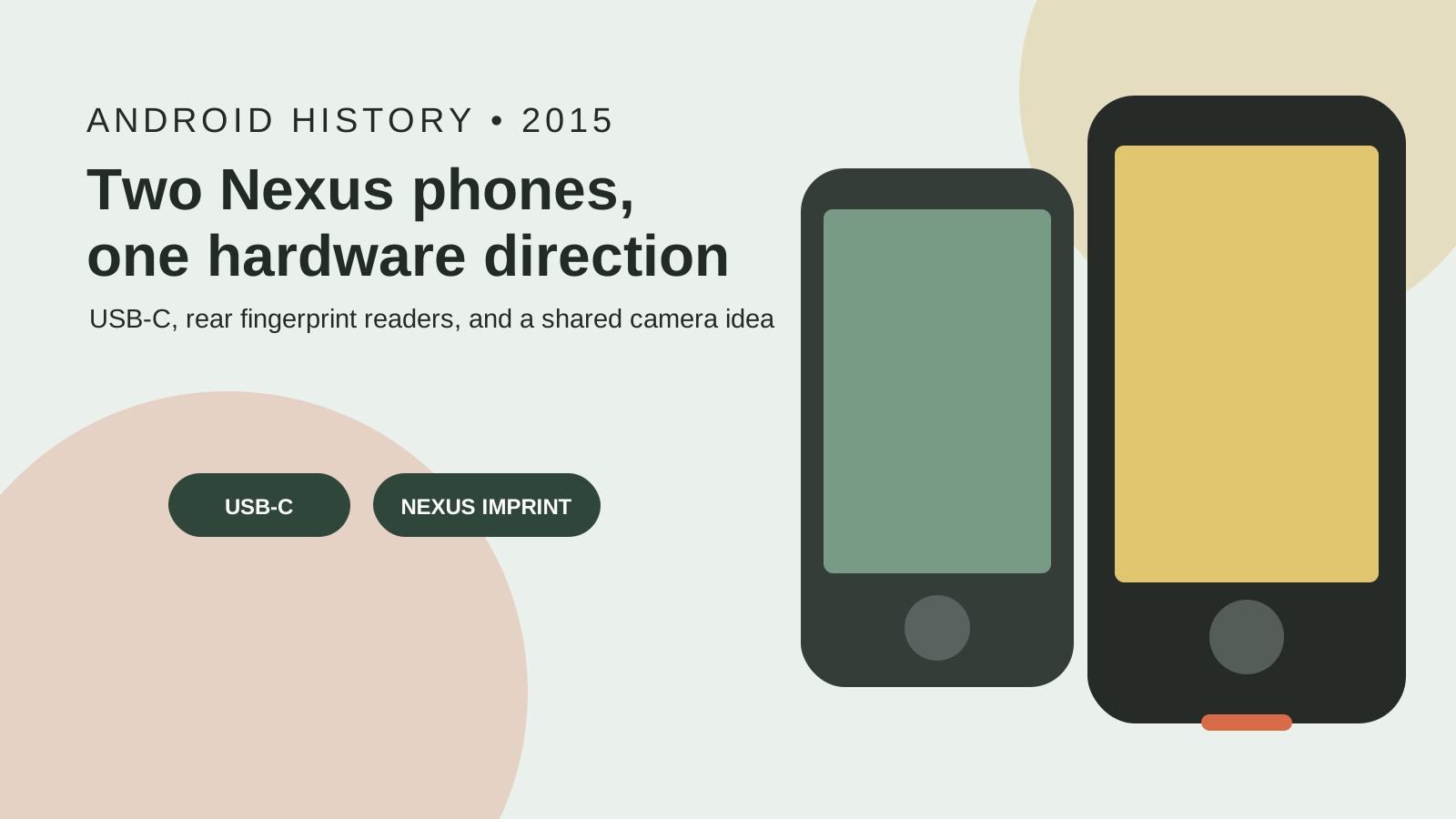
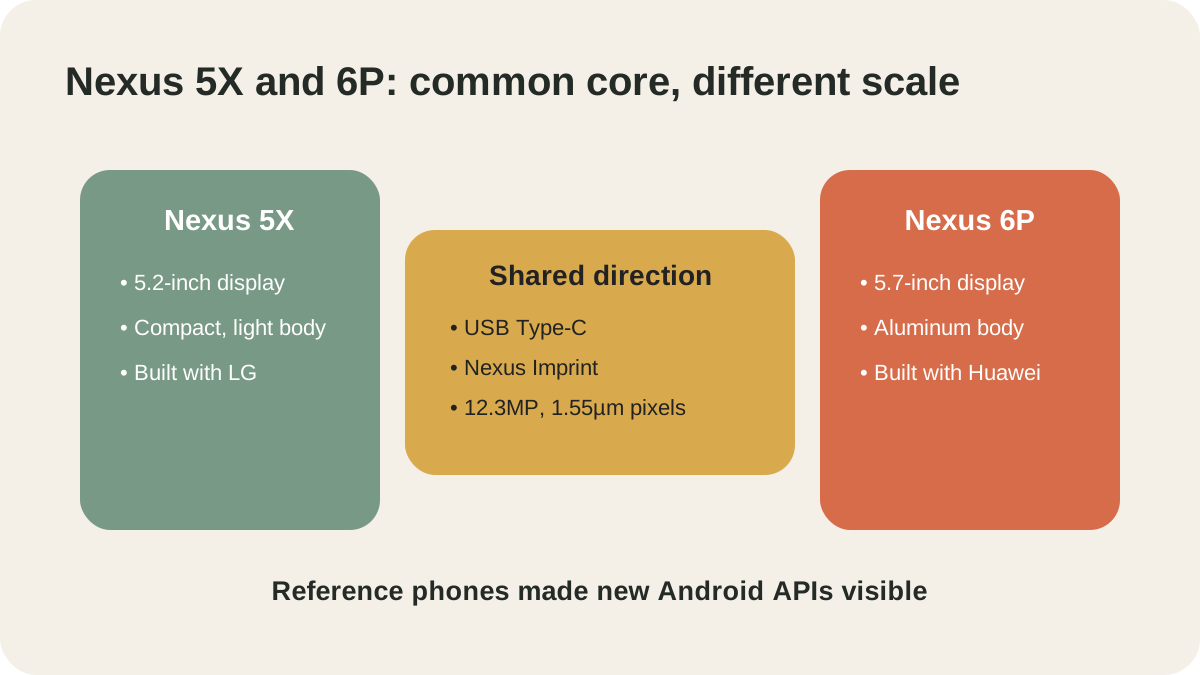
Google announced the Nexus 5X and Nexus 6P on September 29, 2015. The pair served two sizes and two manufacturing partnerships—LG built the smaller 5X, while Huawei built the larger 6P—but shared a clear hardware direction. Both used USB Type-C, a rear fingerprint reader called Nexus Imprint and a 12.3-megapixel camera built around large 1.55-micrometer pixels.
The phones arrived with Android 6.0 Marshmallow, making new platform APIs visible in real products. Google’s hardware announcement described Nexus devices as showcases for the latest Android work. In 2015, that showcase connected software permissions and fingerprint authentication to ports and sensors buyers could touch.
How were Nexus 5X and Nexus 6P different?
The Nexus 5X used a 5.2-inch Full HD display and a lighter body, aiming at people who preferred the size and spirit of the earlier Nexus 5. It used a Qualcomm Snapdragon 808 processor. The Nexus 6P used a 5.7-inch WQHD AMOLED display, a Snapdragon 810-class processor and an aluminum body. It was the first all-metal Nexus phone.
Those differences gave the lineup a compact option and a more premium large option without separating their most important new interfaces. Both cameras, ports and fingerprint readers worked from the same Android 6.0 foundation. That consistency made the pair useful reference devices for developers as well as consumer products.
| Feature | Nexus 5X | Nexus 6P | Shared historical point |
|---|---|---|---|
| Display | 5.2-inch Full HD LCD | 5.7-inch WQHD AMOLED | Two sizes for one Android release |
| Manufacturing partner | LG | Huawei | Google still relied on hardware partners |
| Construction | Compact, lighter body | Aluminum body | Different price and feel |
| Port | USB Type-C | USB Type-C | Reversible connector and fast charging direction |
| Authentication | Rear Nexus Imprint | Rear Nexus Imprint | Android 6.0 fingerprint API made physical |
| Rear camera | 12.3MP, 1.55µm pixels | 12.3MP, 1.55µm pixels | Shared emphasis on larger pixels |
Specifications differed by model and region, and a list cannot capture image processing, thermal behavior or long-term reliability. The table explains the product structure, not which phone was universally better.
Why was USB-C a major change for Nexus users?
USB Type-C introduced a reversible plug, so there was no top or bottom when connecting the cable. It also supported a modern path for charging and data, although the connector shape alone did not guarantee every possible USB speed or charging standard. Cable and charger capability still mattered.
The transition created short-term inconvenience. Existing Micro-USB cables and accessories did not plug directly into the new phones, and the early USB-C accessory market varied in quality. A new standard becomes useful through compatible chargers, laptops, hubs and peripherals, not merely through one phone port.
The two Nexus devices helped make the change visible at the center of Google’s Android lineup. USB-C later became normal across Android phones and many other device categories, but it would be too strong to say the Nexus pair caused that industry-wide transition alone.
What did Nexus Imprint add to Android 6.0?
Nexus Imprint placed a fingerprint sensor on the back where an index finger naturally rested while holding the phone. It could unlock the device and authenticate supported actions, including Android Pay in the United States. The placement was convenient in the hand, though less reachable when a phone lay flat on a desk.
More important than the brand name was the platform connection. Marshmallow introduced a standard fingerprint API, reducing reliance on unrelated manufacturer frameworks. Applications received an authentication result; they did not need access to a raw fingerprint image. Google’s later Android security guidance also noted that the 5X and 6P were encrypted by default.
Our Android 6.0 history explains how fingerprint support fit beside runtime permissions and Doze.
Why did both phones use the same camera idea?
Google emphasized a 12.3-megapixel sensor with 1.55-micrometer pixels on both phones. Larger individual pixels can gather more light than smaller pixels of the same sensor generation, all else being equal, which supported the stated goal of better low-light photographs. Resolution alone was not the product story.
Camera quality still depended on lens design, sensor behavior, processing, focus and software updates. The two phones did not have identical front cameras or every imaging feature. Their shared rear-camera specification nevertheless showed Google treating computational choices and light collection as more important than joining a simple megapixel race.
The Android developer announcement listed hardware details so app makers could prepare for new display densities, sensors and platform behavior. That developer role was central to Nexus even when consumers judged the devices as ordinary phones.
What limitations and problems should the history include?
Neither device was future-proof. The 5X and 6P had fixed storage without a microSD slot, USB-C required new accessories, and their support periods have long since ended. Some units later became associated with serious hardware reliability complaints. A historical account should not erase those ownership experiences simply because the shared features were influential.
The Nexus sales and support model also reached a narrower market than many carrier flagships. Availability, radio bands and service options varied by country. A reference phone can shape developer expectations and enthusiast discussion without becoming the world’s typical Android device.
It is therefore safest to describe the pair as a clear statement of Google’s 2015 hardware priorities, not as a flawless template that every manufacturer followed.
Why do the Nexus 5X and 6P still matter today?
The pair placed three now-familiar ideas together: a reversible USB-C port, a fast fingerprint unlock and a camera strategy that valued pixel size and processing. They made Marshmallow’s APIs understandable to buyers and gave developers concrete hardware for testing the new platform.
They also marked the end of a phase. Google introduced Pixel phones the next year as hardware “made by Google,” bringing hardware and software design under a more unified brand. Nexus 5X and 6P were therefore both forward-looking devices and the last Nexus phones.
In the Android history timeline, their significance is not that every 2015 choice survived unchanged. It is that the two reference phones showed how Android’s future would be communicated: software capability, security hardware, charging and imaging presented as one integrated experience.