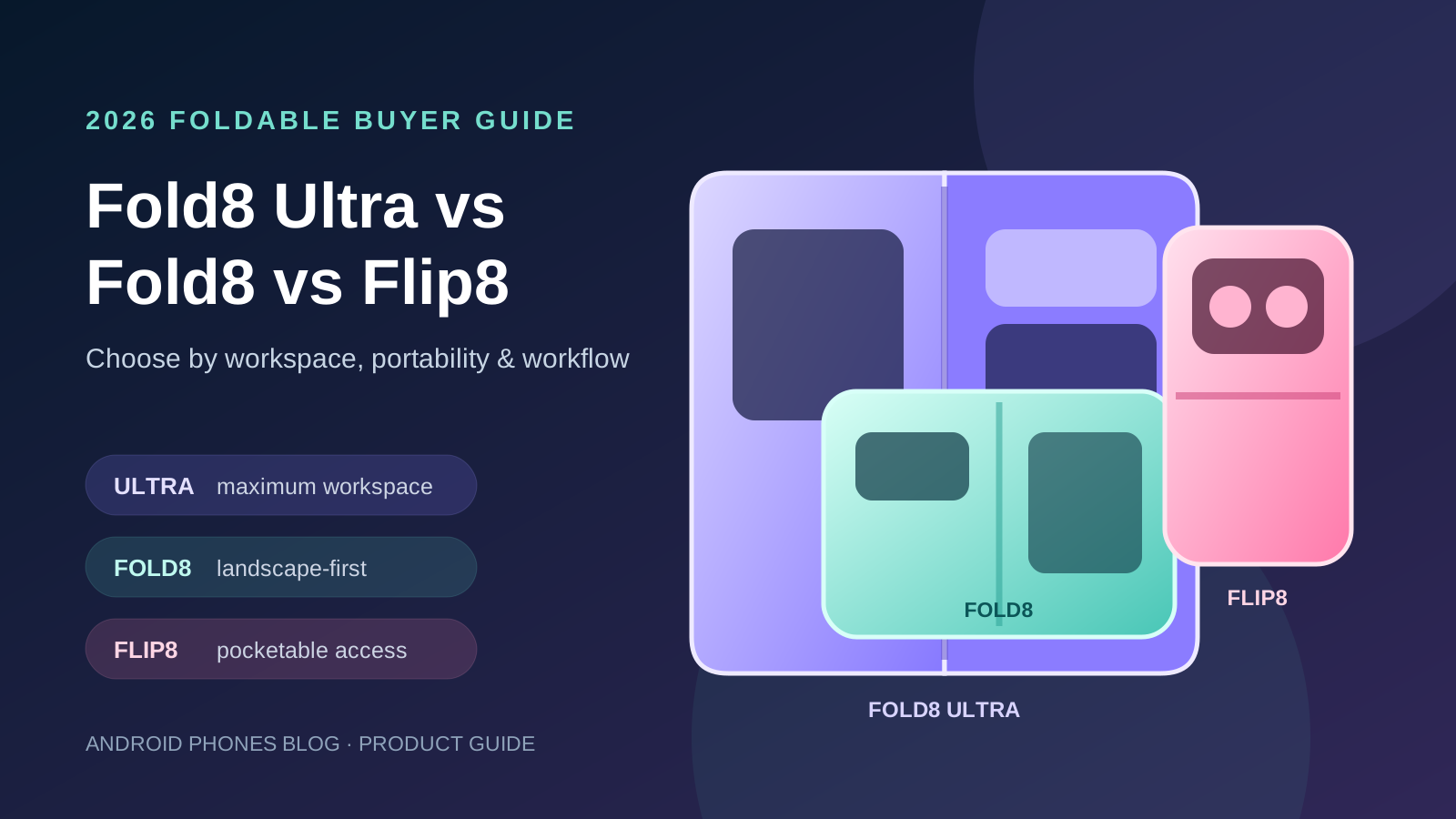
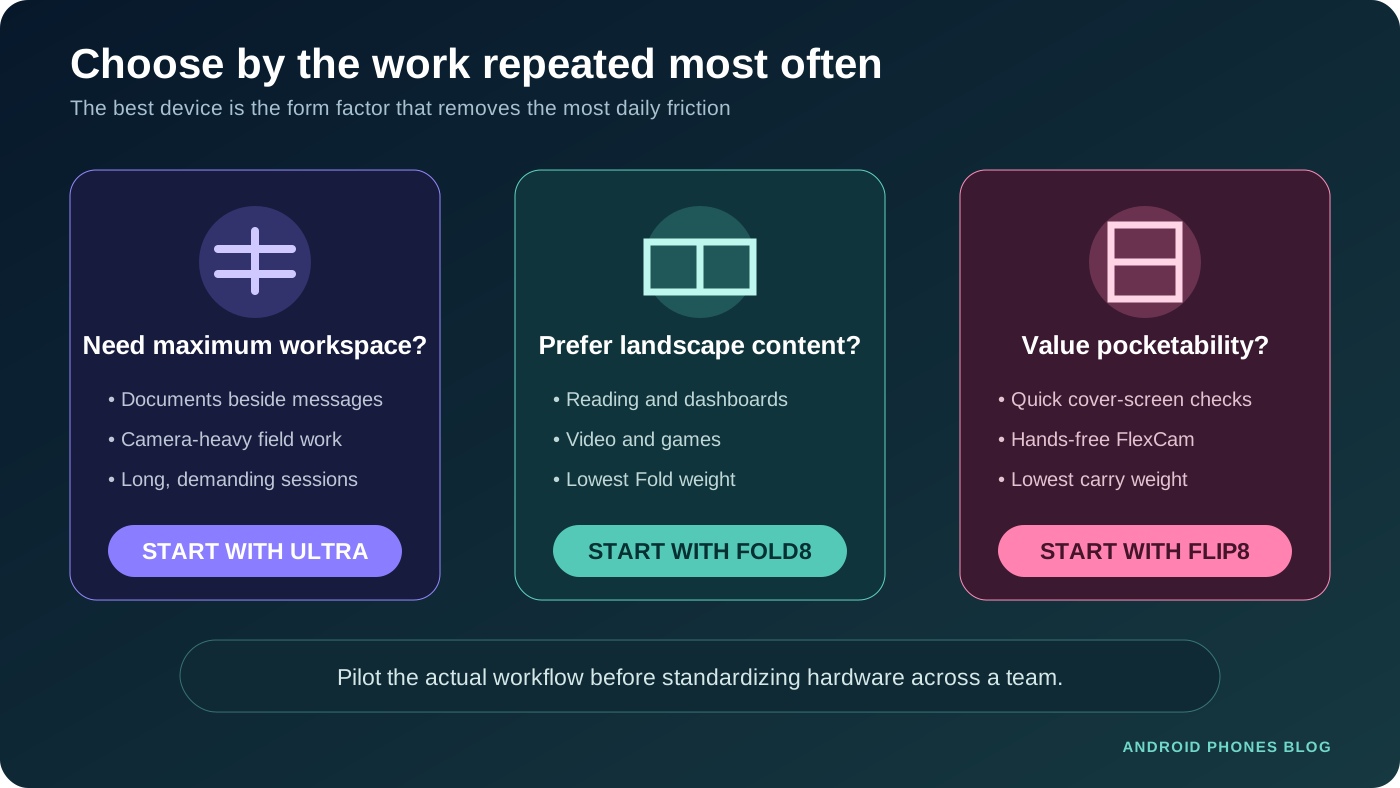
This is a comparison of Samsung’s public specifications, not our hands-on test. If you need the listed 8-inch workspace or telephoto option, evaluate Fold8 Ultra; if lower Fold weight and landscape use matter more, evaluate Fold8; for a clamshell and cover-screen workflow, evaluate Flip8. Test the actual apps, camera output and battery workload before choosing.
Key takeaways
- Samsung positions Fold8 Ultra for productivity and creation: 8-inch main screen, 200 MP main camera, 5,000 mAh battery and 215 g weight.
- Fold8 is the lightest Fold Samsung has released at 201 g and uses a distinctly shorter, wider shape built around reading, video and landscape use.
- Flip8 is a different category, not a cheaper mini Fold: it opens into a 6.9-inch conventional phone and emphasizes portability, FlexWindow and FlexCam.
- All three carry an IP48 rating, Flex Titanium display technology, Android 17 with One UI 9 and Samsung’s advertised support of up to seven OS generations and security updates.
- The Flip8 processor can vary by market. Samsung’s global and U.S. pages currently list different platforms, so compare the exact regional SKU; see the acceptance boundaries below.
Galaxy Z Fold8 Ultra vs Fold8 vs Flip8 at a glance
Samsung announced the eighth-generation Galaxy Z family on July 22, 2026. The portfolio now separates three jobs more clearly than earlier generations: Fold8 Ultra for maximum productivity and creation, Fold8 for a new compact landscape format, and Flip8 for a pocketable clamshell experience.
| Specification | Galaxy Z Fold8 Ultra | Galaxy Z Fold8 | Galaxy Z Flip8 |
|---|---|---|---|
| Main display | 8.0-inch, 2,504 × 2,256 | 7.6-inch, 1,848 × 2,448 | 6.9-inch, 1,080 × 2,520 |
| Cover display | 6.5-inch | 5.5-inch | 4.1-inch FlexWindow |
| Weight | 215 g | 201 g | 180 g |
| Unfolded thickness | 4.1 mm | 4.5 mm | 6.1 mm |
| Folded thickness | 8.9 mm | 9.7 mm | 13.1 mm |
| Typical battery | 5,000 mAh | 4,800 mAh | 4,300 mAh |
| Maximum wired charging | 45W | 45W | 25W |
| Main rear camera | 200 MP | 50 MP | 50 MP |
| Other rear cameras | 50 MP ultra-wide + 10 MP 3x telephoto | 50 MP ultra-wide | 12 MP ultra-wide |
| Maximum listed storage | 1 TB | 1 TB | 512 GB |
| Water/particle rating | IP48 | IP48 | IP48 |
| U.S. starting price shown at publication | $2,099.99 | $1,899.99 | $1,199.99 |
The prices above are Samsung U.S. starting prices displayed on August 20, 2026, before trade-in or temporary promotions. They are useful for understanding the U.S. price ladder, not for pricing an international order. Taxes, storage, carrier incentives, channel discounts and regional configurations can change the actual acquisition cost.
Galaxy Z Fold8 Ultra: 8.0-inch main display, 215g, 5,000mAh typical battery, 200MP main camera. Consider it if screen space or the listed telephoto matters; image quality and runtime need testing.
Galaxy Z Fold8: 7.6-inch main display, 201g, 4,800mAh typical battery, dual 50MP rear cameras. Consider it for lighter book-style carrying and landscape content; test cover-screen comfort.
Galaxy Z Flip8: 6.9-inch main display, 180g, 4,300mAh typical battery, 50MP main camera. Consider it for a clamshell and cover-screen interactions; it does not offer a tablet-style canvas.
These are Samsung’s published specifications, not measured performance. The full table above retains all three model headers.
Which design is easiest to carry and use every day?
The answer depends on what “portable” means for the user.
Fold8 Ultra is the most conventional book-style Fold in the group. Its 6.5-inch cover display can work as a normal phone screen, while the 8-inch interior creates the largest workspace. At 215 g and 8.9 mm when folded, it is remarkably slim for a large foldable, but it remains the widest choice when open.
Fold8 is lighter, yet its geometry is more unusual. Folded dimensions of 81.9 × 123.9 mm make it shorter and wider than a typical phone. Opened, its 4:3-oriented main display is designed for video, reading, games and landscape content. That can be excellent for someone who frequently unfolds the device, but the 5.5-inch cover screen will not feel like a conventional tall smartphone to every buyer.
Flip8 takes the opposite approach. It opens into a 6.9-inch phone but folds into an 85.7 mm-tall square. Its 180 g weight is the lowest of the three. The 4.1-inch FlexWindow supports widgets, quick actions, notifications and selected apps without opening the phone. It is therefore the most pocketable option, but it never becomes a tablet-sized workspace.
Buyers should handle all three shapes before standardizing a fleet. Display diagonal alone does not reveal keyboard comfort, one-handed reach, pocket behavior or how often a user must unfold the device.
Which model is best for multitasking and business productivity?
Fold8 Ultra is a candidate when split-screen work requires its listed larger workspace. Its larger 8-inch display has room for documents, calendars, messages and web research, while the 5,000 mAh battery and expanded graphite cooling system target longer, heavier workloads. The 45W charger is sold separately, so procurement teams should include compatible adapters and cables in the quote.
Fold8 can still run two- and three-way split views in One UI 9, but its landscape-first display changes how those windows are arranged. It may be particularly effective for reviewing dashboards, reading, video calls or pairing a document with notes. Teams should test their actual applications because Samsung states that Multi Window works only with selected apps.
Flip8 is not the strongest choice for spreadsheet-heavy or document-intensive work. Its productivity advantage is speed at the edge of a workflow: checking a calendar, reading a notification, starting Gemini from the FlexWindow or capturing content without opening the device. Field users who mostly acknowledge tasks and communicate may value that more than a larger screen.
For managed deployments, validate work profiles, VPNs, authentication, camera scanning, multi-window behavior and critical apps before purchasing at scale. The staged process in our Android 17 fleet upgrade guide also applies to new-device rollouts: approve the hardware only after representative users complete real workflows.
Which camera system offers the most business value?
Fold8 Ultra lists a dedicated telephoto option that the other two specification tables lack. Its rear system combines a 200 MP wide camera, 50 MP ultra-wide camera and 10 MP telephoto with 3x optical zoom. Samsung also lists 8K recording through its APV codec and Cine LUT controls. Those options may matter for creators or inspections needing those focal lengths and recording formats; they do not establish superior output quality.
Fold8 uses two 50 MP rear cameras—wide and ultra-wide—but has no dedicated telephoto camera in the official specification. Evaluate its output for everyday documentation; a telephoto requirement is a reason to test Ultra alongside it.
Flip8 combines a 50 MP wide and 12 MP ultra-wide camera. Its advantage is form rather than sensor count. Flex Mode and cover-screen previews support hands-free framing, high-quality selfies with the rear camera and capture from unusual angles. That can be valuable for short-form video, retail social content and field documentation where a separate stand would slow the workflow.
Avoid buying from megapixel numbers alone. Ask users to test barcode scanning, document capture, stabilization, low-light video, microphone quality and upload workflows under the conditions in which the device will actually be used.
How different are battery, charging and thermal design?
Fold8 Ultra has the largest typical battery at 5,000 mAh, followed by Fold8 at 4,800 mAh and Flip8 at 4,300 mAh. Samsung lists 45W maximum wired charging for both Fold models and 25W for Flip8. The required adapters are sold separately.
Those numbers do not predict every user’s runtime. An 8-inch screen, cellular conditions, camera work, brightness, AI processing and multi-window use can change consumption. Samsung’s own video-playback estimates are laboratory measurements, not guarantees for mixed business use.
The better procurement approach is a pilot battery test:
- Start every device at the same charge level.
- Run the actual work profile, network and screen-brightness policy.
- Measure a complete shift, including camera, navigation and hotspot use.
- Record thermal throttling, charging time and end-of-shift reserve.
- Repeat with the approved case and charger.
Battery capacity and cooling descriptions alone do not establish endurance or thermal performance. Copy this unexecuted test record for every model, using the same software, network, brightness, scene, charge level and ambient conditions:
| Trial | Shared conditions to record | Model / result / pass-fail |
|---|---|---|
| Camera | Same scene/light, distance, focal length and capture settings | Not run — attach originals and workflow criterion |
| Battery | Same starting charge, work profile, brightness, network and test duration | Not run — record end charge and tasks completed |
| Charging/heat | Same approved charger/cable, case and ambient temperature | Not run — record time, temperature and interruptions |
Choose from recorded workflow results rather than a specification ranking.
What do Flex Titanium and IP48 mean for durability?
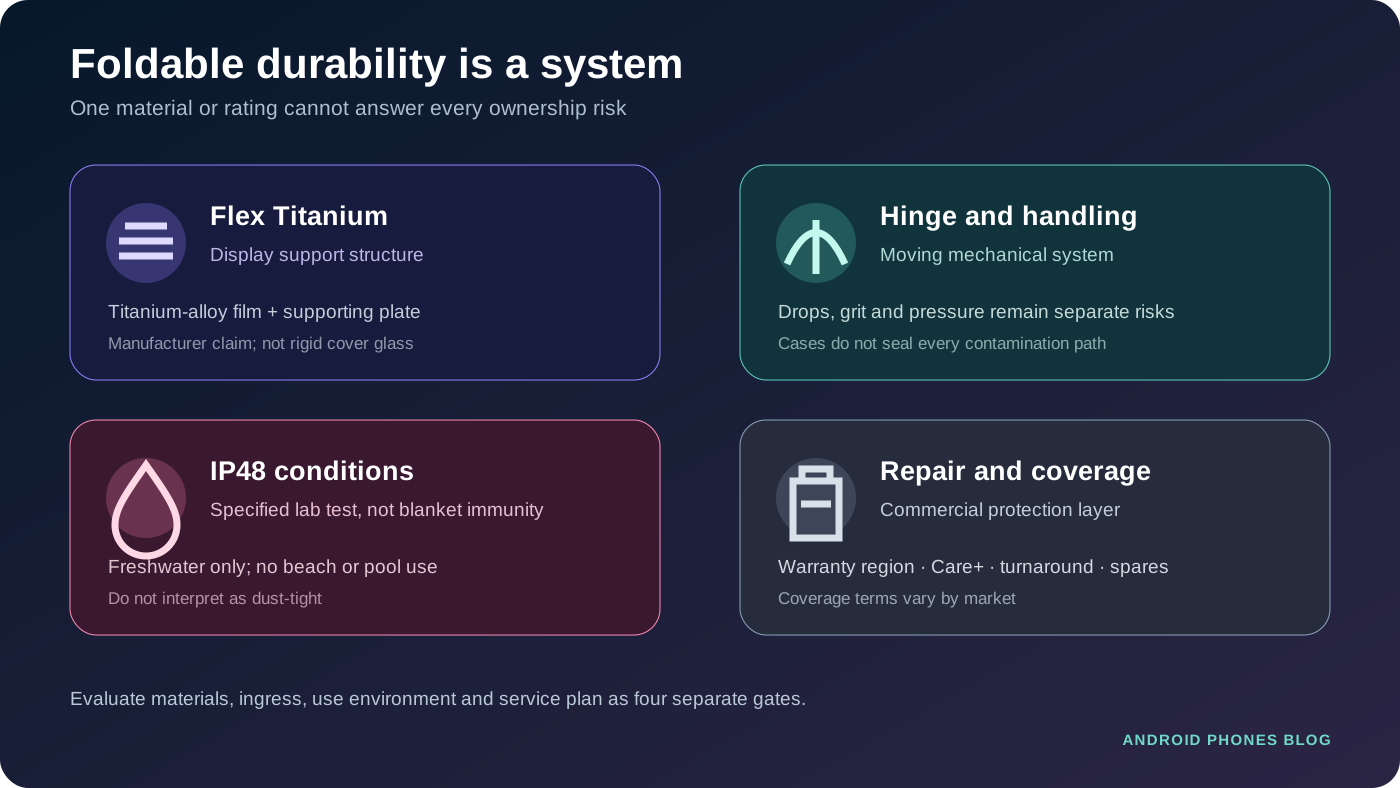
Samsung says Flex Titanium combines a titanium-alloy film below the OLED panel with a supporting titanium plate. The company states that the alloy film has 20 times the mechanical stiffness of its earlier polymer material, while the plate uses micro-patterned holes to remain flexible. Samsung also says the revised structure reduces the display module’s thickness by 10 percent and reduces crease visibility.
These are manufacturer engineering claims, not permission to treat a folding display like rigid cover glass. The internal screen still bends, the hinge still moves and repairs can be more complex than on a conventional slab phone.
Samsung lists IP48 for all three devices and describes freshwater testing at up to 1.5 meters for up to 30 minutes. It specifically advises against beach or pool use and says resistance is not permanent. IP48 should not be read as proof of a dust-tight phone. Buyers operating around construction dust, sand, metal particles or industrial debris need a risk review rather than a rating shortcut.
Samsung says the new Galaxy Z series underwent more than 100 reliability validation tests covering drops, repeated folding, pressure, moisture and debris. Laboratory validation is useful, but it does not reproduce every accident, contaminated hinge or repair history. Our history of Galaxy Z Fold3 and Flip3 durability explains why water protection, particle protection, flexible display care and hinge endurance should be evaluated separately.
Are the AI features the same on all three phones?
The three phones share Galaxy AI and Google’s new Gemini experiences, but the form factor changes how people reach them.
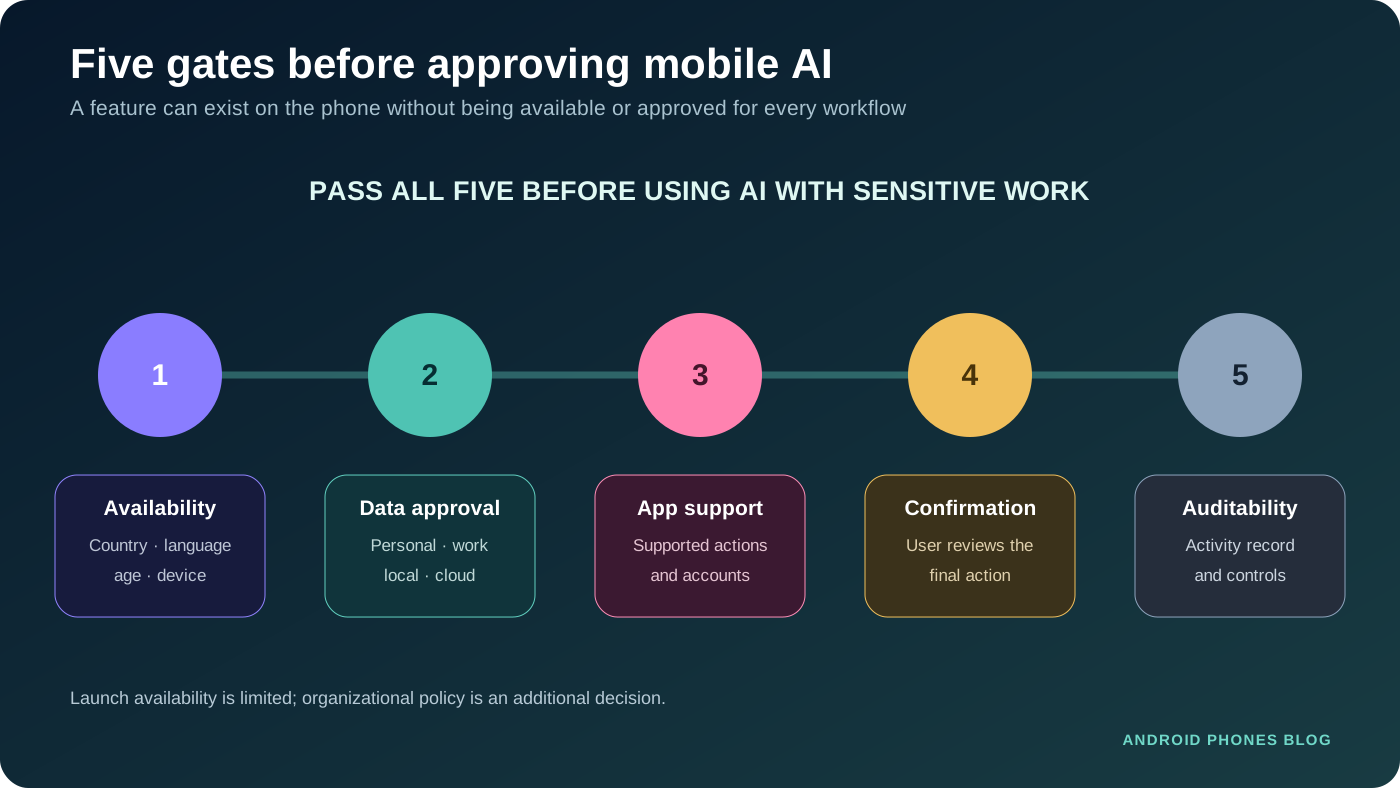
Google says Gemini Intelligence task automation expanded to more than 40 supported apps across the U.S. and Korea at launch. It can perform multi-step tasks such as shopping, reservations or travel booking while showing progress and asking for final confirmation. Use the availability and data boundaries below before enabling these services.
Fold8 Ultra and Fold8 use their larger displays for Gemini Notebook, which can bring documents, images, recordings and notes into a side-by-side workspace. Flip8 emphasizes quick access through FlexWindow. Samsung also gives the Fold models Now Nudge for suggested next actions, while Flip8 highlights Now Brief on its cover screen.
For organizations, the key question is not “Which has more AI?” It is “Which AI features are approved for our data and workflow?” Review account requirements, cloud processing, supported regions, user confirmation, auditability and the handling of work content. The Android Halo visibility guide explains why agent activity and user control matter when software acts across applications.
Do regional versions and software support affect the choice?
Keep these shared boundaries in one acceptance record. Each public reference was reviewed October 8, 2026; the final column is evidence to collect, not a completed test.
| Boundary | Public reference / reviewed | Acceptance evidence |
|---|---|---|
| Regional SKU and processor | Samsung global specifications, 2026-10-08; global Flip8 lists Exynos 2600, US page describes Snapdragon | Confirm model, radio/SIM, memory and accessories in local specification |
| OS and updates | Same global launch source, 2026-10-08: Android 17/One UI 9 and advertised support; timing varies | Record exact model and current update policy |
| Service and warranty region | Samsung availability announcement, 2026-10-08: Care+ conditions vary | Record local coverage, exclusions and repair path |
| AI eligibility | Google’s Unpacked announcement, July 22, 2026 (checked 2026-10-08): country, language, age, account and app restrictions | Confirm eligible users and supported workflow |
| Organizational data approval | Our deployment recommendation, informed by that Google announcement | Review cloud processing and user confirmation before using work data |
If cross-platform sharing is part of the rollout, use our Android and iPhone file-sharing guide to check the transfer method and compatibility evidence. This link does not confirm support for any Fold8 or Flip8 model. Verify the exact model and software before adding Apple sharing to an RFQ as a requirement.
Which Galaxy Z Fold8 should each type of buyer choose?
| Buyer or workload | Candidate to evaluate | Why | Validate before approval |
|---|---|---|---|
| Mobile executive multitasking | Fold8 Ultra | Largest workspace, strong battery and conventional cover display | App layouts, MDM, weight and travel charging |
| Content creator or inspection team | Fold8 Ultra | 200 MP main, 50 MP ultra-wide and 3x telephoto | Low-light results, storage, upload time and protection |
| Reader, gamer or media-first buyer | Fold8 | Lighter 201 g design and 4:3 landscape-oriented main screen | Cover-screen comfort and game/app scaling |
| Retail social-content team | Flip8 | FlexCam, cover preview and pocketable form | Battery, storage and regional processor |
| Communication-focused field user | Flip8 | Quick cover-screen access and lowest weight | Gloves, rugged environment and app support |
| Dust-heavy industrial deployment | None without additional review | IP48 is not a dust-tight assurance | Environmental testing, case, service and replacement plan |
| Large standardized fleet | Pilot before choosing | Foldables add form-factor and repair variables | TCO, repair turnaround, spares and user training |
The right device is the one whose form factor removes enough friction to justify the cost and repair complexity. A buyer who rarely unfolds a Fold may be paying for unused hardware. A creator who constantly carries a second camera may recover the Ultra premium through a simpler workflow. A field employee who needs one-handed checks may be more productive with Flip8 than with either larger Fold.
What should a procurement RFQ include?
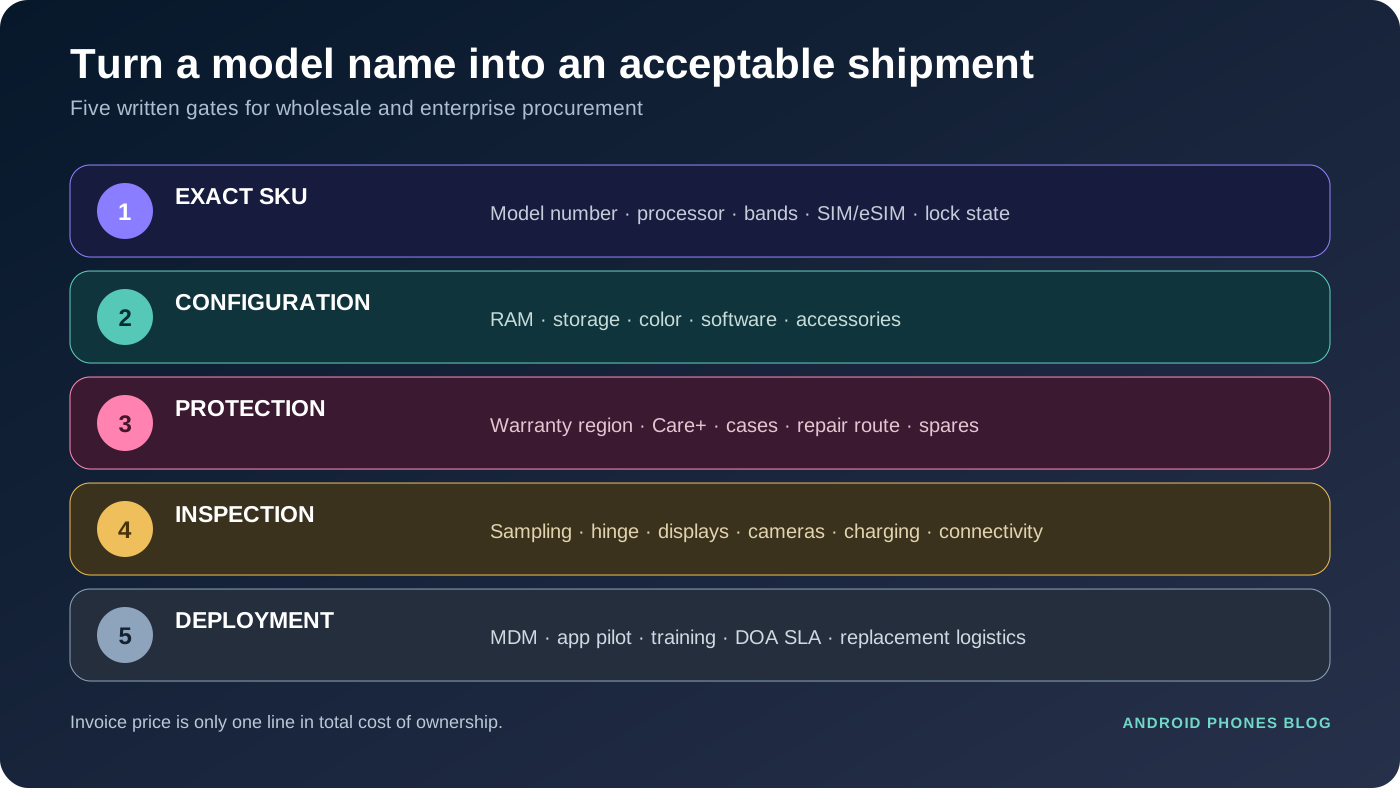
Do not request only “Galaxy Z Fold8” and a quantity. Record the commercial acceptance criteria that make a shipment usable.
| RFQ field | What to specify |
|---|---|
| Exact model/SKU | Regional model number, processor and radio configuration |
| Memory and storage | Required RAM/storage tier; substitutions need approval |
| SIM and carrier state | Physical SIM, eSIM, lock status and supported bands |
| Software | Android 17/One UI 9 baseline and update state |
| Condition | New, refurbished or other; define cosmetic and functional acceptance |
| Accessories | Charger wattage, cable, case and packaging requirements |
| Warranty | Valid country, term, authorized repair path and exclusions |
| Protection plan | Samsung Care+ availability, deductible and enrollment deadline |
| Inspection | Sampling rate, hinge, display, camera, charging and connectivity tests |
| Failure handling | DOA window, replacement SLA, return freight and spare ratio |
Total cost should include protective accessories, chargers, enrollment, repair turnaround, spare units, staff training and expected residual value—not only the invoice price. Clarify whether you need a seller to supply devices or an integrator to configure, enroll, test and deploy them; our phone wholesaler versus rollout integrator guide separates those scopes.
Final recommendation
If an 8-inch canvas or dedicated telephoto is required, test Fold8 Ultra first. If lighter book-style carrying and landscape content are priorities, test Fold8. If a clamshell and cover-screen access suit the workflow, test Flip8. These are conditional starting points from published specifications; the same-condition record above should determine the choice.
For individual buyers, choose by the task you repeat most often. For wholesale or enterprise orders, choose only after confirming the regional SKU, piloting critical workflows and pricing the complete support lifecycle. The form-factor benefit should be visible in the workflow before the premium is accepted in the budget.
Review record — October 8, 2026: Replaced unsupported rankings with task conditions, converted the dense specification graphic to readable text, and added unexecuted trial and shared acceptance records. Removed the history banner; comparison context is the July 22, 2026 announcement.