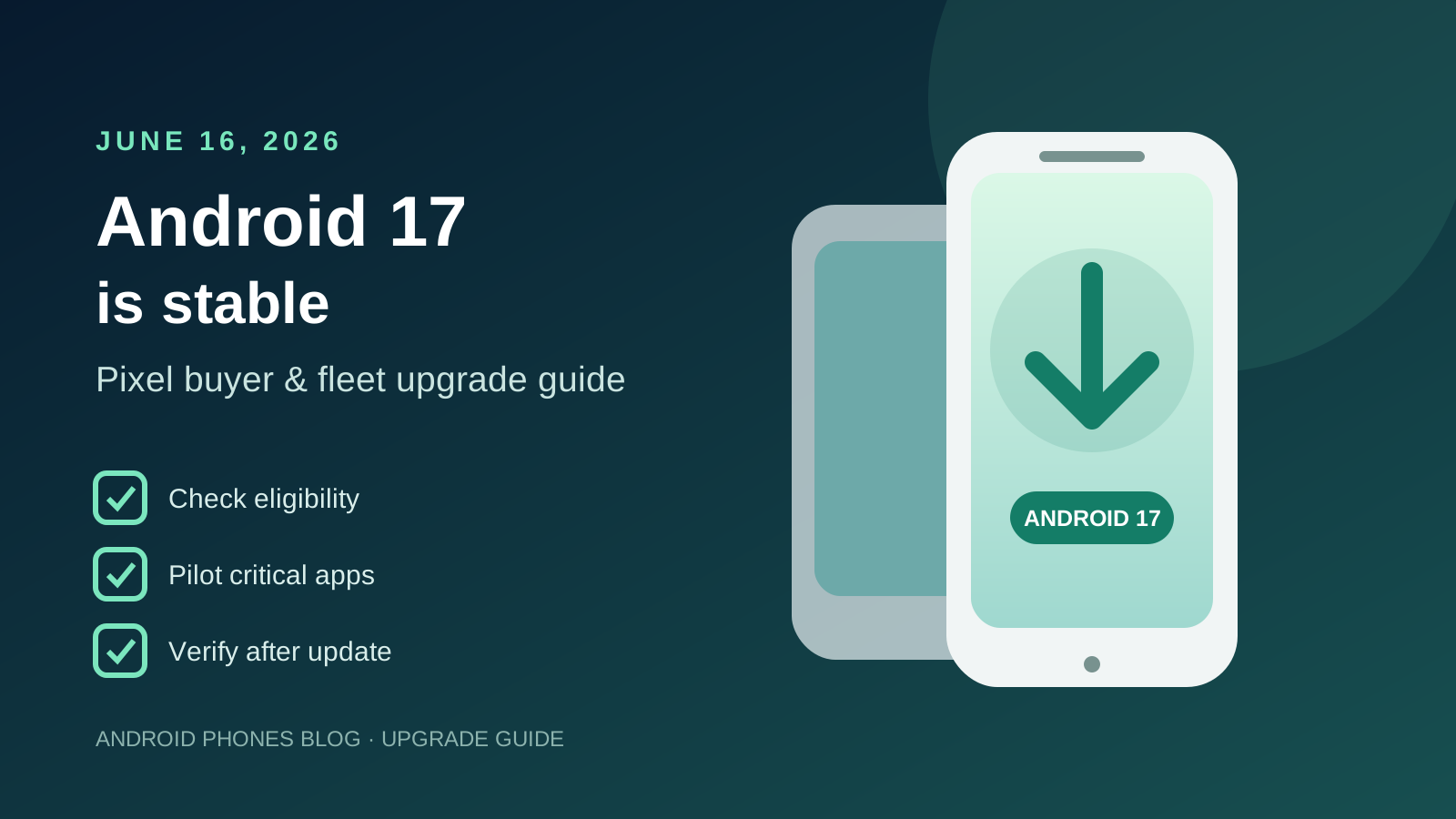
Android 17 stable began rolling out to supported Pixel devices on June 16, 2026, with availability released in phases depending on the carrier and device. Other eligible Android phones will follow on manufacturer-specific schedules during 2026. Before upgrading, verify your exact device eligibility, deployment status, backups and every business-critical app or management workflow. (Google’s June 16 release announcement)
What does the Android 17 stable release actually mean?
The Android 17 stable release marks the point at which Google finalized the platform for production devices and developers. For consumers, the important distinction is that stable availability is not the same as immediate installation availability.
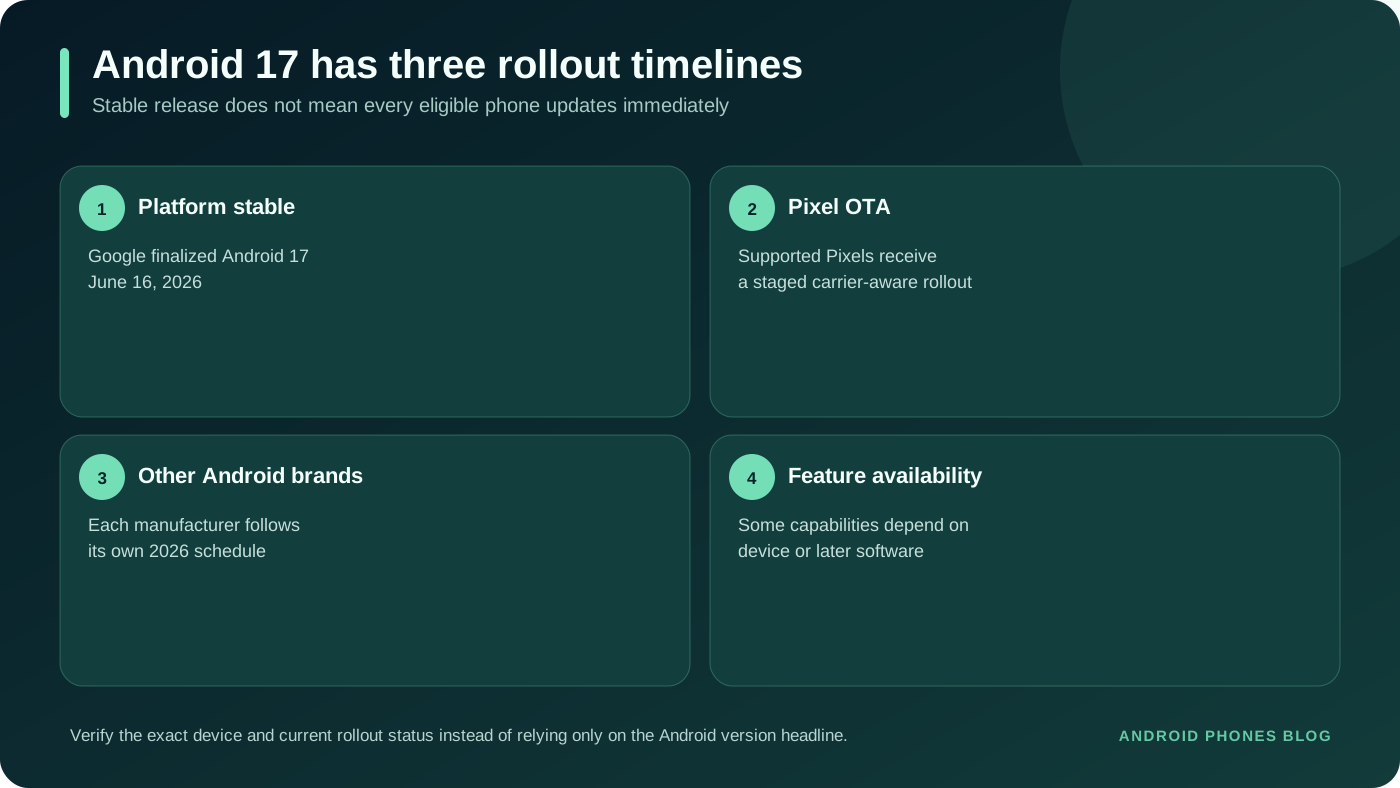
Google started the rollout to supported Pixel devices on June 16, 2026. However, over-the-air (OTA) updates are staged, meaning two owners of the same model may receive the update on different days depending on carrier approval, device configuration and rollout scheduling. Other Android manufacturers will distribute Android 17 throughout 2026 according to their own software schedules rather than Google’s Pixel timeline. (Google’s Android 17 feature overview)
For buyers, that means three separate timelines exist:
| Milestone | What it means |
|---|---|
| Android 17 stable release | Google finalized the operating system on June 16, 2026. |
| Pixel OTA rollout | Supported Pixel devices receive staged updates over time. |
| Other Android brands | Android manufacturers publish their own rollout schedules during 2026. |
Feature availability also deserves separate consideration. Some Android 17 capabilities arrive immediately with the base operating system, while others depend on later software updates, device capabilities or manufacturer implementation.
Which Pixel devices officially support the Android 17 OTA?
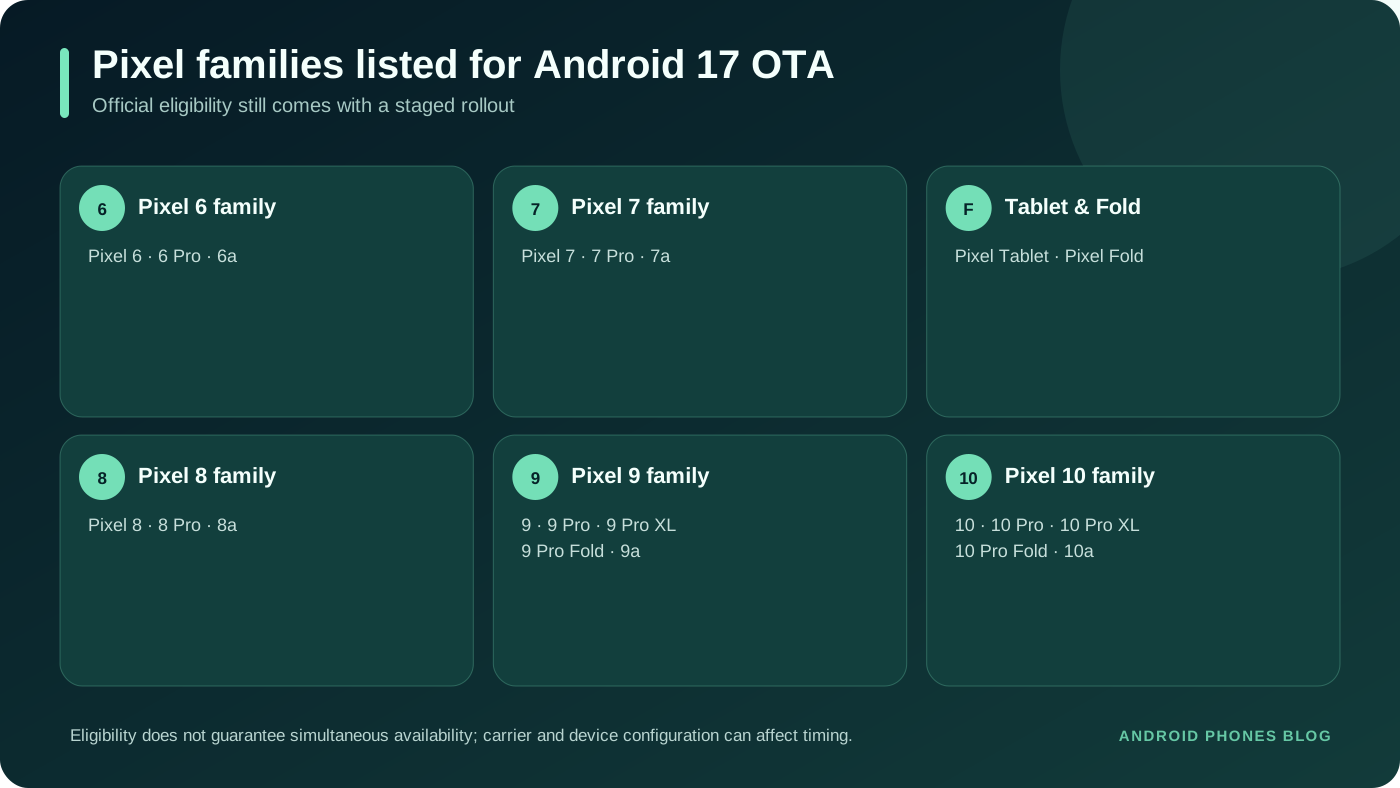
Google officially lists the following Pixel devices for Android 17 OTA updates.
| Pixel generation | Supported devices |
|---|---|
| Pixel 6 family | Pixel 6 • Pixel 6 Pro • Pixel 6a |
| Pixel 7 family | Pixel 7 • Pixel 7 Pro • Pixel 7a |
| Tablet & foldable | Pixel Tablet • Pixel Fold |
| Pixel 8 family | Pixel 8 • Pixel 8 Pro • Pixel 8a |
| Pixel 9 family | Pixel 9 • Pixel 9 Pro • Pixel 9 Pro XL • Pixel 9 Pro Fold • Pixel 9a |
| Pixel 10 family | Pixel 10 • Pixel 10 Pro • Pixel 10 Pro XL • Pixel 10 Pro Fold • Pixel 10a |
Being on this list means Google provides Android 17 OTA support for the model. It does not guarantee that every device receives the update simultaneously because the rollout is staged. (Google’s official Pixel eligibility list)
For buyers considering a used or refurbished Pixel, update eligibility should never be assumed simply from the marketing name.
Before purchase or deployment, verify:
- Exact model designation
- Carrier state (locked or unlocked)
- Region or market variant
- Storage configuration
- Battery health and condition
- Enterprise management enrollment
- Bootloader status
- Repair history
- Whether the device has been modified
Modified or heavily customized devices may behave differently from standard Google-supported configurations, so avoid assuming identical update behavior.
How should buyers evaluate imported and refurbished Pixel phones?
Android version support is only one part of a buying decision.
Professional buyers typically verify the entire device lifecycle before assuming long-term usability.
| Verification item | Why it matters |
|---|---|
| Exact model | Confirms official OTA eligibility |
| Carrier status | May influence staged rollout timing |
| Region | Helps identify original sales channel |
| Storage capacity | Ensures deployment meets application needs |
| Battery condition | Important for long-term reliability |
| Bootloader history | Modified devices may not behave like standard deployments |
| Repair history | Major repairs can affect long-term reliability |
| MDM enrollment | Enterprise devices may already be managed |
| Factory reset status | Required before redeployment |
Fleet administrators should also confirm whether a device remains associated with previous enterprise management, activation policies or organizational ownership before adding it to a new deployment.
What should you complete before installing Android 17?
Google notes that most users can upgrade through the normal OTA process without performing a factory reset, but recommends backing up data before installation. (Android Developers’ installation guidance)
A structured pre-upgrade checklist helps reduce avoidable deployment issues.
| Check | Why it matters |
|---|---|
| Backup completed | Protects personal or business data |
| Free storage available | Reduces installation failures |
| Battery charged or connected to power | Prevents interruption |
| Stable Wi-Fi connection | Improves download reliability |
| Apps updated | Reduces compatibility surprises |
| Authenticator and recovery methods verified | Prevents account lockout |
| Work profile or MDM reviewed | Confirms enterprise readiness |
| VPN profiles and certificates checked | Important for secure business access |
| Banking and payment apps reviewed | Some apps may require updates after major OS upgrades |
| Bluetooth accessories available | Allows post-upgrade testing |
| Maintenance window planned | Especially important for business fleets |
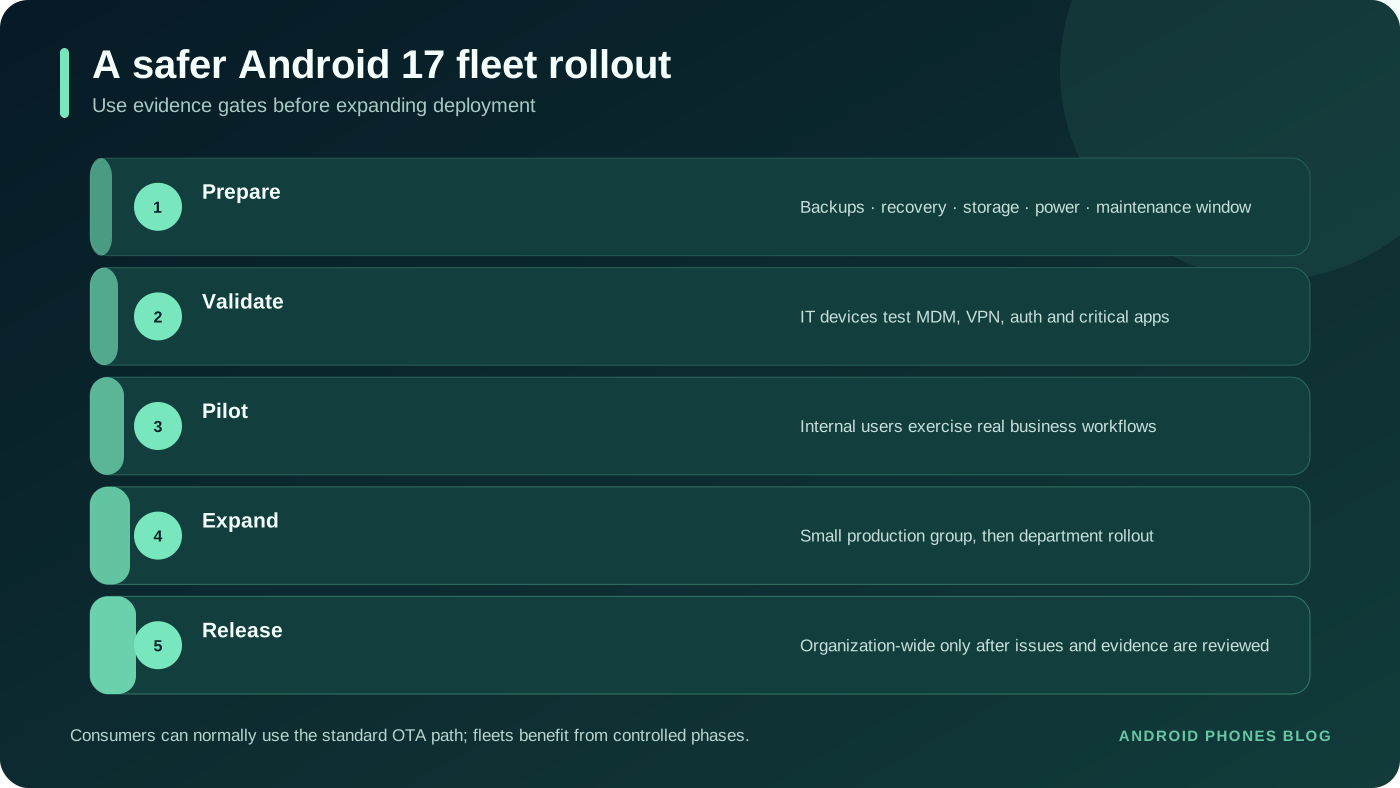
For enterprise environments, avoid upgrading every device simultaneously. A phased deployment allows validation before organization-wide rollout.
Which Android 17 features matter most to everyday buyers?
Android 17 focuses on multitasking, privacy, safety and usability rather than a complete interface redesign.
The most useful additions include:
| Feature | Buyer value | Deployment caveat |
|---|---|---|
| Bubbles floating windows | Turn an app into a compact floating window for multitasking | Large screens use a dedicated bubble bar |
| Screen Reactions | Record the screen and selfie camera together | Availability depends on supported devices and software |
| Foldable gaming mode | Optimized 50/50 game and gamepad layout | Google said availability follows in coming months |
| Temporary precise location | More granular location sharing | Apps must support the permission model |
| Specific-contact sharing | Share selected contacts instead of the full address book | Depends on application implementation |
| Enhanced Mark as lost in Find Hub | Better protection using biometric locking | Requires supported software components |
| Live Threat Detection improvements | Better protection from suspicious apps and scams | Security features continue evolving |
| Advanced Protection improvements | Stronger protection against sophisticated threats | May require user configuration |
| PIN guess defenses | Longer delays after repeated incorrect PIN attempts | Built into supported security behavior |
| Hide app names | Additional privacy on the home screen | User-controlled setting |
| Expanded parental controls | Broader family management | Feature availability may vary |
| Assistant volume control | Separate audio adjustment | User setting |
| Expanded dark theme controls | More display customization | May vary by implementation |
| RAM-based app memory limits | Helps prevent extreme app memory usage | Applies only on a subset of devices |
Google also announced that Gemini Intelligence will arrive later in the summer for select advanced devices. That rollout is separate from basic Android 17 eligibility and should not be treated as a standard Android 17 feature available across every supported Pixel. (Google’s Android 17 feature overview)
For readers interested in Android’s evolving privacy model, see our guide to Android 17 precise location controls.
What should you verify after upgrading?
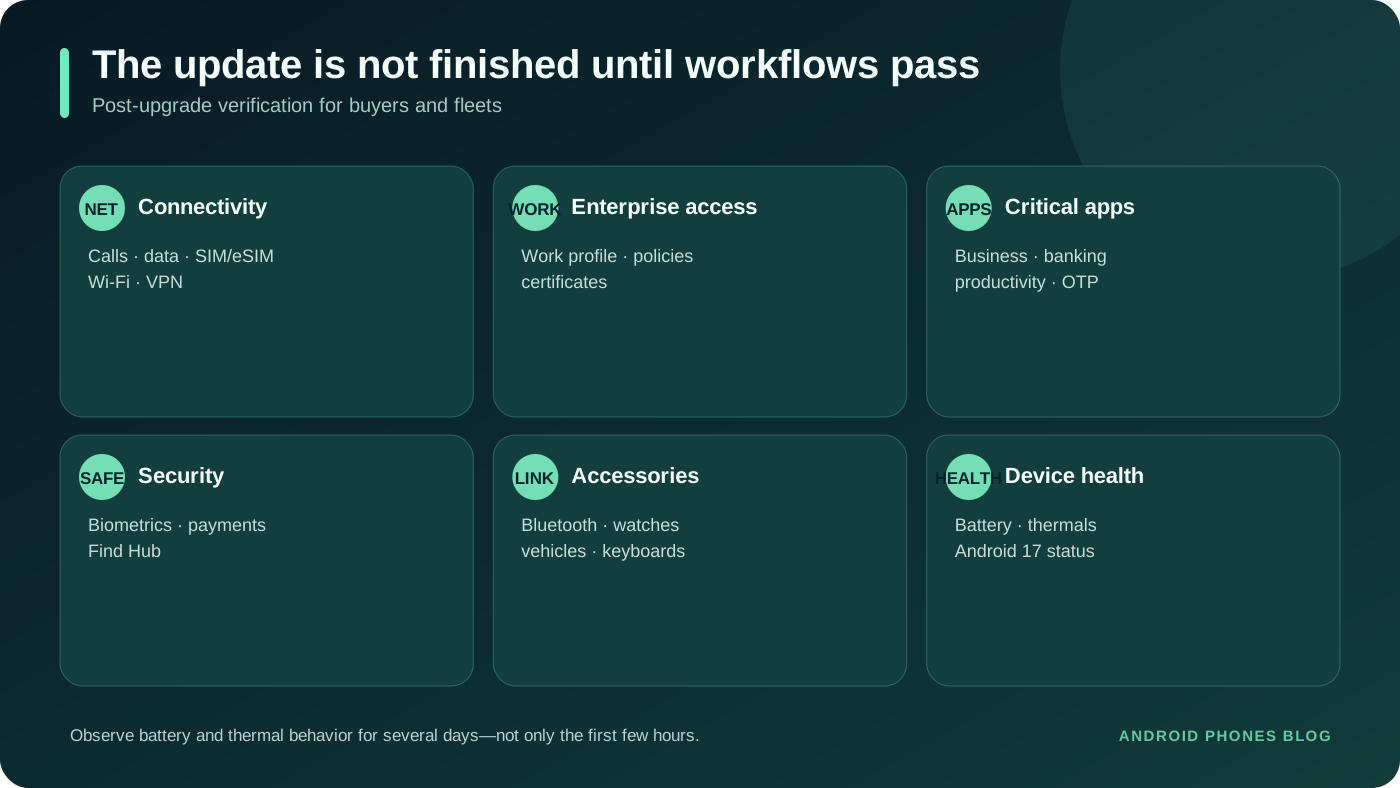
A successful installation should be followed by practical testing rather than assuming everything works immediately.
| Verification | What to confirm |
|---|---|
| Calls, mobile data, SIM or eSIM | Voice and cellular connectivity |
| Wi-Fi and VPN | Corporate and home network access |
| Camera | Photo and video capture |
| Bluetooth accessories | Earbuds, watches, keyboards and vehicles |
| Notifications | Messaging and work alerts |
| Work profile | Enterprise applications and policies |
| Critical applications | Business, banking and productivity apps |
| Biometrics and payments | Fingerprint, face unlock and payment services |
| Find Hub | Device location and Mark as lost functionality |
| Battery and thermal behavior | Observe for several days rather than a few hours |
| Update status | Confirm Android 17 installed successfully |
For enterprise deployments, validation should include business workflows rather than simply confirming the device boots successfully.
What changes affect every app, and which only affect apps targeting API 37?
This distinction matters for buyers, IT teams and application owners.
Some Android 17 behavior changes affect all applications, regardless of which Android SDK they currently target.
Examples include:
- RAM-based memory limits that apply only to a subset of devices and primarily target extreme memory use
- Compatibility and security behavior that should be validated even without retargeting
- WebOTP-related protection changes that can influence authentication flows (Android Developers’ all-app changes)
Other changes apply only after developers explicitly target Android 17 (API 37).
Examples include:
- Local network access permission
- Standard SMS OTP protection behavior
- Background audio hardening
- Additional security and compatibility requirements (Android Developers’ target-37 changes)
For business deployments, the practical recommendation is straightforward:
- Test the currently published application on Android 17.
- Validate workflows before changing the application’s target SDK.
- Only retarget after testing the Android 17-specific behavior changes. (Android Developers’ migration guide)
What should app teams and fleet administrators test first?
Most organizations do not need to study every platform API before approving Android 17.
Instead, focus on business-critical workflows.
Priority validation areas include:
- Memory behavior under real workloads
- Local network access (when targeting Android 17)
- SMS and OTP authentication
- Background audio behavior
- Contact access
- Location permissions
- Large-screen layouts
- Enterprise work profiles
- VPN connectivity
- Internal line-of-business applications
These checks should be completed on pilot devices before expanding deployment across larger fleets.
Organizations using managed Android devices should also review internal policy changes alongside broader platform guidance such as Google Play’s 2026 policy changes, since platform updates and Play policy requirements often affect enterprise application planning together.
Should you delay the upgrade or install it immediately?
There is no universal answer.
For most personal Pixel owners running supported devices, installing Android 17 through the normal OTA process is the safest path once the update becomes available.
Business environments usually benefit from a staged rollout.
A sensible deployment sequence looks like this:
- IT validation devices
- Internal pilot users
- Small production group
- Department rollout
- Organization-wide deployment
This approach gives administrators time to identify application issues before they affect every employee.
Similarly, resellers refurbishing Pixel inventory should validate representative devices before advertising Android 17 readiness across an entire batch.
What should you know about rollback and manual installation?
Ordinary users should normally rely on Google’s standard OTA update process.
Before upgrading:
- Back up important information.
- Confirm account recovery methods.
- Verify critical business applications.
- Schedule enough time for post-installation testing.
Google also provides manual flashing tools and downloadable system images for controlled testing scenarios. Those methods are primarily intended for development, regression testing and managed validation environments. They can involve different data-handling risks depending on the chosen process and should be performed according to Google’s current instructions rather than treated as a routine consumer upgrade path. (Android Developers’ installation guidance)
Android 17 represents a mature platform release rather than a dramatic redesign. The most important decision is not whether Android 17 is available—it is whether your specific device, applications and workflows are ready for the upgrade. Buyers, refurbishers, fleet managers and developers who verify compatibility before deployment will generally experience a smoother transition than those who upgrade every device immediately. For additional security context, see our coverage of Android 16 security and Live Updates.