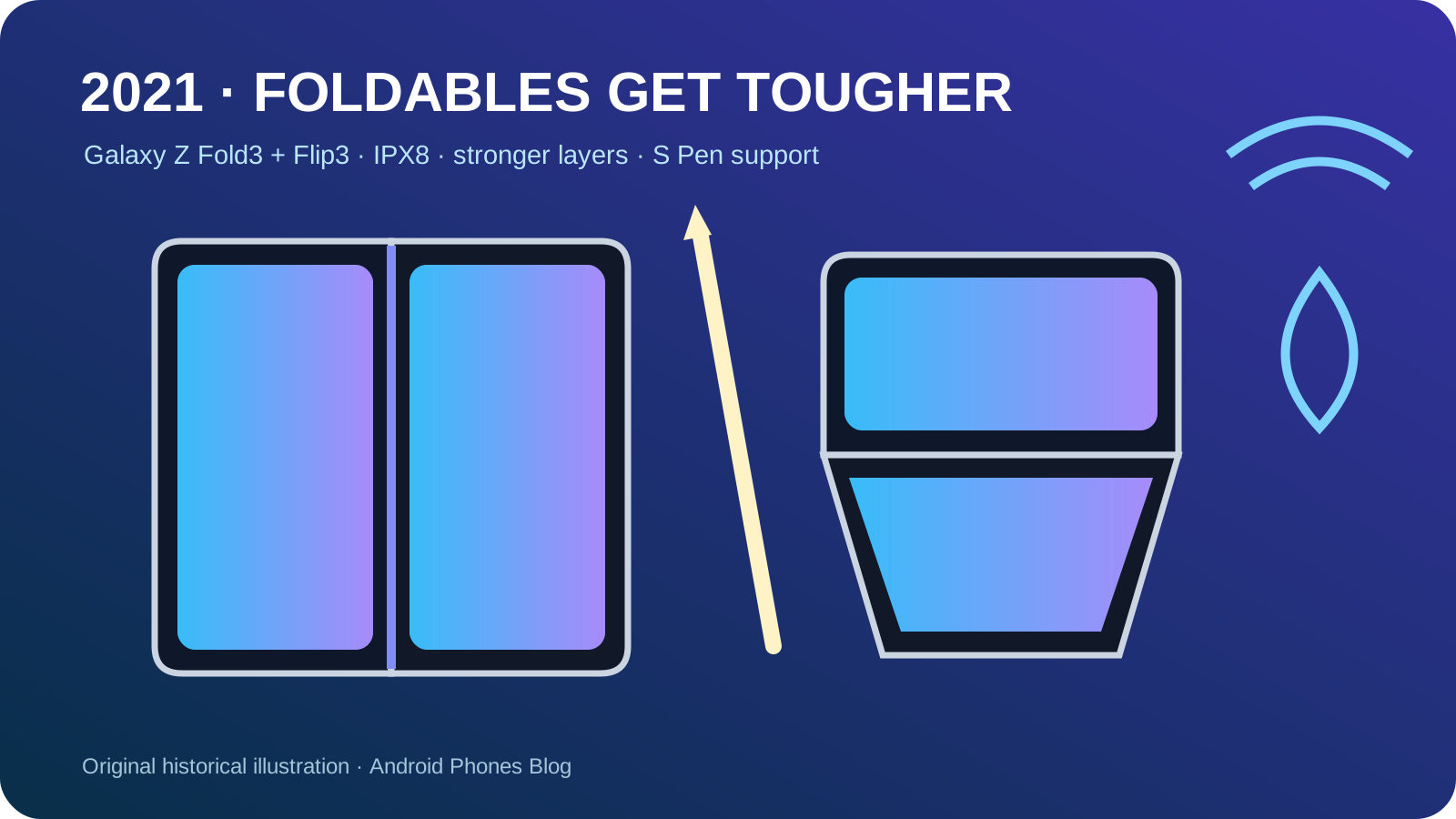
Samsung introduced the Galaxy Z Fold3 5G and Galaxy Z Flip3 5G on August 11, 2021. Both carried an IPX8 water-resistance rating, which Samsung described as a first for foldable smartphones. The company also announced a stronger aluminum frame, Gorilla Glass Victus on exposed outer areas and revised layers that made the main folding screens more durable than their predecessors. The Fold3 added the first S Pen support on a foldable device.
The official launch statement shows why this third generation was a milestone: Samsung was no longer explaining only why a screen should fold. It was addressing whether a foldable could tolerate more ordinary daily conditions.
Why was the third generation a durability turning point?
The 2019 Galaxy Fold established a book-like device, and the 2020 Z Flip added a clamshell design with ultra-thin glass. Both also exposed category-specific concerns: a flexible screen could not be protected exactly like a rigid phone, and a moving hinge created new paths for wear and particles.
Fold3 and Flip3 combined several responses rather than claiming one magic material. Water resistance required internal sealing and corrosion protection. The frame and outer glass addressed drops and scratches. A new protective film and optimized display-panel layers addressed the main screen. Hinge testing addressed repeated movement.
| 2021 change | Area addressed | Important limit |
|---|---|---|
| IPX8 rating | Water exposure | No certified dust-resistance number |
| Armor Aluminum | Frame strength | Does not prevent every impact or bend |
| Gorilla Glass Victus | Outer surfaces | Main folding screen uses a different stack |
| Revised film and panel layers | Flexible display durability | Still requires foldable-specific care |
| Folding-cycle test | Repeated hinge motion | Does not reproduce every real accident |
The combined approach is the historical point. Foldable durability was becoming a system of defined engineering problems rather than one broad reassurance.
What did IPX8 protect against—and what did the X mean?
An IP code has separate positions for solid-particle and water ingress. In IPX8, the X means the product did not carry a stated certified solids rating in that position, while 8 indicates water-resistance testing under specified conditions. Samsung’s footnote described immersion in up to 1.5 meters of fresh water for up to 30 minutes and warned against beach or pool use.
This distinction is essential for a folding phone. Water and dust are different problems. A device can be sealed and treated against water while its moving hinge still lacks a certified dust rating. The “8” should not be read as an overall durability score or proof that all liquids are harmless.
Water resistance can also decrease with wear or damage. It is a tested property under defined conditions, not an invitation to operate the device underwater. The best historical claim is that Samsung added a meaningful protection absent from its earlier foldables while an important dust question remained open.
How were the screen and hinge made more robust?
Samsung said the main screen was 80 percent more durable than the previous generation through a stretchable PET protective film and optimized panel layers. The company used a material it called Armor Aluminum for the frame and Gorilla Glass Victus on cover displays and rear glass. The hinge retained Sweeper fibers intended to help repel particles, with shorter bristles adapted to the updated mechanism.
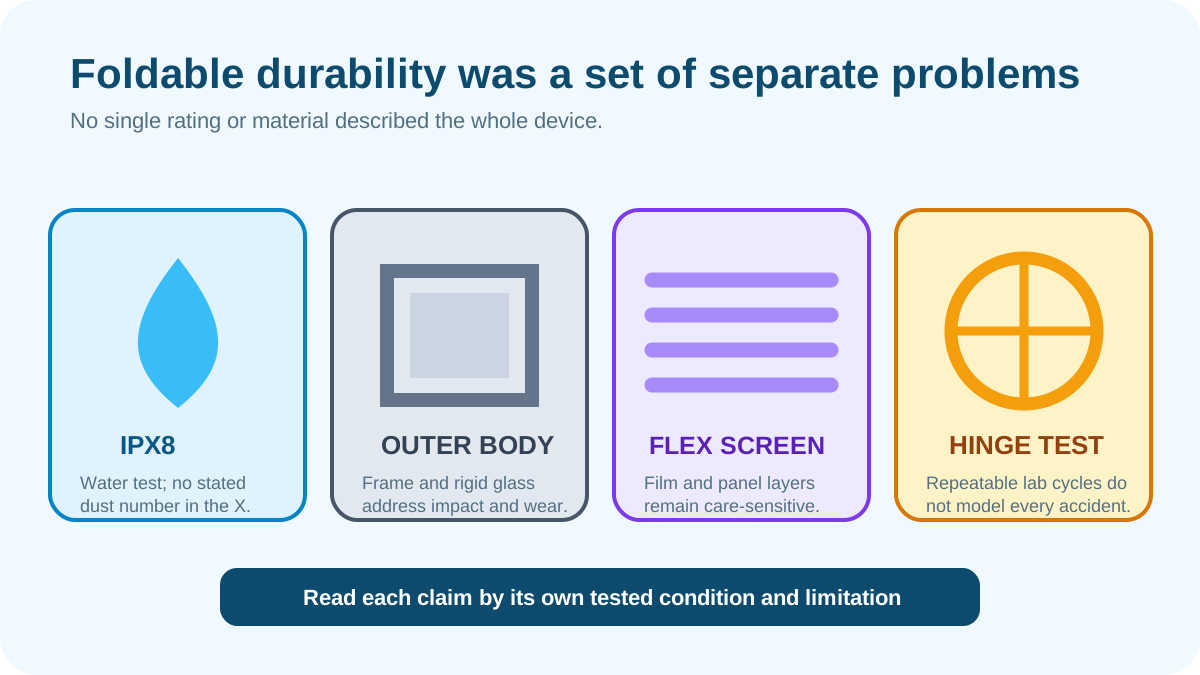
Those percentage and material claims came from Samsung’s launch documentation and should be attributed accordingly. “80 percent more durable” described the company’s comparison of the main screen with its preceding display; it was not a universal measurement against every kind of scratch, drop or pressure.
The flexible display still included a crease and a softer top surface than conventional rigid cover glass. Strengthening it reduced risk without making the care model identical to a slab phone.
Why was S Pen support a difficult foldable feature?
A stylus concentrates force at a small point, exactly the kind of pressure a folding display must manage carefully. Samsung developed an S Pen Fold Edition with a retractable tip and specified it, or the S Pen Pro in the correct mode, for use on the Fold3 main screen. Other pens were not approved and could damage the display.
The S Pen made the Fold3’s large canvas more useful for handwriting, annotation and precise selection. Samsung’s design account also highlighted a taskbar, multi-window layouts and Flex mode for viewing and working at the same time.
This was both a productivity feature and a durability demonstration. Supporting a pen required Samsung to define safe tip behavior and reinforce the screen stack sufficiently for repeated contact. It did not mean the folding panel could accept any pointed object.
How did Fold3 and Flip3 serve different everyday needs?
Fold3 continued the phone-to-tablet idea. Its open 7.6-inch display could show several apps, and the S Pen targeted work that benefited from space. An under-display camera reduced the visual interruption in the main screen, although image quality and visibility involved their own tradeoffs.
Flip3 prioritized compactness and quick access. Its cover display was four times larger than the preceding Flip cover screen by Samsung’s measurement, allowing more useful notifications, controls and previews while closed. Flex mode supported hands-free photos, video and calls.
Neither shape was universally better. Fold3 asked users to accept more size and weight for an expansive working area. Flip3 folded a normal phone experience into a smaller carried shape but did not open into a tablet. Their shared durability work helped both approaches feel like members of a stable product family.
What did Samsung’s laboratory tests prove?
Samsung reported that Bureau Veritas verified testing for 200,000 folds and later showed environmental, water-resistance, S Pen and folding procedures in an official testing overview. Repeatable tests are valuable because they let engineers compare designs under controlled loads.
They do not reproduce every owner’s life. A cycle machine applies a defined motion; a real phone may be dropped while open, exposed to grit or pressed by an object in a bag. Temperature, repairs and existing damage can change outcomes. The test count should therefore be read as evidence about one validation procedure, not a guaranteed number of folds for every unit.
This careful reading applies to conventional phones too. Ratings and lab tests describe specified conditions. Good buying decisions combine them with repair options, warranty terms and realistic handling.
The 2021 improvements moved foldables closer to ordinary phones but did not erase their special characteristics. Fold3 and Flip3 added water resistance and stronger materials, yet lacked a certified dust-resistance number, retained creases and used flexible screens that required different care. They were also thicker when folded than ordinary phones with similar open screen sizes.
At the same time, the improvements addressed barriers that had made earlier models feel experimental. Rain was less alarming under the stated rating, outer surfaces used familiar flagship glass, and the product family had reached a third iteration with more developed software. In hindsight, that combination helped shift discussion from whether foldables could exist to which foldable shape and compromises a user preferred.
The change built directly on the first Z Flip and ultra-thin glass, showing how a novel material becomes only one part of a mature device.
Why do Fold3 and Flip3 still matter today?
The 2021 pair established a more complete checklist for foldable progress: water rating, particle protection, screen layers, hinge endurance, pen or input support, adaptive software and repairability. Later generations changed the numbers and designs, but those categories remain useful for comparing them.
For a current buyer, IPX8 should be read precisely, an approved stylus should be used, and a cycle-test claim should not replace normal care. Visit the Android history collection to follow the form factor from the first Fold onward. Fold3 and Flip3 matter because they turned durability from a vague concern into a visible collection of engineering commitments—and made clear which problems still had not been certified away.