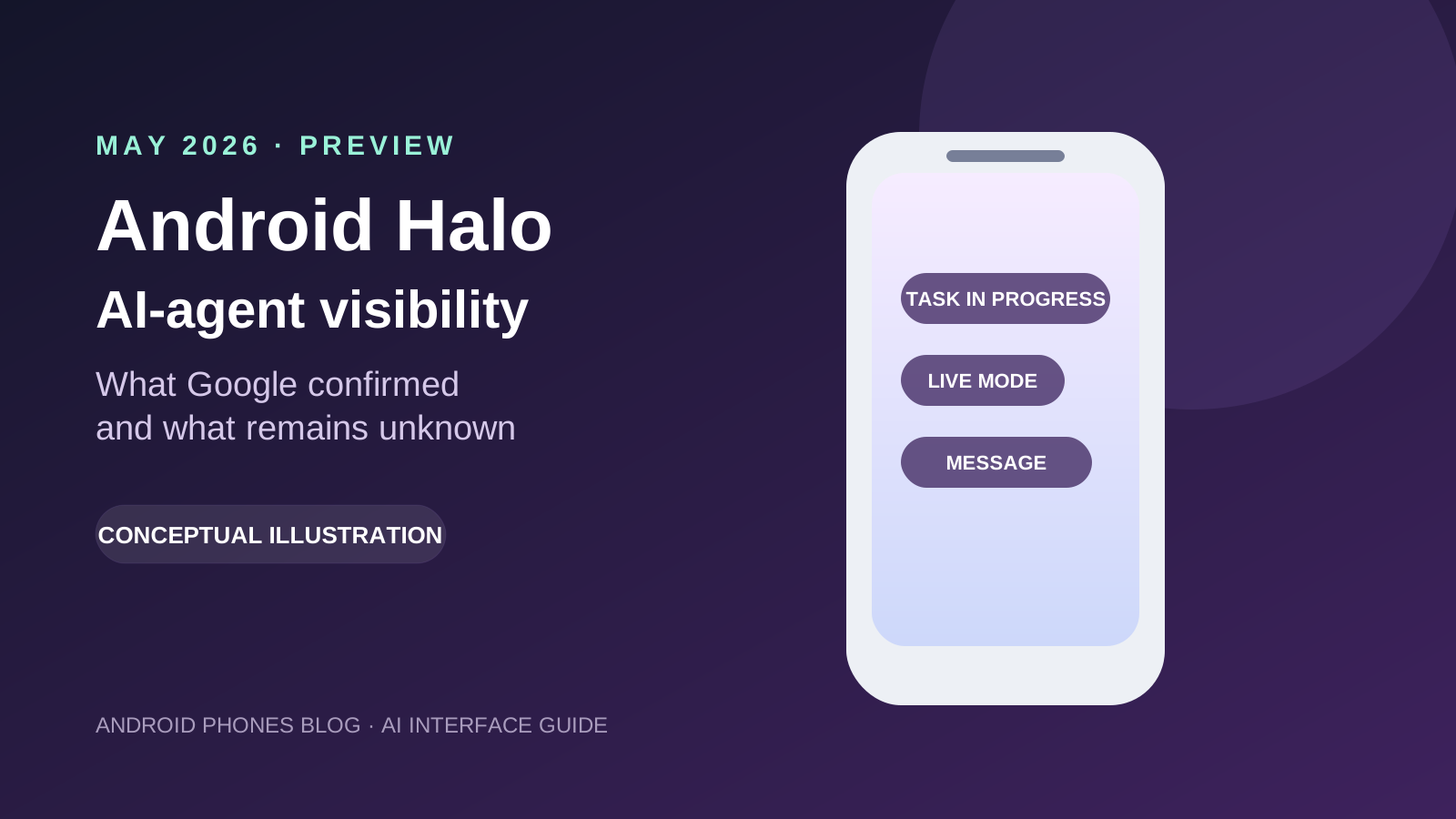
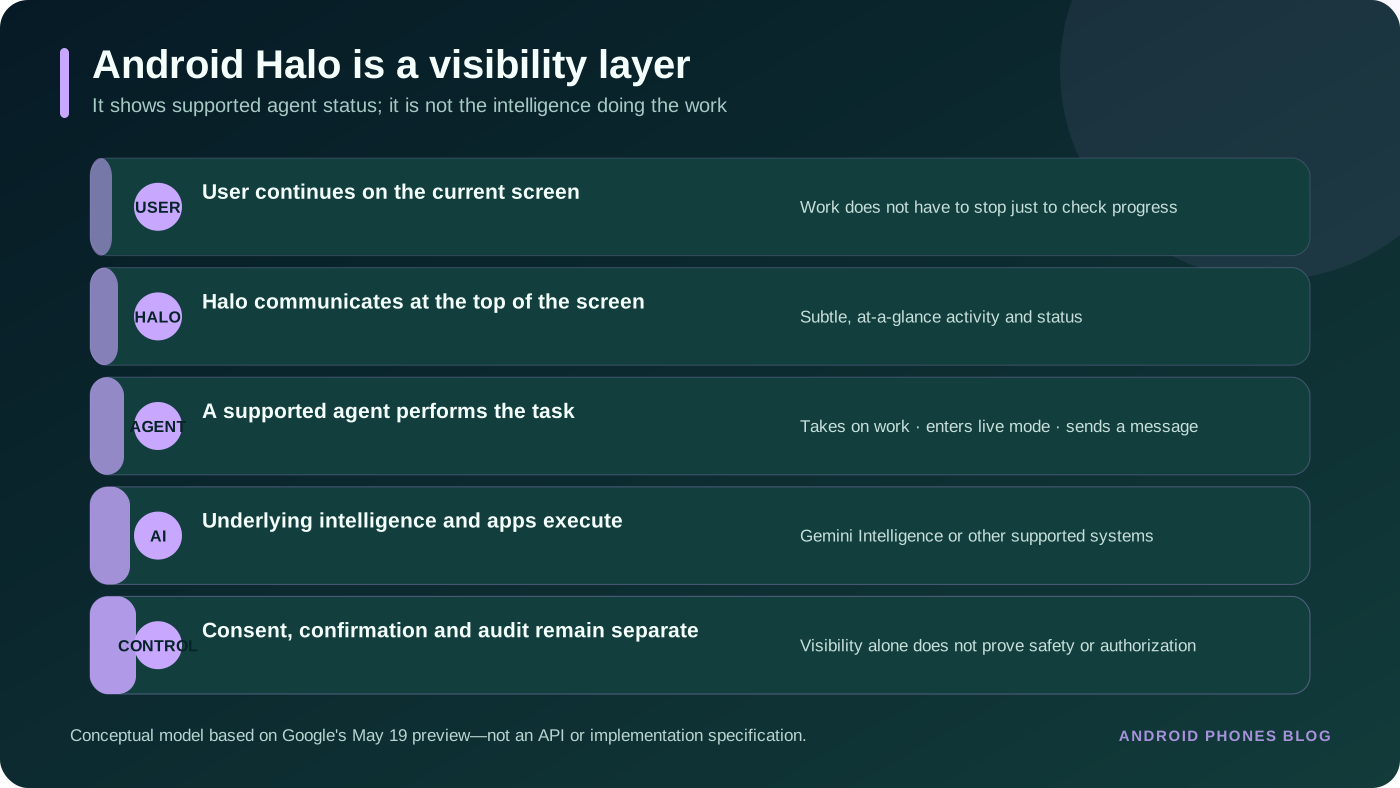
Android Halo is a previewed Android interface that shows the status of supported AI agents at the top of the phone screen. Google said it provides subtle, at-a-glance communication while an agent takes on a task, enters live mode or sends a message, allowing users to keep working without leaving their current screen. (Google Android Halo preview)
What is Android Halo?
Google introduced Android Halo on May 19, 2026 as a preview of a new Android interface designed to make supported AI-agent activity more visible.
The key point is simple: Halo is an activity and status surface, not the AI model or the agent itself.
According to Google, Halo provides:
- At-a-glance visibility into what an agent is working on.
- Subtle communication at the top of the phone screen.
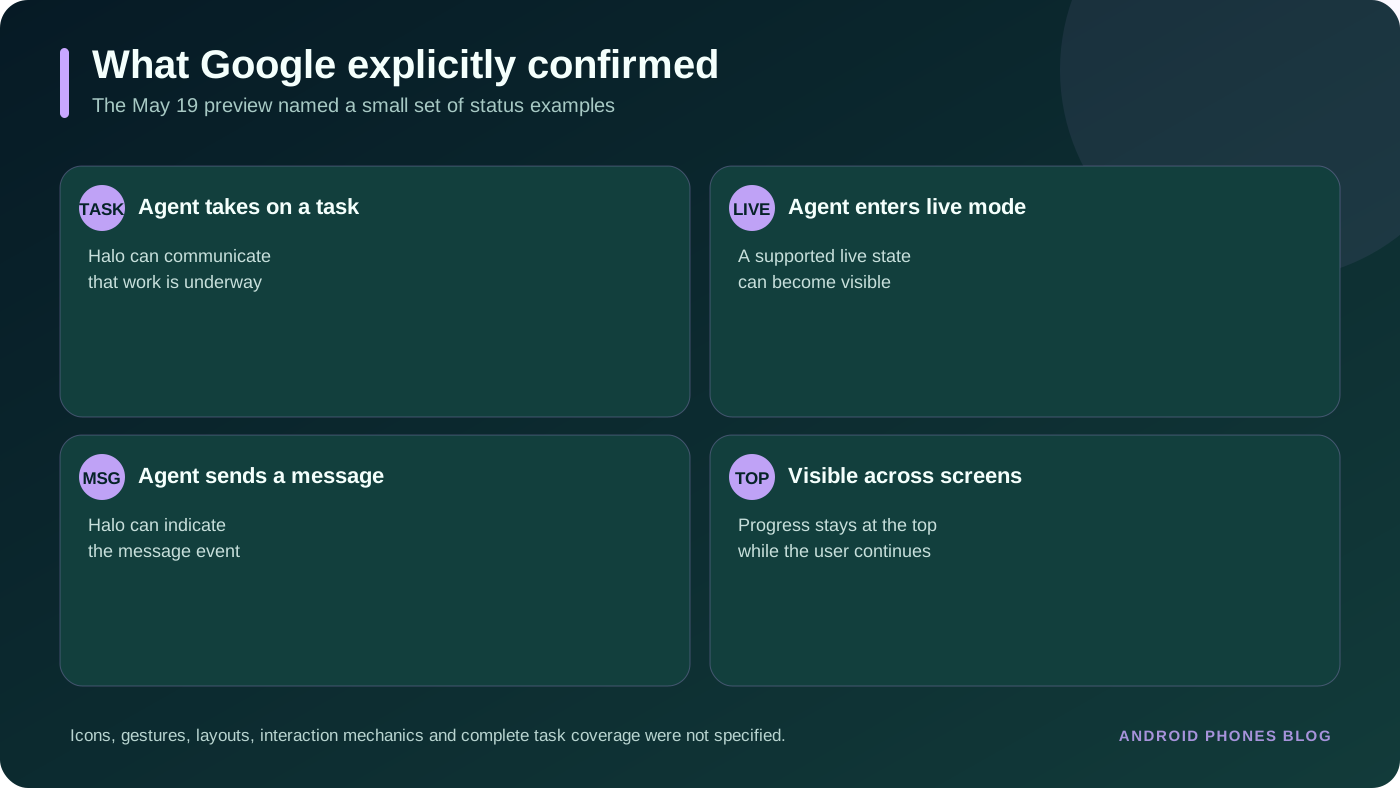
- Visibility while an agent takes on a task, enters live mode or sends a message.
- Progress that remains visible from the top of any screen without requiring the user to stop what they are currently doing.
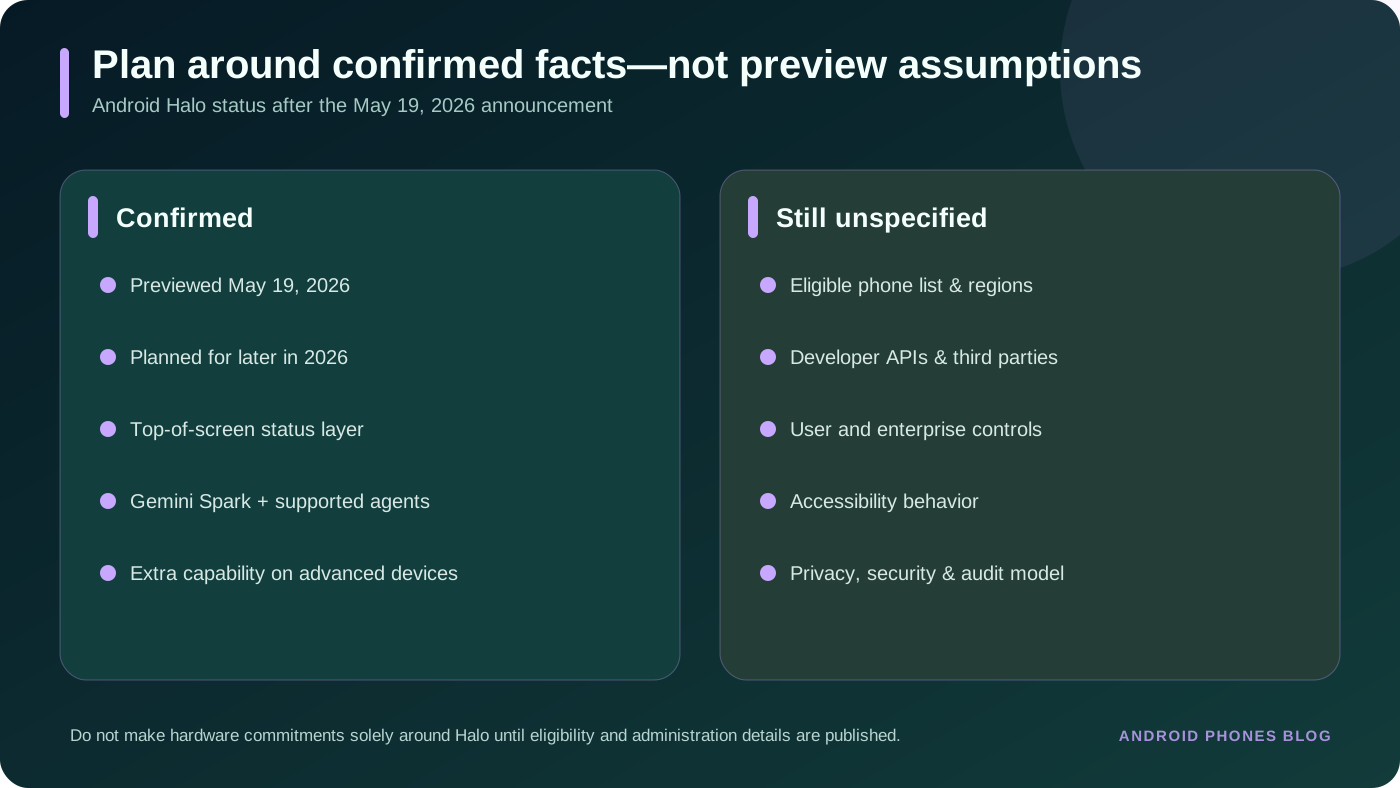
Google also said Halo will become available later in 2026, will work with Gemini Spark and other supported agents, and will gain additional capabilities on advanced devices with Gemini Intelligence. Google did not announce a precise launch date or publish a complete compatibility list. (Official Android Halo announcement)
That distinction matters. Halo should be understood as a user-interface layer that communicates agent status rather than as the intelligence performing the work.
What exactly did Google confirm?
The May 19 preview intentionally focused on a narrow set of confirmed capabilities.
| Confirmed example | What Google confirmed | What remains unspecified |
|---|---|---|
| Agent takes on a task | Halo provides subtle communication at the top of the screen while an agent takes on a task. | Which task types qualify, duration, interaction model and supported apps. |
| Agent enters live mode | Halo can communicate when an agent goes into live mode. | What live mode means for every supported agent, visual treatment and controls. |
| Agent sends a message | Halo can indicate when an agent sends a message. | Which messaging scenarios are supported, supported services and user interaction details. |
Google further stated that users can see this progress from the top of any screen without stopping what they are doing.
Everything beyond those statements—including icons, colors, animations, gestures, layouts and interaction mechanics—remains unpublished as of the May 19 preview.
Why does Android Halo matter for AI agents?
Modern AI agents increasingly perform work that lasts longer than a single request.
Examples may include gathering information across multiple apps, waiting for an event, or completing several sequential actions before presenting a result.
Google separately described Gemini Intelligence as enabling proactive, multi-step automation where agents can work across apps, users can follow progress through notifications, and final confirmation remains with the user. Halo was previewed one week later as an additional at-a-glance status layer rather than as the entirety of Gemini Intelligence. (Gemini Intelligence overview · Android Halo preview)
Inference: If Android continues expanding background and multi-step agent workflows, a lightweight status surface could reduce the need for users to repeatedly reopen an assistant to check whether work is still in progress.
That inference should not be confused with guarantees that Google has not made.
Google has not said Halo:
- prevents agent mistakes;
- proves an agent is operating safely;
- exposes every internal action;
- replaces user consent;
- replaces confirmation before important actions;
- serves as a complete audit trail.
Those remain separate questions.
How is Halo different from notifications or assistant overlays?
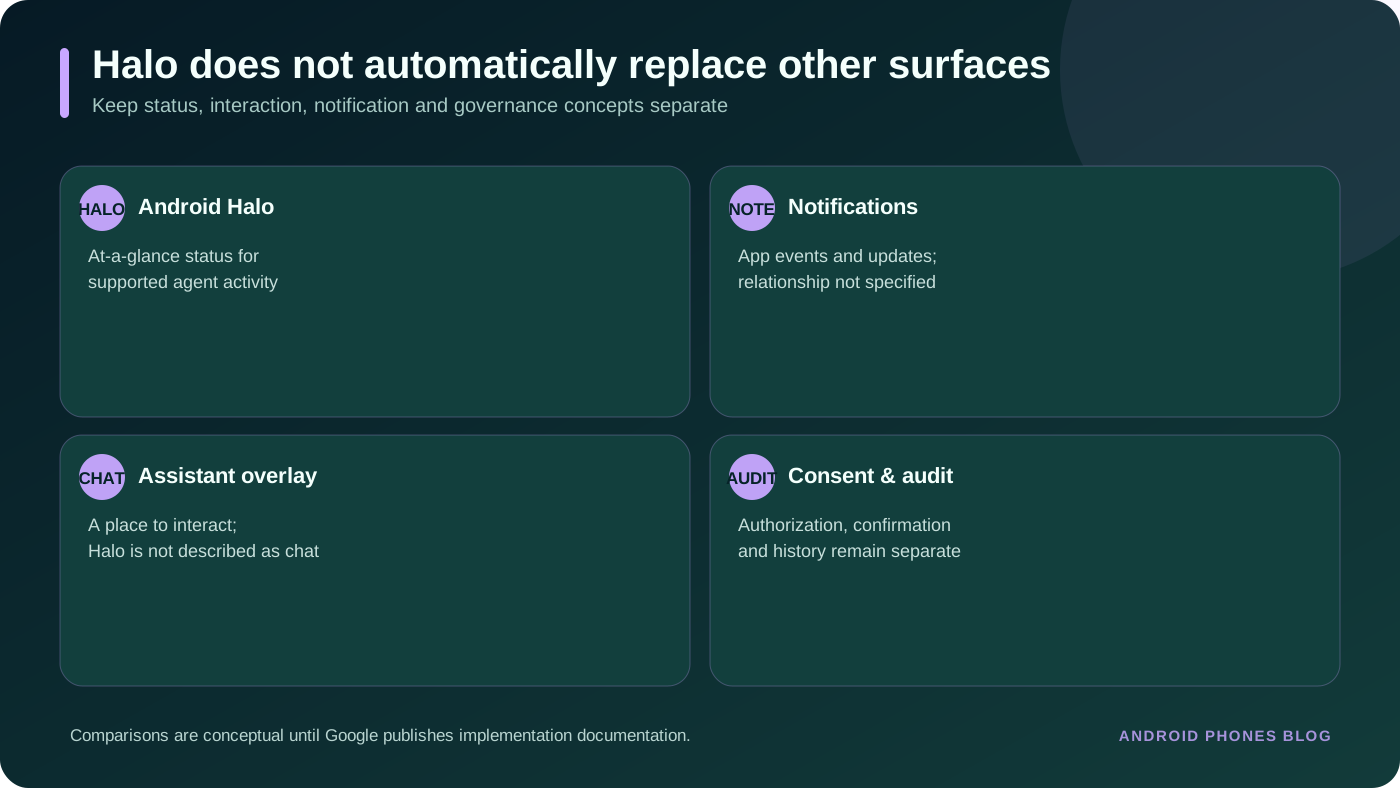
Google has not published detailed implementation documentation, so comparisons should remain conceptual.
| Surface | Conceptual purpose | What should not be assumed |
|---|---|---|
| Android Halo | Persistent at-a-glance status for supported AI-agent activity. | That it replaces notifications or existing system UI. |
| Ordinary notifications | Communicate events or updates from apps. | That Halo uses identical behavior or APIs. |
| Live-activity style interfaces | Show ongoing activity in a persistent location. | That Halo behaves exactly like similar features on other platforms. |
| Assistant overlays | Provide an interface for interacting with an assistant. | That Halo is itself an assistant window or conversation interface. |
Google’s wording consistently describes Halo as subtle communication at the top of the phone screen while work is taking place.
It does not describe Halo as replacing notifications, floating assistant windows or any existing Android interface.
How does Halo relate to Gemini Intelligence?
Because the announcements appeared close together, it is easy to combine them into a single feature. That would be inaccurate.
Google presented Gemini Intelligence on May 12, 2026 as a broader Android intelligence initiative capable of proactive, multi-step automation.
Examples included:
- agents acting on user commands;
- work continuing across multiple apps;
- progress visible through notifications;
- tasks stopping when complete;
- final confirmation remaining with the user.
One week later, Google previewed Android Halo as a separate interface that provides at-a-glance visibility into supported agent activity at the top of the screen.
The relationship can be summarized like this:
- Gemini Intelligence describes broader AI capabilities.
- Android Halo describes a visibility layer for supported agents.
Google also stated that Halo will work with Gemini Spark and other supported agents, with additional capabilities on advanced devices featuring Gemini Intelligence. That statement should not be interpreted as meaning every Gemini Intelligence device will automatically support every Halo capability, because Google has not yet published those eligibility rules. (Gemini Intelligence announcement · Android Halo announcement)
Readers interested in Google’s broader AI hardware direction may also want to read our guide to Pixel 10 and on-device AI.
What had Google not specified as of the May 19 preview?
The preview intentionally left many practical questions unanswered.
| Topic | Status after the May 19 preview |
|---|---|
| Eligible phone list | Not specified |
| OEM and regional support | Not specified |
| Developer APIs | Not specified |
| Requirements for third-party agents | Not specified |
| User controls and settings | Not specified |
| Enterprise administration and policy | Not specified |
| Accessibility behavior | Not specified |
| History or audit logs | Not specified |
| Privacy and security model | Not specified |
| Battery or power impact | Not specified |
This is an important limitation for buyers, developers and IT teams.
While Google’s direction is clear, implementation details remain pending. Google said additional information would be shared later in the year.
What should buyers, IT teams and enterprise fleets do?
For organizations evaluating future Android deployments, Halo is best viewed as an upcoming capability rather than a purchasing criterion.
Current planning should remain focused on established deployment requirements such as:
- Android version support;
- security update commitments;
- enterprise management compatibility;
- application requirements;
- hardware lifecycle;
- regional availability.
Until Google confirms device eligibility, supported agents, enterprise controls and rollout scope, organizations should not standardize hardware purchases solely because Halo has been previewed.
The same caution applies to resellers and procurement teams. Marketing materials should avoid implying that Halo is already broadly available or universally supported across Android devices.
Privacy and compliance teams should also wait for documentation covering user controls, enterprise policy, logging and data handling before incorporating Halo into governance decisions.
For organizations following broader Android platform evolution, our coverage of Android 17 precise location controls explains another example of Google previewing user-facing platform changes before full rollout.
What questions should developers and product teams be asking?
Because implementation documentation has not yet been published, product planning should begin with questions rather than assumptions.
Consider asking:
- Will our agent qualify as a supported agent?
- Which user actions can appear through Halo?
- What events trigger Halo updates?
- Will users need explicit opt-in?
- How should our existing notifications interact with Halo?
- What accessibility expectations should be supported?
- Will enterprise administrators have policy controls?
- How will users distinguish active work from completed work?
- What testing will be needed across OEM implementations?
- Which Android versions will be eligible?
These questions are planning prompts, not undocumented implementation requirements.
Teams should avoid building product roadmaps around assumptions until Google publishes API guidance and compatibility documentation.
Developers interested in Android’s evolving interface language may also find our overview of Material 3 Expressive design useful for understanding the broader design direction.
What should everyone watch for later in 2026?
Google has already identified Halo as a feature arriving later in 2026 and promised additional details during the year.
The most useful future announcements will likely answer questions such as:
- Which phones support Halo at launch?
- Which Android versions are required?
- Which third-party AI agents qualify?
- Whether developers receive dedicated APIs.
- How users configure or disable Halo.
- How enterprise administrators manage the feature.
- What accessibility accommodations are provided.
- Whether activity history or audit capabilities exist.
- How privacy and security protections are implemented.
- Whether capabilities differ between standard Android devices and advanced devices with Gemini Intelligence.
Until those details arrive, Android Halo should be viewed as a promising interface concept rather than a fully documented platform feature.
The May 19 preview established a clear purpose: giving users subtle, always-visible awareness of supported AI-agent activity while they continue using their phones. What Google has not yet published is equally important, and those remaining details will determine how Halo ultimately fits into consumer devices, enterprise deployments and third-party AI ecosystems.