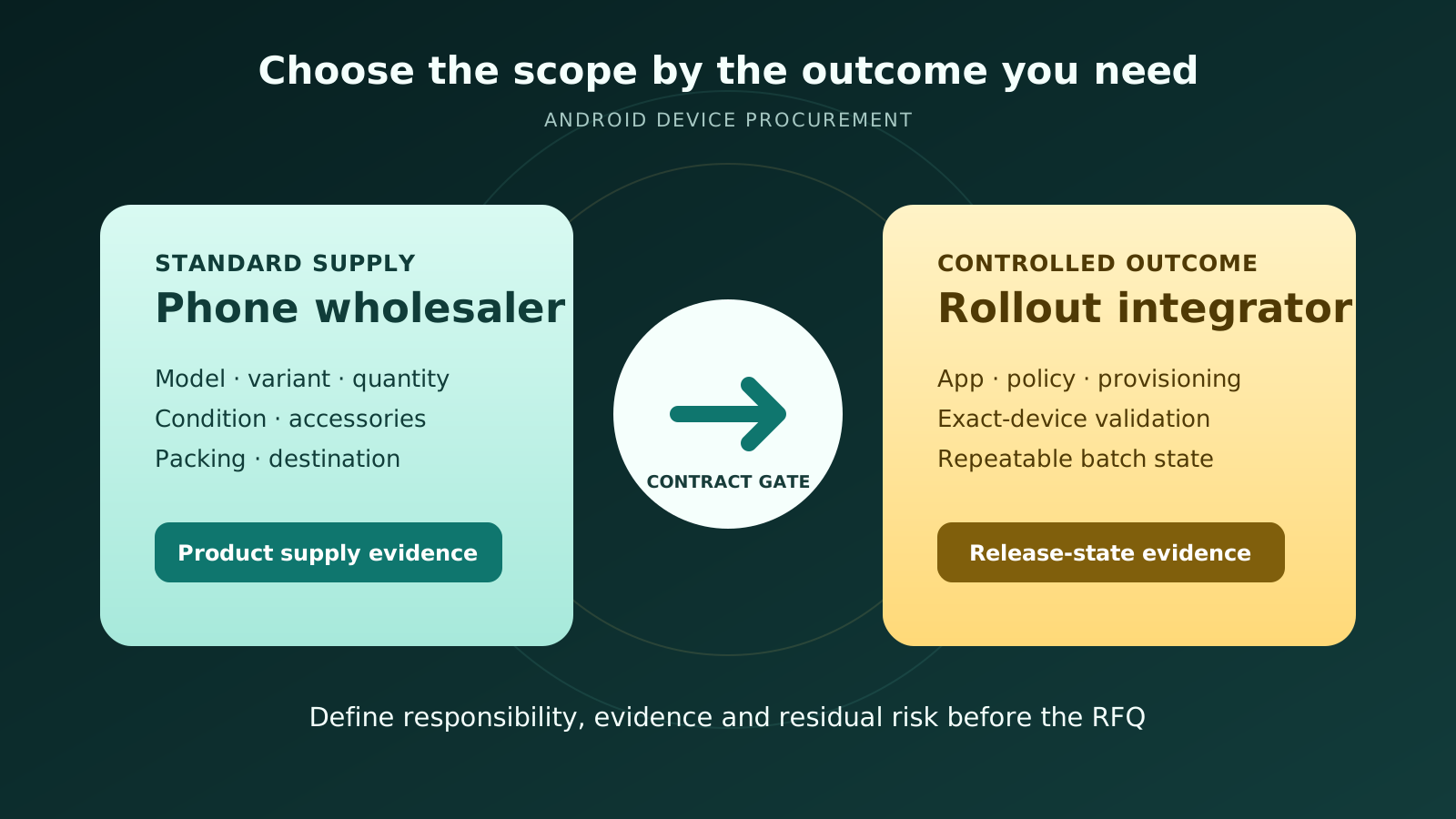
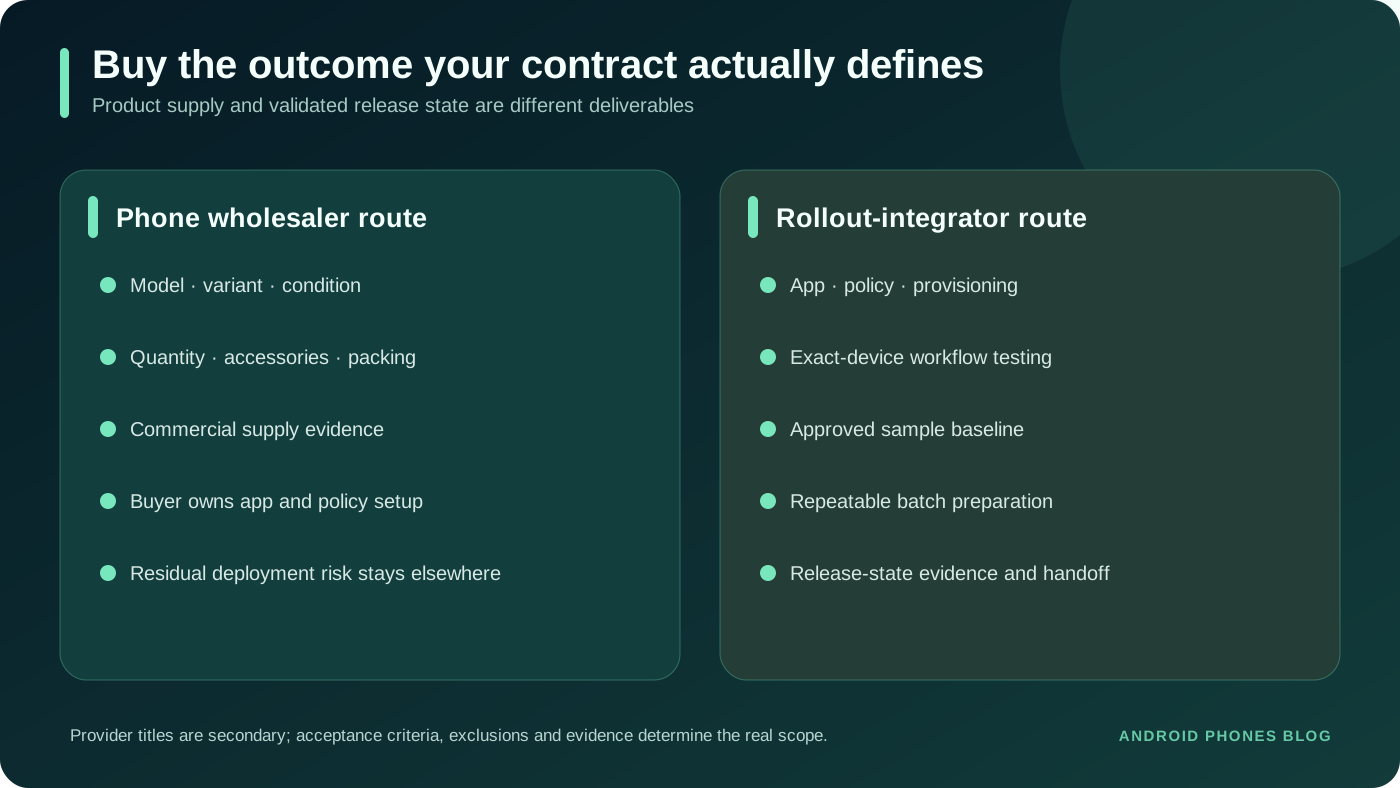
Use a phone wholesaler when the required output is standard devices and accessories supplied by agreed model, variant, condition, quantity, and destination—and your team or another provider already owns configuration and deployment. Consider an Android device rollout integrator when the output also includes a named app, policy outcomes, a provisioning path, exact-device validation, and a device state that can be reproduced across a batch.
This is not a choice between titles. Zero-touch enrollment creates a separate authorized-reseller and device-eligibility check. Custom hardware or privileged firmware work requires OEM or ODM authority. MDM or EMM policy remains dependent on the management platform and configuration. One company may fill several roles, but each responsibility and evidence item should remain explicit.
Key Takeaways
- Choose by the outcome and uncertainty the contract must own, not by title or quantity.
- A wholesaler usually fits when the buyer needs standard devices and owns configuration, testing, and deployment.
- Add rollout scope when an app, policy, provisioning path, exact device, and repeatable batch state must be checked together.
- Zero-touch, OEM or ODM work, EMM, certification, carriers, importation, and logistics remain separate gates.
- One company may perform several roles, but each obligation and evidence item should be explicit.
The Real Difference Is the Contracted Outcome
The correct supplier route is determined not by order quantity or job title, but by which unresolved uncertainties the contract must close and what evidence must exist before the devices are released.
A phone wholesaler’s baseline role is commercial supply. The buyer specifies the product, relevant regional variant, condition, quantity, accessories, packaging, destination, and agreed inspection or documentation. Added services count only when included in the quotation or contract.
An Android device rollout integrator is a practical procurement role, not an official Google or Android credential. Here, it means a provider contracted to coordinate an agreed scope across devices, applications, management policy, provisioning, validation, physical or configuration preparation, batch checks, and handoff. The Android Enterprise Solutions Directory uses separate categories such as EMMs, device resellers, device manufacturers, and mobility consulting services.
The decisive question is:
Are you purchasing correctly specified hardware, or also evidence that a defined operating state works and can be repeated?
A wholesaler may perform integration work, and an integrator may use separate hardware suppliers. Judge the responsibility matrix, acceptance criteria, exclusions, and evidence.
Compare the Routes by Responsibility, Inputs, Evidence, and Residual Risk
| Decision dimension | Phone-wholesaler route | Rollout-integrator route |
|---|---|---|
| Primary responsibility | Supply products under the purchase specification. | Coordinate and validate an agreed device state across specified layers. |
| Buyer inputs | Model, variant, condition, quantity, accessories, packaging, destination, and commercial requirements. | Use case, device constraints, app, EMM, policies, provisioning, tests, region, batch state, and owners. |
| Typical evidence | Quote, SKU, contracted inspection or packing records, identifiers, and shipping documents. | Controlled sample baseline, test results, limitations, approval, preparation instructions, and batch evidence. |
| Application scope | Buyer-owned unless expressly added. | May include a named app and agreed workflows on the selected baseline. |
| MDM/EMM scope | Normally outside baseline supply. | May include coordination and testing; platform capability, licensing, configuration, and operation remain assigned separately. |
| Provisioning | Absent or separately added. | May include a supported QR, token, zero-touch, manual, or other agreed path. |
| Batch state | Products are supplied as ordered; configuration applies only if contracted. | Devices may be prepared and checked against an approved release state. |
| Residual risk | App, policy, enrollment, workflow validation, and field setup remain elsewhere. | OEM authority, EMM behavior, app or backend defects, certification, carriers, import, logistics, and field operations may remain elsewhere. |
Residual risk is the work or uncertainty left with another named party after the supplier completes its scope. A useful proposal makes that boundary visible.
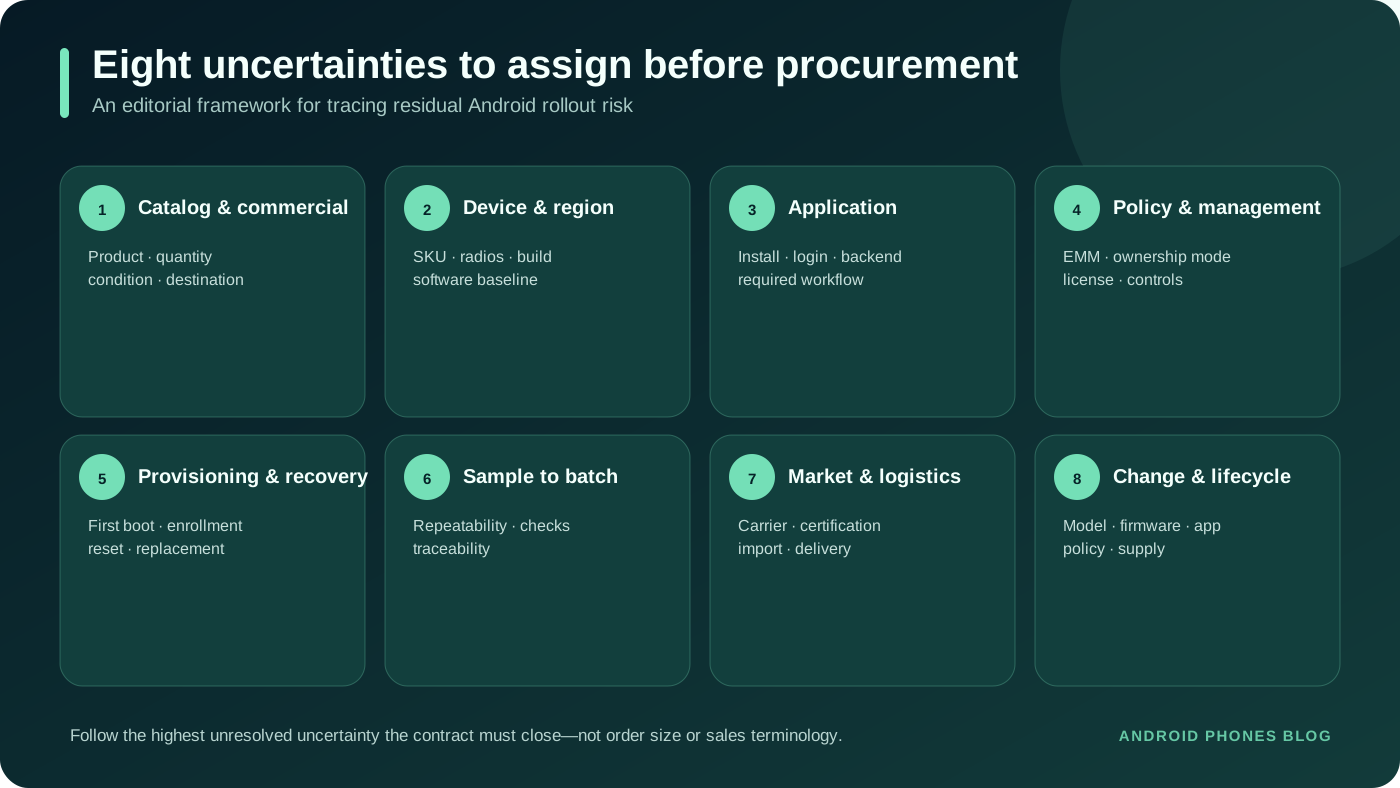
An Eight-Part Uncertainty Map for Android Device Procurement
The following is this guide’s editorial procurement framework, not a Google standard or industry certification.
- Catalog and commercial uncertainty: Can the correct products be supplied in the required quantity, condition, packaging, and destination arrangement?
- Device and regional-baseline uncertainty: Is the exact model, regional SKU, radio configuration, Android build, and software baseline suitable?
- Application uncertainty: Does the named app install, update, authenticate, connect, and perform the agreed workflow?
- Policy and management uncertainty: Can the selected MDM or EMM produce the required outcomes under the chosen ownership mode, license, device, Android version, and configuration?
- Provisioning and recovery uncertainty: What happens during first boot, enrollment, reboot, reset, replacement, connectivity loss, or recovery?
- Sample-to-batch uncertainty: Can the approved state be reproduced, checked, and traced across released devices?
- Market and logistics uncertainty: Who owns carrier compatibility, certification, labeling, import, customs, freight, SIM or eSIM, and delivery?
- Change and lifecycle uncertainty: What happens when the model, firmware, app, EMM policy, provisioning method, or supply changes?
A wholesale purchase may address the first two categories while the buyer manages the rest. A controlled rollout may span several. Follow the highest unresolved uncertainty the contract must close, not order size or sales terminology.
For mixed new and renewed-device sourcing, use the same evidence-first approach to condition, warranty, regional eligibility, and lifecycle support described in our Samsung Certified Re-Newed buyer guide.
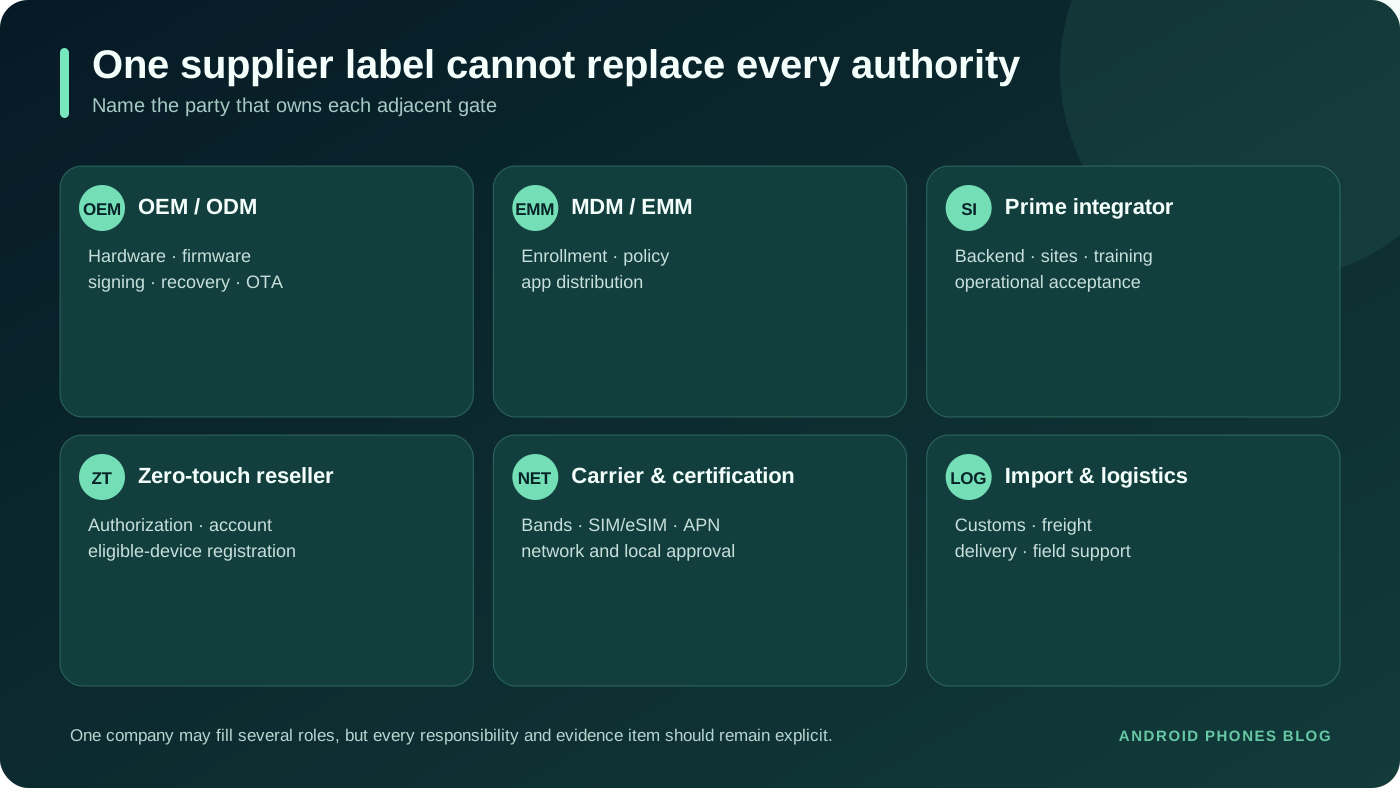
Adjacent Parties May Still Be Required
OEM or ODM
An OEM or ODM is relevant when the project needs authority over hardware design, enclosure changes, drivers, privileged firmware, signing, recovery images, OTA behavior, or other manufacturer-controlled functions. A rollout integrator may coordinate the work but does not gain manufacturer authority.
MDM or EMM Provider
The MDM or EMM supplies supported enrollment, policy, app-distribution, and fleet-management functions. Android’s dedicated-device guidance recommends end-to-end testing with a third-party EMM. Controls such as lock task mode rely on a device policy controller and management configuration.
An integrator can test an agreed path; it cannot guarantee a function the selected platform, license, ownership mode, device, or software baseline does not support.
System Integrator or Project Contractor
A wider integrator or contractor may own backend integration, site work, training, operational acceptance, or support. Subcontracting device preparation does not replace the prime contractor.
Authorized Zero-Touch Reseller
Zero-touch is a separate verification gate. Google states that zero-touch-enabled devices are obtained through select enterprise resellers and partners, and an authorized reseller creates the organization’s account. Confirm the reseller and exact device. Neither a wholesaler nor an integrator label proves authorization. See Google’s guidance on sourcing Android devices and zero-touch enrollment.
When zero-touch is not required, Google says devices can be purchased from any source. That does not establish condition, regional suitability, app compatibility, EMM support, certification, or commercial reliability.
Carrier, Import, Certification, and Logistics Providers
Assign network acceptance, bands, SIM or eSIM, APN, local certification, importer-of-record duties, customs, freight, and field delivery separately when applicable.
When a Phone Wholesaler Is Sufficient
A wholesaler route fits when the deliverable is a commercial product order rather than a controlled device build:
- Standard catalog devices or accessories are required.
- Models, alternatives, regional variants, condition, and accessories are defined.
- Substitution rules and approval rights are clear.
- No custom hardware or privileged firmware change is required.
- The buyer or another provider owns app installation, MDM enrollment, policy setup, user preparation, and deployment.
- Product, inspection, packing, identifier, and shipping evidence are sufficient for acceptance.
Mixed-SKU purchasing does not itself create integration scope. Quantity is also a poor routing rule: a small pilot can have strict dependencies, while a large replenishment order can remain ordinary wholesale.
Ask whether the buyer can accept the supplied devices and independently convert them into the required operational state. When the answer is yes, broader integration scope may be unnecessary.
When a Rollout-Integrator Scope Is Warranted
A rollout-integrator scope becomes useful when several layers must be checked together before release.
A Named App Must Work on an Exact Baseline
The scope may cover installation, permissions, first-run behavior, login, backend communication, offline handling, updates, and peripherals. “Android compatible” is too broad. The relevant question is whether the agreed app version performs the agreed workflow on the exact device and software baseline.
Policy Outcomes Must Be Demonstrated
The buyer may require an allowlisted app set, kiosk behavior, restricted settings, controlled accounts, network rules, or specified reset and recovery behavior. Android describes dedicated devices as fully managed, organization-owned devices serving a specific purpose, with examples including inventory management, field service, logistics, kiosks, digital signage, and hospitality check-in.
Lock task mode can restrict use to a single app or an allowlisted app set. Actual support still depends on the DPC or EMM, Android version, device, and configuration.
App-policy requirements can also change independently of the device contract. Our Google Play 2026 policy guide explains why distribution, privacy disclosures, and update ownership belong in the acceptance plan.
The Approved State Must Be Reproducible
The buyer may require a version-controlled sample, agreed tests, recorded limitations, preparation instructions, identifier mapping, and production checks. Here, “staging” means physically and digitally preparing devices—for example, labeling units, loading approved apps, applying settings, recording identifiers, and checking the result. It is not an Android certification or guarantee.
The benefit is greater visibility and controlled testing within an agreed scope, not certainty that every requested control will work or that no later issue can occur.
What Drives Cost and Timeline
Wholesale scope is affected by product and transaction variables: model and region, product condition, mixed-SKU complexity, accessories, packaging, labeling, inspection, identifier records, destination, freight, import arrangements, and substitution tolerance.
Rollout scope adds candidate baselines, app maturity, test-build access, EMM readiness, policy complexity, provisioning, customization, acceptance scenarios, sample iterations, preparation, traceability, regions, carriers, user profiles, and change control.
Both routes can depend on OEM responses, app fixes, EMM behavior, certification, carrier requirements, approvals, and material changes after sample acceptance. Cost and elapsed time therefore follow scope, uncertainty, dependencies, and approval gates—not the provider’s title.
For Pixel fleets, the Android 17 stable upgrade guide provides a practical pilot-and-rollout framework that can be translated into supplier test gates and release evidence.
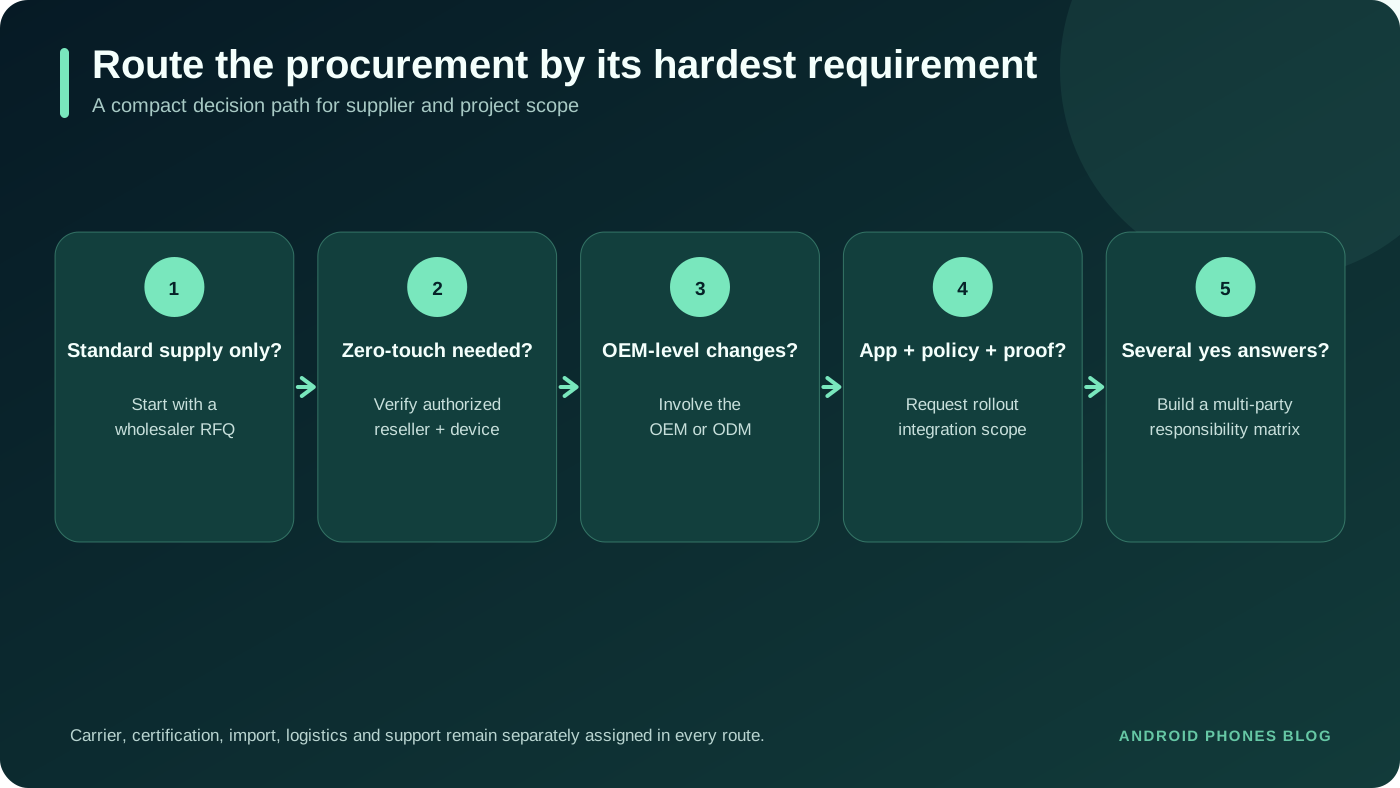
Procurement Decision Tree
-
Standard catalog devices or accessories, with no controlled build requirement?
- Yes: begin with a wholesaler RFQ.
- No or uncertain: continue.
-
Zero-touch enrollment required?
- Yes: verify an authorized reseller, exact device eligibility, account setup, and registration.
- Keep this gate separate even if another provider supplies or prepares the devices.
-
Custom hardware, enclosure changes, privileged firmware, signing, recovery-image control, or manufacturer-level OTA changes required?
- Yes: involve an OEM or ODM.
- A rollout integrator may coordinate but cannot replace that authority.
-
Named app, defined policy outcomes, exact-device validation, and a reproducible release state required?
- Yes: request rollout-integration scope, or assign equivalent responsibilities internally and externally.
- No: ordinary procurement plus buyer-managed setup may be sufficient.
-
Requirements depend on MDM or EMM behavior?
- Name the platform, license, ownership mode, policies, tenant owner, configuration owner, and test environment.
-
Carrier, certification, import, customs, freight, SIM, site deployment, or support required?
- Assign each function to a named party.
-
Several branches returned “yes”?
- Build a multi-party responsibility matrix.
- One company may fill several roles, but every obligation, exclusion, dependency, and evidence item should remain explicit.
Neither route alone is automatically sufficient for every project.
Write the Correct Request Document
Wholesale RFQ Checklist
Include:
- Buyer company, contact, country, and buyer type.
- Brand, model or alternatives, regional variant or model code, storage, RAM, color, condition, and SIM requirements.
- Quantity by SKU and mixed-SKU requirements.
- Accessories, charger type, packaging, labeling, and carton or pallet requirements.
- Substitution rules and approval owner.
- Required Android, GMS, language, or regional characteristics, without treating them as proof of app or EMM compatibility.
- Inspection scope, photos, serial or IMEI records, packing list, or third-party inspection.
- Destination, delivery method, freight and import responsibility, and required documents.
- A request for current commercial and post-delivery terms.
- A separate zero-touch declaration; when required, request evidence of reseller authorization and exact-device eligibility.
Rollout Project-Brief Checklist
Include:
- Business objective, use case, users, environment, and success criteria.
- Countries, sites, phases, and expected quantity range.
- Device form factor, hardware constraints, candidate models, regional requirements, and Android, GMS, or AOSP path.
- App package, version, signing owner, distribution and update path, login, backend, offline behavior, test credentials, and peripherals.
- MDM or EMM, license, tenant owner, ownership mode, test environment, and provider contact.
- Required policy outcomes, including allowed or restricted apps, settings, kiosk behavior, accounts, networking, reset, and updates.
- Provisioning method and account ownership: QR, enrollment token, zero-touch, manual setup, or another supported path. Google’s provisioning documentation shows that enrollment method and management state must be established rather than assumed from the hardware.
- Test scenarios for first boot, enrollment, reboot, reset, replacement, connectivity loss, app or OS updates, and recovery.
- Customization requirements and the party authorized to implement each one.
- Acceptance cases, pass/fail criteria, evidence, exclusions, and approval owner.
- Reference-sample baseline, batch-preparation state, quality checks, traceability, deviations, change control, handoff, and support boundaries.
- Named owners for OEM or ODM work, app, EMM, authorized reseller, carrier, certification, import, logistics, installation, and support.
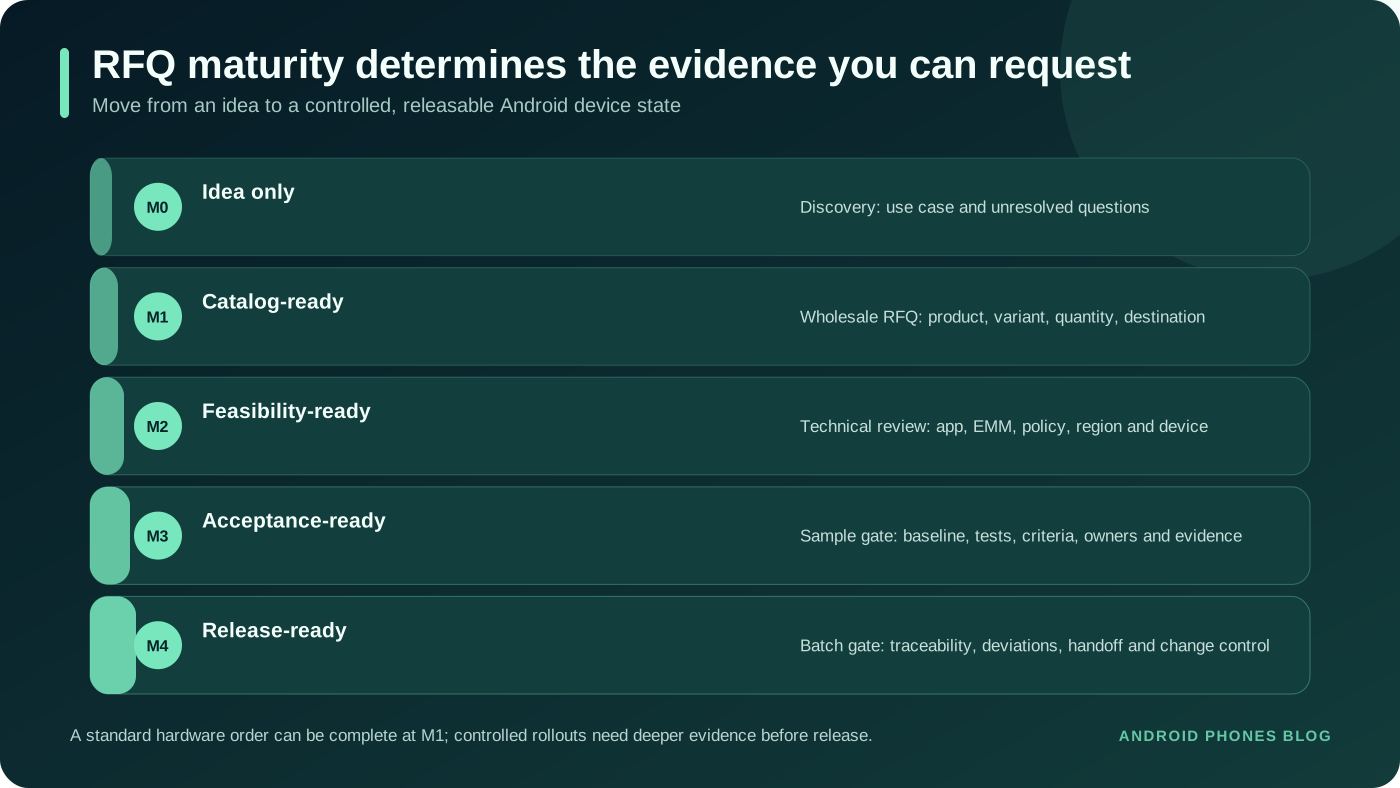
RFQ Maturity Model
This is this guide’s editorial procurement model, not an official Google or industry standard.
| Level | Request state | Procurement use |
|---|---|---|
| M0 — Idea only | “We need Android devices for our app.” | Initial discovery, not a comparable RFQ. |
| M1 — Catalog-ready | Product, variant, condition, quantity, accessories, and destination are defined. | Standard wholesale RFQ. |
| M2 — Feasibility-ready | Use case, app, EMM, policy, provisioning, device, and regional constraints are identified. | Preliminary technical review. |
| M3 — Acceptance-ready | Baseline, tests, criteria, evidence, owners, and exclusions are defined. | Controlled sample planning and approval. |
| M4 — Release-ready | Batch state, quality checks, traceability, deviations, handoff, support, and change control are defined. | Formal batch-release governance. |
An M1 request is complete when hardware supply is the intended outcome. A controlled rollout generally needs M2 or M3 information before a useful feasibility or sample proposal can be produced. M4 matters only when a controlled release state is being purchased.
Evidence Gates and Red Flags
This guide’s editorial evidence matrix organizes proof by procurement gate:
| Gate | Evidence to request |
|---|---|
| Shortlisting | Scope, assumptions, dependencies, exclusions, owners, and proposed output. |
| Before sample | Device baseline, app and policy inputs, test plan, substitution rules, and responsibilities. |
| Sample acceptance | Device, software, app, EMM, policy, provisioning, results, defects, limitations, and approval. |
| Batch release | Quantity, required identifiers, preparation status, quality checks, deviations, failed-unit handling, substitutions, packing, and traceability. |
| Handoff and change | Support boundaries, escalation, replacements, update ownership, outstanding risks, and revalidation triggers. |
Red flags include:
- “MDM-ready” without the EMM, license, ownership mode, device, Android baseline, and tested configuration.
- “Zero-touch supported” without reseller authorization, device eligibility, account setup, and registration responsibility.
- “Custom ROM available” without OEM authority, signing, OTA, recovery, and update ownership.
- “Tested” without a controlled baseline, test cases, results, and limitations.
- “Same as sample” without substitution control or traceability.
- Unassigned certification, carrier, import, customs, logistics, or support duties.
- Quantity used as the sole route-selection rule.
- Absolute compatibility or failure-prevention promises.
Choose the Route That Matches the Written Scope
For standard commercial supply, including branded phones, accessories, or mixed-SKU requirements, buyers can use the NexusSupplyTech wholesale RFQ. NexusSupplyTech describes its offering as a B2B wholesale route for phones, accessories, and mixed-model requirements. This is a first-party description; project-specific details should be confirmed through the current RFQ.
For requirements involving an app, management policy, provisioning, exact-device validation, acceptance criteria, or repeatable physical and configuration preparation, buyers can send a redacted brief through the Vantora project brief. Vantora describes its role as coordinating project-specific feasibility, sample validation, acceptance, batch preparation, and handoff. This is also a first-party description and remains subject to written scope, dependencies, and model-specific feasibility.
Other qualified providers may also meet the same written scope. The correct choice is the provider—or combination of providers—whose contract assigns the uncertainties your organization cannot retain and supplies the evidence needed for approval.