On February 9, 2022, Samsung unveiled the Galaxy S22 Ultra at Galaxy Unpacked. The date matters because some Samsung global pages display February 10 in Korea, while regional announcements and the event itself identify February 9. Retail availability began later, on February 25 in many markets. Announcement and sale dates should not be treated as the same event.
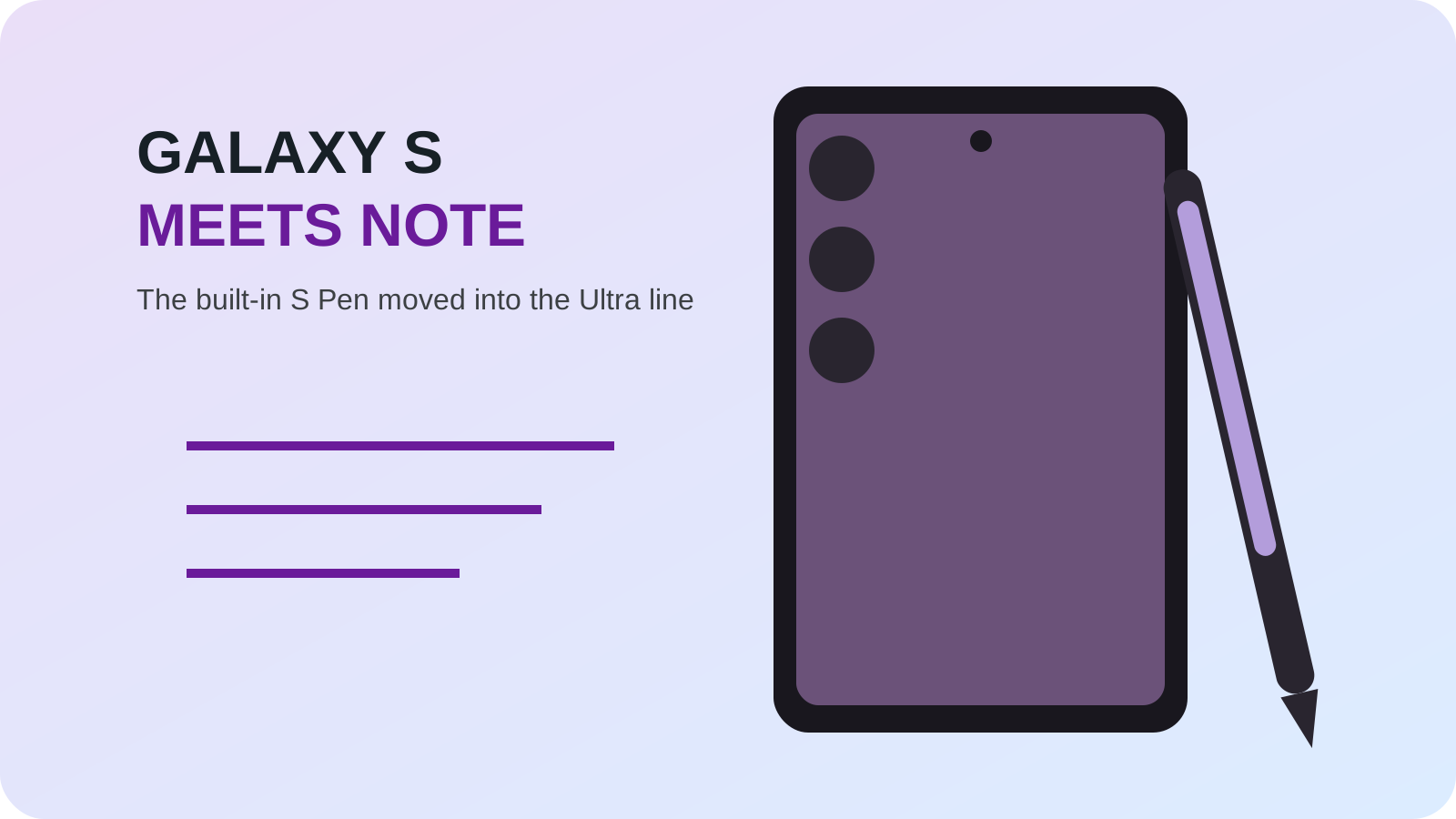
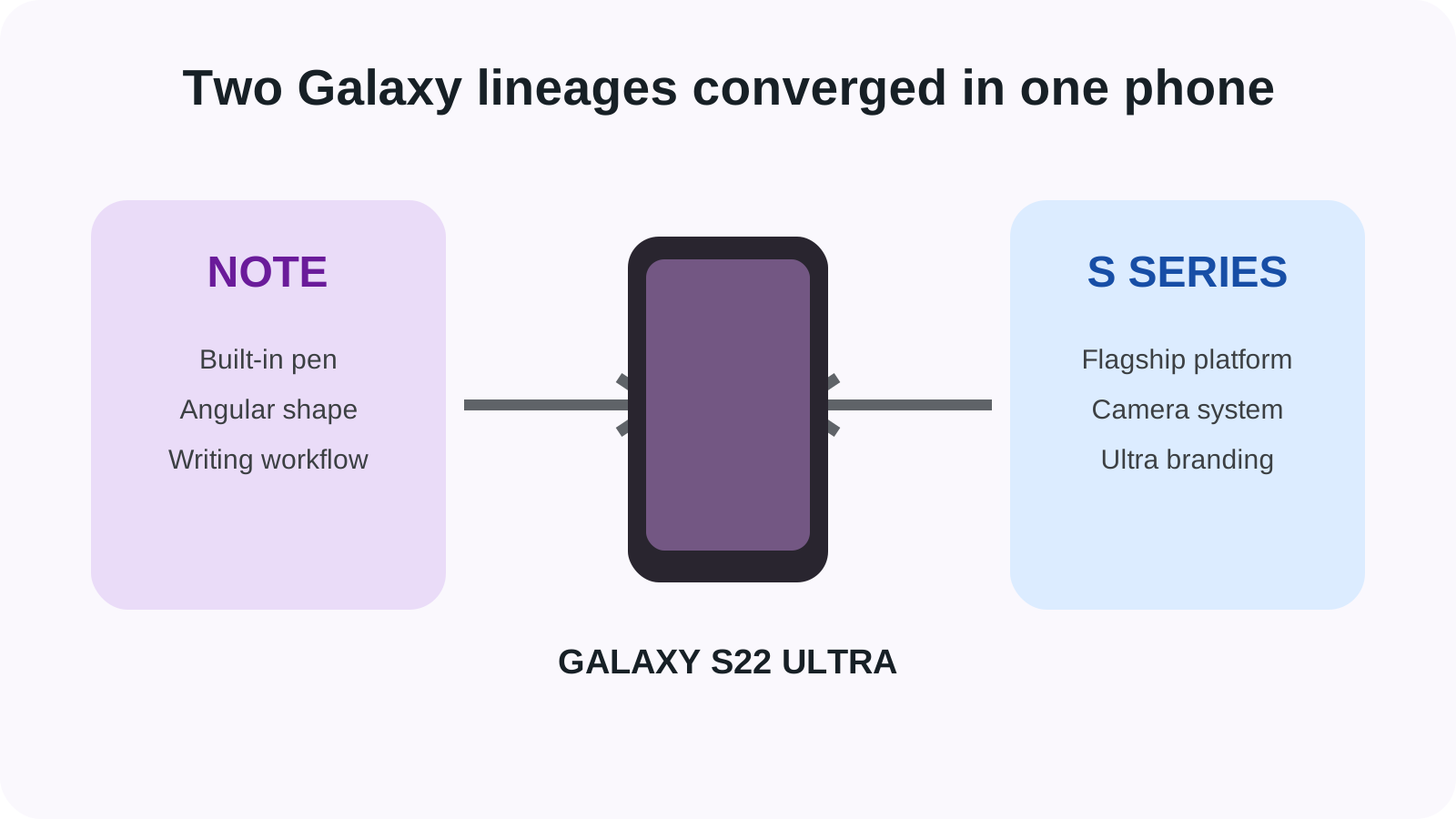
The phone’s historical importance was easier to see than a routine specification upgrade. It put a built-in S Pen, the defining tool of the Galaxy Note family, inside an S-series phone. Samsung did not formally say that every idea associated with Note had ended, but the S22 Ultra made the convergence physical: the stylus slot, angular silhouette and writing workflow now belonged to the Ultra branch of the Galaxy S line.
What made the S22 Ultra different from the S21 Ultra?
The Galaxy S21 Ultra already supported an S Pen, so pen input on an S-series phone was not new in 2022. The important difference was integration. The S21 Ultra’s pen was optional and stored in a compatible case. The S22 Ultra included an S Pen and a silo inside the phone, allowing the familiar remove-and-write routine associated with Galaxy Note devices.
Samsung’s launch announcement called it the first built-in S Pen in the S series. The company also claimed 70 percent lower pen latency than the preceding implementation, a comparison under Samsung’s stated test conditions rather than an independent measure of every writing app.
The shape reinforced the connection. The standard S22 and S22+ kept softer, rounded corners, while the Ultra used a more rectangular body and curved display edges. Samsung’s design account explicitly described the Ultra as inheriting the Note series’ simple, sturdy design identity optimized for the S Pen.
How did the built-in S Pen change everyday use?
Storage inside the phone removed a small but meaningful barrier. A pen kept in a case can be left behind; a pen in a spring-loaded silo travels with the device. Removing it could open Air Command or begin a screen-off note, letting a user write before navigating through an app launcher. Samsung Notes supported handwriting, annotation and conversion workflows, while Air Actions and other features depended on the included active pen.
The S Pen did not turn every task into a better pen task. Typing remained faster for long text for many people, and the narrow phone display could not replace a large notebook for everyone. Its value was precision and immediacy: marking a document, selecting a small interface element, signing a form, sketching or capturing a short note without an on-screen keyboard.
Which Note and S-series ideas came together?
The convergence was not simply a logo change. It combined a tool-centered product identity with Samsung’s main annual flagship platform.
| Lineage | Trait visible in the S22 Ultra | What it meant in practice |
|---|---|---|
| Galaxy Note | Built-in S Pen and storage silo | Pen was always carried and ready |
| Galaxy Note | Angular body and writing-focused software | Familiar shape and workflow for Note users |
| Galaxy S Ultra | Mainstream flagship launch position | The pen model arrived with Samsung’s central S-series release |
| Galaxy S Ultra | Multi-camera system and high-end display | Writing features shared space with the Ultra camera and screen priorities |
| Both | Long software-support promise | Samsung announced up to four Android generations for the S22 series |
Samsung paired the pen with a 6.8-inch Dynamic AMOLED 2X display, adaptive refresh up to 120Hz, a four-camera rear system and a 5,000mAh rated battery. Those figures describe the launch configuration; processor, radio support, memory and availability varied by market. The official product infographic is useful for the announced specifications but should not be read as independent testing of battery life, camera quality or durability.
Did the S22 Ultra replace the Galaxy Note overnight?
The last new Note generation before it was the Galaxy Note20 family in 2020. Samsung skipped a new Note-branded phone in 2021, then described the S22 Ultra as merging two smartphone legacies. From the perspective of later product history, it became the practical successor to the Note formula. At the February 2022 announcement, however, the verifiable fact was narrower: Samsung launched an S-series Ultra with Note-like design and an integrated pen.
That distinction avoids turning hindsight into a fictional announcement. Companies reorganize product lines through a sequence of releases, support decisions and marketing changes. A reviewer in 2022 could reasonably observe the convergence without claiming access to every future Samsung roadmap.
For existing Note owners, the move offered a current flagship path without giving up the silo. For buyers who never used a pen, it also meant that Samsung’s largest S-series flagship devoted internal space and design attention to a tool they might rarely remove. The same decision could therefore look like continuity or unnecessary complexity depending on the user.
How did software support affect the story?
Alongside the S22 launch, Samsung promised up to four generations of Android OS upgrades for the series and five years of security updates. That policy was not unique to the Ultra, but it made the convergence more consequential: a phone positioned as the new home of the Note experience was also intended to remain on current platform versions for longer than many earlier Android flagships.
“Up to” and regional qualifications still mattered. Feature timing could vary by model, market and carrier, and an operating-system generation is not the same as five full calendar years of identical feature delivery. Even so, the published commitment gave buyers a clearer support horizon and foreshadowed the seven-year promises that Google and Samsung would make in 2023 and 2024.
The S22 Ultra shipped with Android 12 and One UI 4.1. Its contemporary software also sat beside Google’s work on large screens. Android 12L, released a month later, focused on tablets and foldables rather than this conventional phone, but the 12L history shows how the wider Android ecosystem was diversifying at the same moment.
What should buyers remember about the launch claims?
Samsung’s announcement included claims about camera intelligence, all-day battery life, durability, charging speed and display brightness. Those were manufacturer statements with footnotes and test conditions. They establish what Samsung introduced and how it positioned the device; they do not substitute for independent endurance, thermal or camera comparisons.
Specifications also differed across regions. The application processor was not the same in every market, network bands depended on model, and storage options varied. The 45W charging capability required compatible equipment, and the charger was not universally included. Historical articles should preserve those conditions rather than flattening all S22 Ultra units into one configuration.
The most stable fact is the product architecture: an S-series Ultra body carried an integrated S Pen and Samsung’s Note-oriented software experience. That is why the device remains historically recognizable even after performance rankings and retail prices have changed.
Why does the S22 Ultra still matter today?
The S22 Ultra made a specialist feature part of Samsung’s central flagship family. In hindsight, it shows how an Android manufacturer can preserve the identity of one line by absorbing its defining interaction into another, rather than continuing two parallel annual launches indefinitely.
It also offers a useful lesson for phone history: a device can matter because of what it consolidates, not only because it invents a component. The S Pen had a long history, and the Ultra name already existed. Bringing them together changed where Samsung users looked for the top pen-equipped phone.
The next major platform milestone arrived with Android 13’s language, notification and privacy controls. Together, these stories show hardware families and Android software evolving on different schedules. Their place in the larger sequence is available in our Android history timeline.