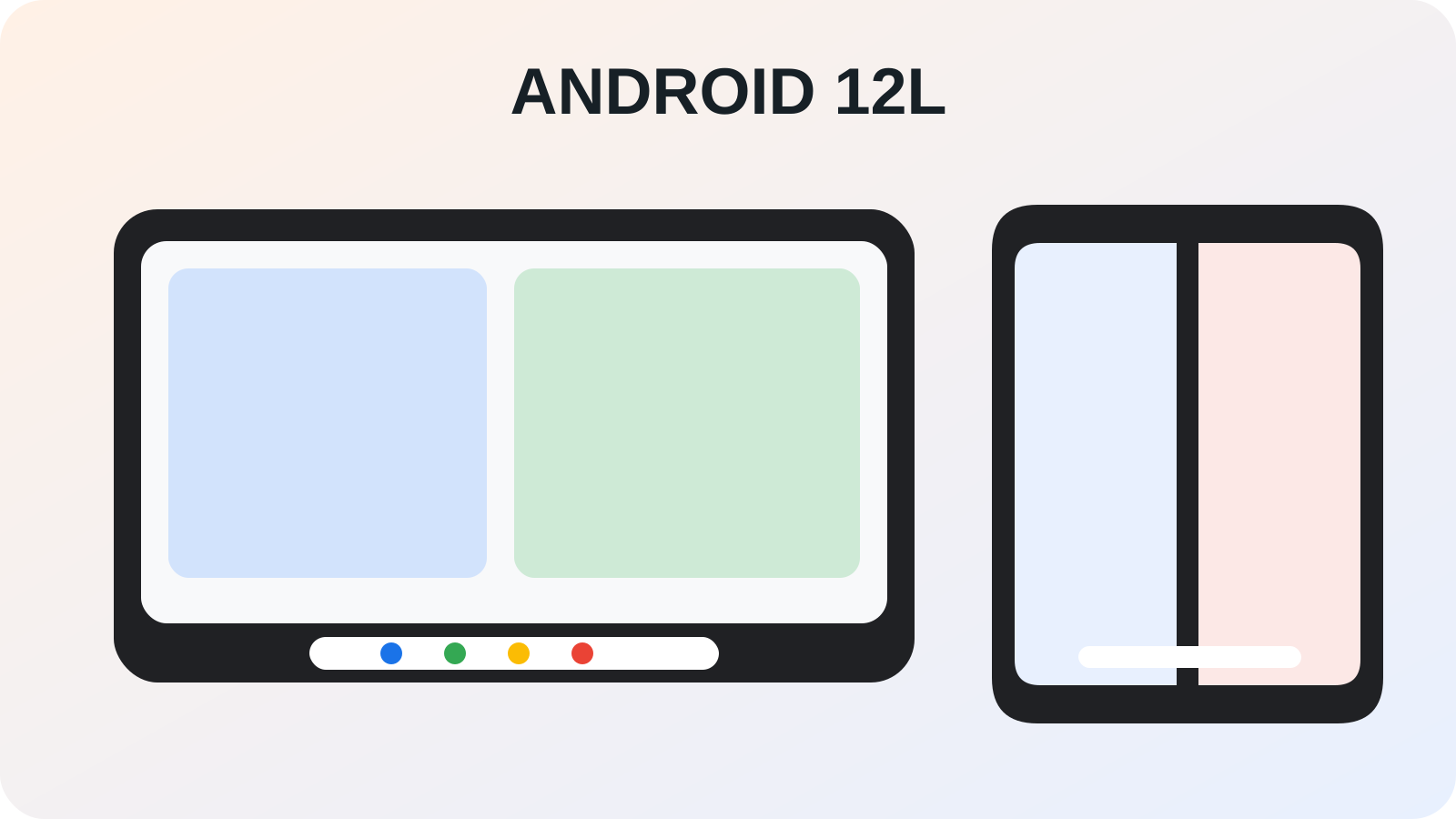
On March 7, 2022, Google introduced Android 12L as a feature drop designed to make Android 12 work better on tablets and foldable phones. The letter did not mark a separate consumer platform with its own app catalog. It identified a large-screen branch of work: redesigned system surfaces, a taskbar, simpler split-screen use and better treatment of apps that had not been built for a wide display.
The timing mattered. Android had run on tablets for more than a decade, and foldables were already shipping. Yet enlarging a phone interface often left empty space, stretched controls or awkward multitasking. Android 12L was an admission in product form that more pixels required different layout decisions, not merely larger versions of the same elements.
Why did Android need a special large-screen update?
A phone usually presents one narrow column of information. A tablet or unfolded phone can show two meaningful areas at once: a list beside its detail view, or quick settings beside notifications. Without adaptive design, that extra space may make an app harder to use because controls become distant and text lines grow uncomfortably long.
Google said there were more than 250 million active large-screen Android devices around the time of 12L. Its consumer announcement framed tablets and foldables as devices for viewing content, communicating and working, while the developer summary gave app makers concrete behaviors to test.
12L therefore addressed two connected problems. The Android system interface needed to use space intelligently, and ordinary apps needed acceptable behavior even before every developer produced a bespoke tablet layout. It was a baseline, not a guarantee that every app would immediately become excellent on a tablet.
What changed in the system interface?
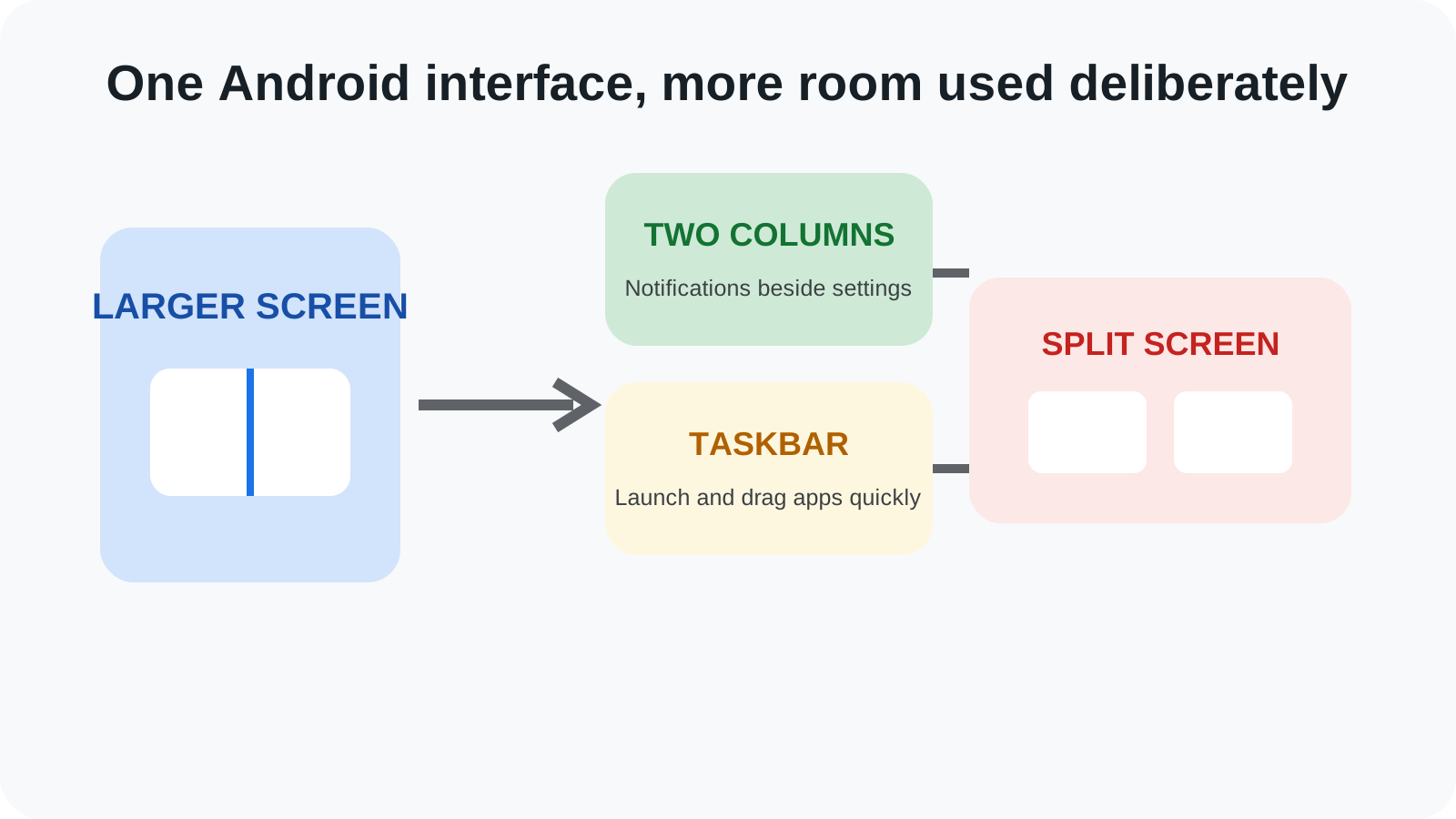
On sufficiently large screens, Android 12L reorganized the notification shade, lock screen, setup screens, home screen and settings. The notification shade could place notifications on one side and quick controls on the other, reducing the need to cover a wide display with one oversized column. The lock screen could similarly distribute information and the keypad across the available space.
Google used 600 density-independent pixels as an important breakpoint for a number of large-screen behaviors. That measurement is not the same as a raw pixel count; it represents usable logical width after accounting for display density. As a result, software could respond to the effective size of the window, not simply a marketing label such as “tablet.”
The approach also suited foldables. An app’s available window can change when a device unfolds, rotates or enters multi-window mode. Designing around window size rather than a fixed device category made the platform more resilient to those transitions.
How did the taskbar change multitasking?
Android 12L added a taskbar for large screens that kept a row of app icons within reach. A user could switch applications without returning to the home screen and drag an app from the taskbar to one side of the display to begin a split-screen session. Google also made split screen available more broadly, including for apps that had not declared themselves resizable.
This was a practical change because discoverability matters. Multi-window features had existed before 12L, but a visible taskbar made the action easier to find and connected launching with arranging. The user did not need to memorize a gesture or navigate through the recent-apps view merely to place two apps side by side.
| 12L area | Large-screen change | Everyday effect |
|---|---|---|
| Notification shade | Two-column controls and notifications | More information visible without a stretched list |
| Taskbar | Persistent access to selected apps | Faster switching and drag-to-split-screen entry |
| Split screen | Broader availability across apps | Two tasks can share the display more consistently |
| Compatibility mode | Improved letterboxing options | Unoptimized apps remain usable without forced stretching |
| App testing | Resizable emulator configurations | Developers can check more postures and window sizes |
Split screen still depended on app behavior. A fixed layout could look cramped, and two demanding apps could place greater pressure on memory. 12L improved the system path into multitasking; it did not rewrite third-party interfaces or remove hardware limits.
What happened to apps that were not designed for tablets?
For unoptimized applications, 12L improved compatibility mode. Device makers could configure letterboxing—the borders around an app kept at a supported shape—and adjust its appearance. The objective was to avoid stretching a narrow interface across the entire display or allowing fixed-orientation software to fail unpredictably.
Google also changed Play Store presentation for large screens. Store listings could warn users when an app did not meet compatibility expectations, while search and recommendations could give greater visibility to well-optimized apps. The company later continued this work with large-screen quality guidance and device-specific reviews.
Compatibility mode was a bridge, not the destination. A responsive app could show a list and detail panel, keep controls within comfortable reach and preserve context as a foldable opened. A letterboxed phone app could only remain functional. The distinction explains why Android provided both platform fallbacks and developer tools.
Was 12L only about tablets?
No. Google’s announcement explicitly included foldables, and many of the same problems apply to both categories. The inner screen of a foldable may resemble a small tablet, but its state can change during use. App continuity, posture and hinge position add requirements that a conventional slab tablet does not have.
12L also mattered beyond products sold with “12L” prominently printed on the box. Google said selected features would reach devices from Samsung, Lenovo and Microsoft, and Android 13 incorporated and extended the large-screen work. That continuity is why our Android 13 privacy and language history also includes tablet taskbar and stylus behavior.
The Android developer announcement paired 12L with tools such as resizable emulators and large-screen Compose guidance. This made it both a user-facing update and a request for developers to stop assuming that every Android window was a tall phone rectangle.
What did 12L not solve immediately?
It did not create a complete catalog of tablet-optimized apps on March 7. It did not dictate one update date for all manufacturers, and not every existing tablet was eligible. It also did not make every foldable design equivalent: screen ratios, hinges, cover displays and manufacturer software continued to differ.
The name itself could be confusing. Because 12L was a feature drop and its work fed directly into Android 13, some consumers never encountered it as a distinct version label. Historical impact should not be measured solely by how often the branding appeared in settings. Its layouts and developer expectations were the more durable contribution.
That context also helps with contemporary reviews. A large display is not automatically productive. App quality, window behavior, keyboard and pointer support, weight and battery life remain part of the experience.
Why does Android 12L still matter today?
Later Android releases placed even more emphasis on foldables, resizable apps and external displays. In hindsight, 12L was the point at which Google publicly treated large-screen adaptation as a platform baseline rather than an optional manufacturer embellishment. Its taskbar and two-column system surfaces made the change visible; its compatibility and testing work made it structural.
The lesson remains useful for ordinary buyers: screen size and software quality must be evaluated together. A folding hinge can create more space, but only an adaptive system and responsive apps can turn that space into a better task. Android 12L’s place in that progression is recorded in the Android history timeline, before Google’s own Pixel Fold made the same large-screen question a first-party hardware story in 2023.