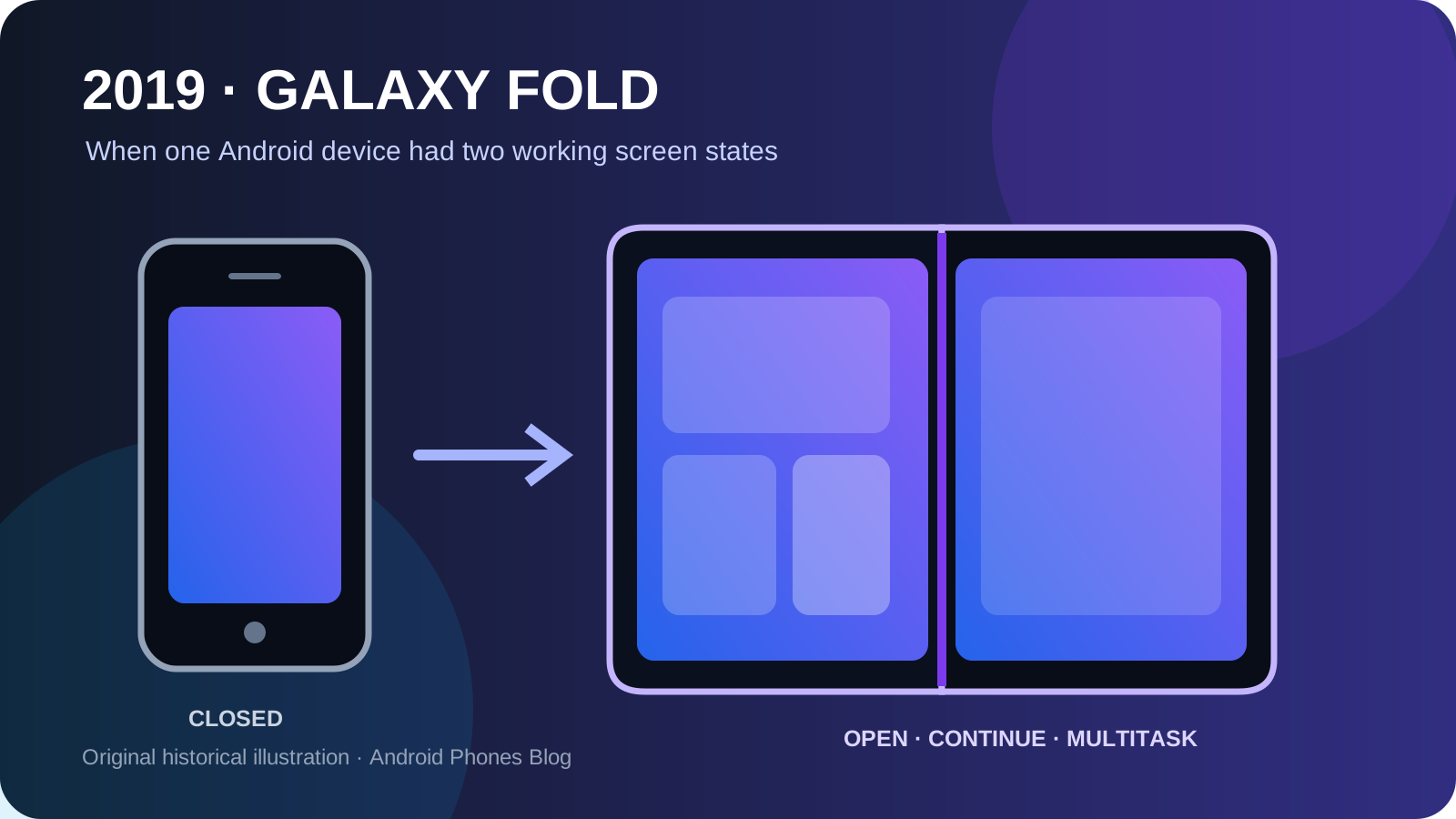
On September 6, 2019, Samsung began selling the revised Galaxy Fold in South Korea before expanding it to selected international markets. The device used a 4.6-inch cover display when closed and a 7.3-inch main display when opened. It was not merely a flexible-screen demonstration: Samsung’s official launch announcement described app continuity and simultaneous multi-app use as essential parts of the product.
The Fold’s historical importance does not require declaring it the first object ever called a foldable phone. Flexible-display prototypes and other commercial efforts existed. What mattered was that a major Android manufacturer placed a phone-to-tablet design into a named global product line and forced hardware, Android software and apps to respond together.
What exactly changed when the Galaxy Fold opened?
A normal large phone keeps one basic display shape. The Galaxy Fold offered two distinct working surfaces. Closed, its narrow cover screen supported quick, one-handed access. Opened like a book, the internal panel provided much more room for video, reading and several app windows. Samsung’s February 2019 introduction described a new polymer display layer, a concealed geared hinge and components distributed across both halves of the body.
That construction changed familiar engineering assumptions. A battery could not occupy one uninterrupted space, so the Fold used two battery units managed as one power source. Cameras and antennas had to work in both physical states. The main screen had to bend repeatedly, while the hinge had to guide its motion and keep the two halves aligned.
| Device state | Main purpose | Software requirement |
|---|---|---|
| Closed | Quick access on the cover display | Interfaces must remain usable in a narrow area |
| Opening | Move from compact to large canvas | The current task should continue smoothly |
| Open | Reading, media and multitasking | Apps must use extra space rather than merely stretch |
The Fold therefore made “screen size” a changing condition rather than a fixed specification. That was the central break from an ordinary phone.
How did software make the folding hardware useful?
App Continuity allowed a supported task begun on the cover display to move to the larger internal screen when the phone opened. Multi-Active Window allowed up to three applications to appear at once. These features addressed the two most obvious risks of a foldable: interruption during the physical transition and wasted space after it.
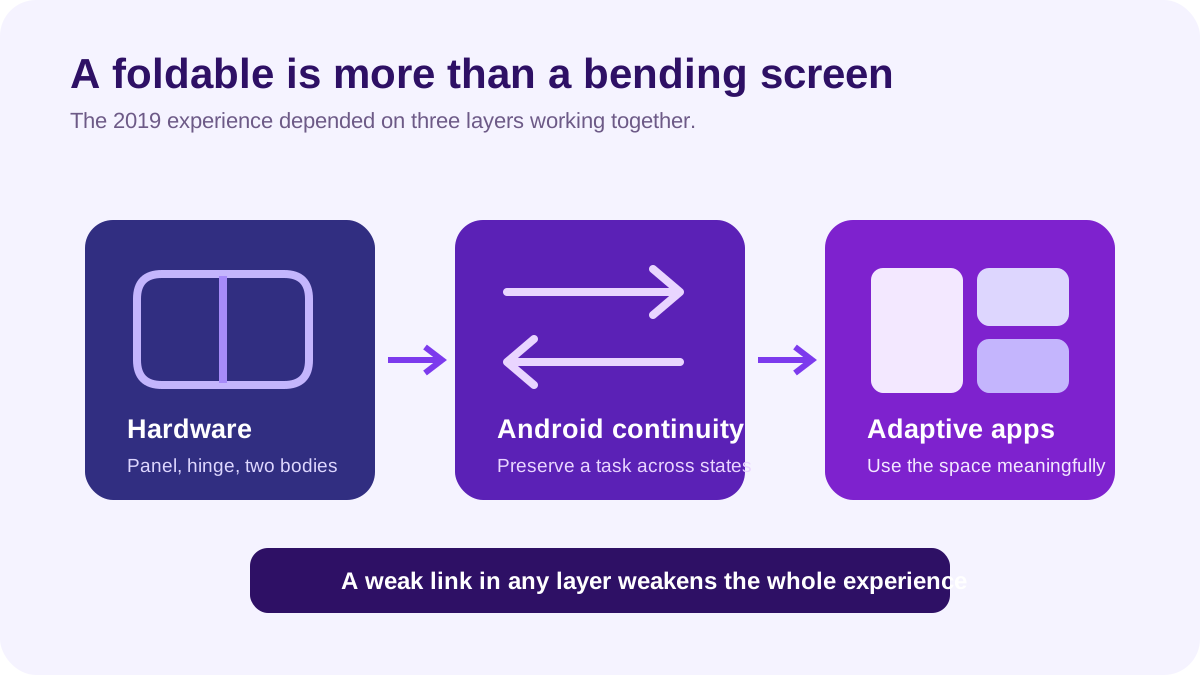
Continuity was more than resizing a picture. An app needed to preserve its state—such as the selected video or current page—while Android changed the available window. Multitasking was also more demanding than displaying three static thumbnails. Apps had to remain responsive and present controls within their new dimensions.
Samsung said it worked with Google and application partners on the Fold’s user experience. Google simultaneously identified foldables as a new technology supported by Android 10. This illustrates how a new phone shape becomes an ecosystem task: a hinge can open the screen, but platform rules and app layouts determine whether the extra area is useful.
Why did the route from announcement to sale matter?
Samsung introduced the Fold in February and initially described second-quarter availability. The model that went on sale in September followed several months of design and construction refinement. Samsung’s launch statement explicitly said the company had improved the device and reconsidered the customer journey.
The official sources used here do not justify reconstructing every reported failure or assigning a single cause to the revised schedule. The reliable historical point is narrower: the first announced design was not the one simply sent into broad sale unchanged. Moving a folding display from a controlled demonstration into a device opened many times a day required additional work.
That episode became part of the category’s development. Conventional phones already benefited from years of shared assumptions about rigid glass, frames and cases. Foldables changed the mechanical system and created new paths for particles, pressure and wear. Later models would make durability a central part of their story rather than a background specification.
Was the Galaxy Fold a phone, a tablet or a new category?
It borrowed from both established categories. It could make calls and fit in a pocket like a phone, although it was unusually thick when closed. Its open display enabled tablet-like layouts, although it was smaller than many tablets. Samsung described it as a new mobile category because its value came from switching between those roles.
The most useful answer is functional rather than semantic. If an app simply expanded a phone layout, the Fold behaved like a larger phone. If an app used multiple panes or worked beside another app, the open screen supported a more tablet-like workflow. The device’s identity changed with the software being used.
This ambiguity was productive. It encouraged Android developers to think in terms of available window size and posture, not a permanent “phone” label. That principle later became more explicit in Android’s large-screen guidance and in the dedicated Android 12L work that followed in 2022.
What tradeoffs came with the first-generation design?
The Fold weighed 276 grams according to Samsung’s launch specification table and measured between 15.7 and 17.1 millimeters thick when folded. Its cover screen was much smaller than the inner display, and the main panel used a large cutout for cameras. These were visible consequences of packaging two display modes, multiple cameras, a hinge and two battery sections into one device.
Software compatibility was another tradeoff. App Continuity worked with supported applications, and an app designed only for one narrow portrait window could not automatically become an excellent wide-screen experience. The hardware exposed the opportunity faster than every developer could redesign for it.
Those constraints do not cancel the achievement; they define what a first-generation product had solved and what remained open. The later Galaxy Z Flip explored a different answer—folding a normal-sized phone into a smaller square—while subsequent Fold models concentrated on making the book-like idea thinner, stronger and easier to use.
How did the Fold influence later Android design?
From hindsight, the 2019 Fold established several recurring expectations: tasks should survive folding and unfolding, apps should adapt across window sizes, and a large inner screen should support meaningful multitasking. It also made posture—closed, partly open or fully open—a potential input to software.
Not every foldable copied Samsung’s exact dimensions, and not every buyer needed three apps on screen. The durable contribution was a set of platform questions. How should navigation work near a hinge? Where should a video or keyboard sit? What happens when a user closes the device in the middle of a task? Android and app developers could no longer assume that display geometry stayed constant from launch to exit.
The original Fold did not answer all of those questions. It made them concrete on hardware that people could buy, test and live with.
Why does the 2019 Galaxy Fold still matter today?
Current foldables are easier to understand when the first Galaxy Fold is viewed as a coordinated system rather than a novelty screen. Its hinge, flexible panel, two display states, continuity behavior and app support were mutually dependent. Improving only one layer could not create a mature experience.
That remains a useful lesson for buyers. A foldable should be judged by screen durability, dimensions and weight, but also by update support, app layouts and what happens during transitions. Follow the next stages in the Android history collection and our account of the more durable Fold3 and Flip3. The 2019 model matters because it turned the folding phone from an abstract display idea into a full Android platform problem.