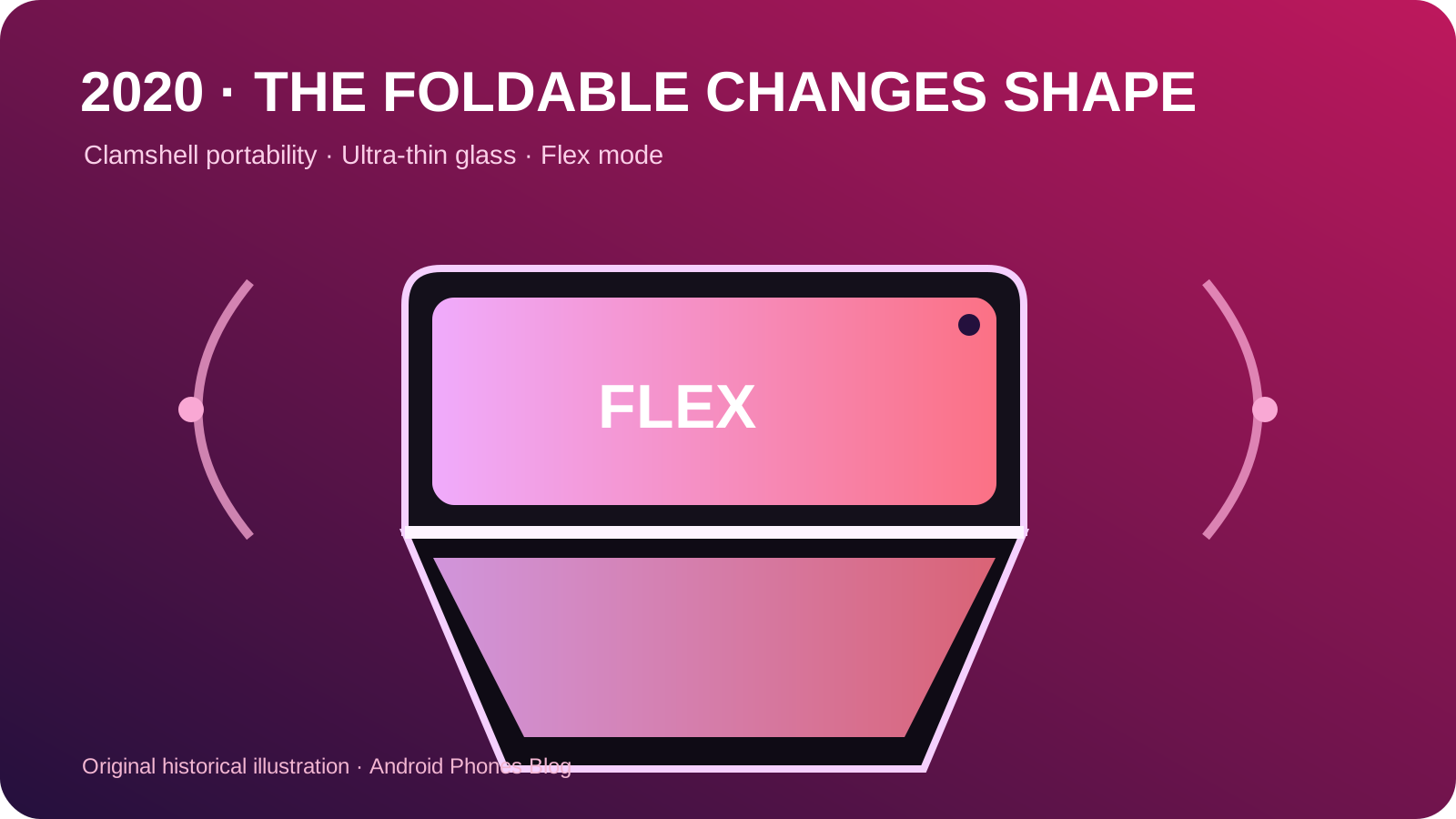
On February 18, 2020, Samsung published its guide to the newly launched Galaxy Z Flip’s foldable interface. The phone used a 6.7-inch display that folded across its middle into a compact clamshell. Unlike the book-shaped Galaxy Fold, it did not primarily turn a phone into a small tablet. It turned a familiar phone-sized screen into a smaller object for carrying, then let the hinge hold the device at intermediate angles.
Samsung’s official product introduction also emphasized its bendable Ultra Thin Glass and a custom interface called Flex mode. Hardware material, hinge posture and software behavior were again inseparable.
How was the Z Flip different from the first Galaxy Fold?
The original Fold opened sideways to reveal a much larger canvas. The Z Flip opened vertically into proportions closer to an ordinary tall smartphone. Its main benefit when closed was compactness, not access to a tablet-sized work area. A small outer display showed time, status and selected notifications, while the full interface lived inside.
| Design question | Galaxy Fold approach | Galaxy Z Flip approach |
|---|---|---|
| Why fold? | Carry a larger inner screen | Carry a normal-sized screen more compactly |
| Hinge direction | Book-like vertical hinge | Horizontal clamshell hinge |
| Closed interaction | Separate phone-like cover screen | Small status and preview display |
| Signature software | Continuity and multi-window | Flex mode and hands-free positioning |
This alternative mattered because it showed that “foldable” was not one product category with one ideal shape. A manufacturer could use the bend to expand the working area or to reduce the carried footprint. Later foldables continued to develop along both Fold and Flip lines.
What was ultra-thin glass, and what was it not?
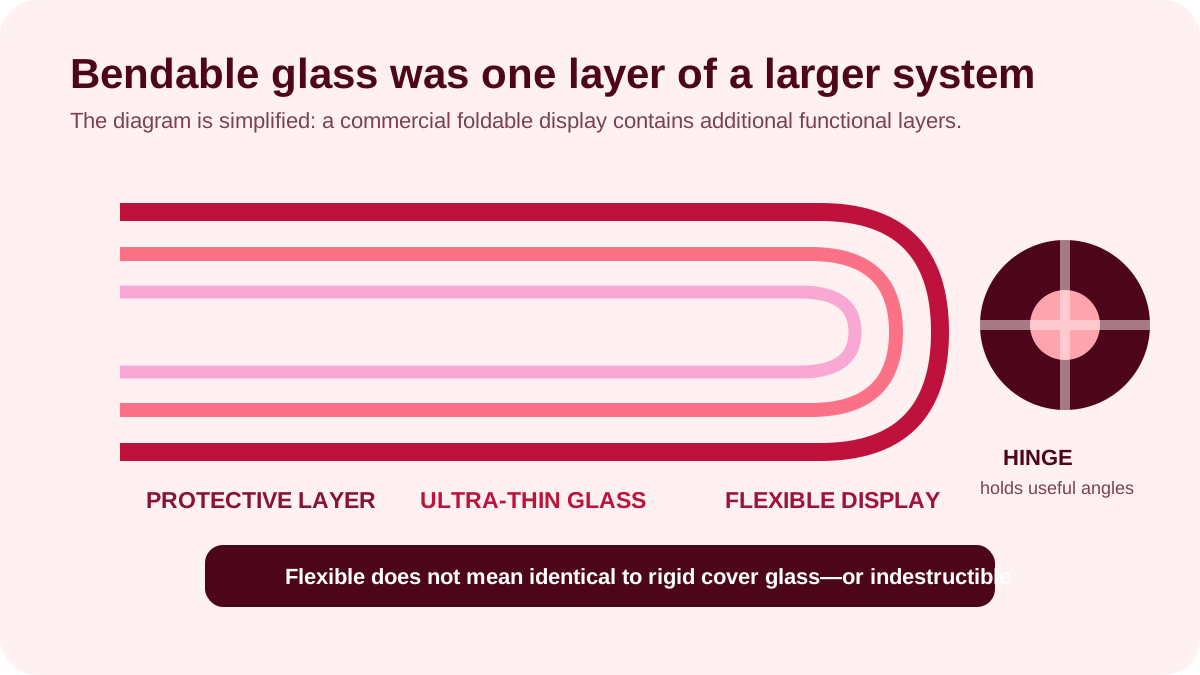
Samsung Display described its UTG material as glass only 30 micrometers thick, processed to improve flexibility and durability. The company said it had commercialized the material as a cover window for foldable displays and first applied it to the Z Flip. Its official material announcement reported third-party folding tests and explained that development had begun years earlier.
“Glass” did not mean the screen behaved like the exposed rigid cover glass on a conventional phone. A foldable display is a layered system that includes the OLED panel, flexible substrate, adhesives, UTG and protective layers. Making glass extremely thin allows it to bend, but it also changes how it responds to concentrated pressure and scratches. Users still had to follow foldable-specific care instructions.
The accurate historical claim is that UTG became part of a commercial folding display stack. It did not make the screen unbreakable, erase the crease or give it the same construction as a rigid slab phone.
How did the hinge create uses beyond simple opening and closing?
Samsung’s Hideaway Hinge could hold the Z Flip at a range of angles. That made the phone its own small stand for photos, video calls and media. A conventional phone can perform those tasks, but it normally needs to be held or supported by another object.
The hinge included fibers intended to help keep particles away from the mechanism, but Samsung did not present the first Z Flip as dustproof. Small moving parts and the gap required for folding remained meaningful differences from a sealed rigid phone.
Intermediate posture was the novel capability. Once the device could remain partly open, software could treat the upper and lower halves as two functional areas rather than a bent version of one flat screen.
What did Flex mode change on the screen?
Samsung’s official UX guide described supported apps dividing the display when the phone was free-standing. The camera could show a preview above and controls below. The Gallery could put an image on the upper half and navigation controls on the lower half. Google Duo was optimized for hands-free video calls.
Flex mode required app awareness. An unsupported app might continue to render as one tall layout, gaining little from the hinge angle. Samsung and Google worked on the interface and encouraged more partners to adapt. This was an early example of “posture” becoming a software input: not just screen width and height, but how the device was physically folded.
The camera use was easy to understand because the hinge replaced a tripod for some angles. Other two-part layouts needed stronger design justification. A fold does not automatically make controls more convenient; developers had to choose what belonged on each side.
Did folding glass solve durability concerns?
It addressed one material challenge, not the whole durability problem. Samsung Display reported that its UTG passed 200,000-fold testing conducted by Bureau Veritas. Laboratory cycles provide a repeatable measure, but they cannot predict every drop, particle, temperature or pressure a personal phone will encounter.
Durability also included the hinge, frame, protective film, display layers and the way a person handled the phone. A material can survive repeated bending yet remain vulnerable to a sharp point. A hinge can complete many cycles yet admit debris under conditions outside a controlled test.
This distinction became important in later marketing. Fold count is useful evidence about a defined test, not a universal lifespan guarantee. Buyers should examine water and dust ratings, repair terms and care guidance alongside the headline material.
What compromises did the clamshell shape introduce?
The Z Flip became thick when folded, used a small external screen and required an extra opening action for most tasks. Its main display had a visible crease, and the layered flexible surface needed more care than conventional rigid glass. The hinge and two body sections also constrained internal component placement.
In return, the phone occupied less vertical space in a pocket, could stand at useful angles and offered a distinctive way to frame photos and calls. Whether that exchange was worthwhile depended on what the owner valued. Foldability was not a free upgrade added to a normal phone; it reorganized the product’s strengths and weaknesses.
The design also made the 2019 Galaxy Fold easier to interpret. One family maximized open screen area, while the other maximized closed compactness. The shared display technology supported two different answers to the same question.
Why does the first Z Flip still matter today?
The 2020 Z Flip established the basic clamshell vocabulary that later models refined: ultra-thin glass within a flexible display stack, a hinge that holds intermediate angles, a small outer information surface and software that reacts to posture. Newer devices improved cover displays, sealing, processors and materials, but the relationship was already visible in the first generation.
For current buyers, that history suggests judging a flip phone as a system. Ask how useful the outer screen is, which apps respond to half-folded posture, what protection ratings apply and how repair works. The Android history collection and our later look at Fold3 and Flip3 durability show how those questions evolved. The original Z Flip matters because it made folding a practical interaction and carrying choice, not only a way to reveal a larger screen.