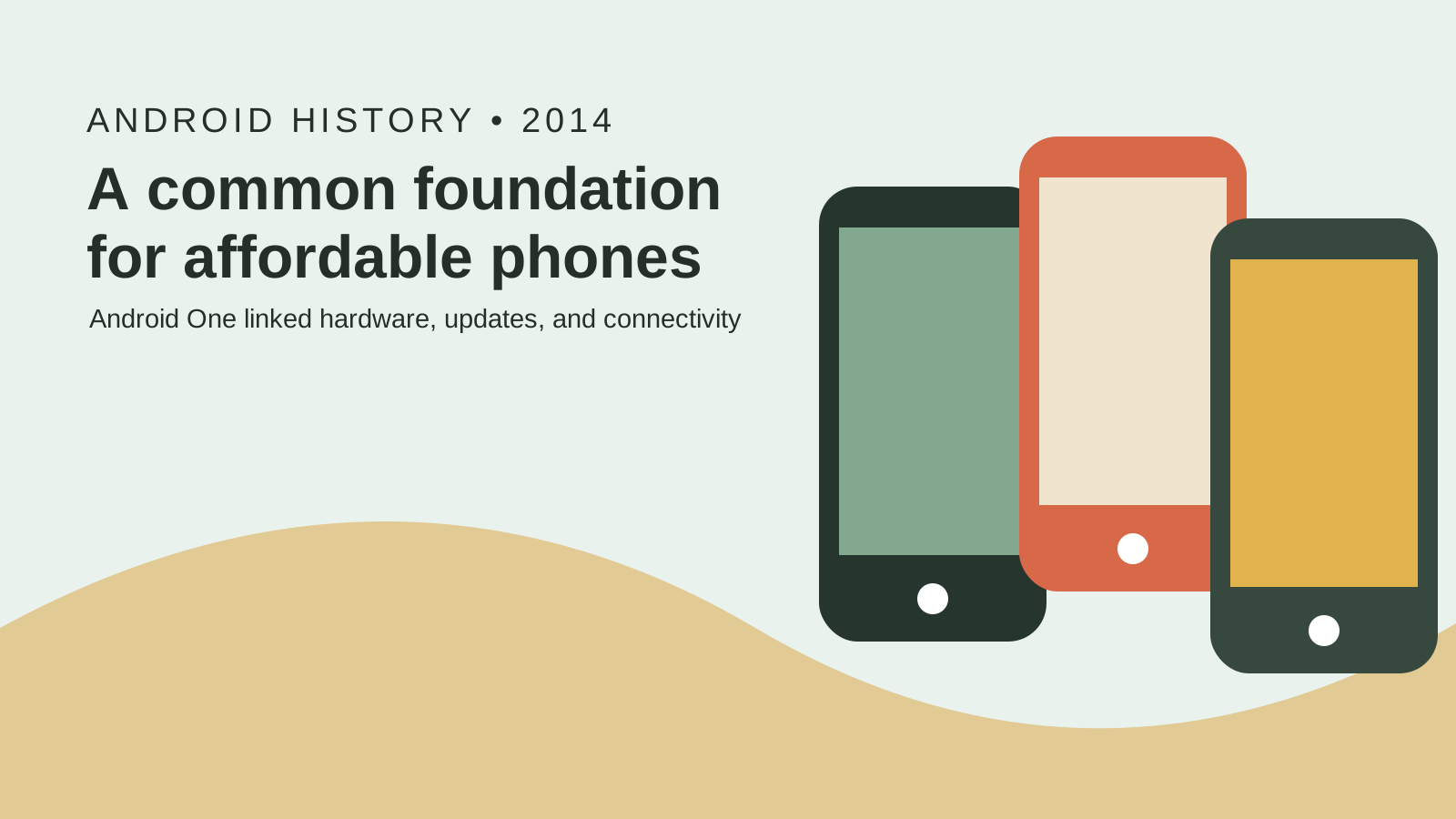
On September 15, 2014, Google introduced the first Android One phones in India. The program was not simply a new brand printed on inexpensive hardware. It joined reference designs, selected components, current Android software, direct updates and a carrier data offer in an attempt to address several barriers that kept capable smartphones out of reach.
Google had previewed Android One at I/O that June, describing sub-$100 phones planned first for India. The September launch turned the proposal into devices from Micromax, Karbonn and Spice starting at 6,399 Indian rupees. The official launch post framed access to information—not specifications alone—as the larger goal.
What did the first Android One program include?
Google worked with phone makers and chip companies on reference designs and component choices. That could reduce duplicated engineering and help partners bring a reliable baseline product to market. The first phones included features suited to their intended customers, including dual SIM support, expandable storage, a replaceable battery and FM radio.
Software was the second half of the offer. Google said Android One devices would receive the latest Android versions directly from Google, including security patches. The first models launched on Android 4.4 KitKat and were positioned to receive the upcoming Android L release.
Connectivity was treated as part of affordability. An Airtel offer provided software updates without counting against mobile data for six months and a monthly allowance for app downloads, subject to the offer’s terms. That detail recognized that a low purchase price does not make a smartphone useful when data remains too expensive.
Which barriers was Google trying to remove?
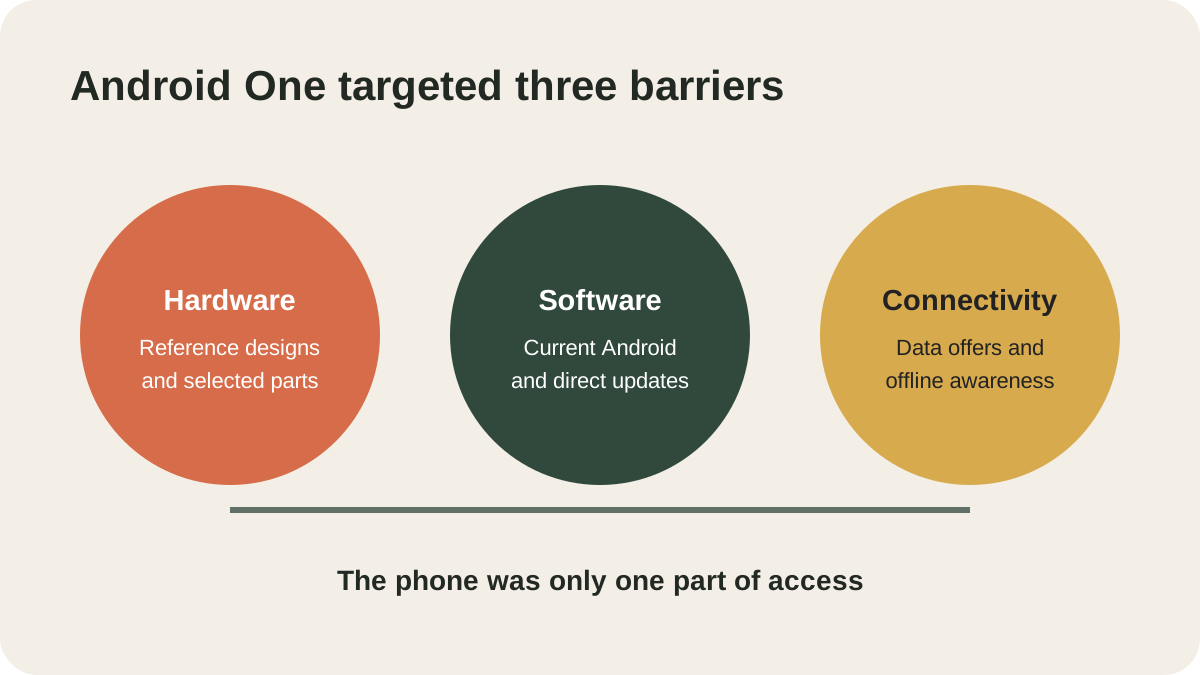
Google identified hardware cost, stale software and expensive connectivity as three related problems. A buyer might afford a basic handset but still receive an outdated platform, weak applications or a data bill that discouraged use. Android One tried to coordinate the participants needed to improve the entire experience.
| Barrier in 2014 | Android One response | Intended user benefit |
|---|---|---|
| Capable hardware cost too much | Shared reference designs and selected components | Better baseline quality at a lower price |
| Entry phones shipped old software | Current Android and updates delivered through the program | New features and security work sooner |
| Mobile data was expensive | Launch carrier offer for updates and app data | Lower initial cost of using the smartphone |
| Local needs differed from flagship markets | Dual SIM, FM radio, removable battery and storage expansion | Hardware better matched to everyday conditions |
The program could influence these barriers but could not remove income, coverage or infrastructure constraints. “The next five billion” was an ambition, not a count of people the first launch immediately connected.
How was Android One different from the Nexus program?
Nexus devices demonstrated Google’s current platform through closely coordinated flagship or enthusiast hardware. Android One used some of the same reference-software logic at a much lower price and with local manufacturing partners. The objective was repeatable affordability, not a showcase device sold under Google’s own consumer hardware identity.
Android One partners still built and sold the phones. The program did not turn all participating devices into identical Google hardware, nor did it eliminate regional retail and support differences. Reference components created a baseline; manufacturers and markets shaped the finished products.
The strategy also differed from the first Moto G. Motorola controlled that phone as a single product and brand, while Android One was a multi-partner framework. Both belong in the same history because each asked how a current, pleasant Android experience could reach below flagship pricing. Read the companion history of Moto G and the modern mid-range for the product-led version of that question.
Did direct updates solve Android fragmentation?
They improved the promise for participating models, but Android One covered only a portion of the overall market. Most Android phones still depended on their manufacturers, chipset vendors and carriers for version upgrades. Program terms and the update experience also evolved across countries and generations.
Even within Android One, “directly from Google” should be understood in the context of the 2014 launch commitment, not assumed to describe every later device arrangement in exactly the same way. Hardware support eventually ends, and no update program can make a phone current forever.
The wider platform continued to pursue other solutions. Android 4.4 reduced memory requirements; Lollipop expanded common design and runtime foundations; Project Treble later separated vendor code from the Android framework to make OS upgrades less costly. Fragmentation was a chain of problems, so it required more than one program.
How did Android One evolve after its Indian launch?
Google planned expansion to Indonesia, the Philippines and other South Asian markets, with more partners to follow. Over time, Android One appeared at additional prices and in more countries. In 2017, Google highlighted Xiaomi’s Mi A1 and described the program around a simple software experience that stayed fresh and secure.
That later positioning shows a change in emphasis. Android One began as a way to coordinate very affordable hardware, software and connectivity. It later also appealed to buyers who wanted a clean Google-designed software experience on partner hardware. Google’s 2017 program update documents that broader range.
This evolution should not be confused with Android Go, announced later as a specific lightweight configuration for low-memory devices. The names sound similar, but One was a device partnership program, while Go focused on an optimized operating system, apps and store experience.
Why does Android One still matter today?
Android One demonstrated that affordable smartphone access is a systems problem. Processor speed and screen resolution matter, but so do updates, storage, local radio features, data prices and distribution. A cheap device with obsolete software or unaffordable connectivity does not provide cheap computing in practice.
The program also helped normalize published software expectations for less expensive phones. Today’s support policies are often longer and more explicit, though they still vary greatly. Buyers can apply the same lesson by checking OS upgrade years, security-patch years, network compatibility and after-sales support before comparing headline specifications.
In the Android history archive, the September 2014 launch marks an early attempt to design the phone, platform and path online together. Android One changed form over time, but its central question remains current: how can a broad hardware ecosystem deliver not just a low price, but a useful and maintained digital experience?