On February 27, 2018, Google summarized the first wave of Android Oreo Go edition phones announced at Mobile World Congress. The software had been made ready with Android 8.1 in December 2017, but the Barcelona announcements turned the idea into actual devices from multiple manufacturers. Android Go targeted phones with very limited memory and storage, often used where mobile data was expensive or inconsistent.
This was not a miniature side project unrelated to “real” Android. It was an attempt to preserve a useful smartphone experience at the affordable edge of a large ecosystem. Understanding that goal requires looking at the operating system, apps and distribution together.
What problem was Android Go designed to solve?
An entry-level phone can satisfy Android’s basic compatibility requirements and still feel frustrating. A large operating-system image leaves little room for photos and apps. Services competing for limited memory force apps to reload. Background transfers consume a data allowance. A heavy app may technically install but respond slowly enough to be impractical.
Those constraints mattered especially for people whose phone was their first or only route to the internet. Buying more storage or a faster device was not a software solution. Google instead tuned Android Oreo for devices with 512MB to 1GB of memory, created lighter versions of major Google apps and adjusted the Play Store experience to highlight software suited to the hardware.
The objective was not to make inexpensive hardware perform identically to a flagship. It was to reduce avoidable overhead so that core tasks—searching, messaging, watching video, navigating and managing files—remained usable. That distinction keeps the history grounded: Go optimized around real limits rather than claiming those limits had disappeared.
How did the three parts of Android Go work together?
Google described Android Oreo Go edition as three coordinated components. System changes aimed to improve performance and storage use. A set of Google apps was redesigned to occupy fewer resources and consider limited connectivity. The Play Store continued to provide the broader Android catalog while calling attention to apps optimized for Go devices.
| Layer | 2018 approach | User problem addressed |
|---|---|---|
| Operating system | Lighter configuration and data controls | Limited memory, storage and data |
| Google apps | Go versions of common services | Large installations and heavy resource use |
| Google Play | Recommendations for suitable apps | Difficulty finding software that runs well |
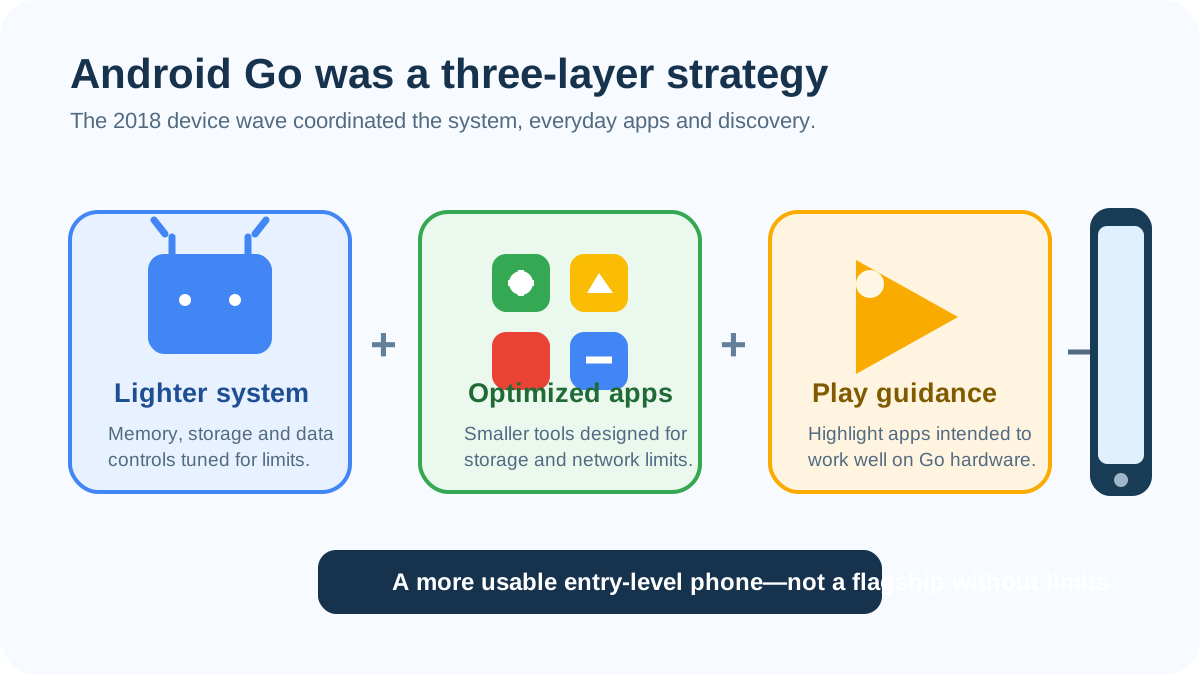
Coordination was the key. Saving space in the operating system would be less valuable if preinstalled apps immediately consumed it. A lightweight app would be hard to discover if the store treated it exactly like every resource-heavy alternative. Android Go made the complete out-of-box arrangement part of the platform proposal.
Google’s 2017 launch material reported faster average app starts and more free storage in its comparisons. Those figures described Google’s test context, not a guarantee for every future phone. Processor choice, flash-storage speed, manufacturer software and network quality could still change the experience.
What made a Go app different from simply being small?
File size was important, but it was not the only constraint. Google Go was designed around finding information with less overhead. YouTube Go included data-conscious viewing and sharing ideas. Files Go helped people understand and free scarce local storage. Chrome’s data-saving behavior and system controls addressed the cost of transfers, not just installation size.
An effective entry-level app also had to cope with interruptions. A weak network might disappear during a task, and limited memory could cause the system to stop a background process. Clear download sizes, resumable work, offline options and restrained animation can matter more in that setting than a long feature list.
Android Go did not create a separate closed catalog. Users could still reach regular Android apps through Google Play. Highlighting optimized apps was an attempt to improve the odds of a good choice, not a promise that every listed app would be equally capable or that every standard app would fail.
How was Android Go different from Android One?
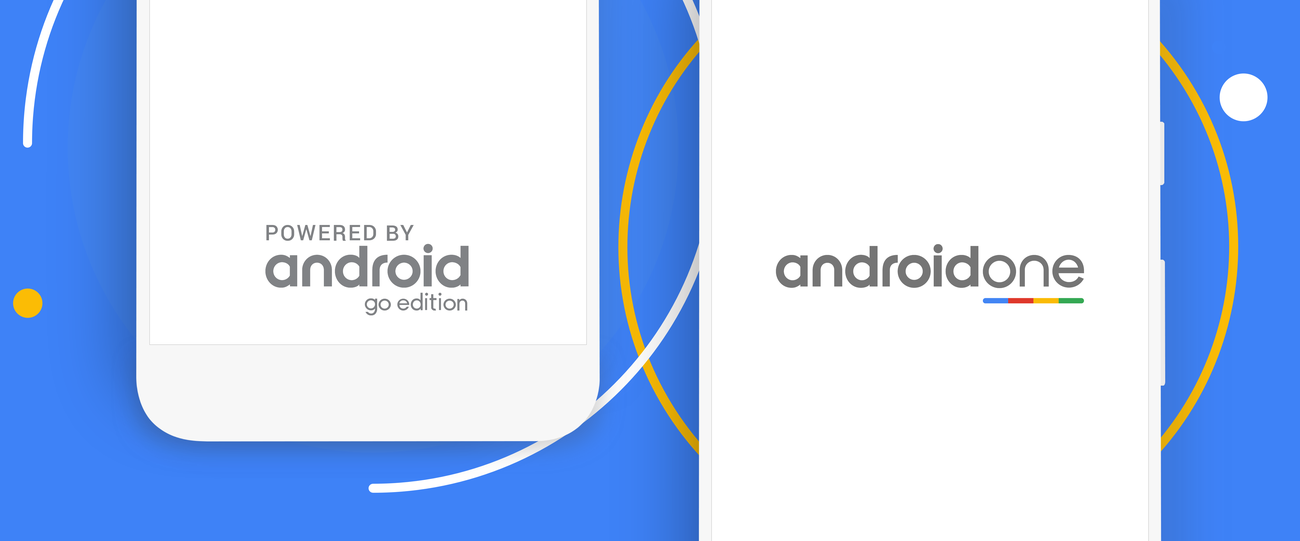
The two names appeared together in Google’s 2018 Mobile World Congress preview, which can make them easy to confuse. Android Go focused on a software configuration and apps for resource-constrained entry-level phones. Android One was a partner program intended to provide a more consistent Google-defined Android experience and update expectations on qualifying devices.
A phone could be inexpensive without being a Go device, and an Android One phone was not necessarily designed around 1GB or less of memory. The programs addressed related but distinct problems: Go concentrated on running well within tight hardware and data limits, while Android One emphasized a defined software experience across partner hardware.
Both reflected the same ecosystem challenge. Android’s openness produced a wide range of prices and designs, but a recognizable label could tell a buyer more about the expected software. Neither label removed the need to examine the specific model, supported networks, storage and update policy.
What compromises remained on an Android Go phone?
Optimization cannot create physical resources. A Go phone still had less room for keeping many apps active, processing complex games or storing large media libraries. Lightweight app versions might omit features or use web-based components. Small storage could fill after updates even if the starting image was compact. Camera quality and display performance depended on the chosen hardware, not the Go name.
There was also a difficult lifecycle question. Entry-level devices benefit greatly from security and system updates, yet thin margins and varied hardware can make long support challenging. Google Play Protect and a current Android base were meaningful parts of the 2018 proposition, but buyers still needed to know what an individual manufacturer would deliver later.
These limitations do not make the project unimportant. They explain why a purpose-built configuration was necessary. Judging Go only by whether it matched a premium phone would miss the intended measure: whether a constrained device became more useful, understandable and economical to operate.
Why was the first device wave historically important?
Software announcements become part of phone history when manufacturers ship them. In its official MWC recap, Google identified models from partners including Alcatel, General Mobile, HMD Global, Lava, Micromax, Transsion and ZTE. Availability varied by market, but the range showed that Go was meant as a repeatable platform configuration rather than one Google-branded experiment.
The effort broadened the meaning of Android progress. In the same year, Android 9 Pie highlighted adaptive features on capable devices, and Pixel 3 Night Sight demonstrated computation-heavy imaging. Android Go asked a different question: how much of a modern smartphone experience could be made accessible when every megabyte and transfer mattered?
That question was central to Android’s global scale. A platform serving many manufacturers could pursue high-end experiments and entry-level efficiency at the same time, even though those paths produced very different phones.
Why does Android Go still matter today?
Android Go established principles that remain relevant even as entry-level hardware improves. Storage-efficient software leaves more space for a user’s content. Data controls make costs more predictable. Apps that recover from weak connections serve travelers and rural users as well as first-time smartphone owners. Clear performance expectations are a form of accessibility.
It also offers a useful way to assess an affordable phone without dismissing or romanticizing it. Ask how much storage remains after setup, whether essential apps retain needed features, how the device behaves under memory pressure and what update support is promised. The Go label explains an optimization strategy; the individual model determines how well that strategy is executed.
Within our Android history collection, the 2018 device wave marks a milestone in making the platform work for more people, not merely in adding another specification to premium phones.