On August 20, 2025, Google introduced the Pixel 10, Pixel 10 Pro and Pixel 10 Pro XL alongside Tensor G5. The phones opened for preorder that day and reached stores on August 28. Pixel 10 Pro Fold was announced at the same event but had a later October retail date, so “Pixel 10 availability” was not one date for every model.
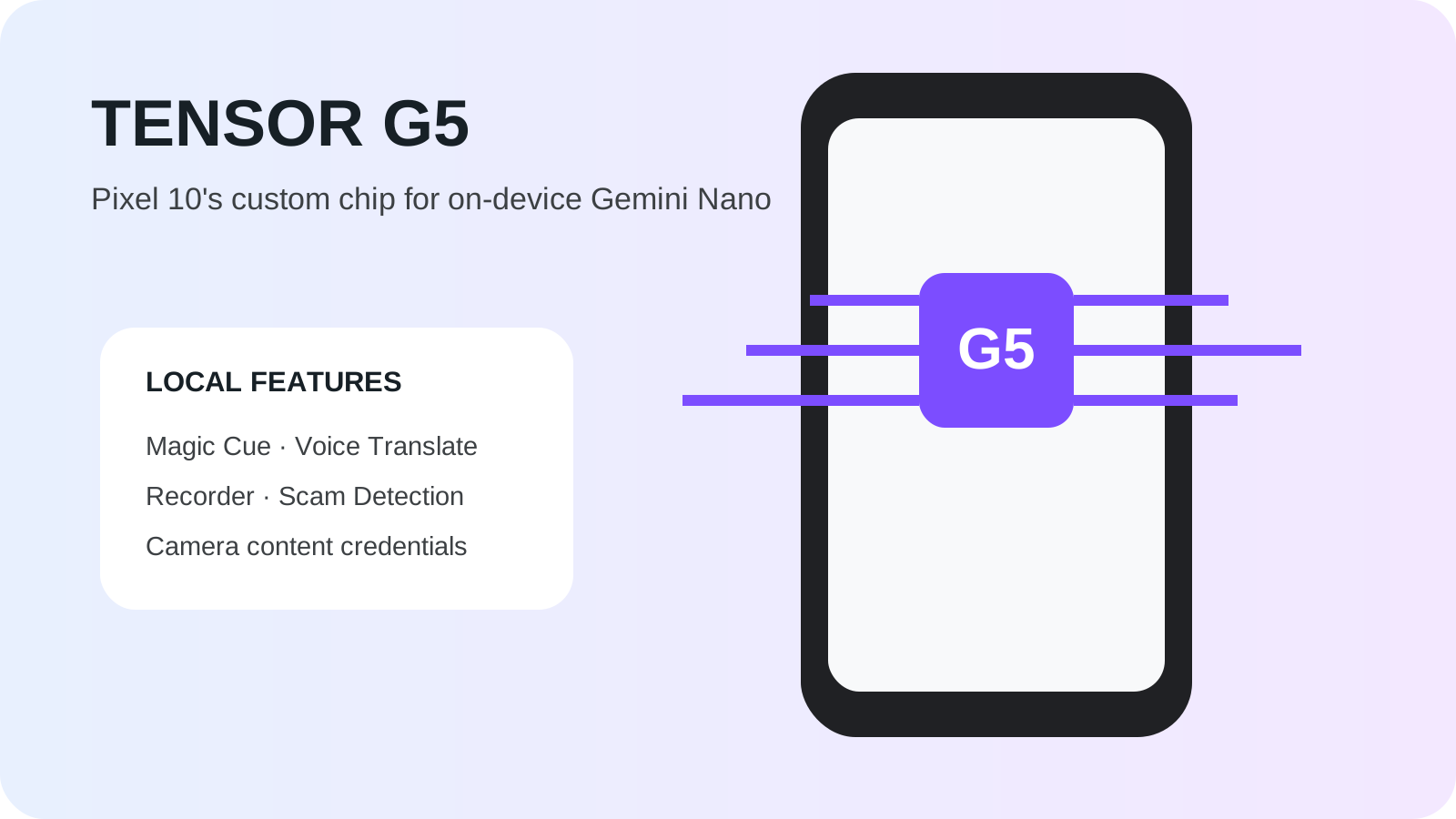
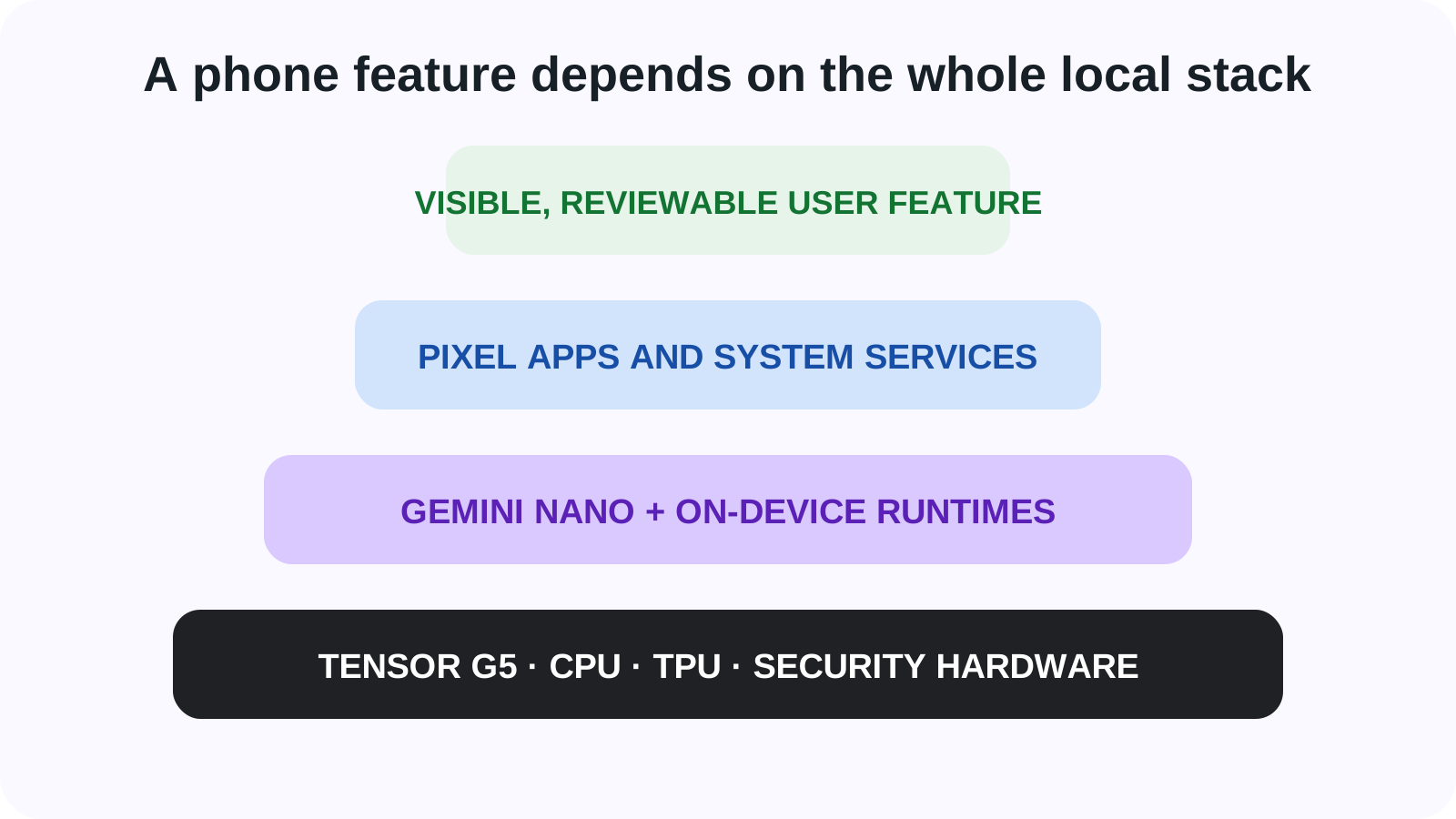
Tensor G5 was Google’s fifth-generation Pixel processor and the first in the line manufactured on TSMC’s 3-nanometer process, according to Google. More important for the product story, it ran a new Gemini Nano model and enabled several features intended to work locally. The chip illustrates how phone AI had moved from a single showcase into an interdependent hardware and software stack.
What did Google change with Tensor G5?
Google called Tensor G5 its largest Tensor upgrade and published internal-test claims of an average 34 percent faster CPU and up to 60 percent more powerful TPU than Tensor G4. Those figures document Google’s comparison under its own conditions; they should not be treated as universal results across every app or sustained workload.
The company said the 3nm process allowed more transistors and improved power efficiency. It also added new security hardware and an image signal processor. Tensor has never been positioned solely as a benchmark competitor. Google’s G5 overview emphasized co-design with research teams and the ability to run Pixel-specific models.
This approach has a trade-off. Deep integration can produce distinctive features, but performance and support depend on Google maintaining the model, system services and apps together. A capable chip by itself does not create a helpful user experience.
How did Gemini Nano use the new chip?
Google said Tensor G5 was the first chip to run its newest Gemini Nano model. In internal comparisons for Pixel Screenshots and Recorder, the company claimed 2.6 times faster and twice as efficient operation than the previous generation. Again, these were named use cases on preproduction hardware, not a general claim that all AI became 2.6 times faster.
The model supported features such as Magic Cue, Voice Translate, Recorder summaries, Gboard voice editing and scam detection. Local processing could reduce latency, operate without sending selected data to a server and continue for supported tasks without a network. Availability still depended on country, language, account and app.
The Pixel 8 Pro had introduced Gemini Nano on-device in 2023. Pixel 10 did not invent the concept; it expanded its speed, model and product integration two generations later.
Which Pixel 10 features were designed to run locally?
| Feature named by Google | Intended task | Why local processing can help |
|---|---|---|
| Magic Cue | Surface relevant information during supported tasks | Context can appear with less app switching |
| Voice Translate | Translate supported calls in the speaker’s voice | Low latency and a clearer audio-data boundary |
| Recorder | Transcribe and summarize recordings | Offline-capable processing for supported input |
| Gboard voice editing | Turn spoken edits into text changes | Faster interaction inside the keyboard workflow |
| Scam Detection | Analyze supported call patterns and language | Sensitive call processing can remain on-device |
| Camera content credentials | Attach provenance metadata to captured media | Secure hardware can help sign the capture history |
Magic Cue was presented as proactive help that could connect information from supported apps to the current task—for example, surfacing flight details during a related call. It was not a free-running agent with unrestricted access to the phone. Connected apps, permissions and eligibility defined what it could use.
Voice Translate and Call Notes involved especially sensitive audio. Google’s official pages included regional and language qualifications, and users needed to understand notification and consent rules. A technical ability to process a call does not remove legal or social expectations around recording and translation.
Why did camera content credentials matter?
The Pixel 10 Camera app added C2PA Content Credentials to record provenance metadata for photos captured on the device. Google said the process used Tensor G5 and the Titan M2 security chip on-device, creating signed information about the image’s origin and edits.
Provenance is not the same as proving that the scene itself is true. A genuine camera can photograph a staged event, and metadata can be removed when a file is copied or processed through an incompatible service. Content Credentials help a viewer inspect an available chain; absence of the chain is not automatic proof of deception.
The feature was notable because the same chip enabling generative camera tools also helped document image history. As generated and heavily edited media became easier to create, provenance offered one technical response without pretending to solve misinformation by itself.
Did all Pixel 10 AI stay on the phone?
No. Google’s Pixel 10 launch page described a mixture of device and Gemini capabilities. Some features explicitly used Gemini Nano locally; others could call larger cloud models. Camera Coach, Gemini Live and generative editing had different processing paths and requirements.
“AI on a phone” describes where the user sees a feature, not necessarily where its computation occurs. A careful explanation checks each feature’s documentation for on-device, cloud or hybrid processing. Connectivity behavior is a useful practical test, but even offline functionality may rely on model updates downloaded earlier.
Cloud processing can offer larger models and rapid service improvements. Local processing can provide lower latency, offline support and narrower data flow. Pixel 10’s architecture used both rather than declaring one universally better.
What should not be inferred from Google’s performance claims?
CPU, TPU and model-speed percentages came from Google comparisons with preproduction devices and named workloads. Different apps can stress memory, graphics, storage and thermal limits in different ways. A short model task does not predict sustained gaming performance, and an efficient accelerator does not guarantee longer battery life under every usage pattern.
The newest Gemini Nano model also did not guarantee perfect results. Generated text, translation and summaries could be wrong. Features such as Magic Cue needed user review before a surfaced detail was trusted or shared. “Proactive” should mean reducing steps, not removing human judgment.
Finally, Pixel 10 features were not a specification for all Android phones. Other manufacturers used different processors, models and assistants. Android provided common platform layers, while Pixel remained Google’s vertically integrated example.
How did Tensor G5 fit the tenth Pixel generation?
The official phone announcement paired Tensor G5 with Material 3 Expressive, Qi2-based Pixelsnap charging and camera changes. The standard Pixel 10 gained a telephoto camera, while Pro models received different display, memory and zoom configurations. Specifications and availability varied by model and region.
The tenth generation also retained Google’s seven-year support policy. A long update window is particularly relevant for model-based features because safety, language support and efficiency can improve after purchase. It does not promise that future models will fit the same hardware forever.
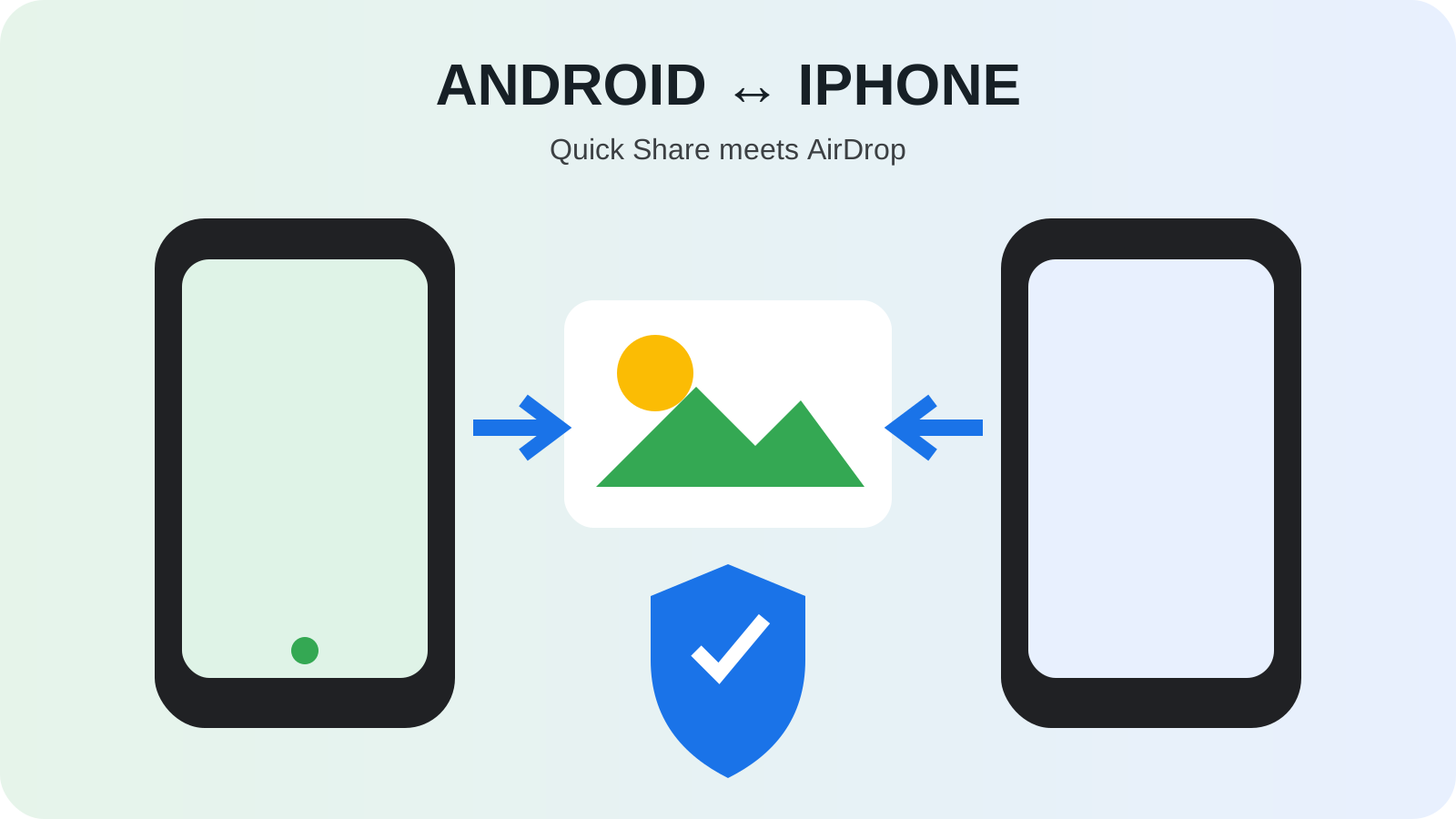
In November, Pixel 10 became the first Android family to support Quick Share interoperability with AirDrop, a reminder that not every important post-launch improvement depends on the neural processor.
Why does Tensor G5 still matter today?
Tensor G5 represents a mature stage of Google’s phone strategy: custom silicon, an on-device foundation model, system services and Pixel applications were designed as one stack. That integration enabled more local tasks but also made clear that “AI performance” cannot be reduced to one benchmark number.
The most useful legacy is a set of questions for any modern phone. Which tasks run locally? What data leaves the device? Can the user review an action? What happens without connectivity? How long will the model and security components be updated? Pixel 10 offered concrete answers for selected features, not a universal solution.
Within the Android history timeline, the August 2025 launch connects the first Gemini Nano deployment in 2023 to the more proactive Android systems that followed. The shift was cumulative: better hardware made a broader local model practical, while careful software determined whether it was useful.