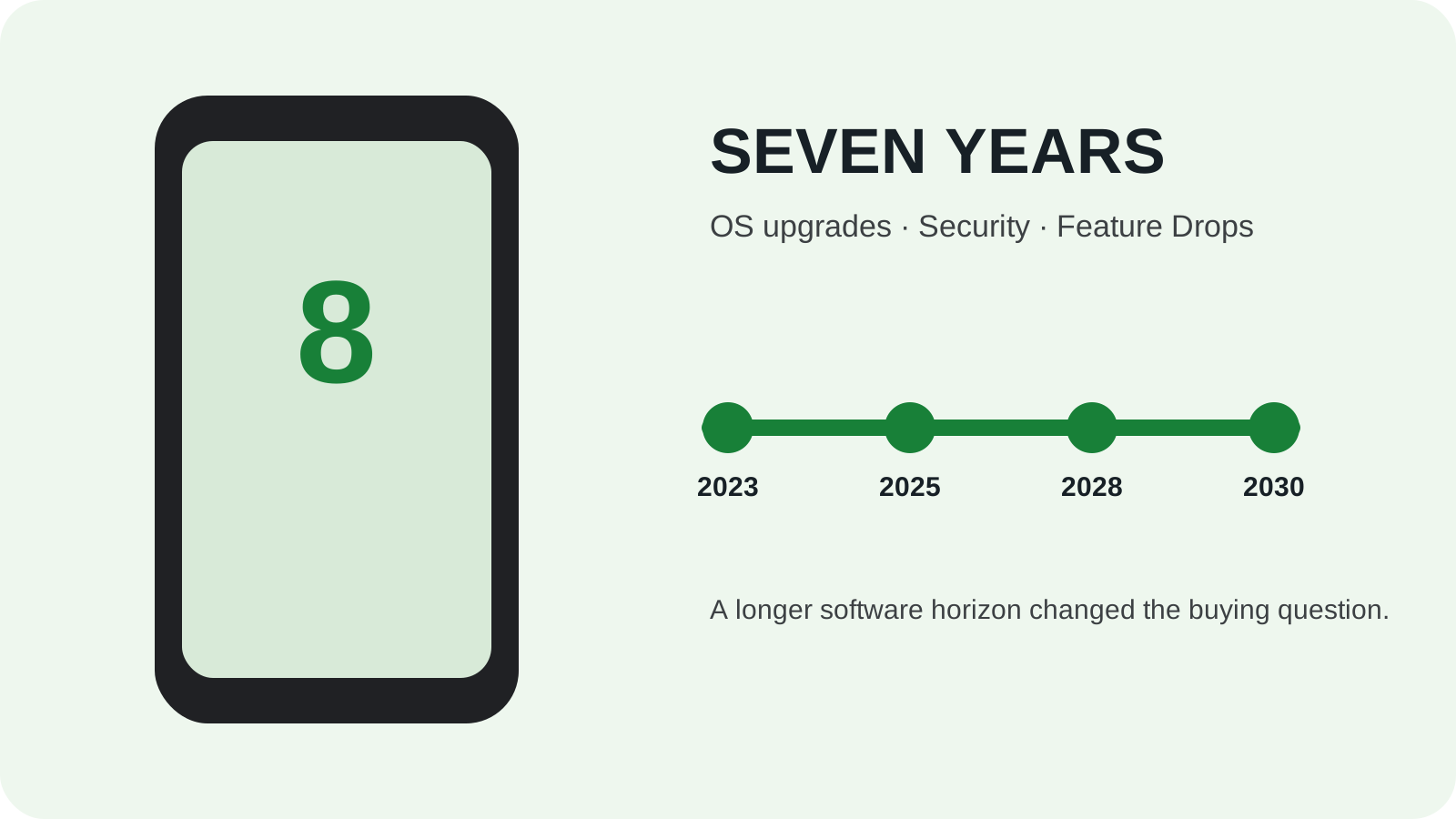
On October 4, 2023, Google announced that the Pixel 8 and Pixel 8 Pro would receive seven years of software support. The commitment included Android operating-system upgrades, security updates and regular Pixel Feature Drops, with support extending into 2030. Google also said it would make replacement parts available for seven years to match the software horizon.
This was not simply one extra update on a specification sheet. Android phones had long been criticized for support periods that varied by brand, model, chipset and carrier. A public seven-year commitment from the company responsible for Android shifted the discussion from how new a phone felt at launch to how long it could remain secure and current.
What exactly did Google promise for the Pixel 8?
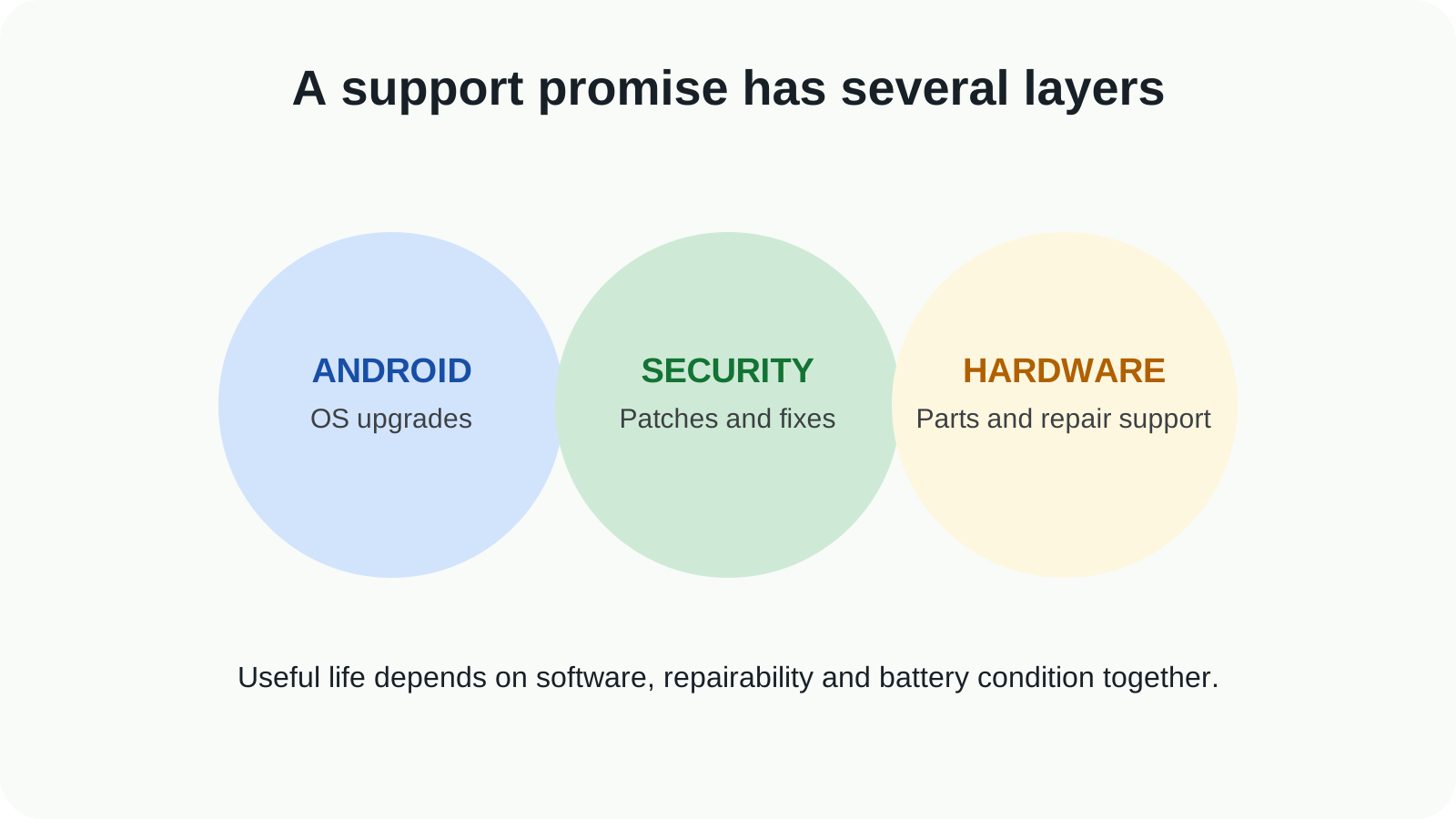
Google’s support announcement named three software categories: Android OS upgrades, security updates and Feature Drops. Its footnote defined security support as at least seven years from the date the phone first became available through the Google Store in the United States. The company said the devices would be supported into 2030.
The categories are related but not interchangeable. An OS upgrade moves the phone to a new major Android version. A security update addresses vulnerabilities and may include other fixes. A Feature Drop delivers selected Pixel functions outside the annual Android release. Counting only major Android numbers would therefore miss part of the promise.
Google also said hardware support and parts availability would last seven years. That was important because software cannot extend a phone’s life if a worn battery, broken screen or damaged connector cannot reasonably be serviced. Parts availability does not mean every repair is free or easy in every country; it establishes one necessary part of a repair ecosystem.
Why was seven years a major change for Android phones?
Before the Pixel 8 generation, Google’s recent Pixels had shorter public commitments, and Android manufacturers offered a mix of policies. Some flagships received several major versions while cheaper or carrier-specific models could receive less. Buyers often needed a support page to learn whether two phones released in the same year had the same future.
Seven years brought the stated horizon closer to the useful life people might expect from an expensive computer. It also reduced the gap between hardware that remained physically capable and software that had reached the end of official security maintenance. The commitment did not force owners to keep a phone for seven years; it made doing so more realistic.
The announcement also created competitive pressure. Samsung’s Galaxy S24 series adopted seven generations of OS upgrades and seven years of security updates in early 2024. That later decision does not prove that Pixel alone caused the industry shift, but it shows that long support quickly became a visible flagship comparison.
How do the support layers differ?
| Support layer | Google’s Pixel 8 commitment | What it does not automatically guarantee |
|---|---|---|
| Android OS upgrades | New major Android versions during the window | Every feature from newer hardware |
| Security updates | At least seven years from U.S. Store availability | A fixed release day or zero remaining risk |
| Feature Drops | Regular Pixel feature releases | Identical availability in every country and language |
| Replacement parts | Seven-year parts horizon announced | Free repairs or equal local service access |
| Repair resources | Manuals, diagnostics and repair partnerships expanded | That every repair is simple for a novice |
Google said it had secured longer commitments from partner teams and invested in testing infrastructure. It also moved away from promising that every update would arrive on a particular day of the month, saying fixes would be deployed after completing the necessary tests. A long support period is useful only if the updates themselves are stable enough for a broad installed base.
Feature availability could still vary. A new camera function may require a sensor or processor absent from the Pixel 8. An AI feature may support selected languages or regions. Seven years of Feature Drops means continuing releases, not a promise that a 2023 phone becomes technically identical to a 2030 model.
What did repair support add to the promise?
In December 2023, Google published additional Pixel repair options. It highlighted repair manuals, diagnostic tools, genuine parts sold through a partner, walk-in and mail-in options and a Repair Mode intended to protect personal data while a phone was serviced.
Repair Mode addressed a practical tension: a technician may need to test a device, but an owner should not have to expose personal photos, messages and accounts unnecessarily. Parts and manuals addressed another: long-term updates have less value if common physical failures end the device’s life.
Access remained uneven. Authorized locations and partner services were more concentrated in some countries, costs varied and advanced repairs still required skills and tools. A seven-year parts statement should therefore be understood as a commitment to availability, not a claim that every owner had the same repair experience.
Did a longer policy make the Pixel 8 sustainable by itself?
No single policy can establish the environmental impact of a phone. Manufacturing, shipping, energy use, repair rates, resale and recycling all matter. Keeping a working device longer can avoid an earlier replacement, but only when the phone remains useful and the owner actually chooses to retain or pass it on.
Battery aging is especially important. Lithium-ion capacity decreases with use and time, so a phone may need a battery replacement during a seven-year life. Storage needs and network compatibility can also change. Google’s commitment removed one major software barrier; it did not suspend physical aging.
It is nevertheless reasonable to treat support length as a sustainability enabler. The Pixel 8 launch paired the seven-year policy with the new phones, giving buyers information before purchase rather than adding an uncertain extension years later.
What should owners not infer from the 2030 date?
The date did not guarantee seven years from each individual’s purchase. The clock was tied to initial availability, so someone buying old stock later had a shorter remaining window. It also did not guarantee that carriers would keep every network service unchanged or that third-party apps would support the device indefinitely.
Security support reduces known software risk but cannot make a phone invulnerable. Owners still need safe account practices, supported apps and timely installation. Nor did the policy cover accidental damage without cost; warranty and repair coverage are different from update support.
These limits do not weaken the historical milestone. They make the promise measurable. A support policy is most useful when its start point, categories and duration are explicit enough for buyers to compare.
Why does the Pixel 8 commitment still matter today?
The Pixel 8 turned longevity into a central flagship feature. By 2026, a buyer comparing premium Android phones could reasonably ask not only about cameras and processors but also about end dates, parts and battery service. That is a more useful question than assuming every expensive phone receives the same care.
The policy also gave emerging features time to develop. Two months later, the Pixel 8 Pro received Gemini Nano on-device AI. The relationship is not a guarantee of endless compatibility, but it shows why post-sale software can materially change a phone.
Within the Android history timeline, the seven-year pledge marks a shift from treating updates as a short after-sales obligation to presenting them as part of the product itself. Modern support promises should still be read carefully, but Pixel 8 helped make them impossible to ignore.