On June 10, 2025, Google released Android 16 to most supported Pixel devices and made its source available through AOSP. It was the earliest major Android release in several years, reflecting a schedule intended to place the new platform on devices sooner in the calendar. Other manufacturers followed on their own timelines.
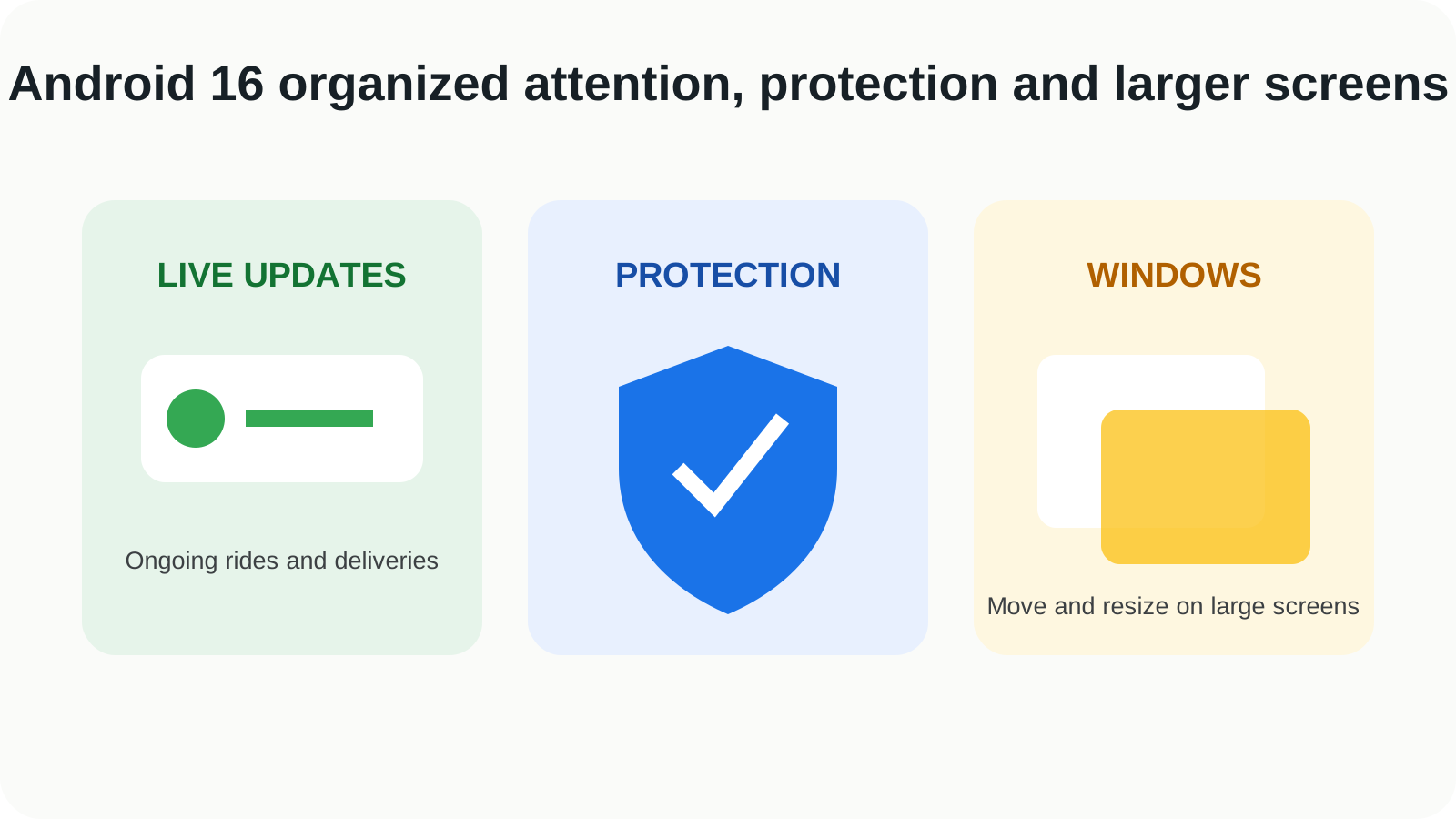
For everyday users, Android 16 brought three different kinds of change. Live Updates made ongoing rides, deliveries and navigation easier to follow. Advanced Protection grouped stronger security settings behind one switch. Desktop windowing extended Android’s large-screen work toward movable, resizable app windows. Not every part arrived on every device on June 10, so release and later rollout must be separated.
What was unusual about the Android 16 release schedule?
Android’s recent major releases had commonly arrived later in the year. Google said Android 16’s June launch was intended to get the major SDK into devices earlier. The developer release also introduced a model with a major SDK release followed by a planned minor SDK release in the fourth quarter.
The distinction concerned developer-facing behavior as well as marketing. The June major release contained the year’s planned app-impacting behavior changes, while the later minor release could add APIs, features and optimizations without another full major version. Quarterly Android releases continued around that structure.
An earlier AOSP date did not guarantee an earlier update for every owner. Manufacturers still had to integrate Android 16 with their interfaces, hardware and carrier requirements. Google Pixels receiving the update first was a rollout fact, not proof that the whole ecosystem had changed schedules overnight.
How do Live Updates differ from ordinary notifications?
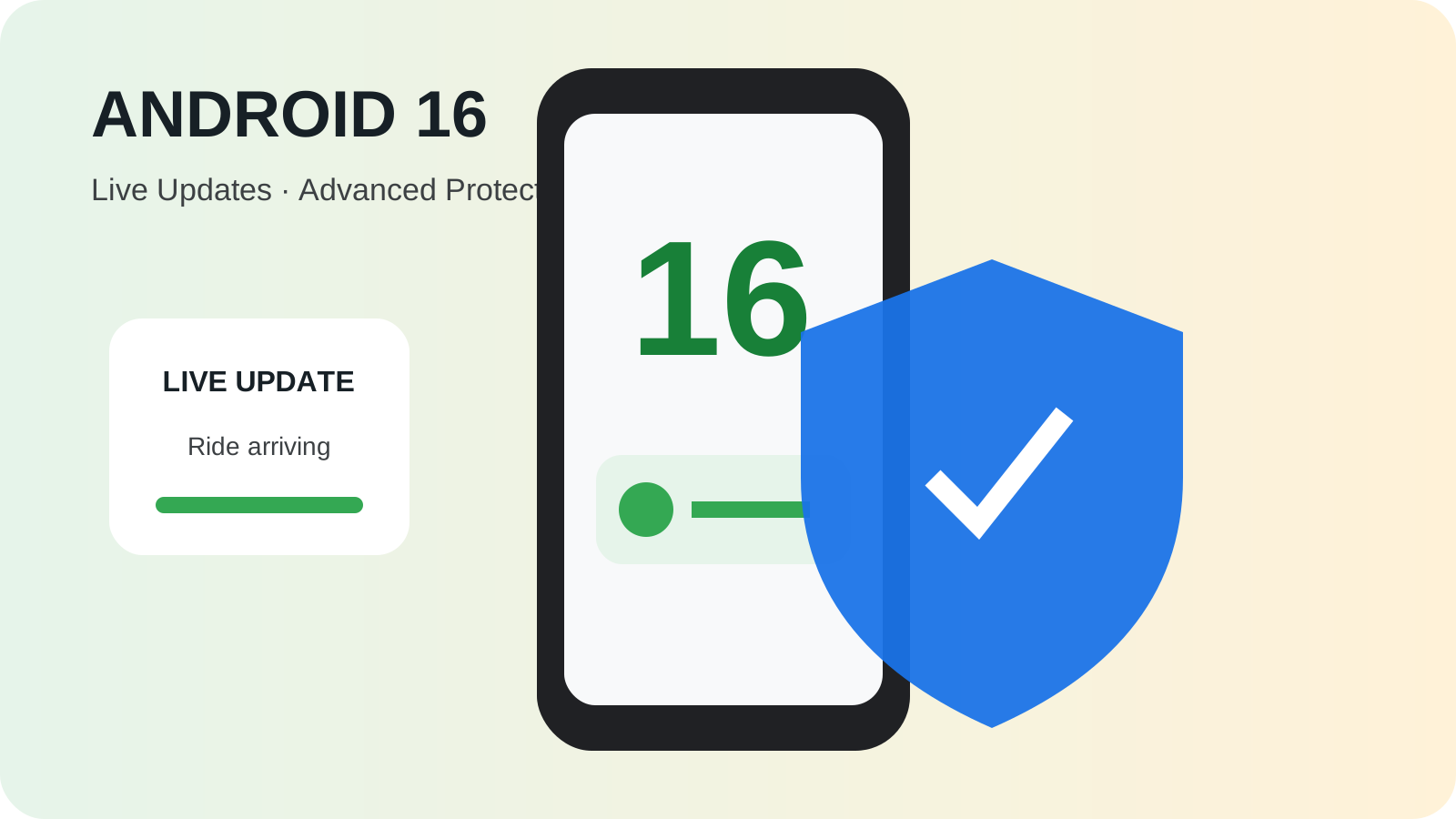
Live Updates are a standardized notification style for important ongoing activities with changing progress. A ride can show that a driver is approaching, a delivery can display its current stage and navigation can expose progress without requiring the user to reopen the app repeatedly.
Android already allowed persistent notifications, but implementations varied. The new progress style gave supported apps a shared structure and allowed device interfaces to place the information more prominently. Google said it was working with Samsung’s Now Bar and Oppo and OnePlus Live Alerts so the underlying activity could fit manufacturer surfaces.
Live Updates were not intended for every background task or promotional alert. Apps had to implement the supported ongoing-activity use cases, and Android’s notification permissions still applied. A standardized format helps the system organize attention; it does not make an irrelevant notification urgent.
What does Advanced Protection change on a phone?
Google had offered an Advanced Protection Program for high-risk accounts since 2017. Android 16 brought an Advanced Protection device mode that could activate a coordinated set of strong supported safeguards from one setting. It was aimed at public figures, journalists and people facing targeted attacks, but Google said anyone wanting the strongest available mobile protection could use it.
The Android safety overview described it as a way to enable robust device protections against sophisticated threats. Exact components could evolve with updates and vary by device. The value of a mode is coordination: a user does not need to discover and configure many obscure security switches independently.
Stronger protection can introduce inconvenience. Restrictions on risky connections, installations or web behavior may interrupt a workflow that an ordinary configuration permits. That is a deliberate trade-off for people who prioritize resistance to targeted compromise. It still does not make phishing, account recovery or physical security irrelevant.
| Android 16 area | What changed | What still depends on support |
|---|---|---|
| Live Updates | Standard progress notifications for ongoing tasks | App implementation and notification permission |
| Advanced Protection | One setting coordinates strongest safeguards | Device, component and later update availability |
| Notification grouping | Same-app alerts are grouped more firmly | Manufacturer presentation can differ |
| Desktop windowing | Move and resize multiple windows | Compatible large-screen device and later rollout |
| Hearing devices | Improved controls and microphone options | Compatible LE Audio hearing equipment |
How did Android 16 improve notification overload?
In addition to Live Updates, Android 16 more aggressively grouped notifications from the same app. A service that posted many related alerts could no longer occupy as much visual space with separate cards. The change sought to preserve information while reducing the sense that one app had taken over the shade.
This did not replace notification channels or user controls. People could still disable an app’s notifications or adjust categories where the app exposed them. Grouping improves presentation after permission is granted; it does not decide whether the app deserves permission.
Android 16 also laid the platform foundation for the Material 3 Expressive redesign, whose Live Update surfaces and motion arrived more visibly on selected Pixel software later. The base release and visual redesign were related but not identical June 10 events.
What did desktop windowing add to large screens?
Google previewed desktop windowing that allowed several apps to open in movable, resizable windows on a compatible large screen, closer to a desktop computer. Custom keyboard shortcuts, taskbar overflow and connected-display work were also described for later rollout and developer testing.
This continued the path from Android 12L and Pixel Fold. Earlier releases emphasized split screen and two-pane layouts; desktop windowing allowed overlapping windows and freer arrangement. The interface was useful only when apps adapted to changing size, keyboard, pointer and focus behavior.
Google said the user-facing windowing rollout would continue later in 2025 on compatible devices. It should not be written as if every Android 16 phone gained a full desktop mode on June 10. The AOSP and developer milestone established the foundation and preview.
What other practical features arrived?
Android 16 improved support for LE Audio hearing devices. Users could switch between a phone microphone and hearing-device microphones in supported calls, adjust ambient sound and access controls more directly. These improvements depended on compatible hearing hardware and applications.
The platform added HDR screenshots, preserving a more useful representation of HDR content, and adaptive refresh-rate improvements. Identity Check expanded biometric requirements for sensitive actions outside trusted locations on supported devices. Predictive back animations became more consistent for apps targeting Android 16.
The developer release also expanded adaptive-app expectations for large screens and added media and camera capabilities. Many of these are infrastructure: a user benefits when an app adopts them, not simply because a settings page says Android 16.
What should not be inferred from Android 16’s feature list?
The feature list mixes platform APIs, Pixel rollout, Google Play components and capabilities planned for later in the year. A device maker can run Android 16 without copying the Pixel interface, and a Google service can deliver a feature outside the major update. Eligibility notes are part of the fact, not clutter.
Advanced Protection reduces risk but does not guarantee safety. Live Updates can be inaccurate if the underlying service data is late. Desktop windows do not make a small phone screen comfortable for desktop work. Hearing improvements cannot overcome unsupported hardware.
Android 16 also did not force every app to use Material 3 Expressive or every AI feature to run locally. Those are separate product and developer choices layered on the platform.
Why does Android 16 still matter today?
Android 16 changed both cadence and direction. Its earlier major release gave manufacturers more of the calendar to ship the platform, while the planned minor SDK showed that new APIs no longer had to wait for the next numbered version.
For users, it made progress easier to glance at, strong security easier to enable and large screens more flexible. Those goals pull in different directions: a phone should demand less attention, resist more attacks and become more capable when given more space. Android 16 treated all three as platform responsibilities.
In the Android history timeline, the June 2025 release sits between Android 15’s theft defenses and Android 17’s adaptive-first rules. Its legacy is less one headline feature than a platform prepared to update more often and operate across more kinds of screen.