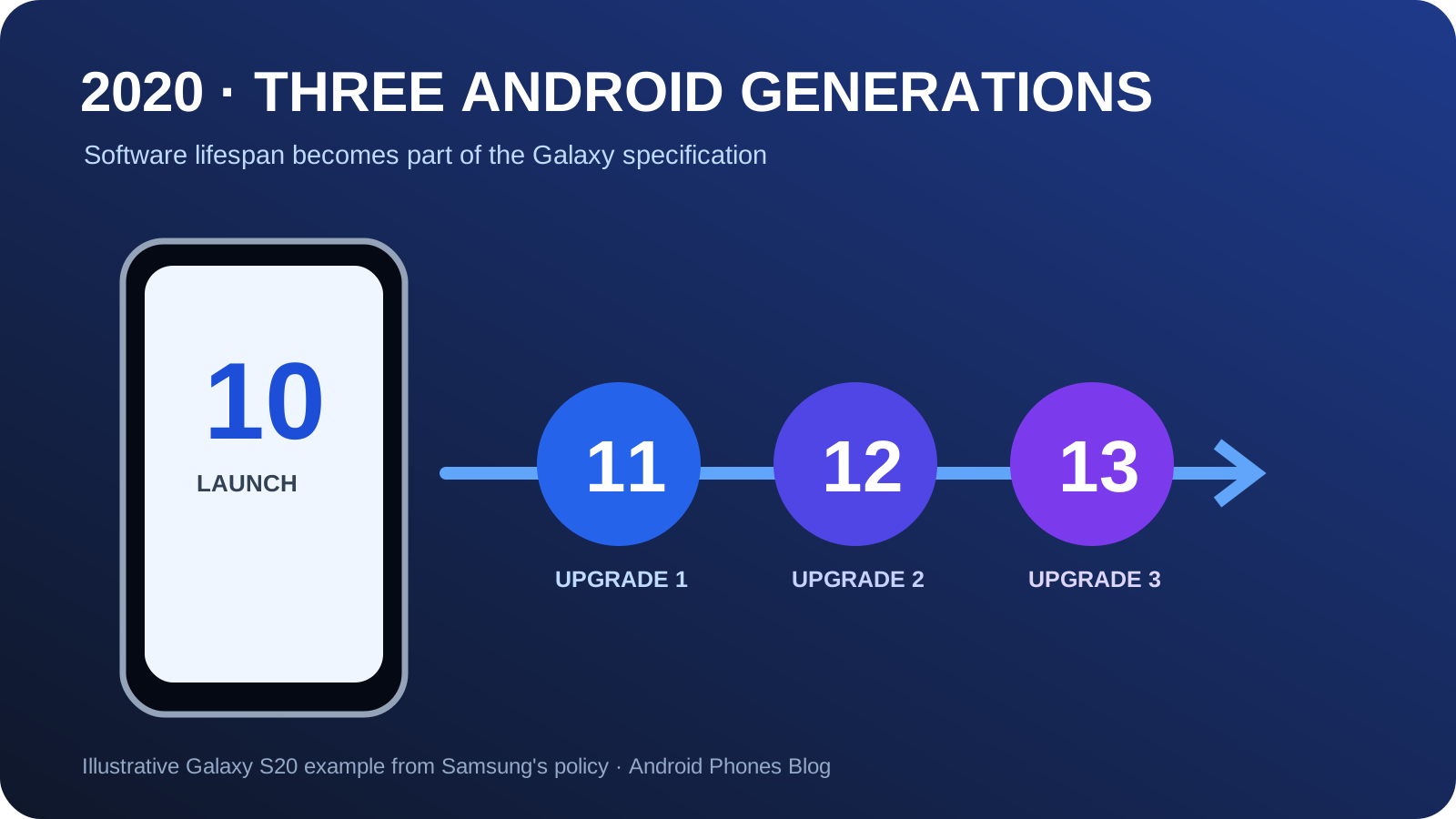
On August 18, 2020, Samsung committed selected Galaxy devices to three generations of Android operating-system upgrades. The policy covered named Galaxy S and Note models, foldables, selected Galaxy A phones and Tab S tablets. Samsung’s official announcement said the change was intended to extend product lifecycles as people kept devices for longer.
The promise was historically important because it turned an uncertain future update into a more legible part of the product. Buyers could compare not only the processor and camera available at launch, but how many major Android generations an eligible phone was intended to receive.
What did “three generations” actually promise?
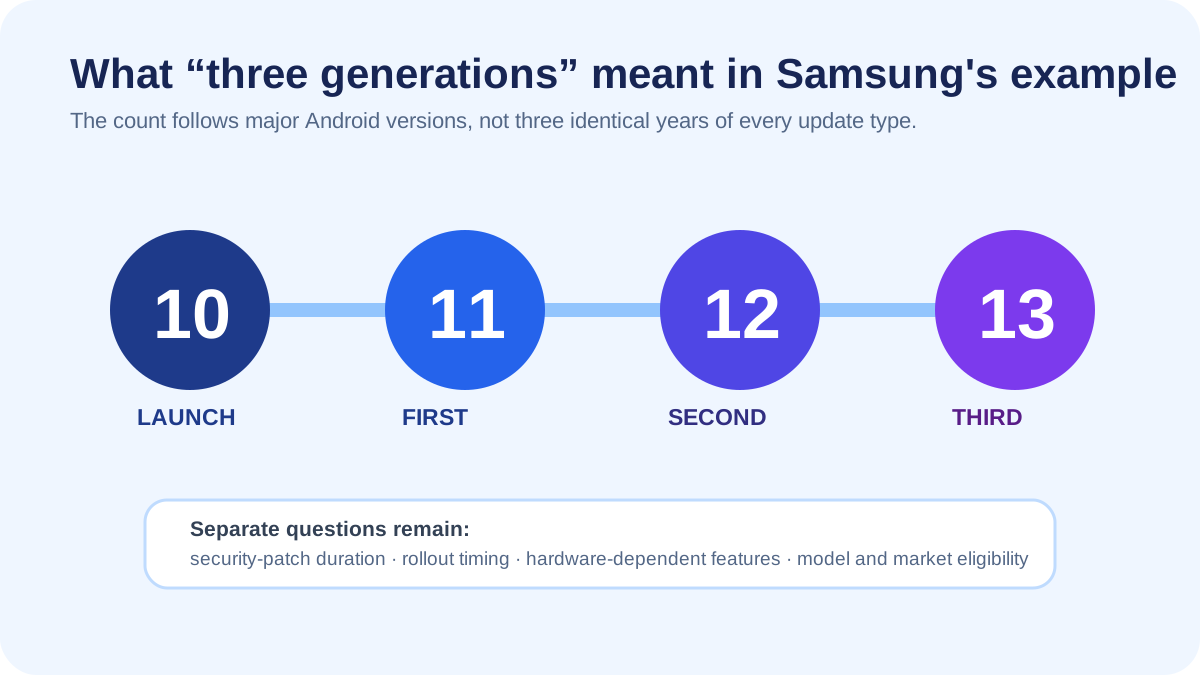
The unit was Android OS generations, not a fixed number of months. Samsung used the Galaxy S20 as its example: the series launched with Android 10 and would be supported for three OS upgrades beginning with Android 11. In that sequence, the expected major versions were Android 11, 12 and 13, although schedules and specific features could vary.
That wording matters because Android versions do not always arrive exactly one calendar year apart on every device. A phone may launch months after the base platform release, and regional or carrier testing can change rollout dates. “Three generations” described version transitions; it did not guarantee that every model would receive an update on Google’s first release day.
| Support term | What it describes | What it does not guarantee |
|---|---|---|
| OS generation | A major Android version upgrade | An exact rollout date |
| Security update | A patch for disclosed platform or vendor issues | A new Android interface |
| One UI feature update | Samsung software capability | Availability on every eligible device |
| Google Play system update | Selected modular Android components | Complete device firmware support |
Separating these channels prevents the common mistake of treating one promise as every kind of maintenance.
Which Galaxy devices were included at the start?
Samsung listed the Galaxy S20 and earlier S10 family variants, the Note20 and Note10 families, Galaxy Fold, Z Fold2 and Z Flip models, selected A-series phones including A51 and A71 variants, and recent Tab S devices. The statement also referred to upcoming products in several ranges.
Eligibility was still model-specific. “Galaxy phones get three upgrades” would have been too broad because not every low-cost or older device appeared in the list. Market availability and update schedules could differ, and Samsung’s footnotes explicitly preserved those qualifications.
The inclusion of some Galaxy A models was nevertheless significant. Longer support was not presented only as a benefit for the most expensive S and Note phones. It began to reach a wider part of Samsung’s Android portfolio, where a buyer might keep a device long after its launch-year marketing ended.
Why were Android upgrades difficult to promise clearly?
Google can publish Android source and update Pixel devices, but a Galaxy update also has to integrate Samsung’s One UI, hardware drivers, chipset components, regional services and sometimes carrier requirements. Engineers test cameras, radios, biometrics, power behavior and apps on each supported configuration. One software image cannot simply be copied unchanged to every model.
Android platform work had been reducing this burden by separating the vendor implementation from parts of the operating system and making selected modules updatable through Google Play. Android 11’s official overview noted that more security and privacy components could use the modular route. Those improvements helped, but they did not remove model testing or make the manufacturer irrelevant.
A public promise was therefore both a technical commitment and a planning one. Samsung had to reserve engineering and validation capacity for devices after their sales launch.
How did a longer update window change phone value?
A major Android upgrade can bring new privacy controls, platform APIs, accessibility work and interface behavior. Continuing support also helps apps rely on newer system capabilities. A phone with sufficient hardware may remain physically useful while its software value declines if major maintenance ends early.
The 2020 promise made that future easier to include in a purchase decision. Price could be considered over a longer intended life rather than only at checkout. Businesses could plan deployments with a clearer version horizon, and second-hand buyers could better estimate how much official support remained.
Longer support does not force a person to keep a phone, nor does it ensure an old battery or damaged screen will last. Repair availability, storage capacity and component health still matter. Software policy is one part of longevity, but it is a part the manufacturer can state before purchase.
What limitations remained in the 2020 commitment?
Samsung used “up to” language and attached model, market and schedule conditions. Some features in a new Android release could depend on hardware and might not appear on every upgraded device. Carrier editions could follow a different timetable. Security-update frequency also varied by model and was not identical to the three-generation OS commitment.
Users therefore needed the exact model number, not just a family name. An S10 variant included in one market did not prove that every similarly named device shared identical firmware. Published support lists and the phone’s settings page were more reliable than assumptions based on appearance.
The promise also did not mean updates would continue forever after the third major version. It defined a longer floor for eligible products in that period, not permanent maintenance.
How did Samsung’s policy evolve after 2020?
In February 2022, Samsung expanded the commitment for selected newer devices to four generations of One UI and Android OS upgrades, alongside up to five years of security updates. The later policy does not retroactively rewrite every 2020 model’s eligibility. It does show that the three-generation announcement was part of a continuing competition over software lifespan.
Other manufacturers developed their own policies with different definitions, dates and device lists. Comparison became more useful but also required care: “years,” “versions,” security patches and feature drops are not interchangeable units. A strong policy states both duration and scope.
The 2020 moment belongs beside Android 11 because it answered a practical question created by every new platform release: which existing phones would actually receive those capabilities?
Why does the three-generation promise still matter today?
The announcement helped make update support a mainstream phone specification. It encouraged buyers to ask for a maintained lifetime before purchase and made manufacturers’ differences easier to see. The exact 2020 promise has since been surpassed on newer products, but the expectation it strengthened remains.
Today, check the policy for the precise model and count both major OS upgrades and security-support years. Confirm the starting Android version, because the same number of promised upgrades can end on different versions. Then consider repair, battery and storage alongside software. The Android history collection shows why this became a central question: a phone’s story no longer ends with its launch hardware, and its planned update path is part of what the buyer owns.