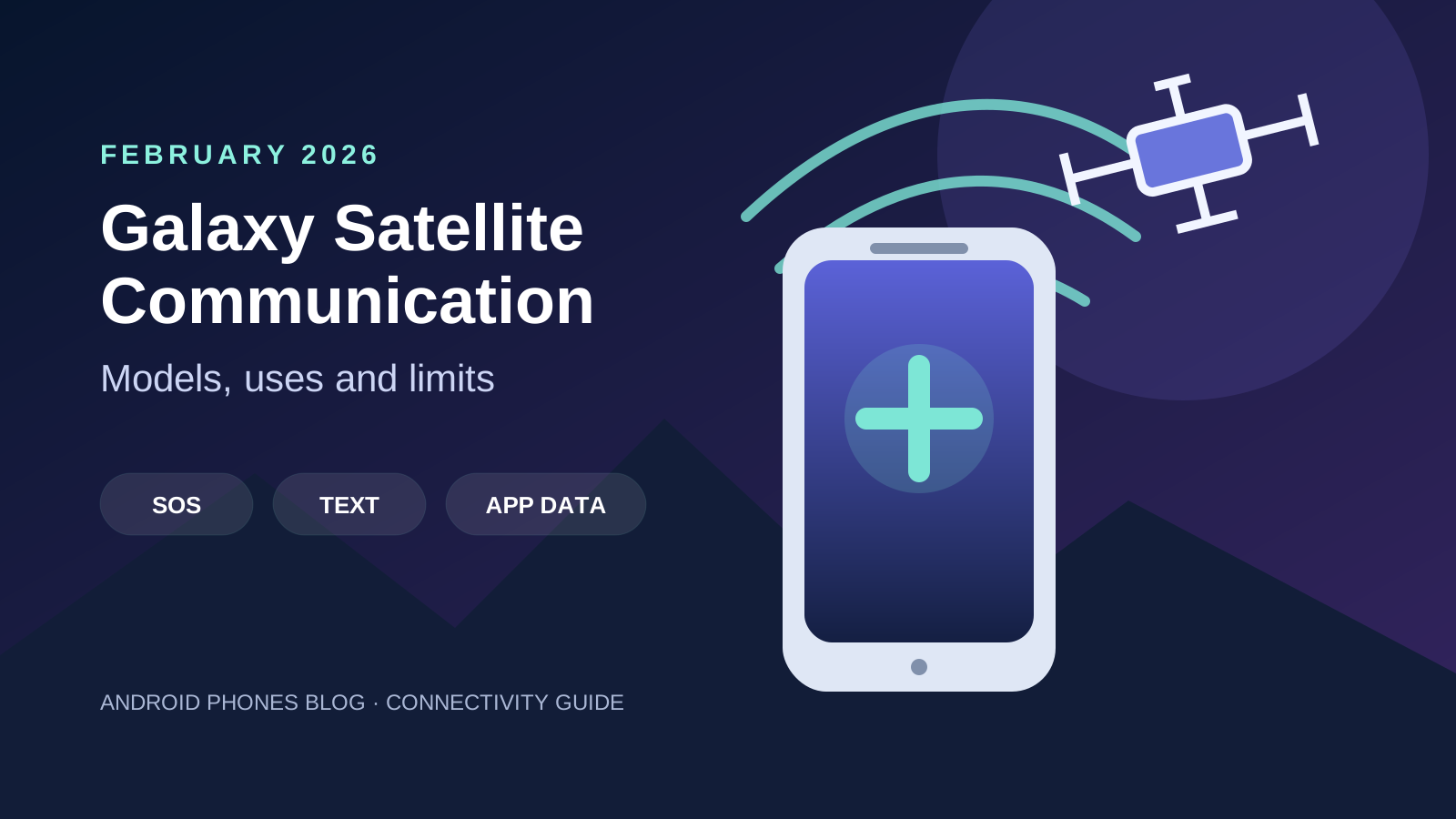
Samsung expanded direct-to-device satellite communication across selected Galaxy smartphones and additional regions on February 27, 2026, including the Galaxy S26 series. However, real-world availability still depends on the exact phone model, software version, carrier, country, regulatory approval, and the specific satellite features that have been enabled for that combination.
What did Samsung actually announce?
Samsung’s February 27, 2026 announcement was not the launch of one universal global satellite service. Instead, it described a broader expansion of satellite communication support across selected Galaxy smartphones, while emphasizing that availability varies by market, carrier, operating system version, One UI version, and regulatory approval.
According to Samsung’s February 27 announcement:
- Selected Galaxy flagship and A-series devices had already gained support in some markets during 2025.
- The expansion includes selected Galaxy smartphones, including the Galaxy S26 series.
- Different carriers are enabling different satellite services in different countries.
- Feature availability depends on multiple conditions rather than simply owning a compatible Galaxy phone.
For buyers, this distinction matters because the same Galaxy model name alone does not determine whether satellite communication will work.
What must all be true before satellite communication works?
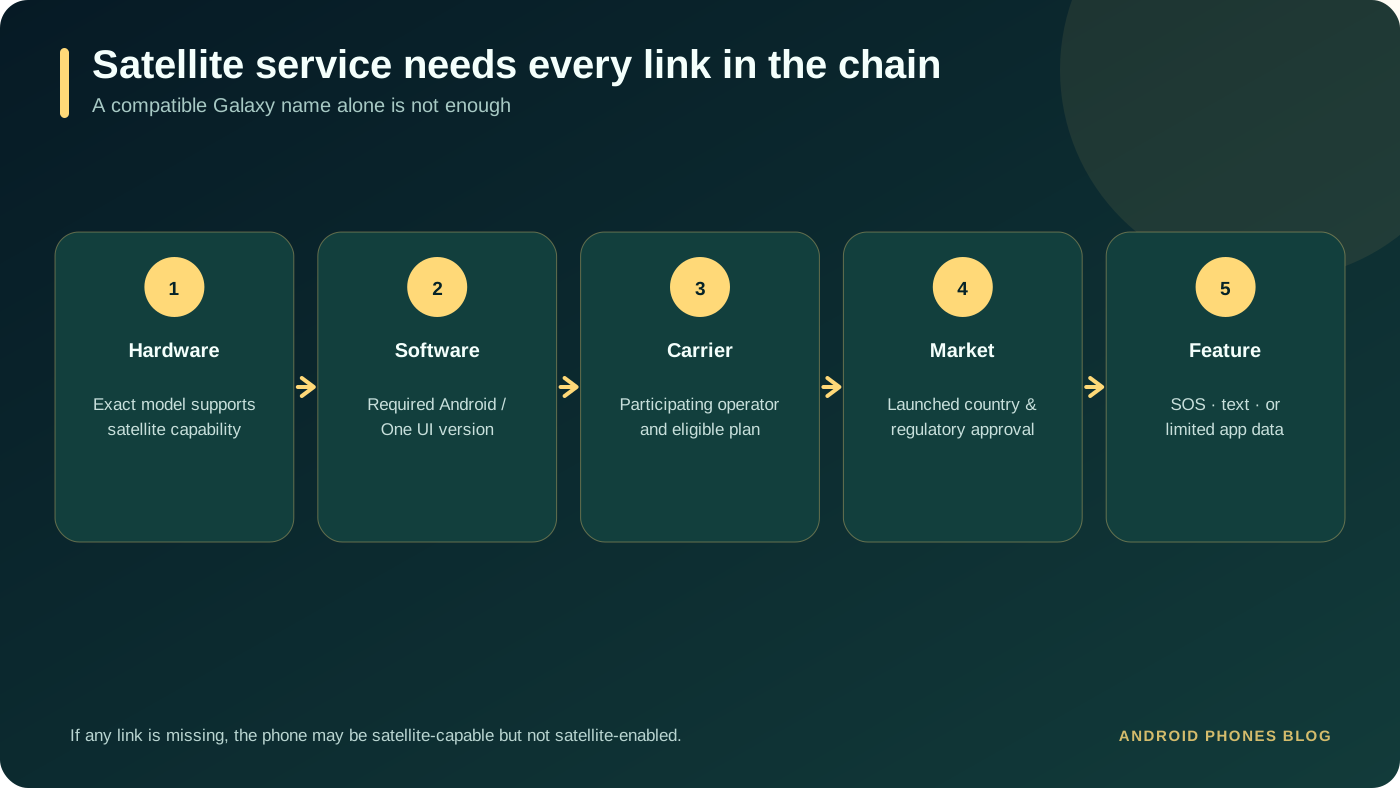
Satellite communication is best understood as four separate layers rather than one feature.
| Requirement | What it means | Why it matters |
|---|---|---|
| Satellite-capable hardware | The phone contains compatible hardware and firmware | A phone without compatible hardware cannot use satellite services regardless of software updates. |
| Carrier-enabled service | Your mobile operator supports a satellite offering for your device | Many satellite features are delivered through participating carriers rather than Samsung alone. |
| Supported country or market | The service has launched and regulatory approval exists where you are | A compatible phone may still be unsupported in another country. |
| Feature level | Emergency SOS, messaging, or limited app connectivity | Different carriers enable different capabilities. Do not assume every service offers the same functions. |
Thinking about these layers helps avoid one of the most common misunderstandings: a satellite-ready phone is not necessarily a satellite-enabled phone.
What kinds of satellite features are available?
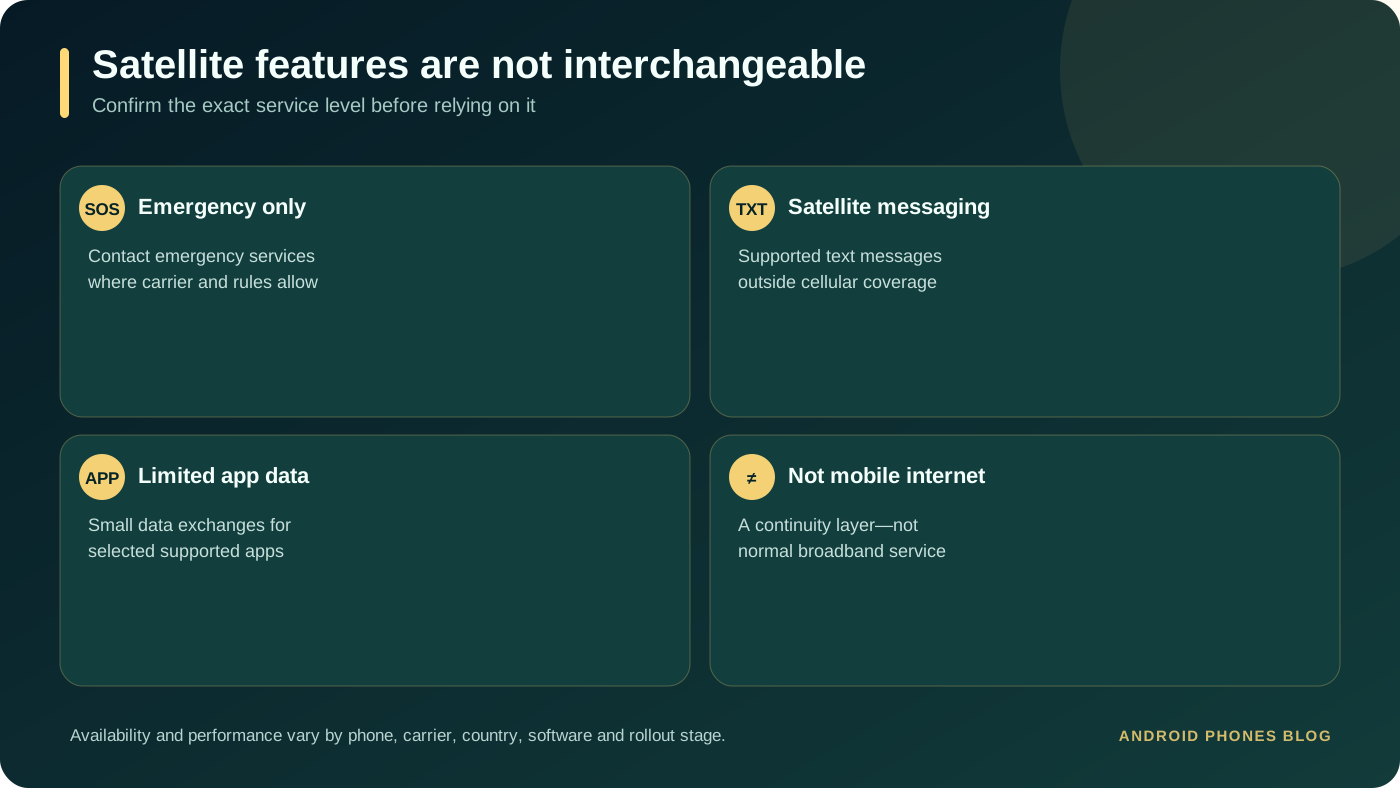
Not every satellite service offers the same capabilities.
Samsung’s announcement references multiple feature levels depending on the participating carrier and market. T-Mobile has also explained that satellite capability can evolve beyond emergency use toward messaging and a limited set of supported apps, although those details remain carrier-specific rather than universal (Samsung’s February 27 announcement; T-Mobile T-Satellite update).
| Feature level | Typical use | Important limitations |
|---|---|---|
| Emergency-only (T911 / Emergency SOS) | Contact emergency services when supported | Availability varies by carrier, market, regulations, and supported devices. It is not a guarantee of rescue. |
| Satellite text messaging | Send and receive supported text messages outside cellular coverage | Usually depends on participating carriers and supported devices. Performance differs by location and rollout stage. |
| Limited app data | Selected supported applications exchange small amounts of data | Not equivalent to normal mobile internet. App support is carrier-specific and may expand over time. |
A useful way to think about satellite communication is as a continuity feature rather than a replacement for cellular service.
Even where supported, satellite communication is generally intended for situations where conventional mobile coverage is unavailable.
Which regions and carriers were included in the February 2026 expansion?
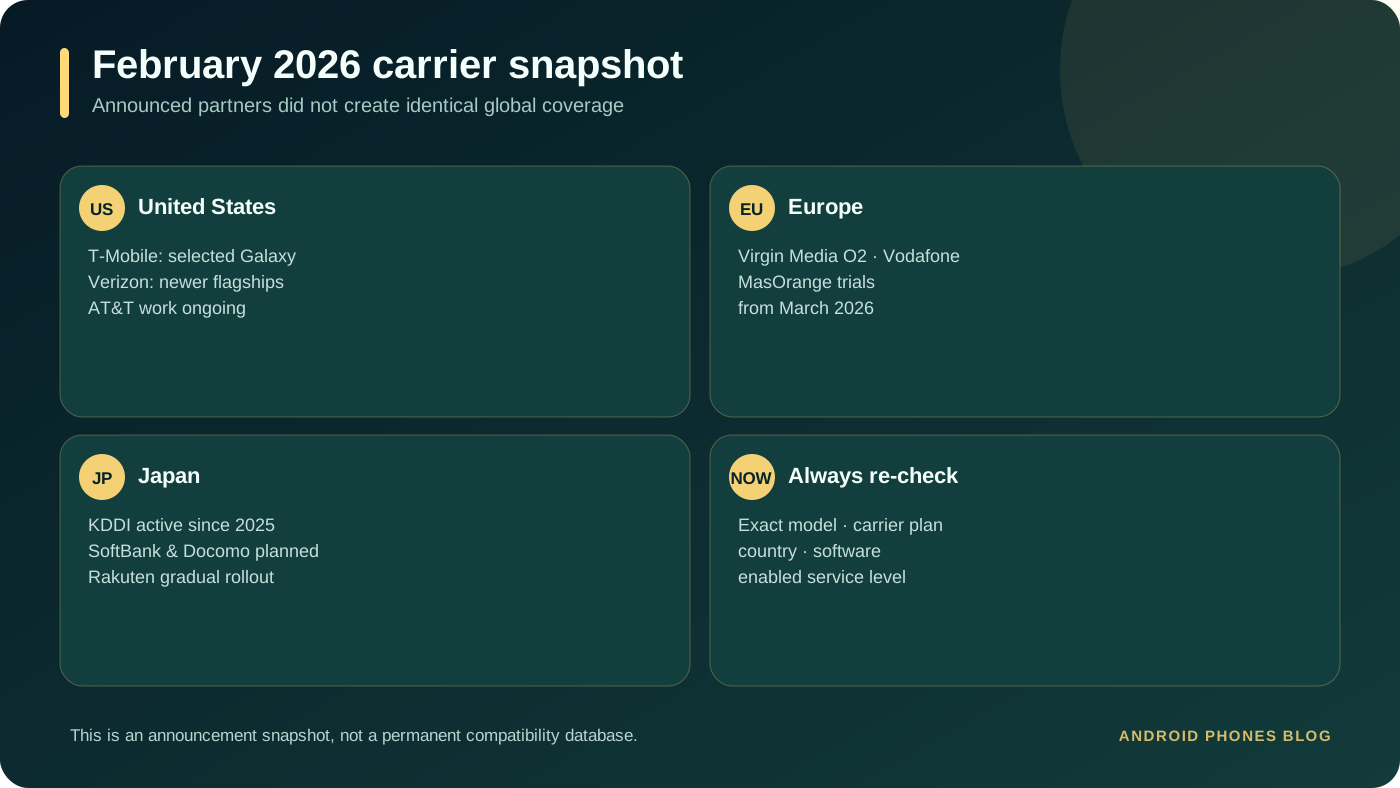
Samsung’s announcement provides a snapshot of participating carriers rather than one global availability list.
United States
Samsung announced support that includes:
- T-Mobile T-Satellite on select flagship and A-series Galaxy models released after the Galaxy S21, supporting T911, text messaging, and some data-enabled applications.
- Verizon emergency SOS and text messaging on flagship models released after the Galaxy S25.
- Ongoing work with AT&T.
Carrier-specific activation, supported devices, and rollout timing remain subject to each operator’s implementation.
Europe
Samsung announced work with:
- Virgin Media O2
- Vodafone
- MasOrange satellite trials beginning in March 2026
These announcements do not mean every European customer automatically receives identical satellite features.
Japan
Samsung states that:
- KDDI has offered service since 2025 with text messaging, data, and emergency warning support on Galaxy S22 and later together with selected Galaxy A-series devices.
- SoftBank and NTT Docomo are planned during 2026.
- Rakuten rollout is gradual.
As always, Samsung notes that availability varies by model, software, carrier, market, and regulatory approval.
How does this affect Galaxy buyers today?
The announcement changes how buyers should evaluate a phone purchase, especially if satellite communication is important.
Rather than asking “Does this Galaxy have satellite communication?”, ask several narrower questions.
- What is the exact model number?
- Which country version is it?
- Which carrier will be used?
- Which software version is installed?
- Which satellite feature is actually supported?
- Has the service launched where the phone will be used?
This approach is particularly important for business procurement, where hundreds or thousands of devices may be deployed across multiple countries.
Organizations planning long-term ownership should also consider software lifecycle support. Samsung’s broader commitment to extended software maintenance can influence future compatibility with evolving carrier services. Our guide to Samsung’s seven-year update policy explains why software support matters beyond security patches alone.
What practical limitations should users expect?
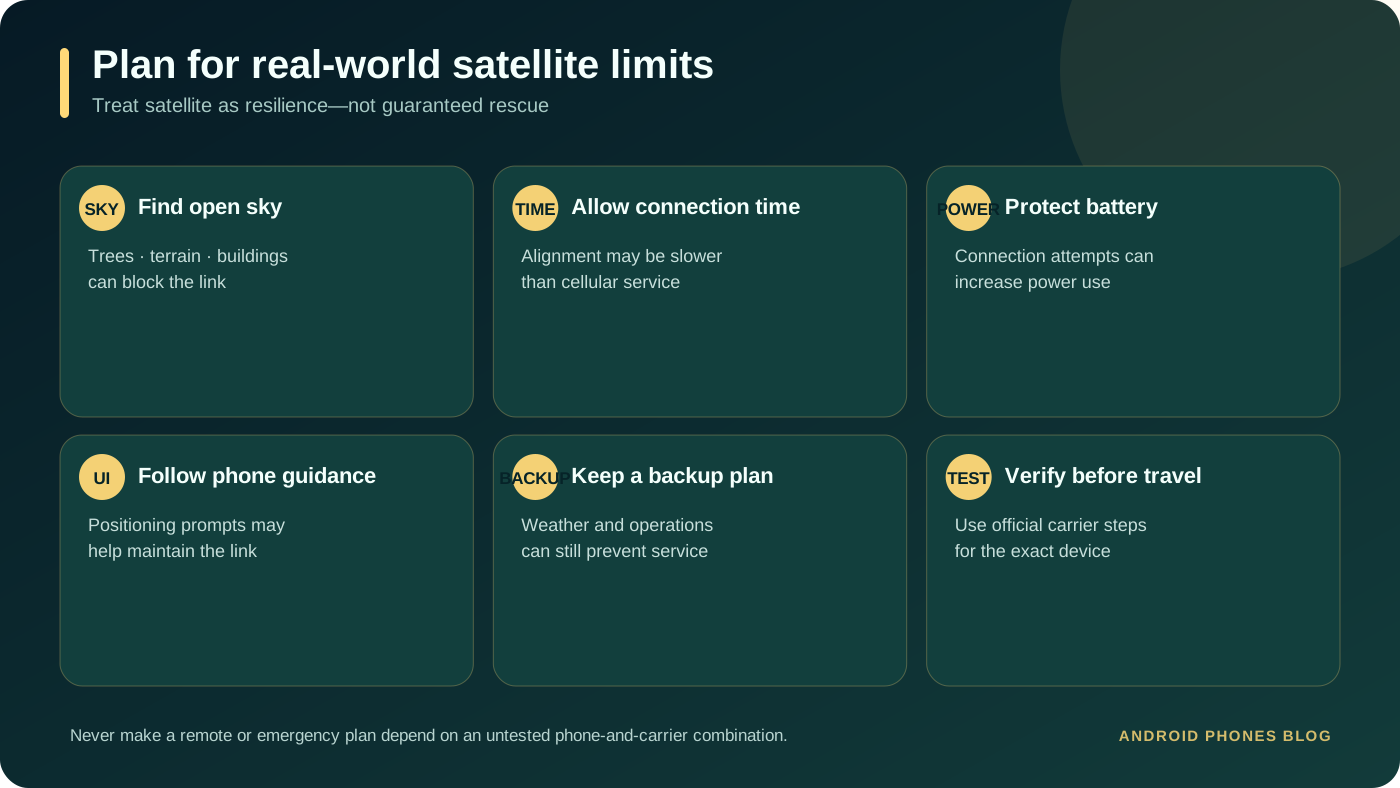
The following guidance reflects how satellite communication generally operates across current consumer satellite systems. These are practical considerations rather than Samsung-specific technical specifications.
Open sky is usually essential
Satellite communication typically works best when the device has a clear view of the sky.
Dense trees, steep terrain, tunnels, parking garages, and building interiors can reduce or prevent connectivity.
Connections may take time
Unlike normal cellular communication, establishing a satellite connection may require waiting while the device aligns with available satellites.
Users should expect that communication may not feel as immediate as conventional mobile service.
Battery use may increase
Maintaining or attempting satellite connections can require additional power compared with ordinary standby operation.
For remote travel, carrying an external battery remains sensible planning regardless of phone model.
Follow on-screen instructions
If satellite communication is available, the phone may provide positioning guidance to help establish or maintain a connection.
Following these instructions can improve the likelihood of successful communication.
Emergency capability is not guaranteed
Satellite emergency features should never be treated as guaranteed rescue services.
Weather, visibility, regulations, participating carriers, device compatibility, and other operational factors can all affect whether communication succeeds.
Always review your carrier’s official instructions and Samsung’s documentation before relying on satellite communication for emergency preparedness.
Who benefits most from satellite communication?
Not every Galaxy owner will use satellite communication regularly.
It tends to provide the greatest value for users who frequently leave reliable cellular coverage.
Travelers
People visiting national parks, mountain regions, deserts, or remote highways may appreciate an additional communication option where supported.
Rural residents
Some rural areas experience inconsistent mobile coverage even when major roads are nearby.
Satellite communication may provide another layer of connectivity under supported conditions.
Field teams
Utilities, construction crews, surveyors, environmental researchers, inspection teams, and agricultural workers may benefit when working beyond reliable cellular coverage.
Fleet managers should evaluate carrier availability before assuming organization-wide compatibility.
Enterprise mobility teams
Organizations deploying managed Galaxy devices should include satellite capability in procurement requirements only after confirming support for:
- specific hardware
- specific carriers
- intended deployment countries
- required feature level
Organizations planning large Android deployments should also review broader platform security and operating system changes, including our coverage of Android 16 security and live updates, because communication capabilities increasingly depend on software as well as hardware.
Outdoor professionals
Search teams, remote maintenance crews, journalists, wildlife researchers, and expedition leaders may all have situations where limited satellite communication provides additional resilience.
What should refurbished and imported phone buyers check?
This is one of the easiest areas for mistakes.
A Galaxy family name does not guarantee identical hardware, firmware, carrier compatibility, or regional software configuration.
For example, two devices marketed under the same Galaxy series may differ in:
- regional model code
- carrier customization
- supported software versions
- available carrier partnerships
- regulatory approval
- feature rollout timing
This matters even more in the second-hand market.
Before purchasing an imported or refurbished Galaxy phone specifically for satellite communication:
| Verification item | Why it matters |
|---|---|
| Exact model number | Similar commercial names may hide different regional variants. |
| Region code | Regional firmware and carrier support can differ. |
| Current software version | Some features may depend on newer Android or One UI releases. |
| Carrier plan | Your operator must actually support the relevant satellite service. |
| Country of intended use | Services launch at different times across markets. |
| Feature required | Confirm whether you need emergency-only, messaging, or limited app support. |
| Activation and testing | After purchase, follow official carrier instructions and verify functionality where appropriate instead of assuming support. |
If possible, verify the device’s IMEI with the intended carrier before buying an imported or refurbished handset.
That extra step can prevent expensive surprises, particularly for enterprise purchases or international deployments.
Businesses refurbishing or reselling Galaxy phones should also avoid advertising “satellite capable” without explaining the conditions attached to actual service availability.
How does satellite communication fit into Samsung’s broader connectivity strategy?
Satellite communication should be viewed as one component of a wider resilience strategy rather than a standalone solution.
Cellular networks remain the primary communication method for everyday use.
Satellite communication becomes relevant mainly when normal coverage disappears and participating services have been enabled.
Likewise, satellite communication complements rather than replaces other resilience features. For example, Google’s and Android’s expanding device-location capabilities remain valuable when conventional connectivity is unavailable or intermittent. Our guide to offline device tracking explains how those technologies address a different problem from satellite communication.
For buyers, IT departments, refurbishers, and resellers, the practical takeaway is straightforward: evaluate satellite communication as a combination of compatible hardware, participating carrier services, regional availability, and confirmed feature support. Samsung’s February 2026 announcement represents a significant expansion of that ecosystem, but actual experience will continue to vary across devices, operators, countries, software versions, and rollout schedules. Before depending on any satellite feature—especially for travel or emergency planning—confirm the latest instructions from both Samsung and your mobile carrier for your exact device and region.