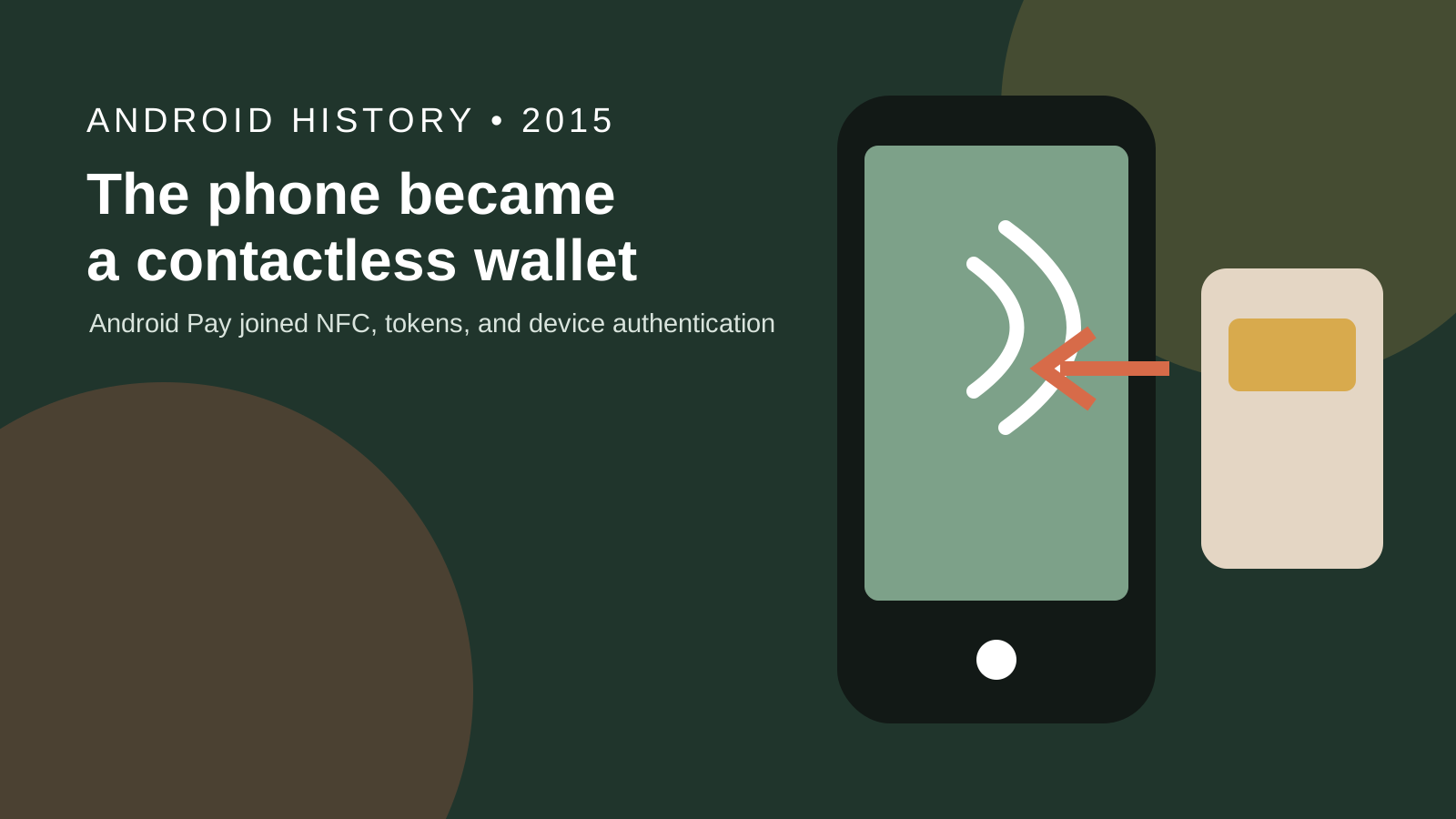
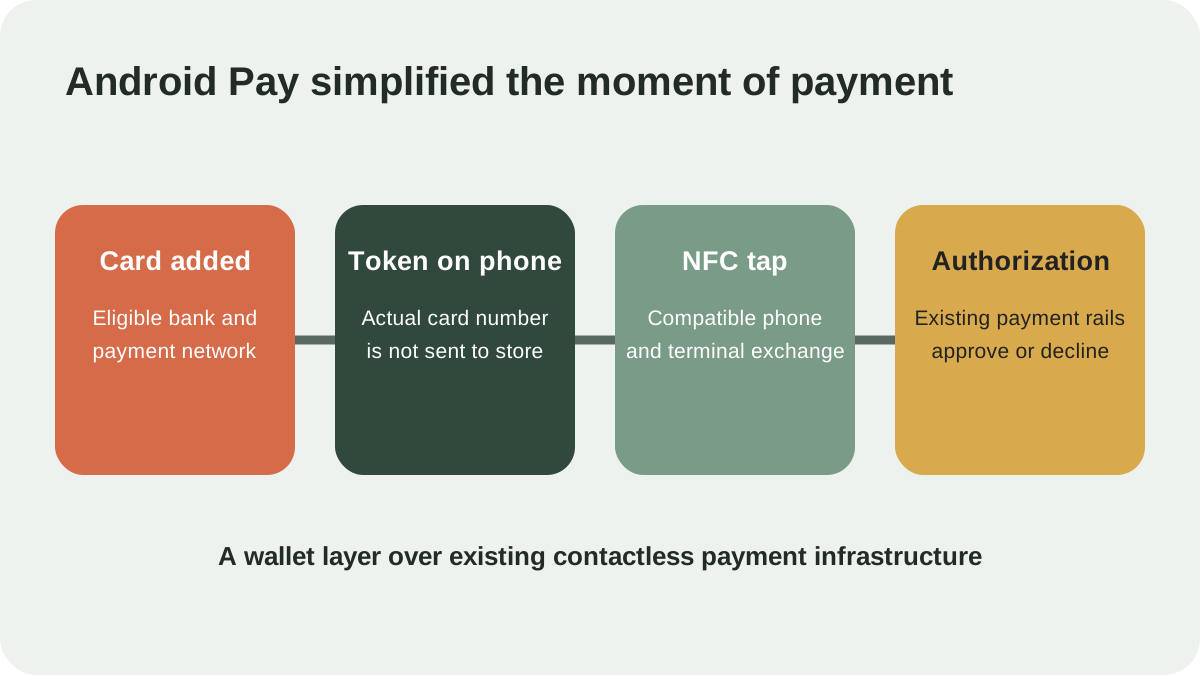
Google began rolling Android Pay out in the United States on September 10, 2015. Compatible Android phones could store eligible payment cards and make a purchase by tapping an NFC terminal. The service used tokenization so the merchant did not receive the customer’s actual card number, and it worked with the existing contactless payment infrastructure rather than requiring a unique Google checkout terminal.
Mobile payments existed before Android Pay, including Google’s earlier Wallet work. The 2015 launch was important because it assembled banks, card networks, retailers, Android security and NFC into a broader platform. Google’s launch post said the service would roll out across more than one million U.S. locations, though acceptance and eligible cards still varied.
How did an Android Pay purchase work?
A user added an eligible credit or debit card to the service. At a compatible contactless terminal, the phone exchanged payment information over near-field communication, or NFC. The normal payment network and bank then authorized or declined the transaction. Android Pay was a wallet and security layer over those existing rails.
The phone generally needed to be awake, and device authentication protected payment use according to the supported Android version and hardware. The service could also store loyalty cards and offers, and Google planned in-app payments so checkout would not be limited to physical stores.
| Part of the transaction | Role in 2015 Android Pay | What it did not guarantee |
|---|---|---|
| NFC phone | Communicated with a contactless terminal | Every Android phone did not contain compatible NFC hardware |
| Tokenization | Kept the actual card number from being sent to the merchant | It did not remove all fraud or account risk |
| Device lock or fingerprint | Confirmed control of the phone | Security still depended on correct setup and supported hardware |
| Bank and card network | Approved eligible cards and transactions | Every bank, card or country was not supported |
| Retail terminal | Accepted standard contactless payment | A store logo did not ensure every checkout lane was configured |
The process felt like “tap and pay,” but several institutions worked behind that simple gesture.
Why was tokenization central to the service?
Instead of presenting the merchant with the card’s actual account number, Android Pay used a virtual account representation. If transaction data were exposed at a store, that design reduced the value of the information compared with disclosing the original card number. Google later described this as industry-standard tokenization in its official UK launch explanation.
Tokenization is one layer, not a claim of perfect safety. A compromised Google account, weak device lock, fraudulent enrollment or manipulation outside the wallet can still create risk. Banks and payment networks apply their own checks, and users need a way to secure a missing phone.
That connection made Android Device Manager relevant. If a phone was lost, Google’s recovery service could help locate, lock or erase it according to the capabilities available at the time. Mobile payment security depended on the whole device, not only the moment it touched a terminal.
What did Android 6.0 fingerprints add?
Android Pay initially supported NFC phones running Android 4.4 or later, so a fingerprint reader was not required for the service to exist. Marshmallow added a standard Android fingerprint API, allowing compatible phones to confirm a purchase with a fingerprint through a consistent platform mechanism.
Google had presented Android Pay and fingerprint support together during the Android M developer preview. The Nexus 5X and Nexus 6P then shipped with rear Nexus Imprint sensors and Android Pay support in the United States. This helped turn biometric authentication from a manufacturer-specific feature into part of an Android payment story.
Fingerprints did not replace the secure screen lock, and the system did not hand fingerprint images to payment apps. Our Marshmallow history explains the platform API and its limits.
How was Android Pay different from Google Wallet?
Google Wallet had launched earlier and included tap-to-pay ambitions, but Android Pay became the company’s new consumer system for in-store and in-app payments. The Wallet name continued for sending money between people in the United States. Existing Wallet users could receive Android Pay through an app update during the 2015 transition.
The branding changed again in 2018 when Google brought Android Pay and other payment experiences under Google Pay. Google later revived Google Wallet as a place for cards, passes and digital items in many markets. These changes can be confusing if each name is treated as an entirely unrelated technology.
The clearer historical thread is functional: Google kept working toward a secure account-based wallet that could use Android hardware in stores and applications. Product names and regional features changed around that goal.
What limited Android Pay at launch?
The September release began in the United States. A person needed a compatible NFC phone, a supported Android build, an eligible card from a participating issuer and a merchant terminal that accepted contactless payments. Rooted or otherwise modified devices could fail security checks. These requirements meant that “available on Android” never meant available to every Android owner.
Merchant acceptance was also uneven in practice. A retailer might support contactless payments in some locations or lanes but not others. Banks joined on different schedules, and international launches required separate financial and regulatory partnerships. The United Kingdom arrived in 2016, with more countries following.
This gradual expansion is normal for payment systems because software is only one component. Hardware certification, banking agreements, payment-network rules and local regulation all shape access.
Why does the Android Pay launch still matter today?
The service helped make a phone an ordinary payment credential rather than a novelty demonstration. It also showed why mobile wallets could improve on simply copying a card number into an app: the device could combine a token, short-range radio, screen lock, biometric confirmation and remote recovery.
Current wallet names and requirements differ, so a 2015 setup guide should not be used as present-day instructions. Users should follow current Google and bank support pages, keep a secure screen lock, enable device recovery and know how to contact their card issuer.
In the Android history timeline, Android Pay marks the moment when Google’s payment effort became tightly connected to the Android platform’s own security and hardware direction. The product name changed, but the idea it helped popularize—the phone as a tokenized, authenticated wallet—remains part of everyday Android use.