On October 4, 2023, Google released Android 14 to supported Pixel devices and said phones from partner manufacturers would follow. The update arrived with the Pixel 8 family, but it was a platform release rather than a Pixel-only feature bundle. Its most instructive changes were not one dramatic redesign. They concerned how Android represented bright photos, organized health records, warned about data sharing and adapted text and alerts for more people.
Android 14 also brought generative wallpapers first to Pixel 8 models and new lock-screen customization. Those visible additions attracted attention, yet Ultra HDR and Health Connect reveal a deeper theme: the operating system was taking responsibility for data that previously depended heavily on individual apps.
What launched with Android 14 on October 4?
Google’s consumer release overview grouped the update around expression, control and accessibility. Supported Pixels began receiving it that day, while Samsung, OnePlus, Oppo, Xiaomi and other named partners had separate schedules. The source release and final APIs gave manufacturers and developers a stable platform, but did not create one global installation date.
Android 14 followed the privacy work in Android 13 and retained the large-screen foundations developed through 12L. It also became the software base for Google’s first year of on-device Gemini Nano, although that model initially reached the Pixel 8 Pro in December rather than every Android 14 phone.
The developer summary included background-work limits, larger-font scaling, regional preferences, credential improvements and app compatibility changes. A consumer could use Android 14 without seeing every one of those APIs, but they affected how apps behaved on the release.
How did Ultra HDR make phone photos look different?
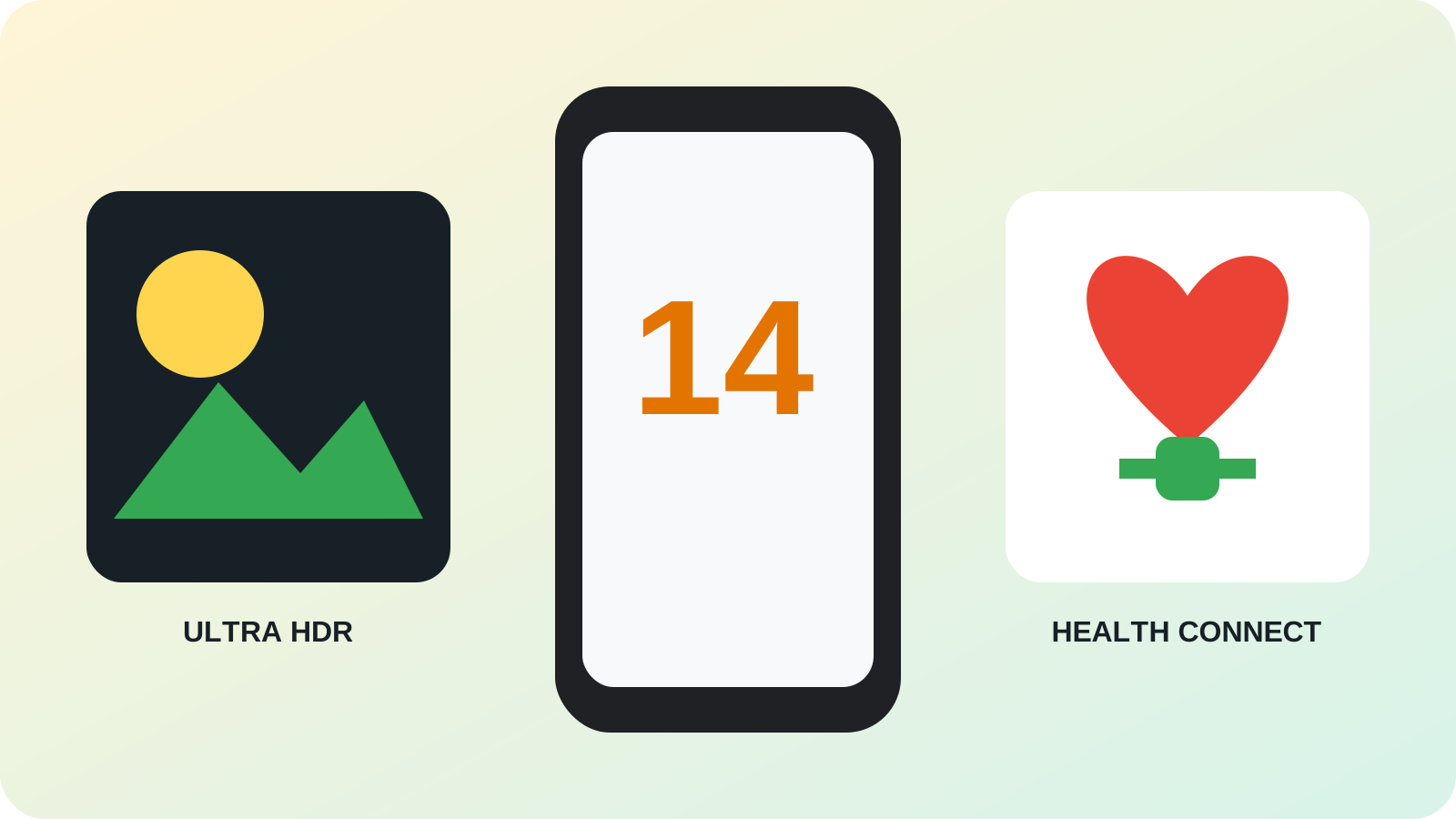
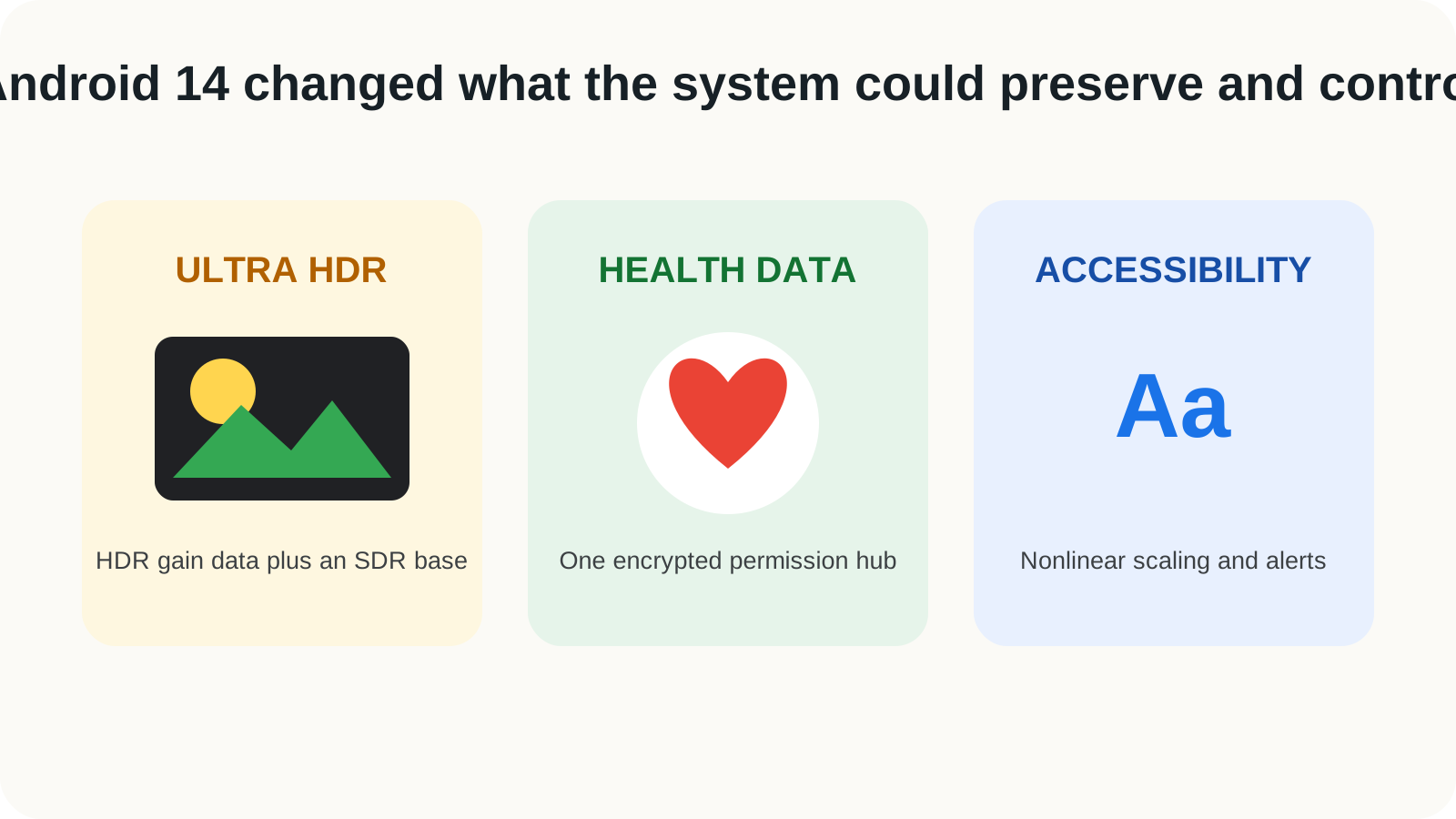
Traditional JPEG images are commonly rendered for standard dynamic range. Modern phone displays can produce brighter highlights and a broader luminance range, but a photo format must carry information that allows compatible software to use that capability. Android 14 added support for Ultra HDR images, which combine a familiar JPEG base with a gain map describing how to render an HDR version.
That compatibility approach was important. A device or app without Ultra HDR support could still show the base image rather than receiving an unreadable new file. A compatible HDR display and software could use the extra data to produce brighter highlights and richer separation between light and dark areas.
Ultra HDR did not guarantee a good photograph. Sensor quality, exposure, processing, display calibration and editing all remained relevant. It also did not mean every image on an Android 14 phone was automatically HDR. The camera, file, app and display needed compatible support, and sharing through a service that removed metadata could change the result.
Why was Health Connect built into the system?
Health and fitness data often sits in separate apps: steps in one service, sleep in another and workouts in a third. Health Connect provided a shared layer through which supported apps could read or write user-approved categories. In Android 14, Google built it into Settings rather than requiring the separate app experience used on earlier versions.
Google said the data was stored and encrypted on the device. The user could see which apps had access, grant permissions by data type and remove records. The official Health Connect architecture also distinguished the platform from a health diagnosis: it was an exchange and permission layer for participating applications.
Integration reduced fragmentation without making every health service identical. An app still decided what it recorded and how it interpreted the information. Availability varied by app and region, and medical decisions should not be based solely on a consumer phone’s unverified measurements.
| Android 14 area | Platform change | Important condition |
|---|---|---|
| Ultra HDR | JPEG-compatible HDR gain information | Needs compatible capture, app and display support |
| Health Connect | Encrypted on-device data hub in Settings | Apps and users must grant data-type access |
| Location permission | Notice when an app reports third-party sharing | Notice informs a decision; it does not inspect every business practice |
| Font scaling | Nonlinear enlargement up to 200 percent | Apps still need responsive layouts |
| Hearing access | Dedicated setup and routing controls | Device and hearing-aid compatibility still matter |
What new privacy controls did Android 14 add?
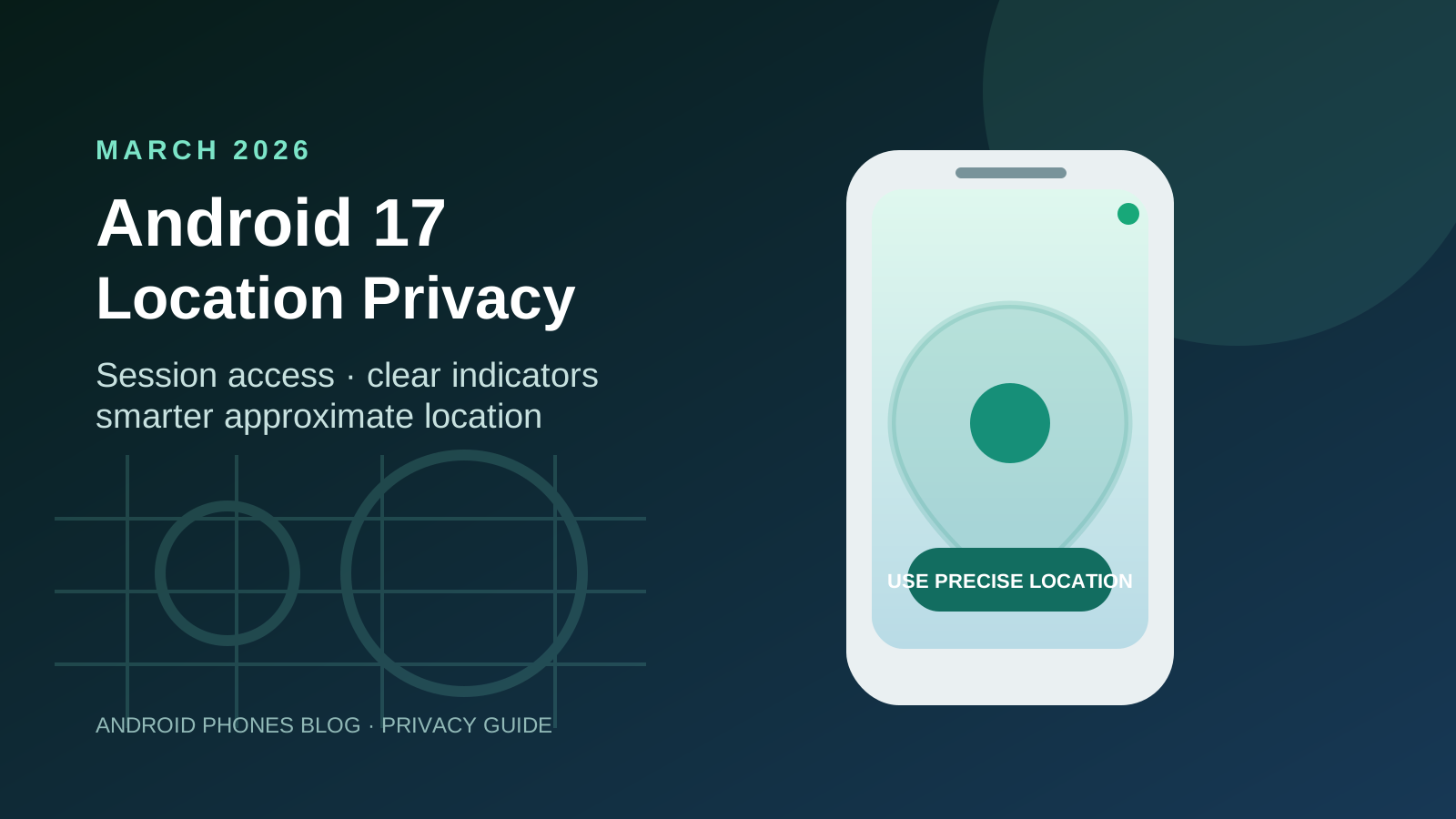
When an app requested location access, Android 14 could tell the user if the app declared that it shared location data with third parties. That information helped place a business practice beside the permission decision. It did not automatically audit every transfer; it relied on information surfaced through the platform and app declarations.
Android 14 also tightened installation of very old applications that targeted obsolete Android versions, reducing exposure to software designed before later permission protections existed. Selected full-screen notification behavior was restricted, and sensitive settings received stronger controls. Six-digit PINs could unlock automatically after the correct digits were entered, while the system encouraged a longer PIN than the old four-digit habit.
The direction was incremental. Android 14 did not eliminate malicious apps or make permission prompts self-explanatory. It added context and raised platform baselines so that users and developers had fewer reasons to rely on outdated assumptions.
How did accessibility improve for vision and hearing?
Android 14 introduced nonlinear font scaling up to 200 percent. Simple linear enlargement can make already-large headings consume the screen while smaller body text remains the main barrier. Nonlinear scaling increased smaller text more aggressively and restrained text that was already large, helping preserve layout while improving readability.
The magnifier gained pinch-to-zoom controls, adjustable size and an option to remain active when moving between apps. Flash notifications could use the camera light or display as a visual alert for incoming notifications. Hearing-aid setup and audio routing became easier to reach through Accessibility settings.
These features improved the platform baseline, but app design still mattered. Text embedded in an image does not respond like real interface text, and a fixed layout can clip even when Android supplies better scaling. Accessibility is a relationship among the operating system, applications, hardware and individual needs rather than a checkbox completed by one release.
Was Android 14 mainly a customization update?
Customization was prominent. Users could select lock-screen clock styles, shortcuts and monochrome themes, while Pixel 8 devices initially received generative wallpapers. The system could emphasize contextual lock-screen information, such as weather, and Android continued the Material You color approach.
Yet describing Android 14 only as cosmetic misses its platform work. Ultra HDR changed image interchange, Health Connect centralized sensitive permissions, accessibility altered text rendering, and developers faced new background and target-version rules. The update’s visual continuity with Android 13 made those less visible changes easier to overlook.
It is also important not to confuse Android features with Pixel exclusives. Generative wallpaper availability began on named Pixel devices, while the Android 14 platform could run on many brands. Manufacturer interfaces could look substantially different and still implement the same underlying version.
What should not be inferred from the release date?
October 4 was the official platform and Pixel rollout milestone, not the day every eligible Android phone updated. Manufacturers needed time to integrate their interfaces and test regional variants. A phone sold through a carrier could follow a different schedule from an unlocked version.
Individual features also had dependencies. An HDR screen alone did not ensure the whole photo path preserved Ultra HDR. Health Connect required participating apps. Hearing-aid behavior depended on compatible equipment, and lock-screen options varied with manufacturer design.
These conditions explain why two Android 14 phones can offer different user experiences without one necessarily misreporting its Android version. AOSP, Google services and manufacturer software form related but distinct layers.
Why does Android 14 still matter today?
Android 14 helped move three categories from app-specific solutions toward shared platform rules: HDR image representation, health-data exchange and accessible interface behavior. Later releases could build on those foundations instead of asking every app to invent them independently.
It also provided the system base for Gemini Nano on the Pixel 8 Pro, showing how an annual Android version can become infrastructure for features delivered later. The release is therefore best understood as a foundation rather than a frozen feature list.
In the Android history timeline, Android 14 marks a year when richer media and tighter control advanced together. That balance remains relevant: a phone becomes more capable only when people can understand and control what its capabilities do with their data.