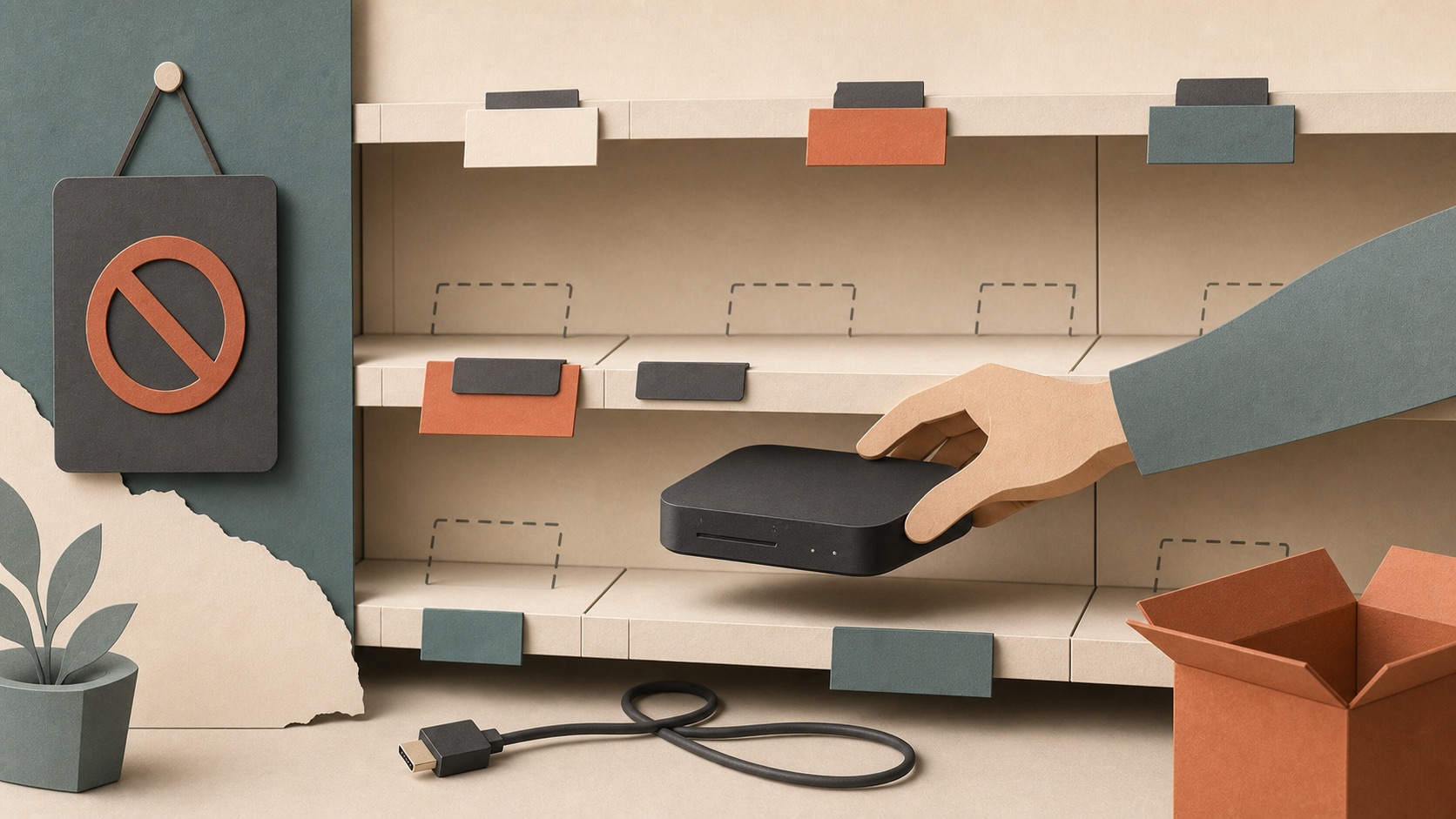
Archive update: On January 26, 2012, contemporary media reported that Logitech had sold out of new Revue units following its price cut and category exit. That company new-unit statement does not establish stock at every retailer, used-device availability or today’s availability.
| Date or reporting period | Event | Evidence and scope |
|---|---|---|
| Early July 2011 | Management decided to reduce Revue’s retail price to US$99 | Logitech 2012 annual report, printed p. 244 (PDF p. 254); historical U.S. retail context, not a current offer |
| Fiscal year ended March 31, 2012 | Logitech describes lowering the price and producing no more units | Same report, printed p. 168 (PDF p. 178); no exact production-stop date established here |
| January 26, 2012 / fiscal Q3 FY2012 reporting | Logitech’s new Revue units reported sold out | Phandroid’s same-day media account; original management remarks not independently recovered |
The annual report’s full-year Digital Home discussion, printed pp. 169–170 (PDF pp. 179–180), covers the year ended March 31, 2012. It is a separate financial period and is not the source for the January quarterly sellout claim.
What was the Logitech Revue?
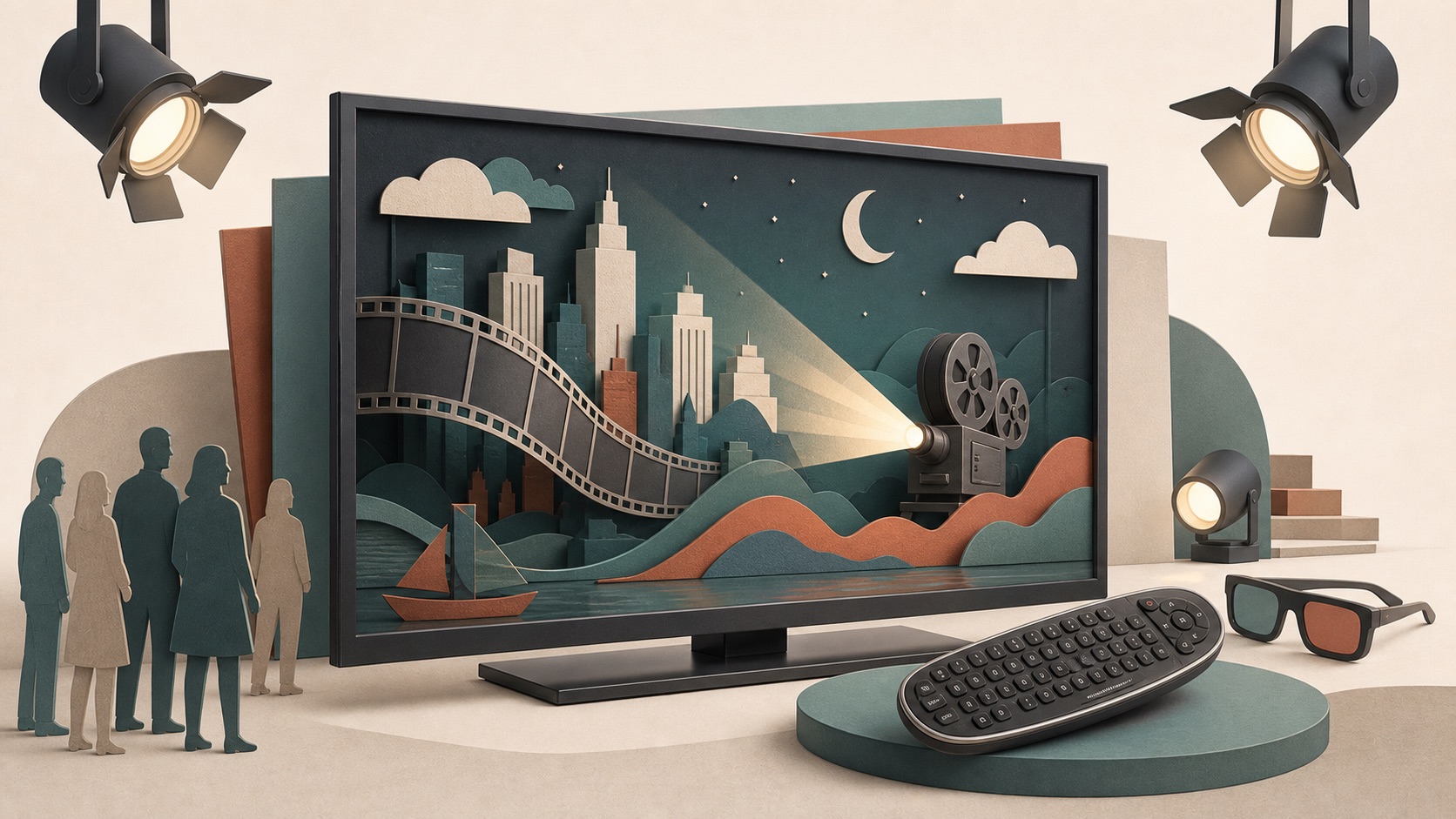
Revue was a launch-era Google TV box designed to bring web search, streaming services and Android-based television features to an existing HDTV. Logitech paired the box with a keyboard-style controller and positioned it as a bridge between television and the web.
The original price was high for an accessory that competed with simpler streaming boxes. Logitech later reduced the U.S. retail price to US$99; its annual report documents the management decision in early July 2011.
What problem was Revue asking customers to solve?
Revue targeted households that already owned an HDTV but wanted search, web access and streaming software without replacing the display. In theory, a box could upgrade the television at lower cost and move to another screen later. A keyboard-style controller also made browser and search tasks possible in a way that an ordinary channel remote did not.
The challenge was explaining why those capabilities justified another device, input, cable and controller. A general web-and-TV proposition was more complex than the promise of a small box built mainly around a few popular streaming services. Customers had to understand Google TV itself before they could decide whether Logitech’s implementation was worth the price.
This made Revue dependent on more than Logitech’s hardware execution. The number and quality of compatible services, the speed of the interface and consumer interest in using web content on a television all shaped its value. A platform partner can supply capabilities, but the hardware company still owns the retail question: what clear improvement will the buyer notice after connecting the box?
What did the price cut change—and what could it not change?
Reducing the price to $99 lowered the financial risk for a curious customer and made Revue easier to compare with simpler streaming products. It could increase unit demand and help retailers move inventory that was difficult to sell at the original position. For a discontinued product, a large discount also converts stored hardware into cash and frees channel space.
Price does not simplify the experience itself. If buyers were uncertain about Google TV, found the controller intimidating or did not see enough distinctive content, a lower number addressed only one objection. It also reduced revenue per unit while manufacturing, returns, support and channel costs remained.
That is why sellout after a price cut cannot be evaluated from volume alone. A promotion may successfully clear the final inventory and still confirm that the original price and product proposition were unsustainable. The commercial question is whether the discounted product creates a repeatable business, not whether a finite pile of boxes eventually reaches zero.
Why did “sold out” need context?
Editorial analysis: Inventory can run out under strong demand, limited supply or a discontinued product’s clearance. Here, Phandroid reported Logitech’s new-unit sellout after the company had decided to exit the category. The headline is an inventory endpoint, not proof of a successful continuing business.
Company stock, retail-channel stock and consumer activations are different measures. The media account does not establish that every retailer had no units. Use the January quarterly report for the reported new-unit status and the annual report for full-year financial context; do not combine the two periods.
What did Logitech focus on next?
Reporting around the earnings release emphasized Logitech’s established Harmony remote business and growing tablet accessories. Those categories aligned more closely with the company’s accessories expertise and required less dependence on the success of an entire television software platform.
Why were Harmony remotes and tablet accessories a different bet?
Accessories can add value to platforms created by other companies without requiring the accessory maker to make the entire ecosystem succeed. A universal remote solves a recognizable control problem across many home-entertainment devices. A keyboard or case for a tablet can serve an installed hardware base whose consumer demand already exists.
Revue carried broader platform risk. Logitech had to build and support the box, explain Google TV and depend on compatible content and software improvements. If the platform proposition confused buyers, excellent peripheral design could not fully compensate. Returning attention to established accessory categories reduced that exposure and aligned more closely with the company’s known retail position.
The comparison is useful for hardware strategy. Building a platform device can offer more control and revenue per customer, but it also requires software support, service partnerships and a reason for developers to care. Accessories usually offer less control while allowing a company to participate across several successful ecosystems.
Google TV did not disappear with Revue. Earlier that month, LG announced an integrated Google TV with Cinema 3D, with media coverage on January 5 and an official release dated January 6, 2012. Apps such as Qello tried to give the platform distinctive streaming content. A separate voice-control concept addressed the interaction problems that keyboard-style hardware had exposed.
What can product teams learn from Revue?
- Early platform partnerships carry software and consumer-adoption risk.
- A sophisticated product can lose to a simpler device with a clearer purpose.
- Price cuts may clear inventory without fixing product-market fit.
- Interpret “sold out” using the inventory owner, production plan and reporting period. It is not a measure of final consumer adoption.
First-generation platform hardware needs a simple entry point. Advanced features can demonstrate ambition, but the buyer still needs one obvious job the product does better than cheaper alternatives. Setup, remote design and the first few minutes of use must reinforce that job.
Second, the support horizon should match the hardware promise. A television accessory may remain physically usable for years, while its applications and web services change quickly. Customers need confidence that the platform will continue receiving attention. A vendor exiting production creates uncertainty even if the units already sold still turn on.
Google’s television strategy continued through later platforms, but Logitech did not return as a major Google TV hardware manufacturer. The Revue remains a useful case study in first-generation connected-TV economics. Continue through the 2012 Android and Google TV archive or return to the Android Phones Blog.
Archive method and revision
Original URL date: January 26, 2012. Sources rechecked October 8, 2026. This restored explanation is not original verbatim prose. The revision adds dated evidence and annual-report page references, narrows the inventory claim to Logitech’s reported new units, combines repeated interpretations and dates LG’s earlier announcement. The original Q3 management remarks remain unavailable; the annual report is preserved as historical context, not verification of all retail stock. The cover is a concept illustration, not an archival product photo.