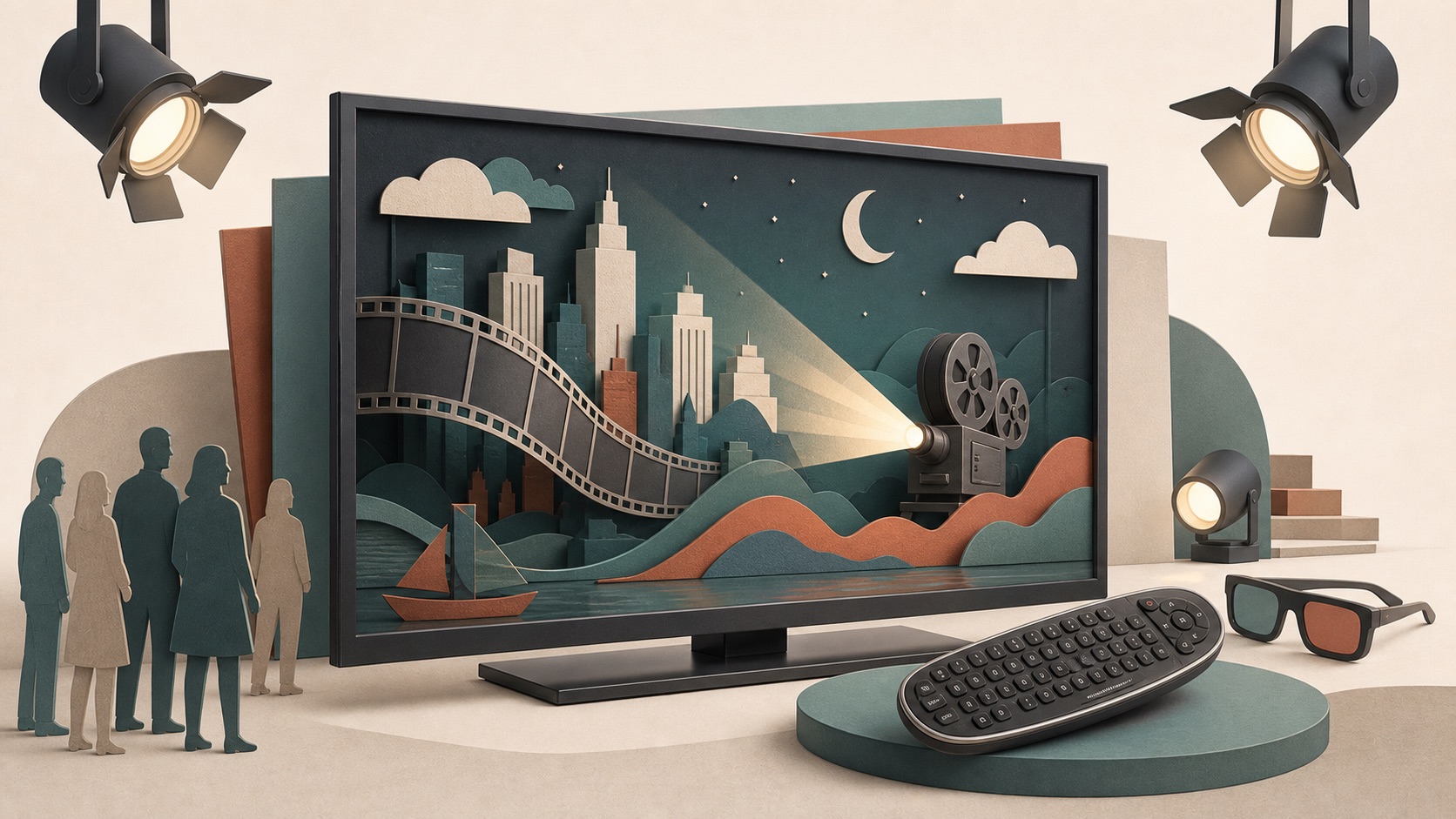
Archive update: LG announced its first Google TV product ahead of CES 2012, combining Google’s Android-based television platform with LG Cinema 3D, a custom interface and a Magic Remote that included a QWERTY keyboard. The product showed how television makers were experimenting with search, apps and web content before modern smart-TV platforms settled into their current forms.
What did LG put into the television?
LG’s announcement combined three technology layers. Google TV supplied search, web and application functions; LG added its television interface and hardware; Cinema 3D handled stereoscopic viewing with lightweight passive glasses.
Why was combining these layers difficult?
A television manufacturer traditionally controlled picture processing, inputs, channel tuning and the on-screen settings interface. Google TV added another software environment with web content, applications, search and accounts. LG had to make those functions feel connected to ordinary television use rather than like a separate computer attached behind the panel.
The layers also followed different development cycles. Display hardware might remain in a home for many years, while web services and applications could change within months. Google maintained the platform, LG maintained its product integration and third-party services maintained their own apps. A failure or update at any layer could affect what the customer experienced as one TV.
That coordination challenge is the hidden significance of the announcement. The product was not only a 3D panel with extra menu items. It was an attempt to combine long-lived consumer electronics with an evolving software ecosystem, then support both through one remote and one living-room interface.
The television also supported 2D-to-3D conversion. LG promoted its Film Patterned Retarder technology because the glasses did not require batteries and were less expensive for households that needed several pairs.
| Component | Role in the product |
|---|---|
| Google TV | Search, web content and Android-based smart-TV functions |
| LG user interface | Browsing, content selection and multitasking controls |
| Magic Remote QWERTY | Pointing-style control plus easier text entry |
| Cinema 3D | Passive-glasses 3D playback and 2D conversion |
Where did Cinema 3D fit into the 2012 proposition?
Three-dimensional television and smart-TV software addressed different reasons to upgrade. Cinema 3D promoted a more immersive picture experience, while Google TV promised access to search, web content and applications. Combining them allowed LG to present the set as a collection of premium technologies rather than betting the entire product story on one feature.
Passive glasses were part of the usability argument. A household might need several pairs for shared viewing, so weight, battery requirements and replacement cost affected whether 3D felt practical. The 2D-to-3D conversion feature tried to address another constraint: not every program was produced in a stereoscopic format.
The later decline of consumer 3D does not make the announcement irrelevant. It shows how uncertain the winning television experience still was. Manufacturers were testing picture formats, app platforms, web access and new controllers at the same time. Some ideas became central, while others remained tied to a short product cycle.
Why was the remote important?
Entering a search query with arrow keys is slow. LG combined its motion-oriented Magic Remote design with a physical QWERTY keyboard so users could navigate the television interface and type web or search text with the same controller.
This was a practical response to an unresolved smart-TV problem: a living-room screen could display websites and apps, but traditional remotes were designed for channels and volume, not software navigation.
What made a living-room interface different from a phone?
Viewers sit farther from a television and often share it with other people. Small text, dense menus and precise touch gestures that work on a personal screen can become frustrating across a room. The interface must keep focus visible, limit typing and make it clear which item will open when the user presses a button.
Web search created pressure for a keyboard, but adding a full keyboard made the controller larger and more complex. LG’s hybrid remote represented a compromise: pointing-style navigation for browsing, dedicated controls for television tasks and physical keys for longer text. The design acknowledged that no single input method handled every smart-TV action well.
Voice control later offered another path, but it did not eliminate the need for visual navigation and fallback buttons. The important historical point is that software expanded what a television could do faster than controller conventions adapted. Manufacturers had to invent new interaction models while consumers still expected power and volume to work instantly.
Did LG commit entirely to Google TV?
No. LG said it would continue advancing its own NetCast-based Smart TV platform, which was planned for a much larger share of its flat-panel lineup. Google TV was an additional product direction, not a complete replacement.
That dual-platform strategy limited risk. LG could test Google’s ecosystem while retaining control of its established interface, services and product roadmap.
Why maintain two smart-TV platforms?
Adopting an external platform can reduce the need to build every service and developer relationship alone, but it also gives another company influence over the interface, update path and application ecosystem. Maintaining NetCast let LG continue serving a broader part of its lineup with technology it controlled, while the Google TV model tested a different proposition.
The approach also recognized that one platform might not suit every price point or market. Hardware requirements, licensing, regional content and retailer plans can affect where a smart-TV system makes commercial sense. A limited product line allows a manufacturer to learn without changing its entire annual portfolio.
Running parallel platforms has costs. Engineering and support teams must maintain different interfaces, documentation and application relationships. Customers may be confused when two televisions from the same brand offer different stores or features. LG’s decision therefore balanced platform experimentation against continuity and control, not simply confidence against doubt.
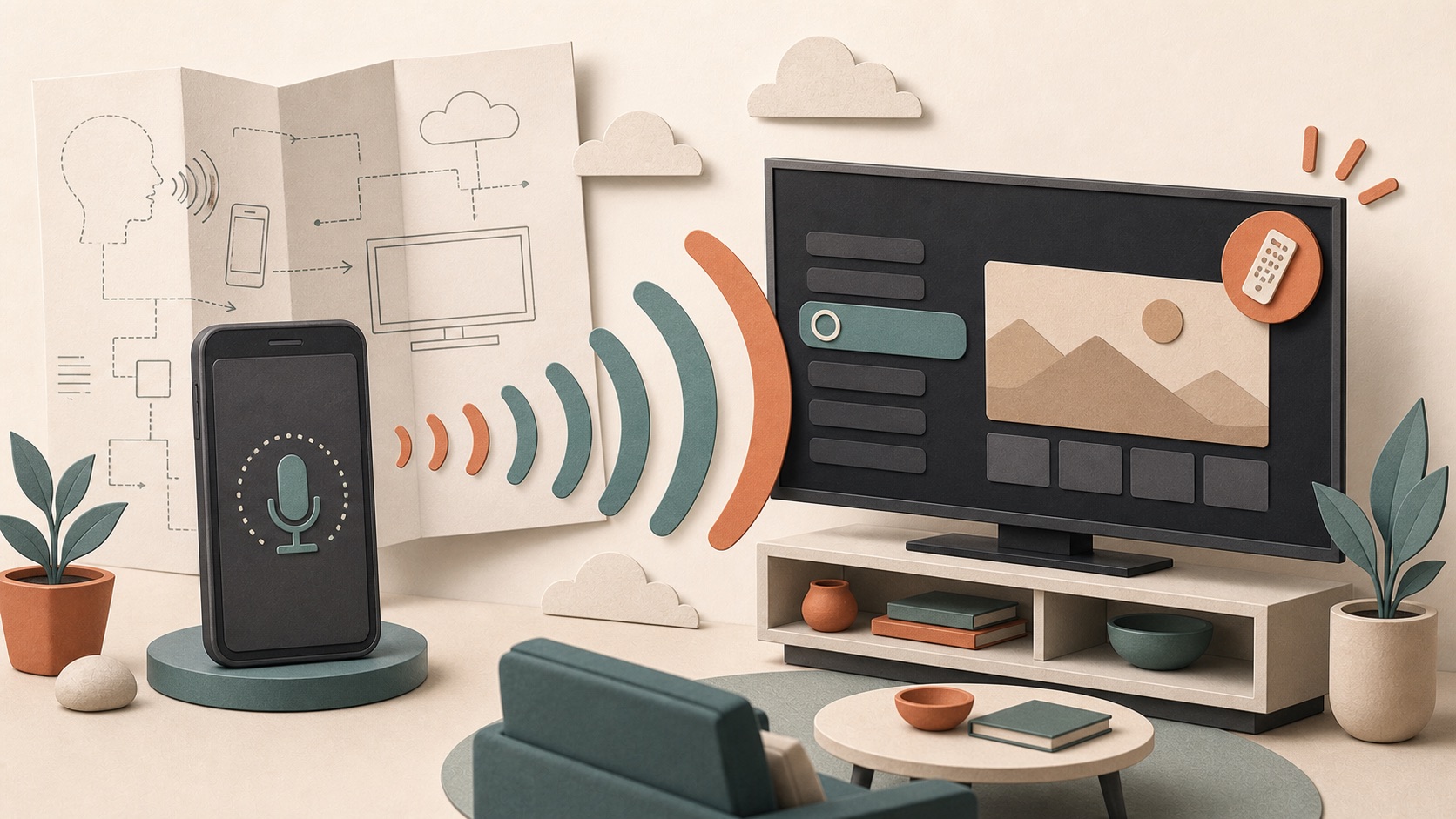
LG’s integrated-TV bet contrasted with the Logitech Revue set-top box, which added Google TV to an existing screen and was already exiting the market by January 2012. Both products needed better ways to navigate a software interface; the Google TV voice-control patent explored using a phone and speech instead of relying only on a keyboard remote.
What is the historical takeaway?
The combination of Android software, 3D video and a keyboard remote looks like a snapshot of 2012 priorities. 3D television later declined, while app platforms, voice search and streaming became central. The announcement remains useful because it shows manufacturers exploring several possible futures at once.
What should modern readers compare with this launch?
Current television buyers rarely choose a set for 3D conversion, but they still face the platform questions visible in 2012. How long will the operating system receive updates? Are important streaming services available in the buyer’s country? Does the remote make search easy? Can the core display continue working well if an online service changes?
Those questions separate durable hardware value from temporary software features. LG’s early Google TV is useful as a case study because it placed both in one product: panel technology and passive glasses on one side, accounts, apps and web services on the other. The balance between them continues to shape how long a connected television remains satisfying.
Continue with our archive on Qello’s concert-streaming app or browse the full Google TV history collection.