Archive update: TED’s March 15, 2012 announcement introduced its Android app for phones and tablets with more than 1,100 talks, offline video and audio, and offline search. Those are launch-period claims, not a promise about the current catalog or app behavior.
| Feature in TED’s 2012 announcement | Why it mattered |
|---|---|
| Phone and tablet layouts | Adapt the same library to different screens |
| Offline video and audio downloads | Prepare content before losing connectivity |
| Offline browsing and search | Find talks while disconnected |
| Bookmarks and sharing | Save discoveries and return to them later |
What did the TED Android app offer?
TED’s original announcement described browsing by theme, tag, rating or popularity, searching by speaker or topic, and bookmarking and sharing talks. It said the library exceeded 1,100 talks at launch; that number belongs to March 2012.
Users could download video or audio to a device and browse or search the library offline. TED also described a curated audio stream. Offline search did not mean every video was stored locally: playback away from a connection depended on content being downloaded first.
Why did offline access matter?
Downloading before travel moved the connection-dependent part of watching a talk to a time the viewer could choose. Audio offered an alternative when looking at a screen was inconvenient, and offline search made disconnected discovery part of the workflow.
Our design reading is that these features treated disconnection as an expected use case. This is an interpretation of the announcement, not a test of either the original or current app.
Offline use also changes how a reader should interpret a feature list. Finding a title while disconnected and playing its media are different tasks. The launch announcement described both searchable library information and media downloads. It did not mean that installing the app put the complete talk collection on every phone. Keeping those tasks separate makes the historical claim more useful than a broad statement that the app “worked offline.”
For a reader planning a journey, the practical sequence is to choose the talk, finish any required download, and check the saved item before leaving a usable connection. This is a preparation recommendation, not a statement that today’s TED app follows the same screens or storage rules as the launch version.
How did discovery work inside the launch library?
A large catalog creates a choice problem. Visitors may know a speaker’s name, have only a subject in mind or want to explore an unfamiliar talk. The 2012 announcement’s browsing categories and search offered different starting points for those intentions. Our reading is that discovery was part of the content product, rather than a minor control added beside the video player.
Bookmarks added a step between discovery and consumption. A reader could notice an interesting subject during a short break and return when there was time to watch. Sharing offered another route into the library, with a recommendation arriving through a person rather than through the app’s own navigation. These are interpretations of the documented features, not evidence that one discovery method produced better engagement than another.
The same distinction matters when reading the catalog count. A launch-period number describes the scope TED announced at that moment. It does not measure how many talks a particular user downloaded, how quickly they found one, or whether every talk suited their interests. Those questions require different evidence. The archive retains the original number because its date and source are known, while leaving present-day catalog decisions to the current service.
Why was device support noteworthy?
TED said its app adapted to Android phones and tablets, including the Kindle Fire and dual-screen Sony Tablet P. Those named devices are evidence of the 2012 design scope, not today’s supported-device list.
The relevant design task was keeping discovery, saving, downloads and playback understandable as the screen changed. A tablet could arrange those tasks differently from a phone without changing the content library itself.
Supporting different screens is more than scaling a single image. A useful evaluation would ask whether labels remain readable, whether the video has an appropriate place beside browsing controls, and whether saved items are easy to reach. The task should remain recognizable even when the arrangement changes. This is a design interpretation of TED’s stated adaptive approach; no original device comparison is claimed here.
The named launch devices also help limit the historical conclusion. Evidence that TED considered a dual-screen tablet does not establish support for every unusual Android form factor, and a phone-and-tablet announcement is not a current minimum-system specification. Readers reconstructing the period should keep those examples attached to the original announcement instead of turning them into a permanent compatibility guarantee.
The catalog strategy resembled Amazon’s cross-platform Kindle apps: the service followed the reader across devices. Kindle’s reading continuity and TED’s offline media were different solutions to that broader problem.
The mobile app’s significance was therefore not simply that the same video could appear on a smaller screen. The documented combination of local media, library discovery and audio gave readers different ways to prepare and consume content. That combination is the useful historical lesson to carry forward. Whether the current app meets a particular travel or learning need still needs to be checked with that reader’s device and intended workflow.
How should readers use this restored article today?
Use the archive to understand the 2012 launch. For installation, check the current official TED listing and TED’s support information, as current reference points. The historical talk count and device examples do not establish current availability.
- Confirm that the listing is published by TED Conferences LLC and available for your device and region.
- Read the current account, privacy and download information.
- If offline playback is important, download a talk and check playback before relying on it during travel.
The launch reflects how Android content expanded beyond the Nexus One and Android 2.1 period. Continue with the 2012 Android and cross-device content archive or our Android phone guides.
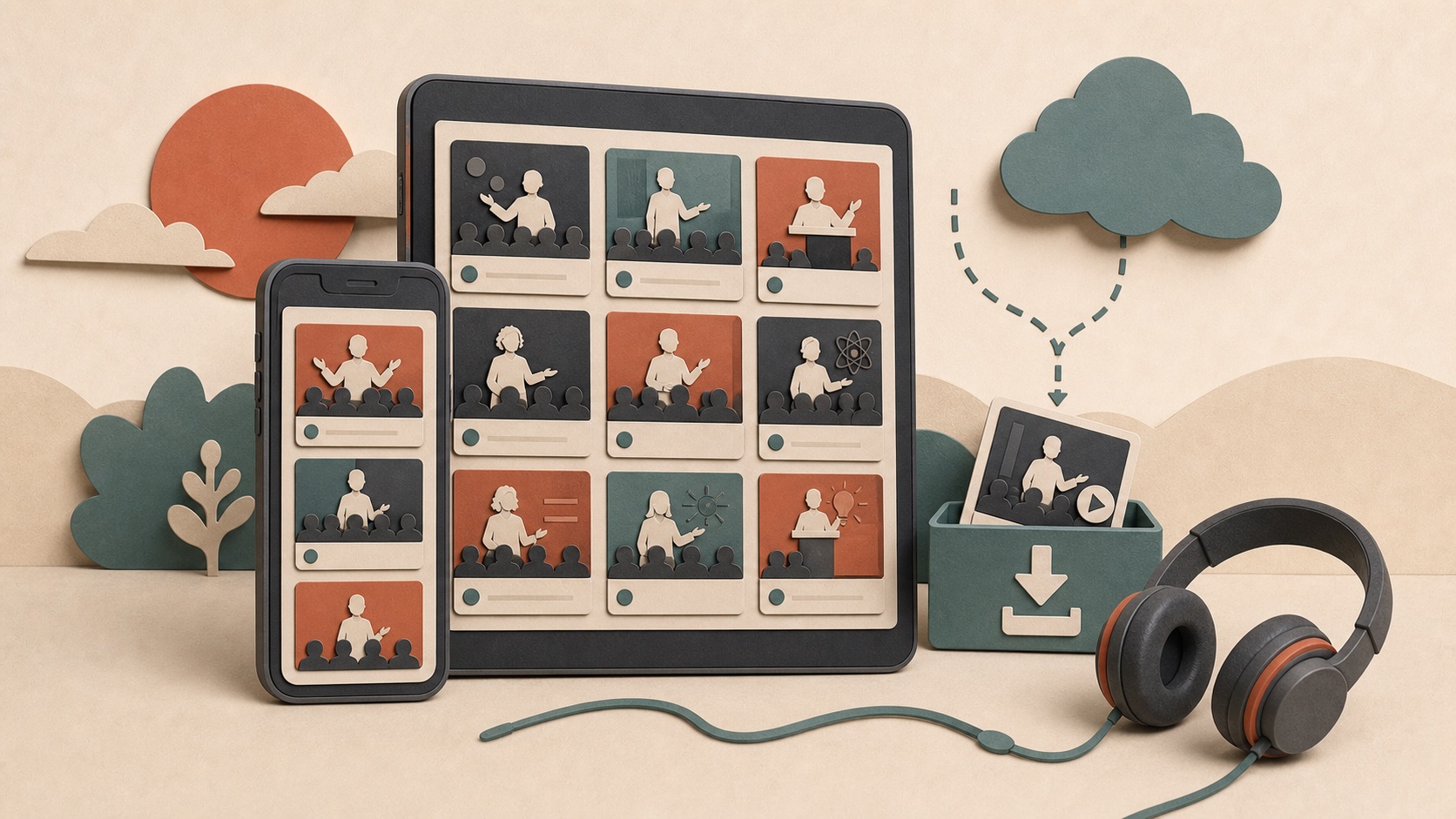
Restoration note: Original publication and TED announcement: March 15, 2012. This revision shortens repeated analysis, retains the launch evidence and adds current installation references; the review date appears in the header and sources. The cover is a concept illustration, not a historical TED app screenshot.